
May 2026
How to Prepare Your Portfolio for an Artist Residency Application
Turn your portfolio into a clear, tailored argument for why you and your work belong in that residency.
Why your residency portfolio matters
A residency portfolio is not just a folder of “best works.” It’s a strategic document that helps reviewers quickly understand who you are as an artist, how you work, and why you’re a good fit for their space, resources, and community.
Most residency portfolios are read under time pressure. Reviewers might have minutes, not hours. Your job is to make it very easy for them to grasp:
- Quality – Is the work mature, thoughtful, and technically capable?
- Practice – What mediums, themes, scales, and forms do you work with?
- Feasibility – Can you realistically use the time and facilities well?
- Fit – Why does your work belong in this specific residency?
When your images, text, and structure all point to those answers, your portfolio starts working for you rather than against you.
Core pieces most residency portfolios include
Residencies all have their quirks, but most applications ask for some version of the same building blocks. Think of these as modules you can reorganize and tailor for each opportunity.
- Artist statement – A concise, current snapshot of what your work is about and how you approach it.
- Curated artwork selection – Images, links, or files that show your practice clearly.
- Captions and work details – Titles, years, materials, dimensions, and context.
- CV or résumé – Enough professional info to show that your practice is active.
- Project proposal or residency plan – When requested, a focused idea for what you’ll do there.
- Optional supporting material – Installation views, process images, video/audio documentation, press, or links to time-based works.
If the residency provides a specific PDF order, follow it exactly. A common, widely accepted sequence is:
- Cover page (name, discipline, contact)
- Artist statement or residency proposal
- Short bio (third person)
- CV
- Artwork section (images, captions, links)
Resources like MyArtPDF’s residency portfolio guide outline simple default structures that work across many applications.
Choosing what to include (and what to leave out)
The hardest part is usually not making images, but choosing them. A residency portfolio is less about completeness and more about focus.
Curate for the residency, not just your ego
Before selecting works, look closely at the residency’s call and website. Ask yourself:
- What kinds of work have they supported before?
- What facilities or contexts do they emphasize (studios, print shop, landscape, local community, research libraries, labs)?
- Is there a theme, medium focus, or community angle?
Then choose work that:
- Represents your current practice, not just your historical high points.
- Resonates with the residency’s context (even loosely).
- Shows a balance of consistency and range – clearly your voice, with some flexibility.
- Supports the project you propose (if they ask for one).
Some artists create a “master archive” of strong works, then pull smaller, tailored selections for each application. That makes customizing much faster.
Lead with your strongest work
The first few images do a lot of heavy lifting. Many reviewers skim, then go back in more depth if they’re interested. Treat the beginning and end of your artwork section as prime real estate.
- Open with a work that is clear, visually strong, and representative.
- Close with another powerful piece – the last image tends to stick in people’s minds.
- In the middle, build a sense of your range and depth without drifting into a different practice.
If your practice has shifted, prioritize recent work and use only older pieces that are essential to understanding what you do now.
Match the residency’s realities
Residencies are also evaluating whether your plans are realistic. Align your selection with how you’d actually work there:
- If the residency is studio-based with production facilities, show resolved pieces and evidence that you can complete work within a timeframe.
- If it is research- or writing-heavy, include projects that foreground process, inquiry, and conceptual development.
- If they emphasize community or socially engaged practice, show projects involving collaboration, participation, or public programs.
- If you’re proposing something new for you, include adjacent work to prove you have the skills or methods to pull it off.
How many works to include
There’s no perfect number, but there is a clear pattern: tight beats bloated. Reviewers consistently prefer a focused selection over a massive, repetitive archive.
Common ranges for residency portfolios:
- 10–15 works is a frequent sweet spot when you’re allowed that much.
- Some residencies set a hard limit (for example 10 images) – respect it.
- If you can submit multiple views, count those as part of your total if the guidelines say so.
Use this filter before adding anything:
- Does this piece show something new about my practice that no other included work already shows?
- Does it make my case stronger for this specific residency?
If the answer is no, leave it out.
Structuring the portfolio so reviewers “get it” fast
The goal is to let someone understand you quickly, then reward a deeper look. There are a few ways to organize the artwork section; choose one and stick to it.
Option 1: By project or series
Good if your work comes in distinct bodies.
- Group works by series or project.
- Give each project a short intro (2–3 sentences) if space permits.
- Within each project, move from strongest overview to details or related pieces.
Option 2: By medium
Useful if you work across formats (painting, video, installation, performance).
- Keep each section internally coherent.
- Lead with the medium most relevant to the residency.
- Use captions to show how the different mediums connect conceptually.
Option 3: By concept or theme
Helpful if your work ranges widely in form but is tied together by recurring questions.
- Group works under clear conceptual headings.
- Write a short note linking each group to your broader practice.
Option 4: Chronological
Best when your development over time is key to understanding your work.
- Use only when later work clearly builds on earlier pieces.
- Avoid starting with weaker early projects just to be linear; you can compress early years into a single spread.
What each artwork entry should include
Strong captions are part of the work’s presentation. They help reviewers read your images accurately without guessing.
As a baseline, each entry should have:
- Title
- Year
- Medium or materials
- Dimensions or duration (height × width × depth, or minutes:seconds)
- Location or context if it’s site-specific or exhibited (venue, city)
When relevant and allowed, you can also add:
- Installation view to show scale and how the work sits in space.
- Detail shots for material or surface-based work.
- Short description (1–3 sentences) for complex or research-based projects.
- Collaborative roles – who did what, especially in large teams.
- Commission or residency context for work made under similar conditions.
Many artists use a simple, consistent caption format across all works to keep things clean and easy to scan.
Artist statement: short, specific, and current
Your statement doesn’t need to be poetic or grand. It needs to be clear. Aim to answer:
- What your work focuses on (subjects, questions, tensions).
- How you approach it materially and conceptually.
- What is driving your practice right now.
Keep it short unless the call asks for more – 200–400 words is often plenty. Avoid generic phrases like “the human condition” or “identity and place” without specifics. Instead of saying “my work explores memory,” you might say you use family archives and fragments of handwriting to think about how personal narratives are edited over time.
Resources like ArtConnect’s residency guide and The Art Gorgeous’s application tips are useful for seeing how statements and proposals connect to residency contexts.
CV or résumé: what residency reviewers actually care about
A CV in this context is not about status flexing; it’s about showing that your practice is alive and moving. Useful sections often include:
- Education or training (formal and informal).
- Exhibitions (group and solo).
- Previous residencies or workshops.
- Awards, grants, or fellowships.
- Screenings, performances, or festivals.
- Press, publications, or catalogs.
- Teaching, organizing, or curatorial work.
- Public art or commissions.
If you’re early in your career, include:
- Local art fairs, open studios, or community projects.
- Self-organized exhibitions or online projects.
- Talks, workshops, or zines.
The aim is to show initiative and momentum, not to pretend to be further along than you are.
Connecting your portfolio to your residency proposal
When a residency asks what you’ll do there, your portfolio should back up your answer visually and structurally.
A strong proposal usually covers:
- What you want to work on (theme, series, experiment, research question).
- Why here – how the residency’s location, facilities, or community matter.
- How you’ll work – materials, methods, collaboration, research.
- Feasibility – why this fits the residency’s timeframe and resources.
Then, let your portfolio reinforce that story:
- Proposing large installations? Include previous installation or spatial work.
- Planning research-heavy or archival projects? Show past projects where deep research shaped the outcome.
- Want to do community-based work? Include evidence of collaboration, listening, and public engagement.
- Trying a new medium? Show related skills and clear reasoning for the shift.
Reviewers are asking: can this artist actually do what they’re proposing here? Your images should help them say yes.
Documentation: make your work legible on a screen
Even strong work can disappear behind bad documentation. Good images and audio/video files are not a luxury; they’re part of the work’s life.
For 2D work
- Shoot straight-on, with the camera parallel to the work.
- Use even, neutral lighting; avoid glare and harsh shadows.
- Crop out distractions and keep backgrounds consistent.
- Check color balance so it’s not wildly different from the original.
For 3D, installation, and spatial work
- Include at least one clear overall view.
- Add a few details to show materials and finish.
- Include a sense of scale (a person, a doorway) when appropriate.
- Show the work in relation to its environment, especially if site-specific.
For performance, video, and sound
- Submit short, strong excerpts rather than full raw documentation when time is limited.
- Provide clear durations and brief context in captions.
- Use accessible formats (common video and audio file types).
- Offer password-protected links if needed and label them cleanly.
For more documentation tips, guides like Eve Duhamel’s portfolio article and shared-knowledge PDFs from residency networks can be helpful references.
Presentation, file formats, and small details that matter
Residency applications often come with detailed technical instructions. Respecting them signals professionalism and makes life easier for reviewers.
Follow the guidelines exactly
- Stick to image counts and file size limits.
- Use the requested formats (PDF, JPG, MP4, etc.).
- Use their naming conventions if they give them.
- Observe word and page limits.
Many strong applications get weakened simply because they’re hard to open or don’t follow basic instructions.
Keep the design invisible
Your layout should support the work, not compete with it.
- Use simple, consistent typography.
- Leave enough whitespace around images and text.
- Align captions in the same place on each page.
- Avoid heavy decorative elements or distracting backgrounds.
Name and organize files clearly
Use straightforward naming so reviewers and file systems don’t get confused.
- Lastname_Firstname_Portfolio.pdf
- Lastname_Firstname_CV.pdf
- Lastname_Firstname_Statement.pdf
If you submit separate image files, add numbers to keep the sequence in order.
Getting feedback and refining your portfolio
You’re very close to your own work, so it’s easy to miss what isn’t clear. Outside eyes are invaluable.
- Ask 1–3 trusted peers, mentors, or past residency participants to review your materials.
- Give them specific questions: Is anything confusing? Is anything redundant? Which images feel weakest?
- Notice where feedback converges. If multiple people point to the same issue, fix it.
Platforms like artist networks, local crit groups, and informal studio visits can all double as portfolio review spaces. Treat it as part of your practice, not just an admin chore.
Common mistakes to avoid
A few patterns show up again and again in weaker residency portfolios:
- Generic selection – one portfolio sent everywhere without adjusting for context.
- Too much work – so many images that nothing stands out.
- Only “hero” shots – no installation or process views for work that needs them.
- Weak documentation – blurry, dark, or distorted images.
- Vague text – statements and captions that sound nice but say very little.
- Proposal-portfolio mismatch – big promises with no evidence in the work.
- Ignoring instructions – wrong formats, missing files, overlong texts.
- Outdated materials – old bios and early work that no longer represents you.
Use these as a checklist when you’re editing. Often, tightening selection and sharpening captions solves several at once.
Evergreen principles to build around
Residency trends shift, but some portfolio principles stay stable:
- Clarity beats cleverness – let people understand your work quickly.
- Specificity builds trust – concrete details feel more reliable than vague claims.
- Fit matters – show why your work and this residency make sense together.
- Documentation is part of the practice – treat it as an ongoing task, not a last-minute scramble.
- Your portfolio is a living document – update as your work evolves.
- Selection is an artistic act – what you leave out is as meaningful as what you include.
- Help reviewers imagine you there – images, text, and structure should all support that picture.
A quick pre-submission checklist
Before you send anything, run through these questions:
- Does this portfolio reflect your current practice?
- Is every work included earning its place?
- Are images clear, consistent, and well-labeled?
- Do titles, dates, media, and dimensions look accurate?
- Does your statement explain your work specifically, not generically?
- Does your CV show that your practice is active at your scale?
- Does the project proposal connect clearly to the images you’ve chosen?
- Is the layout clean and easy to read?
- Have you followed all format, size, and word-count requirements?
- Could a reviewer understand what you do in a few minutes?
If anything feels uncertain, adjust now, before it’s in front of a panel. The goal is not perfection; it’s clarity. A thoughtful, well-structured, residency-specific portfolio gives your work the chance to be seen as it deserves.
Explore residencies
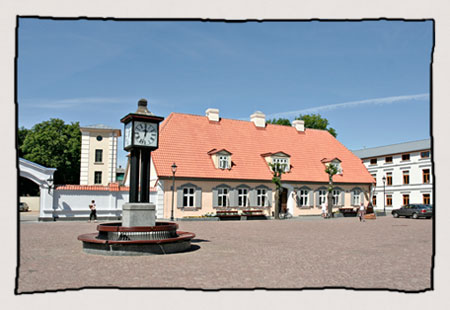
Ventspils House
Ventspils, Latvia
The International Writers’ and Translators’ House in Ventspils, Latvia, is a unique residency for professional authors, translators, and researchers connected to literature. The residency lasts for 4 weeks, providing a serene environment for creative work at a cost of €30 per week for accommodation. Each room in the house is equipped with private bathrooms, Wi-Fi, and essential amenities. Residents enjoy shared kitchen, library, laundry facilities, and bicycles. Applications are accepted anytime and reviewed every two months. Financial support includes a €320 grant post-taxes for selected residents.
Vermont Studio Center (VSC)
Johnson, United States
The Vermont Studio Center (VSC) stands as a vibrant creative sanctuary, offering residencies for artists and writers in the tranquil environment of Johnson, Vermont. Offering private studios and accommodation, VSC is dedicated to providing an immersive creative experience, enhanced by the presence of visiting artists and writers who contribute through talks, presentations, and one-on-one sessions. VSC prides itself on its commitment to inclusivity, with various fellowships targeted at supporting BIPOC artists, women, Native Americans, and writers of color, highlighting its dedication to fostering diversity within its community. The center also encourages community engagement through a Community Contribution Program, allowing residents to actively participate in the local and on-campus community. VSC’s facilities are tailored for a wide range of creative practices, including a print shop, digital lab, sculpture shop, and access to traditional craft media, emphasizing its role as a comprehensive hub for artistic development.
Cafe Tissardmine
Tissardmine, Morocco
Cafe Tissardmine offers a unique artist residency in the heart of the Moroccan desert, providing a serene environment for artists to explore and create. This residency is designed for artists seeking inspiration from the vast landscapes and profound silence of the desert. Up to nine artists at a time can enjoy a 24-day stay, with the opportunity to engage with the local village and its children. The residency emphasizes the importance of being resourceful and inventive due to its isolated location, limited internet access, and the need for artists to bring their own supplies. The program includes accommodation, meals, studio space, and a sunset trip to Erg Chebbi's giant dune, aiming to recharge and inspire artists away from the demands of modern life. The selection process is personal and prioritizes artists committed to the full residency length, with a fee of 950 Euro covering most necessities and activities designed to immerse artists in the desert experience.
More guides
Opportunity Intelligence
Ready to find your next residency?
Get a personalized shortlist — scored against your practice, discipline, and what you need right now.
See how Intelligence works →