Artist Residencies in New York
36 residenciesin New York, United States
Which of these New York residencies is worth your application? Ask in your own words — drawn from 2,300+ residencies and live open calls, grounded in real reviews.
Why New York City residencies actually matter
New York still pulls artists in because it compresses almost everything you need for momentum into one place: museums, galleries, curators, collectors, fabricators, and a huge peer community. A residency here isn’t just about space and time; it’s about plugging into that ecosystem on fast-forward.
NYC makes the most sense if your goals include visibility, professional connections, and access to institutional resources. If you mostly want quiet isolation, a rural or small-town residency might fit better. If you want studio visits, critics, funders, and curators walking through your work, New York is still hard to beat.
Key reasons artists choose NYC
- Institutional proximity: MoMA, the Whitney, New Museum, Brooklyn Museum, Queens Museum, Studio Museum in Harlem, ICP, The Drawing Center, and a dense nonprofit scene are all reachable on the subway.
- Gallery clusters: Chelsea, Tribeca, Lower East Side/Chinatown, plus Bushwick, Greenpoint, DUMBO and other Brooklyn neighborhoods give you a constant flow of exhibitions and openings.
- Production resources: Print shops, foundries, wood and metal shops, robotics labs, media facilities, and specialized fabricators are more accessible here than in many cities.
- Cross-disciplinary overlap: Visual art, performance, sound, design, fashion, and tech all share the same city, which is especially helpful for hybrid practices.
- Audience and feedback: You can test work in front of a very active, opinionated art public and receive fast, honest responses.
So the question is less “Is NYC good for artists?” and more “Is NYC the right context for what you need right now?” Residencies are one of the cleanest ways to test that without committing to a full move.
Types of NYC residencies and who they suit
Residencies in New York fall into a few broad categories: network-driven programs, studio-space residencies, production-focused labs, museum and institutional programs, and socially engaged or civic residencies. Knowing which lane you’re in will narrow your search and keep you from wasting time on the wrong applications.
Network and professional-development residencies
These prioritize connections, studio visits, and professional support over quiet time.
- Residency Unlimited (RU) – Builds customized residencies for artists and curators. Expect critical feedback, production and admin support, lots of meetings, and public programming. Ideal if you want to expand your professional network and understand how your work lands in NYC’s ecosystem.
- Lower Manhattan Cultural Council (LMCC) – Offers multi-month workspace residencies (including Governors Island) and community-based programs. Strong for artists interested in public engagement, context-specific work, and long-term relationships with NYC arts infrastructure.
- SVA Artist Residencies – More structured and school-adjacent. Great if you like a cohort format, critiques, and a mix of studio practice with professional immersion or new tech/social practice themes.
These programs are good when your priority is visibility, feedback, and learning how to position your work in a big-city context.
Studio-space residencies (production time in the city)
These give you a dedicated workspace and some support, but housing is usually on you. The trade-off is location and long-term access.
- Sharpe-Walentas Studio Program – Year-long, rent-free, non-living studios for visual artists in Brooklyn. If you’re ready for a serious production year surrounded by peers, this is a strong fit.
- Smack Mellon Artist Studio Program – Eleven months of studio space for six emerging artists in DUMBO. Two open studios, plus curator and gallerist visits, make it effective for building relationships and getting your work seen.
- Green-Wood Artist in Residence – Studio space at the landmarked Fort Hamilton Gatehouse inside Green-Wood Cemetery and an honorarium. The residency culminates in site-specific work tied to the cemetery’s landscape and history. Strong match for artists working with memory, ritual, ecology, or performance.
- Amant New York – Research-oriented, three-month residencies with a monthly allowance and studio space. Studios are not residential, so you organize your own housing. Good for conceptually driven practices that benefit from deep research and conversation more than heavy fabrication.
When you apply to studio-focused residencies, be clear about how you’ll use the actual space: scale of work, materials, and how the city context will feed what you’re doing.
Production and fabrication-heavy residencies
If you need serious tools more than white walls, these programs give you access to professional facilities and technical guidance.
- Powerhouse Arts Artist in Residence – Three-month residency in Brooklyn for NYC-based artists, especially those in print, ceramics, textiles, or public art. Provides a generous honorarium, materials budget, access to fabrication facilities, and professional development. It prioritizes artists from marginalized communities, so identity and access are built into the program’s goals.
- Pioneer Works – Interdisciplinary residency crossing art, music, tech, and science. Offers workspace, tools, and a visible public platform in Red Hook, Brooklyn. Strong for experimental practices and anyone interested in performance, sound, or time-based media alongside visual work.
- Materials for the Arts (MFTA) – Not a residency, but often used by NYC artists in residencies. This Queens-based reuse center provides free donated materials to registered organizations; some residencies give you access through their institutional accounts.
With these programs, your application should highlight how you’ll use the specific shops or tools, and what kind of technical or material experimentation you plan to do.
Institutional and museum-based residencies
These place you inside or alongside major institutions and can be very significant for your CV and network.
- Studio Museum in Harlem Artist-in-Residence – Eleven-month museum residency for three artists in any medium, including a substantial stipend, studio space, and exhibition and publication opportunities. Historically one of the most impactful residencies for artists working in and around Black diasporic contexts, though the program is open to a wide range of practices.
- SVA Residencies – On-campus summer residencies can act like hybrid institutional programs, giving you access to faculty, visiting artists, and school facilities while you work.
- Mothership NYC – Live-work and presentation space in Greenpoint with different formats (production, exploration, micro-residency, presentation). One to three month residencies with public outcomes and a focus on collective culture and transnational networks.
In proposals for institutional residencies, show how your work speaks to the institution’s audiences, collections, or histories, not just how you’d use a nice studio.
Civic and socially engaged residencies
These embed you in communities, government, or social contexts instead of a traditional art-only space.
- Public Artists in Residence (PAIR) – Places artists within NYC government agencies to address civic issues creatively. Think policy, public space, and social infrastructures as your medium.
- LMCC Community Programs – Some LMCC residencies place artists in senior centers or other public contexts, prioritizing engagement over purely studio-based work.
For these, your track record with communities, social practice, and collaborative methods matters as much as your portfolio.
Living, working, and surviving NYC during a residency
The biggest surprise for many visiting residents is not the art scene; it is the cost and logistics. Thinking about housing, transit, and studio access early will save you a lot of stress once the residency starts.
Cost of living and budgeting
New York is expensive, but there are ways to keep it manageable while you are in residence.
- Housing: This is the main cost. Some residencies are live-work (for example Mothership NYC), many offer only studio space. Short-term sublets, room rentals in shared apartments, or extended-stay hostels are common strategies.
- Transit: A monthly metro card is usually worth it if you plan to commute to your studio regularly and visit openings or events. Factor this into your budget from day one.
- Food: Groceries from local markets and cooking at home will stretch your funds; eating out constantly will burn a stipend quickly.
- Materials and fabrication: Build in a buffer. Access to shops is great, but materials and fabrication services can add up faster than expected.
If the residency offers an honorarium or stipend, map it against a basic monthly budget before you accept. Make sure you are comfortable with what it will and will not cover.
Neighborhoods that work well for artists
The “right” neighborhood depends on where your residency is based, but a few areas come up repeatedly for artists.
- Bushwick, Brooklyn – Dense with studios, DIY spaces, and younger galleries. Good if your residency or studio is in Brooklyn and you want to be near peers.
- Greenpoint, Brooklyn – Many live-work arrangements and proximity to Mothership NYC and other small spaces.
- Gowanus, Brooklyn – Industrial, studio-heavy, and close to fabrication resources.
- DUMBO, Brooklyn – Studios and institutions like Smack Mellon and other nonprofits; more polished and pricier, but very convenient if that is where your residency is.
- Harlem, Manhattan – Key for artists connected to Black art histories and community. Convenient if you are working with Studio Museum in Harlem or uptown institutions.
- Lower East Side / Chinatown, Manhattan – Galleries, project spaces, and easy access to other parts of Manhattan and Brooklyn.
- Long Island City and Astoria, Queens – Practical for some residencies and studios, plus close to Materials for the Arts and several production facilities.
When choosing housing, prioritize one or two reliable subway lines that connect you to your studio, your residency’s neighborhood, and at least one major gallery cluster.
Studios, fabrication, and material resources
Even outside formal residencies, New York has a lot of options for making work.
- Powerhouse Arts – Membership and project-based fabrication support in ceramics, print, public art, and more, beyond the residency program itself.
- Materials for the Arts – If your host organization has an account, you may be able to source donated materials for installations, sets, or mixed media work.
- Shared studio buildings – In Bushwick, Gowanus, Greenpoint, and Long Island City you’ll find private and shared studio complexes where many residents extend their stay after a program ends.
Ask your residency coordinator what partner shops, discounts, or institutional affiliations you can tap into. Many programs have informal arrangements that are not loudly advertised.
Using NYC: transit, visas, and making the most of your time
Getting around is straightforward once you understand the subway, but legal and practical issues like visas and shipping work need attention upfront, especially for international artists.
Transit, hauling work, and logistics
- Subway: Fastest way to move between boroughs. For regular studio commutes and gallery hopping, a monthly pass pays off.
- Bus: Useful in areas without convenient subway access, such as parts of Red Hook or outer Queens.
- Ride-shares / taxis: Helpful late at night or when carrying fragile work, but expensive as a daily option.
- Moving larger pieces: Ask about freight elevators, loading docks, and delivery access before you scale up. Many residencies can recommend art-handling services or shared transport options for exhibitions.
Plan ahead for how you will get artwork to and from the city if you are traveling in. Crating, shipping, and customs can cost more than the residency itself if you are not careful with scale and materials.
Visa basics for non-U.S. artists
Immigration status is individual, but a few patterns come up.
- Short stays: Some artists enter on visitor status (B-1/B-2 or visa waiver where applicable) for short, non-employment residencies. The details matter, so you need to match the residency’s structure to what your status allows.
- Paid residencies: Honoraria, stipends, and contracts can change the visa category required. Always clarify with the residency’s staff what they expect from you contractually.
- Longer terms or regular paid work: Artists sometimes use O-1 or other work-authorized visas when residencies are part of a broader U.S. practice.
Residency organizers usually cannot give legal advice, but they can explain how their program is classified and what past international residents have done. For anything complex, speak with an immigration attorney well before your start date.
Timing your residency with the art calendar
NYC’s art calendar is not flat; when you come changes what you experience.
- September–November: Peak gallery season and many institutional openings. Great for networking, studio visits, and seeing a lot of work quickly.
- Spring: Another strong exhibition season with major shows and events. Good balance between activity and capacity to work.
- Winter: Calmer socially, often ideal for deep studio focus with fewer distractions.
If your main goal is connections, try aligning your residency with fall or late spring and schedule studio visits early. If your priority is production and experimentation, a quieter winter residency can be a gift.
Tapping into local communities and events
A residency can easily become an isolated bubble if you let it. To really use NYC, treat the city as an extended studio.
- Open studios and public programs: Smack Mellon, Powerhouse Arts, Pioneer Works, Studio Museum in Harlem, Green-Wood, and LMCC all build public moments into their residencies. Use these as anchors to invite curators, peers, and friends-of-friends.
- Gallery nights: Chelsea, Tribeca, and Lower East Side openings can turn a single evening into a survey of current conversations and aesthetics.
- Libraries and archives: The New York Public Library and various university collections are valuable for research-based practices; some residencies explicitly encourage this.
- Peer networks: Chances are your city already has artists who spent time in NYC residencies. Talk to them beforehand for neighborhood, housing, and program-specific tips.
If you frame your residency as a concentrated research block on both your work and the city itself, you’ll leave with more than just new pieces—you’ll leave with a map of relationships and resources you can return to later.
ADKX Artist-in-Residence
New York, United States
The ADKX Artist-in-Residence program at the Adirondack Experience museum offers four one-month residencies in June, July, August, and September, where artists create work inspired by the Adirondack environment and museum collection while engaging the public three days a week on the grounds and two days in the Art Lab makerspace. Selected through a competitive application process open to various mediums, residents receive on-site housing, a $5,000 stipend, and $500 travel allowance, with access to collections and staff.
Amant New York Residency
New York, United States
Amant New York Residency is a three-month international studio and research program in Brooklyn, NYC, hosting up to four artists at various career stages across disciplines like visual arts, performance, filmmaking, writing, and cultural theory. It provides individual studios, a $3,000 monthly stipend, round-trip airfare, and access to Amant's exhibitions and networks, but does not offer housing as studios are non-residential. Residents engage in research projects benefiting from NYC's resources and participate in public programs.

Apex Art
New York, United States
The apexart Fellowship is an alternative educational program in New York City for internationally based creative individuals, offering a 30-day schedule of non-art activities outside their usual interests while requiring them to refrain from producing creative works. Unlike traditional artist residencies focused on production, it emphasizes cultural immersion through workshops, lectures, volunteering, and new experiences to inspire future creativity. Fellows keep a public journal and participate in an exit interview.
Art on the Block NYC
New York, United States
Art on the Block NYC offers a vibrant short-term residency program, transforming a New York City storefront into a dynamic space where art and community engagement intersect. This residency provides artists the opportunity to turn the space into both a working studio and a public gallery. Throughout their five-week stay, artists are expected to be on-site five days a week, facilitating various interactive programs for youth, families, and adults. The residency aims to support and advocate for artists while fostering community collaboration and hands-on engagement with art. Artists receive a stipend of $6000 for their participation, and have the opportunity to sell their artwork under a separate sales contract. This residency is only open to NYC artists and housing is not provided.
Artists Alliance Inc.
New York, United States
Artist- and curator-centered nonprofit supporting emerging and underrepresented contemporary artists through residencies, exhibitions, and commissioned projects in the Lower East Side.
Arts Center Residency
New York, United States
Municipal residency embedding artists in city government to develop creative solutions to civic challenges.
CEC ArtsLink
New York, United States
ArtsLink International Fellowships – residencies for artists and curators from our partner countries in the USA followed by projects in home countryArt Prospect Residencies – research and creative practice residencies in the Art Prospect Network countriesIf other, please specify?:Residencis are developed with appropriate partner organisations so facilities varyResidency Programme since: 1992Description of Organisation: CEC ArtsL
Eyebeam
New York, United States
Eyebeam is a New York City-based nonprofit residency program for emerging artists, technologists, and writers in the first decade of their careers, focusing on technology's role in arts and society through experimental, interdisciplinary projects. The 2026 residency, guided by the prompt on building a pluralistic commons, offers NYC residents studio access in Brooklyn for creative exploration and invention. Participants receive a generous financial stipend, shared studios, top-notch facilities, mentorship, and community engagement, with the program returning to in-person format post-pandemic.
Harvest Works
New York, United States
Harvestworks is a national artist residency program supporting contemporary American artists and legal U.S. residents working at the intersection of art and technology. Selected artists receive a $5,000 commission to develop and present new projects at the T.E.A.M. Lab in New York City, exploring how technology can deepen understanding, provoke ideas, and inspire innovation through integrated sound, visual art, and experimental forms.
Here Arts Center
New York, United States
The HERE Artist Residency Program (HARP) at HERE Arts Center supports mid-career, cross-genre artists in developing innovative hybrid works in theatre, dance, music, puppetry, visual art, and new media over 1-3 years, providing commissions, developmental support, career planning, and opportunities for full productions. Artists receive substantial support including $50,000-$125,000 in cash, equipment, space, and services, tailored to individual needs within a collaborative peer community. The program emphasizes artist control, ownership of work, and skill-building in areas like grantwriting and audience relations.

Institute for Public Architecture
New York, United States
The Institute for Public Architecture (IPA) offers the Independent Project Residency, an 11-week live-in program at the historic Block House on Governors Island, inviting emerging and mid-career practitioners in architecture, urbanism, design, art, and research to develop independent projects focused on the public realm. Fellows live and work in a communal environment, engage with the public through Open House events, and culminate in an exhibition of their work. The program provides access to NYC's networks while offering solitude on the island, with facilities including living accommodations, studio, and library.
International House
New York, United States
International House (I-House) in New York City is a residential community for global leaders, including artists, offering programs and events that foster cultural exchange through performances, discussions, and creative activities like the Fall Fiesta festival of words, music, and dance. It connects residents with acclaimed musicians, actors, and artists to explore the creative process and social issues. While not a traditional artist residency with studios, it provides a supportive living environment for international creative professionals.
KODA Utopia Artist Residency
New York, United States
The KODA Utopia Artist Residency is a social practice program on Governors Island in New York for two mid-career, female-identifying and/or non-binary artists creating conceptual and socially engaged work, themed around Utopia for Fall 2026 (August 1-October 31). It provides studio space, an honorarium, optional exhibition, studio visits, public engagement opportunities, and professional development support.
Lower East Side Printshop
New York, United States
The Lower East Side Printshop in New York City offers two primary residency programs: the Keyholder Residency Program and the Publishing Residency Program. The Keyholder Residency provides emerging artists with free 24-hour access to printmaking facilities for six months, supporting them in developing new work and advancing their careers. Artists work independently in a shared studio environment, with access to basic printmaking supplies and consultation hours with the Printshop’s staff. Each year, eight artists are selected through a competitive process by a panel of esteemed art professionals, with a $500 stipend and opportunities to exhibit new work through the Printshop’s exhibitions and public events. The Publishing Residency invites artists to collaborate with a master printer to create a new body of work. These projects are fully published by the Printshop, and the final editions are shared between the artists and the organization. Artists are nominated by invited artists and art professionals, with the Printshop making the final selections. This program is highly selective and supports the creation of significant new work in the printmaking field.
Lower East Side Tenement Museum
New York, United States
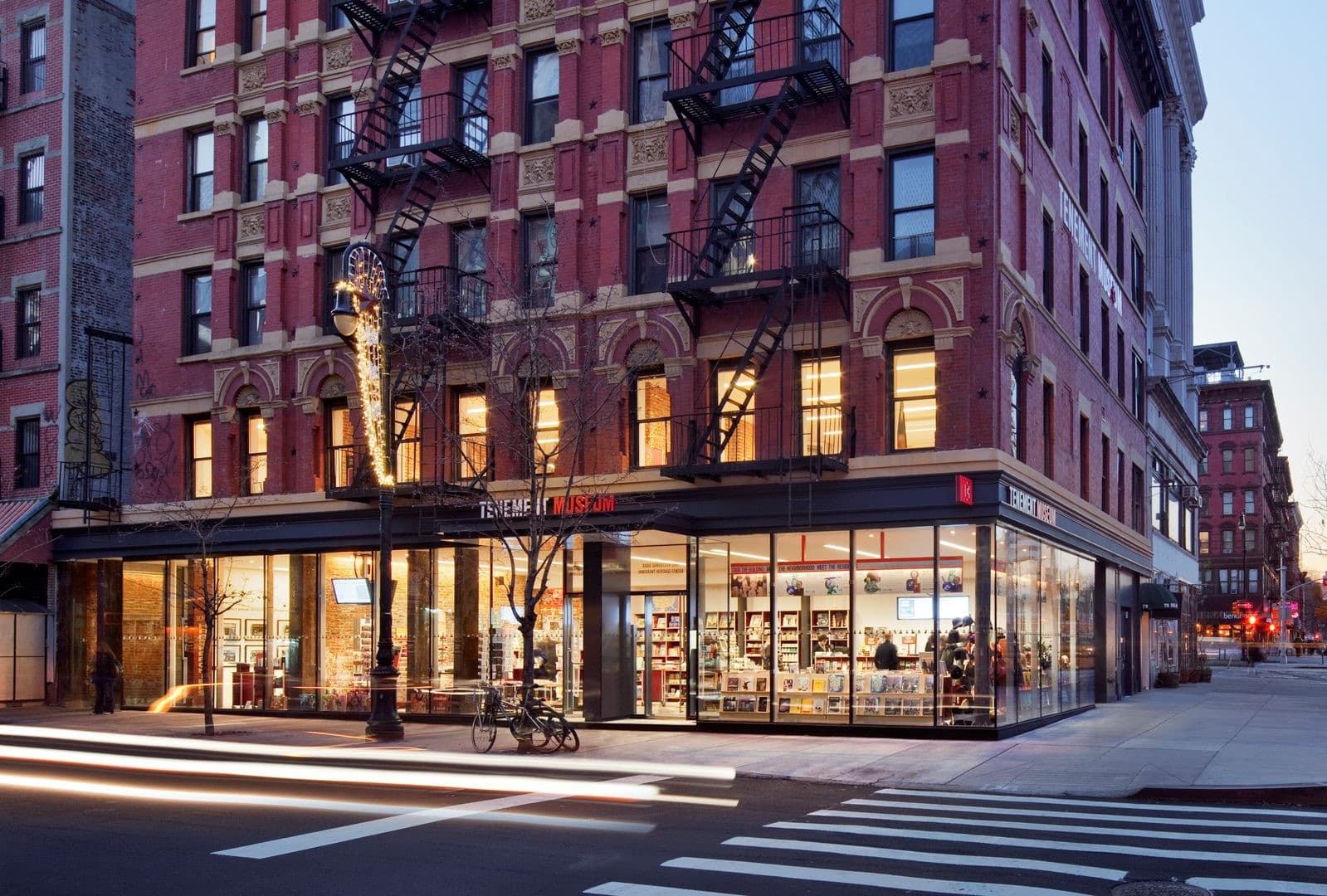
The Lower East Side Tenement Museum is a historic site in Manhattan preserving immigrant stories through guided tours of restored 19th-20th century tenement apartments at 97 and 103 Orchard Street.
Lower Manhattan Cultural Council Residency
New York, United States
The Lower Manhattan Cultural Council (LMCC) Residency Program, founded in 1973, offers various artist residencies in New York City, including Workspace (9 months for emerging visual artists and writers), Arts Center Residency (8 months for multidisciplinary artists at Governors Island), and Process Space (2-8 weeks for performing artists). These programs provide free studio spaces, stipends when available, professional development, peer community, and public presentation opportunities to foster creative experimentation and career growth.
MAD Artist Studios
New York, United States
Public artist residency at the Museum of Arts and Design offering studio access, public open hours, and professional development for contemporary artists and designers.
Marathons Intensive Workshops in Drawing, Painting, and Sculpture
New York, United States
Intensive 2-week Marathons in Drawing, Painting, and Sculpture at New York Studio School. Daily 9am-6pm in-person or virtual, open to all levels, with faculty critiques. Offered Fall, Spring, Summer.
MINI/Goethe-Institut Curatorial
New York, United States
MINI/Goethe-Institut Curatorial Residencies Ludlow 38 was a contemporary art space and residency program of the Goethe-Institut New York located on the Lower East Side. The program selected curatorial residents from Germany annually, providing them the opportunity to program the experimental exhibition space and gain experience directing a small institution with an international profile.
New Dance Alliance
New York, United States
The LiftOff Residency takes place at NDA’s Studio in Tribeca and **provides six physical-based performance artists with 30 hours of rehearsal space each**, an introductory meeting, and two feedback sessions. This residency is for artists looking to join a small cohort of artists to share and give feedback on each other's work. Fall/Winter LiftOff artists have access to book the studio from **November 5th, – January 30th, **. Winter/Spring Liftoff artists have access to book the studio from **February 2nd, – April 30th, **. Feedback sessions will be in-person. They are designed to share about creative process, project development, and participate in a community exchange. Feedback sessions are a space to present live work you are creating during the residency. Discussions regarding process, development, and production are also encouraged. LiftOff Artists will have an introductory meeting with NDA Executive and Artistic Director, Karen Bernard, at the beginning of the period to meet each other and schedule the two feedback sessions: one mid-residency and one at the end of the residency. The residency is only available for solo artists, or groups with up to 4 artists. The studio is located inside a personal residence, so studio hours are limited. **The studio is only available Monday – Friday: 10am-6pm. Please make sure this works with your schedule before applying. Weekends are not available to book.** Studio Regulations: * No live or loud music * No dancing with shoes unless approved * Props must be approved in advance * No more than four participants per artist/company Studio hours for Fall/Winter resident artists will start being reserved in October and hours for Winter/Spring resident artists will start being reserved in January , in order to secure priority space booking.
NEW INC
New York, United States
NEW INC is the New Museum's cultural incubator supporting creative practitioners and small businesses working across art, design, and technology. The program offers a yearlong membership model providing access to dedicated workspace, mentorship, professional development, and collaborative opportunities. Founded in 2014 as the first museum-led cultural incubator, NEW INC now operates in its twelfth year with five specialized tracks including Art & Code.
Palazzo Monti
New York, Italy
Palazzo Monti, launched in March 2017, is an Artist Residency program located in an eight centuries old palazzo in the city of Brescia, Italy. The project is completely independent from any institutions and funded by the Monti family. Artists are selected anonymously by the Board whose members are based in New York, London, Seoul, Paris and Brescia. The program is open to all international artists and offers the opportunity to explore different mediums. The reside
Parent Company Studio Residency
New York, United States
Short Description This summer Parent Company is excited to shift its programming from an exhibition space to a studio residency for artists whose work is based in installation and/or performance with an emphasis on site-responsive practices. The gallery space will change its focus from display to production, giving one resident the chance to work in
Plum Lime
New York, United States
The Plum Lime Residency, offered by NYC Crit Club, provides a unique opportunity for artists to immerse themselves in their practice within the vibrant Chelsea Gallery District of New York City. This residency, available in Winter, Spring, and Summer, awards one artist a large private studio for 4-5 weeks, facilitating a deep dive into creative work. Residents benefit from studio visits with invited gallerists or curators, an open studio event, and features on NYC Crit Club's website and Instagram. Open to artists over 21 with a dedicated art practice, the residency emphasizes the importance of ongoing dedication rather than formal education. The application process is straightforward, with a modest fee, and artists from anywhere are encouraged to apply, provided they can cover their travel, lodging, and living expenses.
Pollock-Krasner Foundation Grant
New York, United States
Organizer Information The Pollock-Krasner Foundation is an internationally recognized grant-giving organization dedicated to supporting professional visual artists. Established in 1985 under the will of abstract expressionist painter Lee Krasner, the Foundation continues the legacy of both Krasner and her husband, Jackson Pollock, by providing financial assistance to artists whose work demonstrates artistic merit and professional

Pratt>FORWARD
New York, United States
Pratt>FORWARD, facilitated by Pratt Institute in New York, is a transformative platform designed to nurture emerging artists by connecting them with prominent practitioners and mentors in the field of fine arts. This unique program is co-directed by notable artists Mickalene Thomas and Jane South and features a blend of intense mentorship, professional development, and community engagement. The initiative offers emerging artists studio space, exposure to creative thought-leaders, and a rich program of dialogue sessions and studio visits, aimed at bolstering career development skills and fostering a sustainable artistic life. The residency is particularly notable for its commitment to providing a free, supportive environment where artists can explore innovative artist-led models for cultural engagement and advocacy.
Residency Works & Process
New York, United States
Organizer Information: Works & Process champions performing artists and their creative process from studio to stage. Expanding from their bubble residency program, they now utilize a network of over a dozen partner venues across five states (CT, MA, NJ, NY, VT) to support the incubation of new and developing performances. Title & Description: Applications
SVA NYC (School of Visual Arts)
New York, United States
The School of Visual Arts (SVA) in New York City offers a range of Artist Residency Programs, providing artists, designers, and creative thinkers with time, space, and a supportive community to develop their artistic direction. These programs, available both on-campus in New York City and online year-round, are designed to offer professional immersion and opportunities for artists to engage critically within their field. SVA's residencies cater to a variety of disciplines, including studio arts, design, and new media. The unique combination of creative and professional resources at SVA creates a rich environment for artistic growth and opportunity in the vibrant current art scene. On-campus housing and opportunities to display work are available to residents. The residencies are hosted by the Division of Continuing Education at SVA, with a focus on interdisciplinary practice. They offer a balance between dedicated work time and inspirational communal activities, including shared meals and community-building events. SVA's programs are tailored for artists at various stages of their careers, emphasizing both individual creative exploration and interaction with a diverse artistic community. Residents at SVA are selected through a competitive process, based on their work’s alignment with the mission of the foundation. They benefit from living in shared accommodations with private facilities, studio spaces, and access to the Oak Spring Garden Library. The foundation’s residency programs are unique in striking a balance between independent exploration and communal interaction, allowing residents the freedom to work autonomously while living and engaging with others.
Textile Arts Center Artist in Residence (TAC AIR)
New York, United States
The Textile Arts Center Artist in Residence (TAC AIR) program offers a comprehensive 9-month residency combining studio access with an interdisciplinary curriculum, critical dialogue, and mentorship. It culminates in a group exhibition hosted by TAC. Since 2010, TAC AIR has graduated over 100 artists and designers, contributing significantly to textile art in various fields. The program is structured in three phases: 'Play' (October-December) focusing on exploration and technical skill development; 'Research & Concept' (January-March) emphasizing project development and mentorship; and 'Project Creation' (April-June) dedicated to finalizing projects and professional development. Residents have 24/7 access to a personal studio space and TAC’s equipment, along with $1,000 worth of free classes at TAC. The tuition is $11,000, with payment plans available, and a scholarship is offered to support artists from historically marginalized communities. The selection process involves a committee of TAC staff and textile arts professionals, with criteria including the quality of work and the plan for residency. Applications are digital, with an early bird fee available, and international applicants are welcome but responsible for VISA arrangements.
The Camera Club of New York
New York, United States
The BAXTER ST Residency Program at the Camera Club of New York offers emerging lens-based artists living in New York City a three-month workspace residency, including access to facilities, equipment, and the CCNY community. Residents receive a monthly stipend per W.A.G.E. certification, a production fee for their solo exhibition at BAXTER ST following the residency term, and programming like public conversations and advisory meetings. Housing is not provided, and the program emphasizes photography and lens-based art practices.
The Glasshouse Project
New York, United States
The Glasshouse Project is an artist-led residency program launched in , focused on durational performance art and visual performance, inviting professionals such as artists, curators, and scholars to develop new works engaging local communities in New Paltz, NY. Residencies typically last one week, providing on-site accommodation, studio access, and a modest $250 honorarium. It emphasizes neo-domesticity, sharing the founders' home as a space for research and public interventions.
The Studio Museum in Harlem
New York, United States
The Studio Museum in Harlem offers an 11-month Artist-in-Residence program for 3 artists in any media, providing studio space, stipend, institutional guidance, research support, and a culminating exhibition.

theartistnetwork New York
New York, United States
the:artist:network is an independent arts organization based in downtown Manhattan that functions as a vibrant, interactive think-tank where New York-based and international artists work, live, and exhibit their creations. The organization has established residency programs in New York and China, providing creative spaces for artists to meet, exchange ideas, and collaborate together.
TNT Residency
New York, United States
Tiger Strikes Asteroid New York and Transmitter Gallery offer the TNT Residency, a 6-month fully funded program for professional working artists, both national and international. This residency provides a 430 square foot studio space adjacent to both galleries, culminating in a solo exhibition or open studio event. It prioritizes underrepresented artists and those creating works not typically viable in traditional commercial markets. The residency includes a $250 honorarium and professional installation shots. Artists from all educational backgrounds are encouraged to apply, with work from artists across the United States and internationally welcomed. Housing is not provided, so residents must secure their own living arrangements in New York City. The selection process includes studio visits and a submission fee, with fee waivers available to support operating expenses of the volunteer-run galleries. Residents will have access to a private studio and are required to use the space a minimum of 20 hours per week.
Triangle Arts Association
New York, United States
Triangle Arts Association is a visual arts residency program in New York founded in 1982, offering committed artists free spacious studios with 24-hour access for three-month periods to foster dialogue, experimentation, and community building through gatherings, curator visits, and open studios.
Upper Jay Art Center
New York, United States
The Upper Jay Art Center in Upper Jay, New York, hosts the CA+MP (Creative Arts and Multidisciplinary Performance) artist residency program, providing artists across all disciplines with 1-4 weeks of time, space, housing, and creative freedom in a historic Adirondack setting to create, dream, and perform. The program supports working artists by offering stipends to offset costs and aims to share new creative perspectives with the local community through performances and exhibitions. It welcomes musicians, writers, filmmakers, visual artists, dancers, theater practitioners, and others, though applications are not being accepted.
Browse by discipline in New York
Filter in New York
Been to a residency in New York?
Share your review