City Guide
La Foulerie, France
A quiet, process-led residency in Normandy that suits artists who want space, focus, and a close relationship to place.
La Foulerie is not a city, and that is part of the point. It is a human-scale artist center in rural Normandy, built for slow attention, experimentation, and work that grows out of landscape, history, and local context. If you are looking for a residency that feels less like a networking sprint and more like a place to think, make, and test ideas, this one fits that lane.
Because it sits outside the usual urban art circuit, the useful question is not “What is the scene like here?” but “What kind of work can happen here, and what do you need to make the most of it?”
Why La Foulerie makes sense for artists
La Foulerie is especially appealing if your practice benefits from time, quiet, and direct contact with place. The residency frames itself around sharing process, and that matters. It suggests a setting where you are not expected to arrive fully formed. You can research, test, shift direction, and let the work respond to what is around you.
The residency welcomes photographers, performance artists and companies, fine art artists, writers, and filmmakers. That range usually points to a flexible environment, one that can hold hybrid projects well. If your practice crosses media, or if you need a retreat that supports both making and thinking, this is a strong match.
The rural Normandy setting also gives the residency a particular character. You are not arriving for a dense gallery district. You are arriving for landscape, local history, and the slower rhythm that comes with being outside a city. That can be a real advantage if your work needs distance from routine or room for observation.
What the residency actually offers
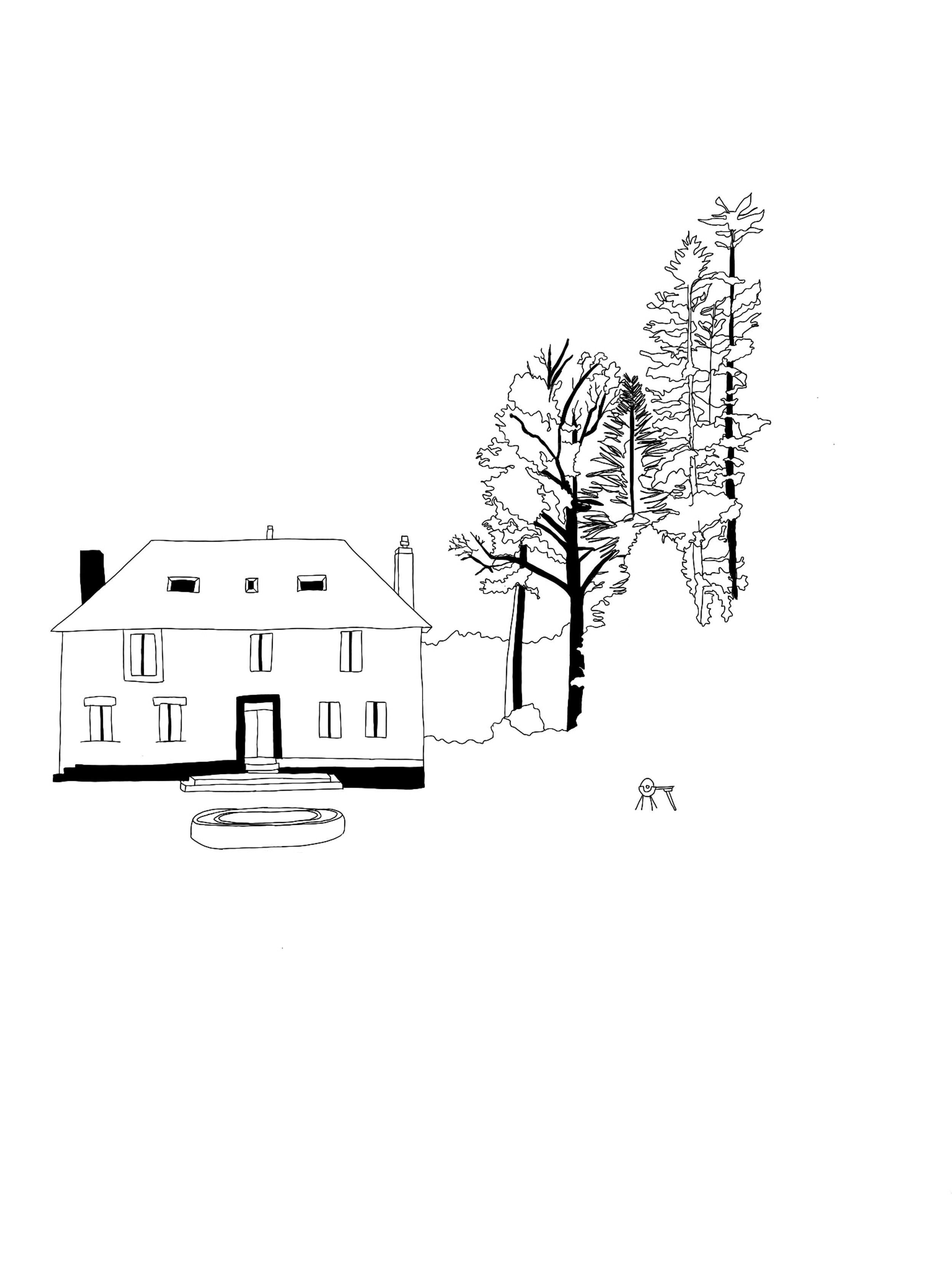
La Foulerie’s summer residency programme runs only from July through September. That seasonal window gives the place a clear identity: this is a summer site for concentrated work. Residents stay in the main house, with room arrangements that are simple and practical, and they share bathroom facilities. There is access to a main kitchen and a summer kitchen, which makes the stay feel more self-sufficient and domestic than institutional.
The center is independent and operates without government subsidy. In practical terms, that usually means you should expect a more intimate setup rather than a heavily funded program with large production support. The upside is that the atmosphere can feel personal, direct, and less bureaucratic. The tradeoff is that you should read the offer carefully and clarify what technical support, materials access, or workspace setup is available before you commit.
La Foulerie also seems oriented toward hosting beyond residencies, including film shoots, workshops, training, advice, and project support. That tells you the team is probably used to adapting to different kinds of artists and needs. If your project has specific logistical requirements, it is worth being precise about them early.
How to shape a strong application
The application asks for the basics, but the details matter. You will need CVs or biographies, a project proposal, your residency goals, and your logistical needs. If relevant, send demo videos or other material that helps explain how you work. You should also include your preferred dates and length of stay, with several options rather than a single fixed plan.
The strongest applications to a place like La Foulerie usually do three things well:
- They show a clear connection between the project and the place.
- They explain what you need in practical terms, not just conceptually.
- They make it easy for the host to understand how your work fits the residency structure.
Try to describe what you want to test, not only what you want to finish. Because this is a process-led residency, a proposal that allows for discovery will often read better than one that sounds overdetermined. If you are working site-specifically, say how the rural setting shapes the project. If you are writing, research-based, or developing a performance, explain what kind of quiet, space, or exchange will help the work move forward.
Be direct about equipment. If you need projection, sound, storage, fabrication space, or something unusual, ask clearly. A residency like this can be very generous, but only if your expectations match the site.
What kind of work fits here
La Foulerie is a good fit for artists whose practice benefits from observation and time on the ground. That includes visual artists working with landscape, photographers, writers, filmmakers, and performance makers. It can also suit interdisciplinary projects that move between text, image, body, and research.
Some practices tend to settle especially well in this kind of environment:
- site-responsive installation
- documentary or observational photography
- field-based writing and research
- performance development
- small-scale video work
- drawing and sketch-based research
- projects that connect ecology, heritage, or local memory
If your work depends on heavy fabrication, specialized studio infrastructure, or a large team, you should confirm those conditions before assuming they are available. Rural residencies often shine when they support a shift in pace rather than a full production build.
How to think about Normandy as an art context
La Foulerie sits within a broader Normandy art ecosystem, even if it is not part of a dense urban scene. That means you can think of the residency as a base for retreat, with regional cities offering the rest of your art-world contact. Rouen, Caen, and Le Havre are the main names artists tend to keep in mind when they want museums, galleries, and institutional programming within reach.
Rouen is useful if you want historic texture and a stronger cultural center. Caen offers university energy and an accessible museum scene. Le Havre has a more contemporary, port-city feel, plus a serious museum presence. If your stay is long enough, these cities can give you a useful counterbalance to the quiet of the residency site.
That said, do not expect Normandy to behave like Paris. The region works differently. Its strengths are slower and more grounded: regional institutions, heritage sites, local associations, artist-run projects, and seasonal events. If your goal is visibility, plan that work separately. If your goal is concentration, Normandy can give you exactly what a city cannot.
Travel, access, and daily logistics
Rural residencies are often won or lost on logistics. If you are considering La Foulerie, ask how far it is from the nearest train station, whether pickup is available, and whether having a car is realistically helpful. Public transport in rural areas can be limited, and even a short trip for supplies can become a project if the site is isolated.
For artists coming from outside France, Paris is usually the main entry point by air, followed by a train or rental car into Normandy. If you are bringing work materials, factor in the cost and ease of transport. It is also smart to ask in advance whether shops are walkable or whether you will need to plan grocery and supply runs.
Budget-wise, Normandy is generally easier on the wallet than Paris, especially outside tourist-heavy coastal zones. Even so, transport can become the main expense if your residency is far from a major station. Build that into your planning early, along with food, materials, and any local travel.
Who this residency is best for
La Foulerie will likely suit you if you want a residency that is intimate, flexible, and rooted in place. It is a good match for artists who are comfortable working without a lot of institutional polish, and who value conversation, reflection, and a slower pace. It is also well suited to artists whose work opens up through landscape, history, or informal exchange rather than through a highly structured production environment.
You may find it especially useful if you:
- want time away from your usual studio rhythm
- need a setting that supports research and experimentation
- work across disciplines
- are building a project connected to rural place or memory
- prefer a small-scale residency with a personal feel
If you need a big team, lots of equipment, or a highly public-facing program, make sure the setup matches your expectations before you apply. A residency like this can be generous, but it is generous in a specific way.
For the right artist, La Foulerie offers something rare: a setting that lets the work breathe. If you are looking for time, space, and a direct relationship to Normandy’s landscape and history, it is the kind of place that can quietly shift how a project develops.
Explore France
More city guides
Opportunity Intelligence
Ready to find your next residency?
Get a personalized shortlist — scored against your practice, discipline, and what you need right now.
See how Intelligence works →