
City Guide
Oaxaca de Juarez, Mexico
How to choose the right residency in Oaxaca, understand the scene, and actually get work done while you’re there.
Why Oaxaca de Juárez pulls so many artists in
Oaxaca de Juárez is one of those places where a residency can shift your practice, not just your location. The city has a dense, walkable center and a mix of contemporary art, Indigenous knowledge, craft, and activist culture that you feel in daily life, not just in institutions.
For residency artists, it’s especially strong if your work touches textiles, ceramics, printmaking, community-based practice, food, folklore, material culture, or long-form research. You get both studio time and a living archive on your doorstep.
A layered art ecosystem
Oaxaca isn’t just “pretty streets and good light.” Artists come because contemporary art, craft, and community intersect in ways that are hard to fake. You can:
- study with or collaborate alongside local makers, collectives, and workshops
- build projects that respond to living textile and clay traditions
- show work to a serious cultural audience, not just tourists
- develop research-heavy projects where process and context actually matter
- meet Oaxacan and visiting artists constantly through residencies, openings, talks, and informal gatherings
Materials and craft traditions you can actually access
For material-driven practice, Oaxaca can feel like a huge open studio. The wider region is known for:
- Textiles: weaving, embroidery, natural dyes, backstrap loom, and cooperative production models
- Ceramics: strong clay traditions in the greater Oaxaca area, with local clays and firing methods
- Print culture: posters, political graphics, zines, independent publishing, and active print workshops
- Folk and ritual arts: masks, carved figures, altar elements, festival objects, and street processions
If your work is process-oriented or you’re curious about cultural exchange through materials, this mix is a big part of what makes a residency here so useful.
Real arts infrastructure, not just vibes
Within and around Centro Histórico you’ll find:
- museums and cultural centers
- independent contemporary galleries
- print studios and graphics institutes
- artist-run spaces and project rooms
- community arts initiatives and collectives
The city is compact enough that you can usually walk between a morning in the studio, an afternoon at a museum, and an evening opening or talk.
Key residency options in and around Oaxaca de Juárez
There’s no single “right” residency here; they really serve different types of practice and temperament. Below are some of the better-known programs, with a focus on who they actually work for.
Pocoapoco: for thinkers, talkers, and slow workers
Location: Oaxaca de Juárez (city center and nearby)
Website: pocoapocomx.org/residency
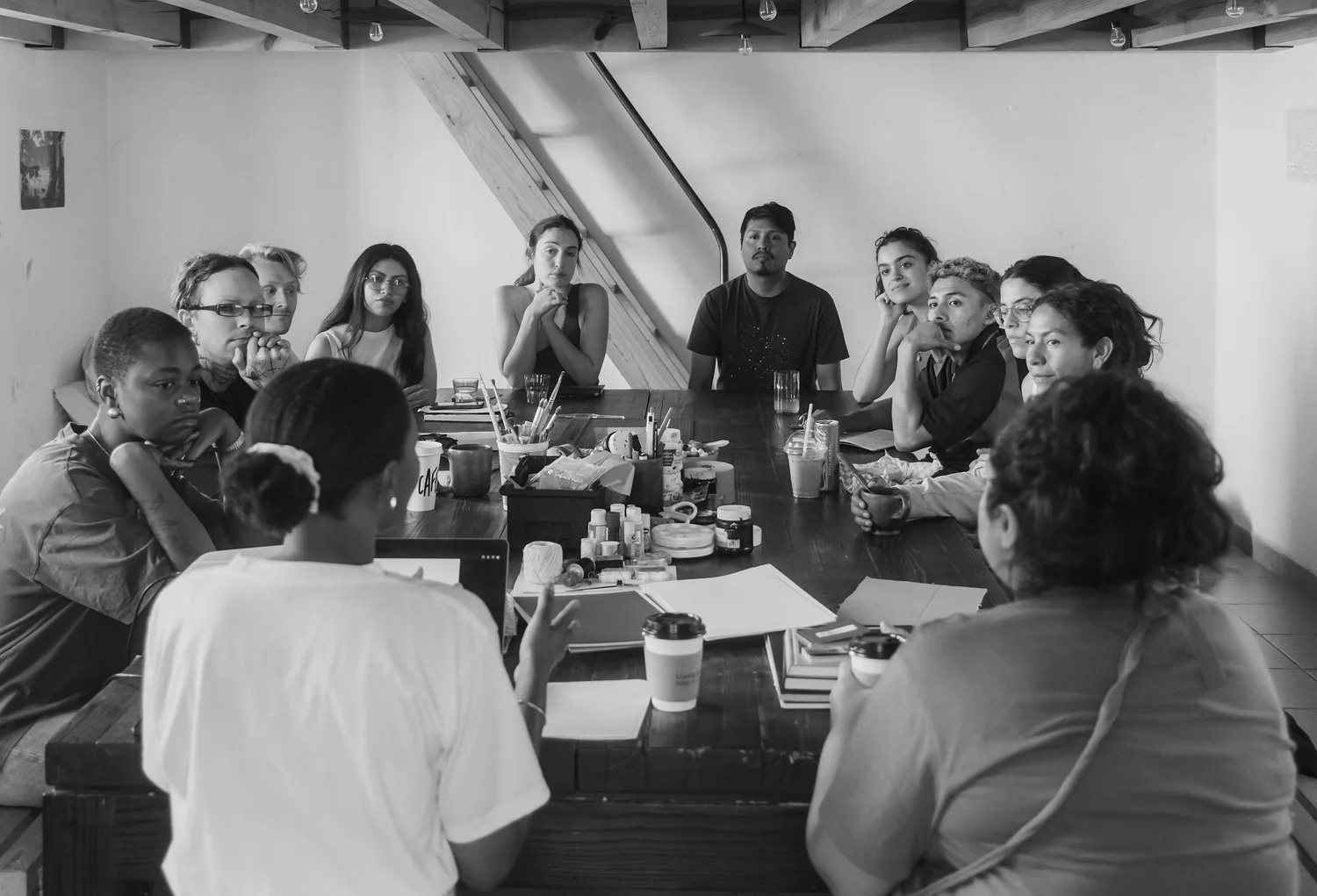
Pocoapoco runs five-week residencies that bring together international and local Oaxacan participants. It’s designed less as a production marathon and more as a space for shared thinking and practice.
What you can expect:
- a cohort of artists, cultural workers, and thinkers across fields
- programming around shared practice, dialogue, and reflection
- time to rethink or reframe your work, not just execute an existing plan
- connections to Oaxacan contexts and collaborators
Great fit if you:
- enjoy conversation, critique, and shared meals as much as studio time
- work in research, writing, social practice, curating, or cross-disciplinary projects
- want to understand Oaxaca’s context, not just borrow it for imagery
Less suited if you:
- need a huge private studio and total isolation
- are racing toward a tight production deadline
Arquetopia Oaxaca: structured mentorship in the countryside
Location: San Pablo Etla, about 30 minutes from central Oaxaca
Website: arquetopia.org
Arquetopia’s Oaxaca site is a mentored residency in a villa setting overlooking mountains and the city. The program is known for its structured, critical approach, with an emphasis on social justice, anti-colonial thinking, and material research.
What you can expect:
- weekly meetings with directors or curatorial staff
- project guidance, feedback, and research support
- 24-hour access to shared studios and workspaces
- a private bedroom, shared common areas, and kitchen access
- on-site housekeeping and utilities included
- scheduled van transport into central Oaxaca
- organized field trips, hikes, and community-engaged activities
Great fit if you:
- want real mentorship instead of being left to figure everything out alone
- are developing concept-driven, research-based, or site-responsive work
- like having some distance from the city while still accessing it weekly
- are interested in environmental, historical, or social questions tied to place
Questions to ask them directly:
- which specific program matches your discipline or topic
- how often you can go into the city beyond scheduled transport
- what tools and materials are realistically available on-site or nearby
Thread Caravan / TEXERE: for textile and fiber artists
Location: Santa María del Tule (in the Oaxaca metro area)
Website: threadcaravan.com/independent-residency
TEXERE is an independent textile residency tailored to fiber artists. Stays are typically one to four weeks, with rolling applications throughout the year. The focus is on experimentation, research, and exchange rather than brand development.
What you can expect:
- housing in a shared house with private room and bathroom
- shared kitchen, garden, and studio space
- workspace and certain tools provided
- a small on-site shop for buying some materials
- connections to local artists and artisans in the region
- optional end-of-stay presentation or exhibition in the house, a gallery, or community space
Great fit if you:
- work in textiles, fiber, or material research
- want to learn about or respond to textile production systems, environment, and social fabric
- prefer a semi-independent structure with local support rather than daily group programming
Important boundary: TEXERE is explicit about not being a space to build a commercial brand that relies on artisan labor. The emphasis is on experimentation, growth, and mutual exchange.
Fees (approximate tiers from program info):
- Indigenous artists: no participation fee
- Mexican citizens and diaspora: mid-level fee tier
- Citizens of Latin America, Asia, Africa, and the Caribbean: higher tier
- Citizens of the U.S., Canada, Australia, New Zealand, and Europe: highest tier
Always verify current rates directly; the structure can shift over time.
REMO Residencia Estudio Marte Oaxaca: for serious private studio time
Listing source: Res Artis
Website: Search "REMO Residencia Estudio Marte Oaxaca Res Artis" to find the current listing.
REMO is a residency that, according to the listing, accommodates a small number of artists per session in large, bright private workshops with tables and storage.
What you can expect (based on available info):
- private workshop spaces with good natural light
- limited number of residents per period (more intimate environment)
Great fit if you:
- need dedicated studio space more than group programming
- are a painter, sculptor, or mixed-media artist with spatial needs
- prefer a small cohort or semi-solitary working environment
To clarify with them:
- application process and calendar
- what’s included in fees (housing, materials, studio, etc.)
- how integrated they are with the broader Oaxaca art community
OBRACADOBRA: residency inside Casa Colonial
Location: Oaxaca de Juárez (Casa Colonial)
Website: obracadobra.com
OBRACADOBRA is an artist residency housed within Casa Colonial, a long-running guesthouse in Oaxaca. Think of it as a hybrid between a residency and extended studio-friendly lodging.
What you can expect:
- lodging and studio packages
- options for artists who need or don’t need a studio
- year-round booking instead of fixed seasonal cohorts
Typical fee structure shared publicly:
- lower monthly rate for writers and non-studio-based artists
- higher monthly rate including studio access
Great fit if you:
- want a flexible timeframe outside of strict cohort calendars
- are self-directed and comfortable structuring your own time
- need a base in the city for a month or more, with or without a studio
Casa Wabi: important but not in the city itself
Location: Pacific coast near Puerto Escondido, Oaxaca state
Website: casawabi.org
Casa Wabi isn’t in Oaxaca de Juárez, but it’s a key part of the wider Oaxaca art network. It’s a non-profit project with architecture, residencies, exhibitions, and strong community programs focused on social development through art.
Why it matters for you:
- it’s a major reference point if you’re mapping residencies in Mexico
- you might build a longer stay that combines Oaxaca city with a coastal residency
- its approach to community engagement can be a useful comparison when reading city-based residency expectations
Living, working, and moving around Oaxaca during a residency
Once you’ve picked a residency, the next layer is practical: where you’ll sleep, what life will cost, and how to get to your studio, openings, and collaborators.
Cost of living basics
Oaxaca is generally more affordable than Mexico City, but central neighborhoods have seen rising prices. Costs vary a lot by lifestyle, but you’ll want to budget for:
- Housing outside the residency: shared rooms or modest apartments can be relatively affordable, especially outside the most touristy areas; central, short-term rentals are higher.
- Food: markets, street food, and local comedores keep daily costs manageable; imported goods and high-end restaurants add up quickly.
- Studio or workspace: if your residency doesn’t include a studio, shared spaces and short-term rentals exist but take time to hunt down.
- Transport: local buses and taxis are generally inexpensive; trips to rural workshops or artisan towns are what add up.
- Materials: basic supplies are easy to find; specialized inks, papers, or electronics often come from Mexico City or abroad, so plan ahead.
A good strategy is to keep a materials buffer in your budget. Even in a craft-rich place, the exact materials you use might not be standard locally.
Neighborhoods artists tend to gravitate toward
If your residency doesn’t define your living situation, or if you’re extending your stay, these areas often make sense:
- Centro Histórico: maximum walkability and proximity to galleries, museums, and events. You pay in higher rent and more noise, but networking is easy.
- Jalatlaco: a small, visually charming neighborhood with murals, cafes, and a solid creative presence. Popularity has pushed prices up.
- Xochimilco: a more residential feel while still close to the center; good if you want some quiet without losing access.
- Reforma: slightly more spread out but with services, shops, and housing options. Feels more like everyday city life, with easy taxi access to Centro.
- San Pablo Etla / Santa María del Tule: technically outside the city but important for residencies (Arquetopia, TEXERE). Great for focus and nature; you just need to add transit time into your planning.
Galleries, studios, and cultural spaces to plug into
The strongest residency experiences usually combine studio work with time in local spaces. Oaxaca’s art life runs through:
- Independent galleries and project spaces: often in Centro and nearby neighborhoods; keep an eye out for opening posters and social media announcements.
- Print and graphics institutes: core to Oaxaca’s visual culture and often more accessible than larger museums for workshops and conversations.
- Museums and cultural centers: for historical grounding, contemporary shows, and public programming.
- Workshops and collectives: textile studios, ceramic workshops, dye labs, and artisan cooperatives that sometimes host visitors or offer short courses.
A simple way to get oriented is to treat your first week like research: visit print studios, ask about open workshops, and talk to residency staff or fellow artists about which spaces are generous with visiting artists.
Getting around and staying mobile
Oaxaca is compact enough that many residency days will be built around walking, with short hops by taxi or bus as needed.
Within the city:
- walk for most Centro and nearby neighborhoods
- use taxis or ride apps for late nights, heavy materials, or long distances
- local buses and colectivos for cheaper trips to outlying areas
Airport and residency access:
- Oaxaca International Airport (OAX) connects to major Mexican hubs and some international flights
- many residencies either offer or help arrange airport pickup
- for places like San Pablo Etla or Tule, ask your program how residents usually commute to markets and the city center
Before arriving, it helps to ask:
- whether your accommodation area feels comfortable to walk at night
- how far the nearest grocery store, pharmacy, and hardware shop are
- rough taxi prices between your residency and Centro
Visa and paperwork basics
Residency stays are often covered under tourist entry for many nationalities, but immigration rules depend on your passport and the nature of your stay.
Points to pay attention to:
- how long you’re actually allowed to stay when you enter
- whether your residency involves payment, teaching, or employment-like activity
- whether you’ll be selling work or doing public-facing projects
It’s wise to check with the residency and then verify against official Mexican immigration resources, especially for long stays or funded programs.
Making the most of an Oaxaca residency
Beyond choosing a program, the real value is in how you use your time on the ground. Oaxaca rewards intentionality.
Clarify your goals before you land
A simple framework that works well here:
- Production: pieces or a body of work you aim to complete
- Research: questions about materials, history, or social context you want to investigate
- Relationships: people, communities, or types of practitioners you’d like to connect with
Choose your residency based on which of these you want to weight more heavily. Pocoapoco, for example, leans toward research and relationships; Thread Caravan leans toward material research and moderate production; Arquetopia blends production with structured research and critique.
Engage respectfully with local knowledge
Oaxaca’s appeal is tied closely to Indigenous and local practices that are very much alive. A few guiding principles help keep your work grounded and ethical:
- Ask for permission before photographing or documenting people’s workspaces and processes.
- Pay fairly for workshops, guidance, and labor; avoid asking artisans to “teach you a little” for free.
- Be clear about your intentions if you’re researching visual motifs, techniques, or stories.
- Credit collaborators properly in any publication, exhibition, or talk.
Residencies like Arquetopia and TEXERE build these conversations into their structure; even if yours does not, it’s worth setting your own standards in advance.
Use the city’s rhythm to your advantage
Oaxaca’s calendar has periods of intense festivals and quieter stretches.
- Culturally dense seasons (such as around Día de Muertos, winter holidays, and certain spring festivals) are incredible for reference-gathering, photography, field notes, and understanding public ritual.
- Quieter months often give you better concentration for studio work and writing.
When planning, decide if you want maximum cultural immersion, maximum focus, or something in between. That decision alone can narrow down which residency cycle or month makes sense for you.
Where to start your research
For an overview of programs across Mexico, it can help to look at a residency directory collected with artist reviews:
Reading through multiple artists’ experiences is one of the easiest ways to sense whether a residency in Oaxaca aligns with your working style and expectations.
If you approach Oaxaca with clear intentions, respect for local knowledge, and a bit of flexibility, a residency here can be a powerful place to stretch your practice, test new directions, and build long-term connections.
Explore Mexico
More city guides
Opportunity Intelligence
Ready to find your next residency?
Get a personalized shortlist — scored against your practice, discipline, and what you need right now.
See how Intelligence works →