
City Guide
Morelia, Mexico
How to plug into Morelia’s studio infrastructure, rural residencies, and regional art communities as a visiting artist
Why base your residency in Morelia?
Morelia gives you something a lot of bigger art cities don’t: space, materials, and a strong regional identity without brutal overhead. The city is big enough to have museums, universities, and cultural centers, but small enough that you can actually get work done and meet people without burning all your energy on logistics.
You get a mix of:
- Colonial architecture and historic center with galleries, cultural venues, and plenty of public space
- Access to rural communities and Indigenous culture across Michoacán
- Material culture rooted in ceramics, stone work, printmaking, and folk arts
- Lower cost of living than Mexico City, especially useful for long-form projects
If your practice is material-heavy, research-based, or community-oriented, Morelia can be a very practical base. You can set up in the city, plug into a residency, and still get out to lakes, mountains, and small towns when your project needs it.
Key residencies in and around Morelia
Most artists looking at Morelia end up circling around a small but solid ecosystem of residencies and programs. Some sit right outside the city in rural landscapes; others use Morelia as a transit and cultural hub while you work in nearby communities.
La Coyotera Taller Estudio (Presa de Umécuaro)
Good for: ceramics, sculpture, land art, visual arts, research-based practice
Location: Presa de Umécuaro, a rural town about 30 minutes from Morelia
La Coyotera Taller Estudio – Facebook
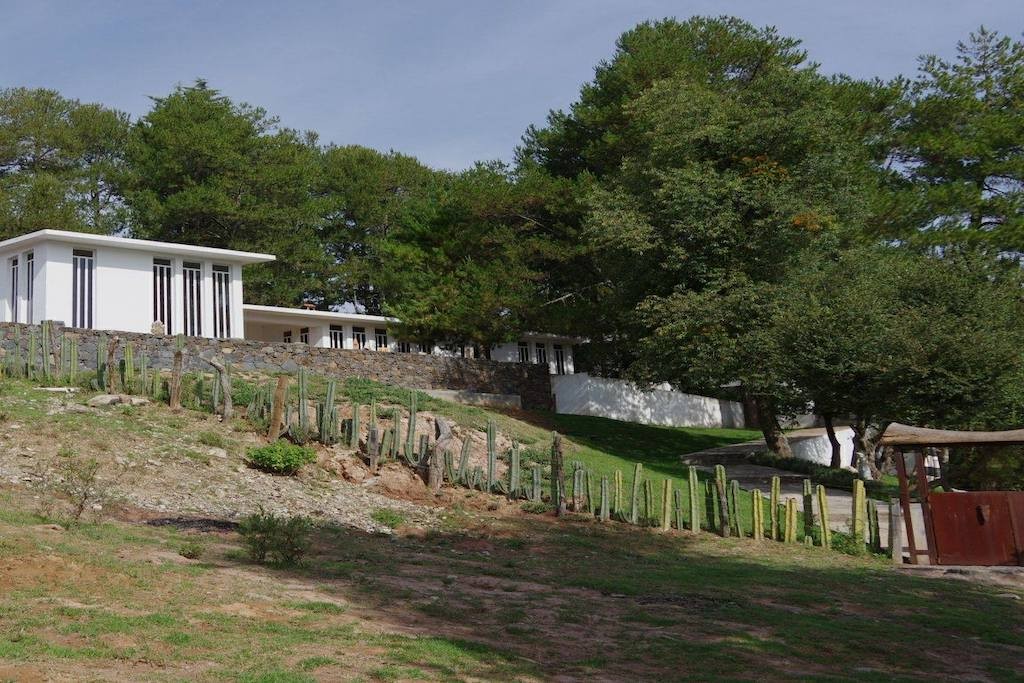
La Coyotera is an independent studio and residency founded by artists and cultural managers in a rural area just outside Morelia. It’s set up more like a serious working studio than a retreat, with real production infrastructure and a clear emphasis on contemporary art.
What you actually get
- Up to two artists hosted at the same time, up to about five per year
- Private rooms for residents
- Shared studios for ceramics, sculpture, visual arts, and graphic arts
- Ceramics facilities with two professional kilns
- Options for stone carving in basalt, volcanic rock, and marble
- Access to exhibition space on site
- A strong land-art focus through the “In Situ Project,” using local natural materials
The residency is production-focused. You come with a clear project, use the facilities, and often end up sharing that work with local communities through exhibitions or workshops. Artists are encouraged to leave a piece for the studio’s collection, so expect to produce something substantial.
Who it suits
- Ceramicists who need reliable kilns and a place to experiment with clay and glazes
- Sculptors working with stone or mixed materials who want outdoor space and time
- Land-art and site-specific artists interested in working directly in the landscape around the lake and rural area
- Artists with community-facing practice, since workshops and public events are part of the culture of the space
Application basics
- They accept applications year-round
- You send a CV with your website or social media links
- You propose a project that makes sense for the facilities and context
Questions to ask before applying
- What is the typical length of stay and is it flexible?
- Is the residency fully paid, partially subsidized, or self-funded at the moment?
- How is kiln time scheduled and are there specific firing days or temperature limits?
- What tools and machinery are available for stone and sculpture work, and what do you need to bring?
- What opportunities exist for public presentations, open studios, or workshops during your stay?
If your main goal is to actually make work, not just network, La Coyotera is one of the strongest options near Morelia.
Patzingo Ecotourism Center & Crossing Bridges (Michoacán)
Good for: socially engaged projects, Indigenous culture, educational and group residencies
Location: Patzingo, Michoacán, within the P’urhépecha region; travel often routed through Morelia
Crossing Bridges – Patzingo Ecotourism Center
Patzingo is an ecotourism center linked to the P’urhépecha community, and through organizations like Crossing Bridges, it hosts residencies and cultural exchange programs. Instead of a classic solo studio model, think immersive program focused on cultural exchange, education, and collaborative projects.
What you actually get depends on the program, but usually includes:
- Structured engagement with local community and culture
- Possibilities for workshops, group projects, and research
- An emphasis on intercultural learning rather than purely individual studio production
This is especially relevant if your practice relates to Indigenous knowledge, language, rural ecologies, or decolonial research. It can be powerful if you build your project in real dialogue with the hosting community and let the residency shape the form and pace of your work.
Questions to ask
- Is the program oriented to individual artists, or mostly to university or institutional groups?
- What does the daily structure look like: field visits, talks, studio time, community work?
- What kind of documentation and permissions are expected when working with community members or cultural practices?
- How are languages handled: is there translation, and what level of Spanish is needed?
If you want to work ethically in a community-centered context, the key is to be very clear about expectations on both sides before you arrive.
Artists in Residence Program – National Art Network
Good for: artists who want structured travel logistics and regional immersion
Artists in Residence – National Art Network
This program uses Morelia as a hub while moving artists to other locations in Michoacán, such as Angahuan. The listing highlights that it covers:
- Transportation from Mexico City to Morelia and then to Angahuan
- Food and lodging in cabins
The structure and theme can shift depending on the edition, but the throughline is regional immersion, with logistics taken off your plate. That frees up energy for focusing on the work instead of constantly coordinating rides and accommodation.
Questions to ask
- What is the current artistic focus of the program?
- Is there a studio or workspace, or is the work mostly site-based and research driven?
- What kind of public outcome is expected: exhibition, talk, publication, or internal sharing only?
- How much free time versus group time will you have?
This type of program works well if you want a guided introduction to Michoacán’s cultural landscape with basic needs covered.
Choosing a neighborhood and living setup
Residencies around Morelia usually handle your housing, but you might want to tack on extra time before or after, or even rent your own place and use the residency as a partial anchor.
In Morelia city
Centro Histórico
- Walkable streets, colonial architecture, plazas, and cultural institutions
- Easy access to museums, galleries, and university-related events
- Good if you want to be in the middle of exhibitions, openings, and concerts
University and cultural corridors
- Areas near art schools and university departments often have cheaper rentals
- Useful for meeting students, young artists, and cultural workers
- Look out for university galleries and project spaces
Central residential neighborhoods
- A bit quieter, still close to the center
- Good balance of comfort and access if you stay longer
- Often more affordable than the tourist-heavy streets directly around the main cathedral
Outside the city
Presa de Umécuaro
- Rural, close to nature, centered around the lake
- Home base for La Coyotera Taller Estudio
- Good if you want focus, outdoor work, and minimal distraction
Patzingo, Angahuan, and other towns
- Linked to programs like Crossing Bridges and the National Art Network
- Better for landscape-based and community-based projects than for white-cube studio practice
- Usually require some coordinated transportation from Morelia
Cost of living and budgeting for a residency in Morelia
Costs shift constantly, so instead of chasing exact numbers, think in terms of proportions and structure. Morelia is typically less expensive than Mexico City, especially for:
- Rent and short-term housing
- Daily food, especially if you cook or eat at local markets
- Local transportation if you mix walking with moderate use of taxis or ride-hailing
If a residency covers housing and some meals, your main expenses become:
- Art materials
- Local transportation to and from rural sites or events
- Personal costs like phone data, small trips, and social activities
Rural programs like La Coyotera or Patzingo can mean fewer temptations to spend money, but you might pay more for transport when you do go into the city. When planning, it helps to ask each residency specifically:
- Exactly what is included (housing, meals, studio, tools)
- What you’re expected to cover yourself (materials, firings, excursions)
- What is available locally and what you should bring (specialized tools, paper, film, pigment, digital gear)
Studios, galleries, and how to connect once you’re there
You can treat a Morelia residency as isolation time, or as a launchpad into the local scene. Either way, it helps to know where artists usually plug in.
Art infrastructure to look for
Within and around Morelia, you’ll find:
- Museums and cultural centers that host exhibitions, talks, and educational programs
- Independent and artist-run spaces, which can be more reactive and experimental
- University galleries and art departments with young artists and ongoing research
- Ceramic and sculpture workshops linked to regional craft traditions
- Graphic arts and print studios where you can test editions or collaborate
Most residencies can point you toward specific spaces; ask hosts for recent venues, not just the big institutional names.
Building community while in residency
Residencies around Morelia often encourage open formats: workshops, talks, walk-throughs with local communities, or exhibition projects. To make that work for you, start thinking about this before you arrive:
- What can you teach or share in a short workshop that fits local interests and your practice?
- How might you frame your project so that a non-specialist audience can connect with it?
- Do you want to offer a final open studio, small show, or artist talk, and what space would be appropriate?
Places like La Coyotera already have a rhythm of public activities. Use that structure: be clear about what you want to present and what you need (projector, translation, printed texts, etc.).
Transportation and mobility for artists
Movement shapes how much of the region you actually experience, so think through transport early.
Arriving in Morelia
- By air: Morelia has its own airport, with domestic connections and some international routes
- By bus: Long-distance buses from Mexico City and other major cities are common and relatively comfortable
- By car: Driving can work if you want to move equipment or explore rural areas on your own schedule
Getting around the city
- Walk the historic center; it is compact and built for foot traffic
- Use taxis or ride-hailing apps for longer distances and late returns
- Ask locals and residency hosts about safe routes and times, especially if you’re carrying work or equipment at night
Reaching rural residencies
For places like Umécuaro, Patzingo, or Angahuan:
- Confirm if pickup and drop-off are provided by the residency
- Ask how often you can realistically travel to Morelia for supplies or events
- Budget for occasional private transport if local public options are limited or irregular
This is especially important if your work relies on specific materials or lab-style processes; you do not want to be stranded without a way to get what you need.
Visas and paperwork
For many artists visiting Mexico, short-term residencies and research stays are possible on a standard tourist entry, depending on your passport and what you’re doing. The details change, so the safest approach is to link your planning to the current official information and your exact project.
Before committing to a residency, it helps to:
- Confirm the length of stay and expected schedule
- Ask if the residency provides an invitation letter or formal documentation
- Clarify whether you will receive any payment, stipend, or fee for teaching or exhibiting
- Check with a Mexican consulate or official immigration site what status best fits your situation
If your stay includes teaching paid workshops, formal employment, or substantial stipends, the residency may fall under a different immigration category than a regular visitor entry. Clarify this early so you can adjust timing and paperwork.
When to be in Morelia for a residency
Climate matters when your work depends on outdoor spaces, land art, or firing ceramics.
Dry months are usually more comfortable for:
- Outdoor sculpture or land-art projects
- Fieldwork in rural communities
- Open studios and public events
Rainy periods can still work, but expect:
- Delays reaching rural locations
- Less predictable schedules for outdoor activity
- More humidity, which can affect drying times for certain materials
On the application side, many independent Mexican residencies work with rolling applications or plan a few months ahead. For Morelia-related programs, it’s usually smart to aim for:
- Three to six months lead time if you need funding, visas, or to ship work
- Extra buffer if you want to align with local festivals, academic semesters, or specific seasonal events in Michoacán
Matching your practice to a Morelia residency
The trick is to align your actual needs with what each program is built to offer, instead of trying to force your project into the wrong structure.
- If you’re a ceramicist or sculptor: Look closely at La Coyotera Taller Estudio for kilns, stone, and real workshop capacity.
- If you’re focused on land art or site-specific work: La Coyotera’s In Situ Project and the rural landscapes around Presa de Umécuaro are especially relevant.
- If you prioritize community engagement and Indigenous culture: Programs connected to Patzingo and similar initiatives through Crossing Bridges are better fits than purely studio-focused residencies.
- If you want regional immersion with logistics covered: The Artists in Residence Program via the National Art Network can provide structured travel and lodging while you concentrate on the work.
Morelia sits in the middle of all this: a city where you can access museums, universities, and cultural events, but also get out into landscapes and communities that are central to many contemporary practices. If you’re honest about what your work needs right now—kilns, community, quiet, or a wider network—you can use the residencies around Morelia as a very workable base.
Explore Mexico
More city guides
Opportunity Intelligence
Ready to find your next residency?
Get a personalized shortlist — scored against your practice, discipline, and what you need right now.
See how Intelligence works →