City Guide
Morelia, Mexico
How to use Morelia and its rural surroundings as your studio, lab, and point of connection in Michoacán
Why Morelia works so well as a residency base
Morelia sits in a sweet spot: historically rich, calm enough to focus, and connected to some of Michoacán’s strongest craft and cultural traditions. If you’re looking for time, space, and materials, this region can give you all three without the financial and sensory overload of a huge capital city.
The draw is a mix of contemporary art and deep-rooted material practices. You get access to ceramics, stone, printmaking, textiles, and land-based work, plus contact with Indigenous and rural communities nearby. For many artists, Morelia isn’t just a backdrop; it’s a material source and a conceptual trigger.
Three things usually make artists choose Morelia over bigger centers:
- Material access: clay, volcanic stone, basalt, marble, wood, and landscape for land art or installation.
- Cost and pace: more affordable and slower than Mexico City, which helps if you’re self-funding or need focus.
- Cultural depth: proximity to P’urhépecha communities and regional craft traditions that can feed research or community-based projects.
La Coyotera Taller Estudio: rural production hub near Morelia
Location: Presa de Umécuaro, a rural town about 30 minutes from Morelia, Michoacán, Mexico.
Focus: ceramics, sculpture (especially stone), land art, painting, drawing, graphic arts.
Official listing and contact info
What La Coyotera actually feels like as a working environment
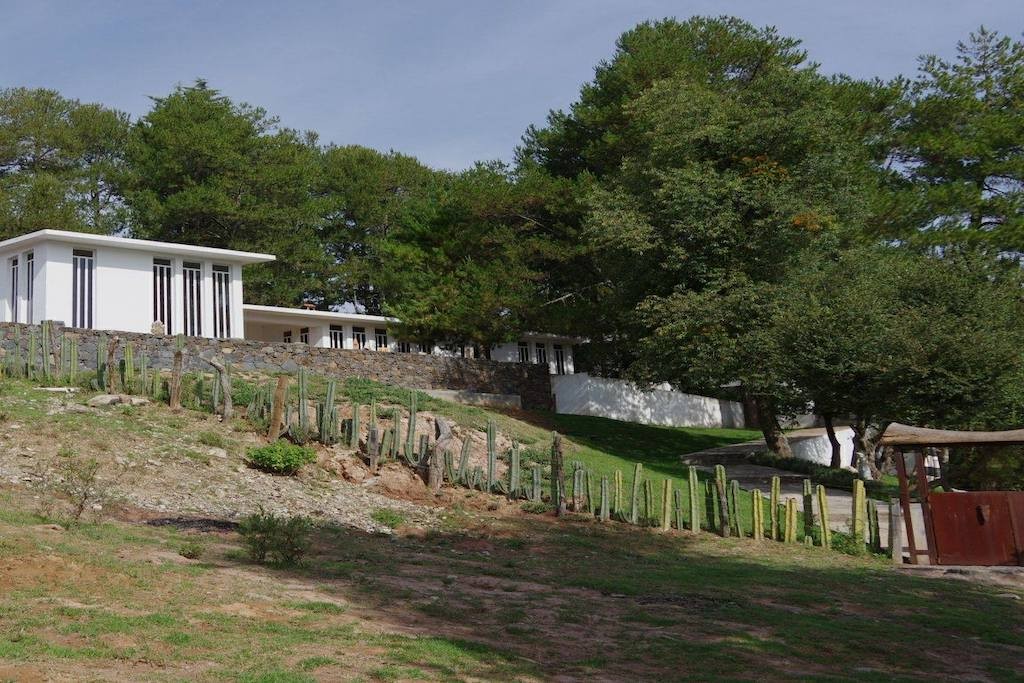
La Coyotera is set up as a professional studio in the countryside, not a lifestyle retreat. You get a focused production space in a quiet, rural context, with access to both indoor studios and the surrounding land.
The facilities are particularly strong if your practice is material-intensive:
- Ceramic studio with two professional kilns.
- Stone sculpture area for basalt, volcanic rock, and marble.
- Visual arts studios for painting, drawing, and graphic arts.
- Land art space via their “In Situ Project,” using natural materials from the area to build a sculpture park.
- Exhibition space on site, including a gallery where they run exhibitions and cultural events throughout the year.
The atmosphere is closer to an artist-run workshop than a formal institution. You’re expected to work, experiment, and potentially share your process with local communities.
Who this residency suits best
La Coyotera is a good fit if you:
- Need kilns and a functioning ceramics workshop.
- Work in stone, carving, or heavy sculpture and want access to basalt or volcanic rock.
- Build land art or site-responsive installations and want landscape to work in.
- Have a production-driven project and want a rural, low-distraction setting.
- Enjoy community interaction through workshops, open studios, and exhibitions.
It can also work if your practice is more drawing, painting, or print-focused, as long as you appreciate being slightly outside the city and sharing space with more materially heavy practices.
Accommodation, capacity, and daily life
La Coyotera keeps the cohort small, which changes the residency dynamic:
- They host up to five artists per year in total.
- At any given time, there are usually up to two artists in residence, each with a private room.
- Studios are shared and equipped for ceramics, sculpture, and visual arts.
The small scale means you’re not anonymous. You’ll likely interact closely with the hosts, local collaborators, and the other resident (if there is one). You have space to focus, but you’re also visible as an artist in the community.
Programming: workshops, exhibitions, and land art
La Coyotera’s program is built around two main strands: production and exchange.
- Workshops: Residents can organize or participate in workshops, often with community or regional visitors. This is helpful if you like teaching or sharing techniques.
- Exhibitions: The space hosts exhibitions and cultural events during the year, and residents can present work, process, or research.
- In Situ Project: Artists use natural materials (stone, earth, plants, found objects) to contribute to a growing sculpture park that local communities can visit.
Artists are encouraged to leave a work for the studio’s collection, which can be an interesting way to anchor your presence in the region.
How applications work
La Coyotera’s listing describes a year-round application process. To apply, you typically send:
- A CV or resume.
- Links to your website and social media.
- A project proposal outlining what you plan to work on during the residency.
There are no restrictions on age, gender, nationality, or career stage, which is helpful if you’re early in your career or changing direction. Because they take few artists, the clarity and specificity of your proposal matters more than your CV length.
You can find current contact details and updates via their listing or their social page: La Coyotera Taller Estudio on Facebook.
Patzingo Ecotourism Center & Artist Residency: cultural exchange in rural Michoacán
Location: Angahuan / P’urhépecha region of Michoacán. This is not in Morelia city itself but is often reached via Morelia, which functions as the main urban gateway.
Focus: cultural exchange, Indigenous collaboration, education, multi-disciplinary residencies.
What this residency is built around
This program is oriented toward cultural immersion and exchange more than heavy production. It connects artists with the P’urhépecha community and local educators, often through organized programs connected to external partners.
Common elements include:
- Intercultural projects with P’urhépecha communities.
- Educational and arts exchange formats (workshops, collaborative activities).
- Residencies for artists, educators, and sometimes students or collectives.
Instead of a large urban studio, think of cabins, outdoor settings, and local community spaces where you might research, collaborate, and prototype work.
Support and logistics
Program descriptions mention that some residencies at Patzingo cover:
- Transport from Mexico City to Morelia.
- Transport from Morelia to Angahuan.
- Food and lodging in cabins.
This makes it especially appealing if you’re coming from abroad or from another part of Mexico and want a structured, relatively low-risk way to work with Indigenous communities. You still need to confirm current details directly with the organizers, since formats and funding levels can change.
Who this residency suits
This is a strong fit if you:
- Work in socially engaged art, education, or community-based practices.
- Are interested in Indigenous cultural exchange and want to approach it respectfully and collaboratively.
- Are comfortable working outside a conventional studio and can adapt to cabins, shared spaces, and outdoor environments.
- Value immersion and dialogue as much as (or more than) making large volumes of studio work.
If your project is purely studio-based ceramics or sculpture, La Coyotera will likely give you more tools. If your work depends on context, people, and long conversations, Patzingo’s setup can be more aligned.
Using Morelia itself: housing, neighborhoods, and day-to-day life
Even if your residency is outside the city center, you’ll likely pass through Morelia before and after your stay. Some artists also choose to arrive early or stay longer in the city to research, network, or decompress after an intensive residency.
How affordable is Morelia for artists?
Costs fluctuate, but compared with larger Mexican cities, Morelia generally feels manageable for working artists. You can expect:
- Housing: Cheaper options as you move away from the historic center. Short-term rentals and shared apartments are common among artists.
- Food: Local markets, street food, and small restaurants are budget-friendly. Cooking at home keeps costs low.
- Transport: City buses and taxis are affordable; central areas are walkable, which cuts transport costs.
- Materials: Basic supplies are accessible; specialized materials might require planning or trips to specific vendors.
When budgeting for a residency in the region, it helps to separate costs into city time (before/after the residency) and residency time (rent, food, and studio often bundled or structured differently).
Neighborhoods artists often use as a base
For short to mid-length stays, artists usually gravitate toward these areas:
- Centro Histórico: Walkable, full of colonial architecture, museums, cafes, and cultural venues. Great if you want direct access to events and public life. Rents can be higher and it is busier.
- Southern and western corridors of the city: Quieter residential areas with more space and lower cost. Practical if you’re staying longer and want room to spread out or store work.
- Areas near universities and cultural institutions: Often more youthful and informal, with shared flats, student life, and access to talks, screenings, and exhibitions.
If you’re splitting your time between La Coyotera or Patzingo and the city, a quiet neighborhood with easy road access toward the south or west can be helpful for trips in and out.
Studios, workshops, and where to make work in town
Morelia isn’t saturated with big commercial studios, but you’ll find a mix of:
- Independent studios and collectives where artists share space.
- Workshop-based cultural centers offering printmaking, ceramics, or craft courses.
- University-linked spaces that host exhibitions, talks, and occasional open studios.
If your residency gives you a rural base (like La Coyotera) and you still want urban studio contact, you can use your city time to visit workshops, buy materials, and connect with local artists who maintain studios in town.
Galleries and institutions worth paying attention to
Instead of chasing a single famous gallery, think of Morelia as an interconnected mesh of:
- Museums and cultural centers in the historic center, often run by state or municipal cultural agencies.
- University art spaces that show experimental or student work.
- Independent galleries and project spaces that pop up in adapted houses or small storefronts.
When you arrive, keep an eye on posters, social media, and word-of-mouth invites for:
- Exhibition openings.
- Artist talks and panels.
- Workshops and short courses.
- Residency presentations and open studios.
Residencies like La Coyotera often connect back to the city through exhibitions and events, so your work in the countryside can still end up on a wall or in a public setting in Morelia.
Transport, visas, and timing your residency
Getting to and around Morelia
You can reach Morelia by:
- Plane: via Morelia International Airport, then taxi or arranged pickup into town.
- Bus: direct long-distance buses from Mexico City and other major cities.
- Car: useful if you need to move tools, heavy works, or materials between city and rural sites.
Inside Morelia, the center is very walkable. For longer distances, buses, taxis, and app-based ride services are common. If your residency is outside the city, clarify with the organizers how you’ll get there and back, especially if you’re carrying work or equipment.
For La Coyotera in Presa de Umécuaro and for Angahuan/Patzingo, plan for:
- Pre-arranged pickup from Morelia, or
- Taxi or local transport plus clear directions, or
- A rental car if you want maximum independence and are comfortable driving.
Visa basics for foreign artists
Visa rules vary by nationality and change over time, so always confirm with a Mexican consulate and the residency itself. A few general patterns:
- Short stays: Many artists visit under regular tourist or visitor status when they are not employed locally and the stay is relatively short.
- Long stays or paid work: If you will teach for a fee, receive a salary, or stay for an extended period, you may need a temporary resident visa or specific permission.
- Stipends and honoraria: Even if the residency is “unpaid,” any stipends or fees can have visa implications, so ask directly.
Before you book travel, have the residency confirm the category of your stay and then cross-check with the nearest Mexican consulate for your passport.
When to go: climate and project planning
Morelia’s climate is generally temperate, with a distinct rainy season and drier periods. Weather affects how you work, especially if you’re firing kilns or building outdoors.
You might think about timing like this:
- Ceramics and sculpture: Drier months often make it easier to store and dry work, and transport pieces without weather stress.
- Land art and outdoor installation: Lush vegetation during rainy months can be a gift if your work uses plants or mud, but plan for limited access on very wet days.
- Community projects: Ask residencies about local festivals, school calendars, and community rhythms if you want to sync your project with specific events.
Application-wise, assume a lead time of several months if you need funding, visas, or elaborate logistics. La Coyotera accepts applications year-round, which gives you some flexibility to align the residency with your own seasonal schedule.
Choosing Morelia: is this region right for your practice?
Morelia and its surrounding rural areas are strongest when you want depth rather than constant spectacle. The region suits artists who:
- Use ceramics and need reliable kilns and clay.
- Work in stone or heavy sculpture and want access to basalt and volcanic rock.
- Develop land art or site-specific work in dialogue with landscape.
- See value in Indigenous and regional cultural exchange, and are willing to put time into relationships.
- Prefer a mid-sized city and rural context instead of a saturated mega-city art market.
It’s less ideal if your priority is a dense international gallery circuit or constant large-scale openings, but it’s very strong if you need space, materials, and a grounded context to rethink your practice.
The most effective way to approach Morelia is to choose the residency that matches your current project stage—production at La Coyotera, cultural immersion at Patzingo, or an independent research stay in the city—and then build in a few extra days before or after to connect with local artists, visit exhibitions, and let the region reshape the work you came to make.