City Guide
Morelia, Mexico
How to use Morelia and rural Umécuaro as a serious base for ceramics, sculpture, and context-driven work
Why Morelia works so well as a residency base
Morelia, in the state of Michoacán, gives you a very specific mix: a historic city full of cultural life, strong regional craft traditions, and costs that are generally lower than Mexico City or Guadalajara. If your practice leans into material, landscape, or community, it’s one of the more interesting hubs to work from in Mexico.
A compact, culturally dense city
Morelia’s historic center is a UNESCO World Heritage site, and it feels like a live cultural lab: stone architecture, museums, universities, and a steady flow of exhibitions and festivals. For you as an artist, that usually translates into:
- an active calendar of shows, concerts, and public events,
- university-related programs and students around,
- state and independent cultural spaces within walking distance,
- simple day trips out to lakes, small towns, and craft-producing communities.
You can base yourself in the city, plug into contemporary art spaces, and still reach rural or semi-rural residency sites in under an hour.
Deep local material traditions
Michoacán has a strong identity around craft and community-based making. You will encounter:
- ceramics in different regional styles,
- woodwork and furniture-making,
- copper work and metal crafts,
- textiles and weaving,
- lacquer and decorative work,
- stone and volcanic rock carving.
Residencies in and around Morelia tend to plug into this ecosystem. They’re not just neutral white cubes with beds attached; they are tied to specific materials, landscapes, and communities. If you like to work directly with local techniques and resources, you’ll find a lot to absorb.
Costs and scale
Compared with Mexico’s biggest cities, Morelia is generally easier on your budget. That makes it suitable if you want:
- a longer production stay,
- to self-fund part of your time,
- room to explore new materials without burning through savings.
The tradeoff is scale: the art market is smaller than Mexico City. If you need high-density collector traffic and dozens of galleries, Morelia on its own may feel small. As a production and research base, though, it works extremely well.
Key residency options in and around Morelia
The Morelia area doesn’t have a huge quantity of residencies, but it does have some very specific programs that reward artists who want focused production time and real connection to place.
La Coyotera Taller Estudio (Umécuaro, near Morelia)
Location: Presa de Umécuaro / rural Umécuaro, roughly 30 minutes from central Morelia
Type: Independent studio and artist residency
Focus: Ceramics, stone/volcanic materials, land art, visual arts
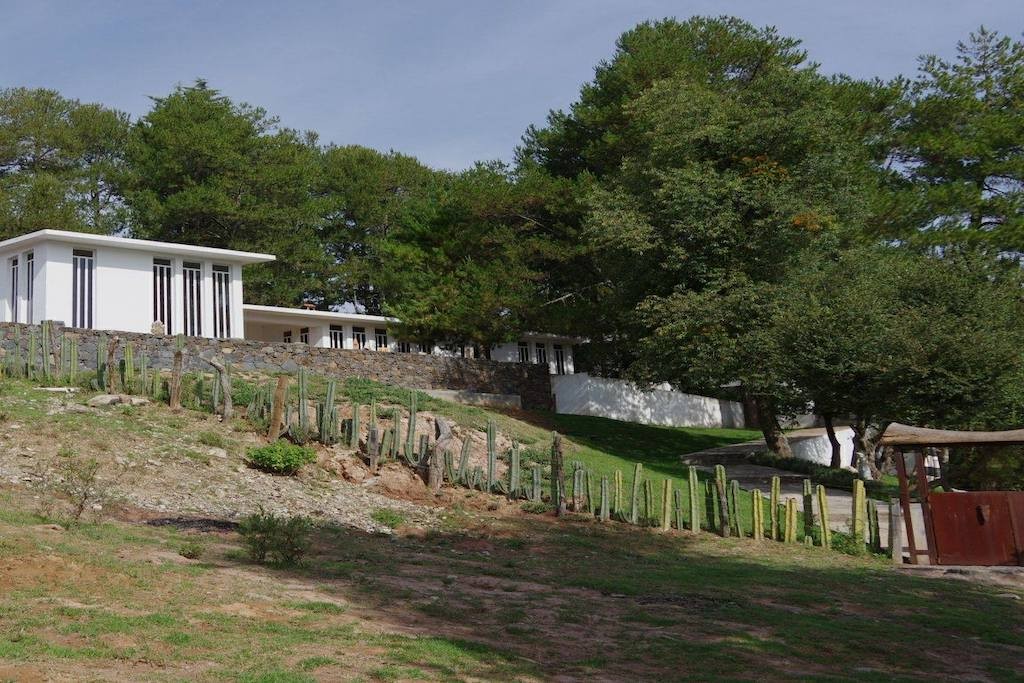
La Coyotera Taller Estudio is a production-oriented residency set in a rural town near a reservoir outside Morelia. It was founded in 2017 by artists and cultural managers Kees Ouwens and Carmen Jacobo, and it’s designed as a professional working studio rather than a tourist retreat.
What you actually get at La Coyotera
The space is especially good if you want to work with ceramics or stone. According to residency listings like Artists in Residence TV and Reviewed by Artists, La Coyotera offers:
- a ceramic studio with two professional kilns,
- a stone sculpture area, including volcanic rock and marble,
- spaces for painting, drawing, and graphic arts,
- outdoor land-art-friendly areas,
- an exhibition space on site,
- a residence cabin with kitchen and bathroom.
The environment is rural and quiet, with the landscape right there as a resource. If working outside, collecting natural materials, or making larger pieces is important to you, this setup is unusually supportive.
How the residency is structured
Based on public descriptions, La Coyotera usually:
- hosts up to five artists per year,
- works with up to two artists at a time in private rooms,
- has no restrictions on age, gender, nationality, or career level,
- runs production or workshop-based residencies with space for exhibitions.
Artists have access to collective studios and can organize workshops or public events. The residency encourages you to share your research with local communities in Michoacán and to leave a piece for the studio’s collection, which helps build a visible history of visiting artists.
Who La Coyotera suits best
You’ll probably get the most out of La Coyotera if you are:
- a ceramic artist needing kilns and time to test glazes or forms,
- a sculptor wanting to work in stone, especially basalt or other local rock,
- someone developing land art or site-specific projects using local materials,
- a painter or printmaker who benefits from a quiet studio and optional public show,
- comfortable in a rural environment rather than an urban nightlife scene.
It can also work well if you’re interested in workshops, because they actively support teaching and community engagement.
How to apply to La Coyotera
La Coyotera accepts applications year-round. They usually ask you to send:
- a CV or resume,
- a link to your website and social media,
- a project proposal describing what you want to do during the residency.
To reach them or see current information, use their Facebook page and email:
Before applying, ask about current fees, what materials are on site, and what they expect in terms of public presentations. Small independent spaces can adjust their program over time, so confirm details directly.
Patzingo Ecotourism Center and Artist Residency (regional)
Location: Michoacán region, associated with P’urhépecha communities
Type: Ecotourism and cultural exchange residency
Focus: Indigenous cultural exchange, socially engaged and educational work
Patzingo appears in international listings as a hub that hosts artist and student groups in connection with P’urhépecha communities. It’s not a classic studio-residency with a big ceramics workshop; it’s closer to a cultural exchange and research base.
Groups and individual artists can use it as a base for:
- fieldwork linked to Indigenous culture and local knowledge,
- collaborative projects with communities,
- university or museum-based study trips,
- projects that blend art, anthropology, education, and social practice.
If you are primarily looking for clean white walls and a large private studio, this might not be the right fit. If your work is about community, storytelling, and shared research, it is worth exploring.
Information about Patzingo is often routed through organizations like Crossing Bridges or regional cultural networks, so you may need to reach out via those channels and ask for current program details.
Using Morelia as a springboard for other residencies
Many artists connected to Morelia also spend time at residencies elsewhere in Mexico, such as CANTE, CMMAS, La Parota, or La Ceiba Gráfica. These are not in Morelia, but they are part of the broader circuit that artists in the region move through.
That matters when you design your residency plan. You can:
- do a production-focused stay at La Coyotera near Morelia,
- spend time in the city connecting with institutions and galleries,
- then continue to another residency in a different state with a complementary focus.
Morelia’s size, costs, and cultural infrastructure make it a good hub for this kind of extended research-and-production arc inside Mexico.
Who thrives in Morelia’s residency scene
Most artists who come out of Morelia-area programs with a strong body of work share a few things in common.
Practices that fit the context
Morelia and Umécuaro work especially well if you are:
- Working with clay or ceramics: access to kilns and ceramic culture in the region can take your experiments much further.
- A sculptor: volcanic rock, marble, and other stones are part of the local material vocabulary.
- Into drawing, painting, or print: the light, architecture, and craft references feed two-dimensional work nicely, and you still get access to production space.
- Doing socially engaged or community-based art: regional programs and rural residencies give you a direct line to communities, not just urban audiences.
- Interested in land art or site-specific work: rural settings like Umécuaro make it realistic to build outside and draw directly from the landscape.
Who might struggle
Morelia may feel less ideal if you:
- need a dense commercial gallery scene and high collector traffic,
- want a large selection of residencies inside a single city,
- are uncomfortable in quieter or rural environments,
- expect nightlife and international networking to be the main part of the experience.
In those cases, using Mexico City as a base might make more sense, and you can treat Morelia as a project-specific destination later.
Living and working in Morelia: practical details
Cost of living and budgeting
Budgets vary a lot depending on how you structure your stay, but artists usually find Morelia affordable by international standards. General patterns:
- Housing: central apartments in the historic center can cost more, but you get walkability and access to institutions; outer neighborhoods offer more space for less money.
- Food: eating at local markets and simple restaurants is usually affordable; cooking at home keeps costs predictable.
- Studio: residency fees that include a studio often end up cheaper than renting a studio separately for a short period.
- Transport: local buses, taxis, and rideshare are generally manageable; longer trips around Michoacán add up but stay reasonable.
The main variable is the residency structure: some programs wrap housing and studio into a single fee, while others expect you to handle your own accommodation in the city. Factor that in when you compare options.
Neighborhoods to know
You may want to combine a rural residency with a city stay before or after. A quick orientation:
- Historic Center (Centro Histórico): stone arcades, plazas, museums, galleries, and cafés. Great for walking and showing work, less ideal if you need heavy-duty fabrication space at home.
- Chapultepec area: a mix of residential streets, cafés, and small venues. Often popular with younger residents and students.
- Ventura Puente and nearby residential areas: practical neighborhoods with access to main roads and services, useful if you need to move materials or commute.
- Rural outskirts: towns and villages around Morelia, including Umécuaro, are where you find spaces like La Coyotera. These give you quiet, larger workspaces, and direct contact with the landscape.
Studios, galleries, and institutions
Morelia’s art infrastructure is a mix of:
- museums and heritage venues in the historic center that host contemporary exhibitions,
- university-linked galleries and cultural offices,
- independent galleries and project spaces,
- craft and artisan networks across Michoacán.
Residencies like La Coyotera add to that by offering exhibition space and structured public programs. If you want to show work during your stay, ask any residency how they connect to the city’s institutions and if they help with open studios, talks, or group shows.
Getting there and moving around
Logistics are straightforward:
- By air: Morelia is served by General Francisco J. Múgica International Airport (MLM). Many international artists route through Mexico City or another hub and connect from there.
- By bus: Long-distance buses connect Morelia to Mexico City, Guadalajara, and other regional centers. The bus network in Mexico is generally reliable for intercity travel.
- Inside the city: Walking in the center works well; for longer trips, taxis, rideshare apps, and local buses are common options.
- To rural residencies: Ask the residency how transport works. Some offer pickup or can arrange shared rides. In other cases, you might use a mix of bus and taxi. Clarify how you’ll move large materials or artwork.
Visas and legal status
Visa requirements change based on nationality and length of stay, so always check official sources before committing to dates. Broad patterns many artists encounter:
- Short residencies often fit within a visitor stay, as long as you respect entry conditions.
- If you are receiving payment, teaching, or staying for an extended period, you may need a different immigration status.
Ask any residency:
- How long is the program?
- Is there a stipend or formal employment component?
- Do they provide any documentation for visa applications if needed?
Residency staff are not immigration lawyers, so use their answers as context and verify requirements yourself.
When to go and when to apply
Weather in Michoacán affects outdoor work, kiln use, and rural access. Many artists prefer cooler, drier periods for production; heavy rains can complicate land-art projects or travel to remote communities.
Independent residencies such as La Coyotera often accept applications on a rolling basis. That gives you flexibility, but spots are limited, so treating it as “anytime” can backfire.
A useful rhythm:
- Plan to apply around 4–9 months before your ideal dates, especially if you’re also applying for grants.
- Check which months the residency considers most comfortable for your medium (for example, firing heavy ceramic work vs. doing open-air painting).
- If you want to sync your stay with local festivals or cultural events, ask the residency which periods are most active but still workable.
Connecting with the local art community
How to plug into Morelia’s network
Morelia’s community includes independent artists, cultural managers, students, and craft specialists across the region. To tap into that, build a few actions into your residency plan:
- Show up at openings and talks: use museum, gallery, and university calendars as your social map.
- Offer a workshop or talk: many spaces are open to visiting artists sharing skills or research; residencies like La Coyotera explicitly support this.
- Visit craft communities: trips into Michoacán’s craft towns expose you to techniques and social dynamics that can feed your work.
- Invite studio visits: curators, teachers, and local artists are often willing to visit your workspace if you extend a clear, friendly invite.
Questions to ask any Morelia-area residency
Before saying yes to a program, send a concise list of questions. Useful ones include:
- Is housing included, and what is the setup (private room, shared house, cabin)?
- Are meals provided, or will you cook for yourself?
- What are the studio dimensions and shared vs. private areas?
- What equipment is available (kilns, tools, presses, hand tools for stone, etc.)?
- Which materials are provided and which should you bring or buy locally?
- Are open studios, exhibitions, or community workshops expected or optional?
- Is Spanish required, recommended, or not necessary?
- How do you get from Morelia’s airport or bus station to the residency?
- Can you receive shipments of materials or large works?
- Is there any form of stipend, or is the residency fully self-funded?
Clear answers here will tell you quickly whether a specific Morelia-area residency really aligns with your needs, or whether you should treat the city more as a research and visiting base.
If you work with ceramics, sculpture, land art, or community-focused projects and want a place that balances serious production with real cultural context, Morelia and rural Umécuaro are worth putting on your residency map.