City Guide
Morelia, Mexico
How to use Morelia and its residencies as a base for making, research, and community-focused work
Why Morelia works well for residencies
Morelia, the capital of Michoacán, is a UNESCO-listed colonial city with a dense historic center, active universities, and easy access to rural landscapes. For artists, the draw is a mix of solid cultural infrastructure, lower costs than Mexico City, and a slower pace that still feels connected rather than isolated.
Residencies in and around Morelia tend to emphasize production, research, and exchange with local communities rather than a purely retreat-style model. You get a city with historic architecture and cultural life, plus nearby villages, lakes, and countryside that support site-responsive, land-based, and socially engaged work.
Morelia tends to be a strong fit if you:
- Work in ceramics, stone sculpture, land art, drawing, painting, or mixed visual practices
- Want fabrication time and space, not just theory or networking
- Prefer a quieter, lower-cost base than Mexico City
- Are interested in local crafts, materials, and indigenous or rural contexts
- Value small-scale, relationship-based art communities
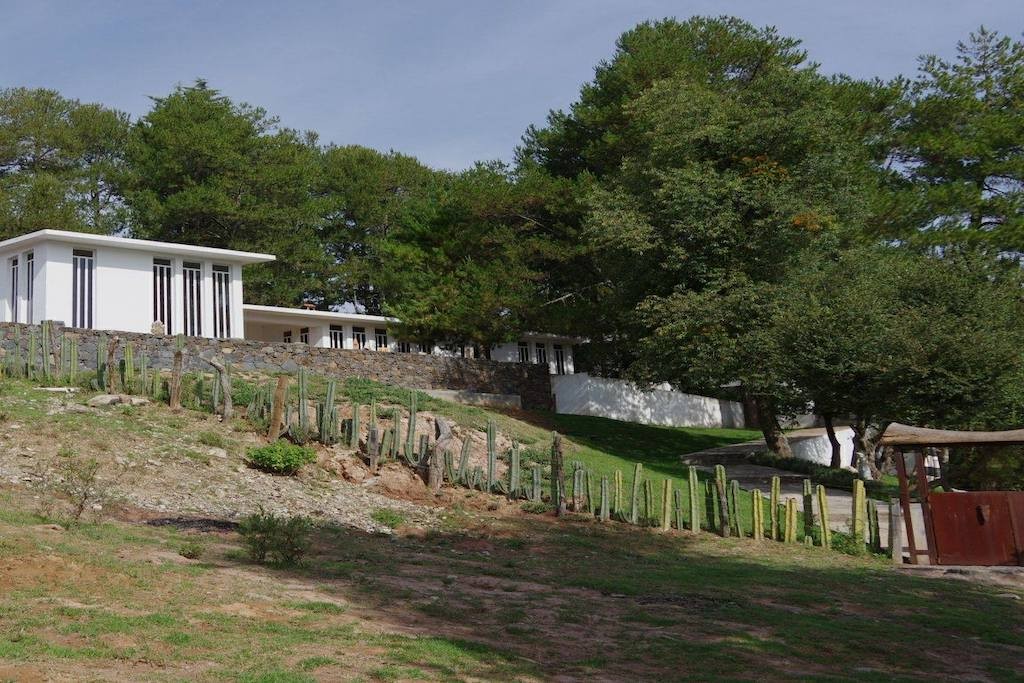
La Coyotera Taller Estudio: rural studio residency near Morelia
Location: Presa de Umécuaro, about 30 minutes from Morelia
Type: Independent, artist-run studio and residency
Best for: Ceramics, stone sculpture, land art, painting, drawing, and production-heavy visual practices
La Coyotera Taller Estudio is an independent initiative founded by artists and cultural managers in the rural town of Presa de Umécuaro, a short drive from Morelia. The space operates as a professional studio for the production and presentation of contemporary art, with a clear emphasis on material-based practices.
Facilities and working conditions
The residency is particularly strong for artists who need real, working infrastructure rather than a symbolic "studio" corner. It includes:
- Ceramics studio with two professional kilns
- Equipment and space for basalt, volcanic rock, and marble sculpture
- Studio areas for painting, drawing, and graphic arts
- Outdoor space for land art and site-specific work
- An exhibition space and on-site gallery for shows and events
- Private rooms for up to two resident artists at a time
Across the year, the residency hosts up to around five artists, usually keeping a small cohort so the space stays focused and more one-on-one. You are sharing studios and grounds, but you keep your own room and working rhythm.
Program focus and expectations
La Coyotera offers either a production-focused program or a workshop-oriented stay, depending on your proposal and the current programming. Core elements usually include:
- Time and space for studio production
- Options to organize and lead workshops with local participants
- Possibilities for exhibitions in the on-site gallery or connected cultural spaces
- A strong push toward In Situ / land art using natural materials from the surrounding environment
- Encouragement to leave a work for the studio collection at the end of your residency
The In Situ project is one of the most distinctive elements: artists are invited to create outdoor works with materials available in the area, contributing to a growing sculpture park that local communities can walk through. If your practice leans toward environmental or site-responsive work, this can be a very direct way to connect your research to the place.
Community and professional context
La Coyotera sits in a rural context, but it is linked to the broader cultural life of Morelia and Michoacán. Throughout the year, the studio organizes exhibitions and cultural events in its gallery, and resident artists often interact with audiences from the state, not just the immediate village.
This makes it well suited for artists who want:
- Quiet daytime studio work in nature
- Periodic access to city-level culture and contacts in Morelia
- Opportunities to share research through public workshops and exhibitions
Who it suits and who it does not
Good fit if you:
- Need kilns, sculpture equipment, and hands-on making time
- Enjoy working in rural surroundings with minimal distractions
- Are open to engaging with the local community via workshops or public events
- Work in ceramics, stone, land art, painting, drawing, or mixed-material sculpture
Less ideal if you:
- Rely heavily on advanced digital fabrication tools or specialized industrial processes that are hard to source locally
- Want constant urban nightlife, large crowds, or a heavy commercial gallery circuit
- Prefer big-group residencies with dense daily programming
Applications, fees, and contact
La Coyotera accepts applications year-round. To apply, artists are asked to send:
- A CV or resume
- Website and social media links
- A project proposal outlining what you plan to work on during the residency
Available listings do not clearly state a set residency fee, so you should confirm directly by email what the current costs are, what is included (housing, studio, kilns, materials, local transport), and whether there are any expectations around workshops or public presentations.
Contact:
Email: lacoyoteratallerestudio@gmail.com
More info: search for “La Coyotera Taller Estudio residencia artística Presa de Umécuaro” or visit their listing on Artists in Residence TV: residency overview
Patzingo and community-centered residencies in the Michoacán region
Beyond Morelia’s immediate orbit, there are residency-style projects in Michoacán that use the city as a reference point but are firmly rooted in indigenous or rural communities. These are especially relevant if your work is socially engaged, research-based, or focused on cross-cultural collaboration.
Patzingo Ecotourism Center and Artist Residency
Location: P’urhépecha community setting in the Michoacán region, accessible via Morelia
Type: Ecotourism-linked residency and cultural exchange program
Best for: Socially engaged artists, educators, interdisciplinary practices, and cultural research
This residency is connected to initiatives such as Crossing Bridges and focuses on deep cultural exchange with P’urhépecha communities. Instead of centering on heavy fabrication facilities, it revolves around relational work, local knowledge, and lived experience in the region.
Based on available descriptions, the program often includes:
- Food and lodging in or near the community
- Some forms of transportation support between Mexico City, Morelia, and the host community
- Structured opportunities for cultural interchange, shared learning, and possibly educational programming
This setting can work especially well if you are interested in:
- Methods that involve listening, ethnographic approaches, or participatory art
- Collaborative projects that are co-developed with community members
- Educational or workshop formats rather than studio-only work
Because this type of residency is often run through partnerships rather than large institutions, always verify current information directly with the organizers. Ask about fees or stipends, what kind of project is appropriate, expectations around documentation and output, and what language level is needed.
Using Morelia as your base: neighborhoods, costs, and logistics
Even if your residency sits outside the city (like La Coyotera or Patzingo), Morelia often ends up being your reference point for flights, materials, and cultural life. Understanding the city itself helps you plan your residency around it.
Art scene and ecosystem
Morelia brings together:
- Universities and cultural centers that host exhibitions, lectures, and festivals
- Independent and artist-run spaces that organize shows, talks, and workshops
- Traditional craft connections, especially ceramics and regional artisan work
- Regional art networks that link Michoacán to other states and cities
For a residency-based stay, you can expect less of a hyper-commercial market and more of a mix between contemporary practice, academic contexts, and craft or community arts.
Cost of living for artists
Compared with Mexico City, Morelia usually offers lower costs for rent and daily expenses, especially if you are flexible about being a bit outside the most central, tourist-heavy areas. Rough patterns:
- Housing and studios: Cheaper on the edges of the historic center or in residential neighborhoods, more expensive in prime colonial streets
- Food: Markets and small eateries are budget-friendly; café culture in the center is moderate
- Materials: Common art supplies are accessible; ceramics, stone, and basic construction materials are often easier to source than highly specialized imported tools
- Transport: City buses, taxis, and ride-hailing apps are generally affordable
If your residency does not fully cover housing and meals, it is realistic to combine a short intensive residency period with a longer, self-organized stay in the city before or after.
Neighborhoods artists often look at
Centro Histórico
Good if you want walkability, quick access to cultural events, galleries, and historic architecture. The tradeoff is more noise, more tourists, and higher rents. Studio-scale work can be tricky in small colonial apartments.
Ventura Puente and nearby central districts
Close enough to the center for easy access, but more everyday-residential and often more practical in terms of rent and space. A decent choice if you need to balance studio area with budget.
Chapultepec area
Known for bars, cafés, younger crowds, and a more informal art-adjacent social life. This can be useful if you want to meet local creatives and keep some nightlife in your routine.
University-adjacent zones and outer residential areas
Typically cheaper, with larger apartments that can double as modest studios. Less picturesque than the center but more functional if you need space.
Rural outskirts and lakeside villages
If you are doing land art, sculpture, or site-specific work, rural rentals or residency spaces near lakes and villages around Morelia can be ideal. This is the kind of setting you find at La Coyotera, where you trade instant urban access for space, quiet, and direct contact with landscape.
Practicalities: transport, visas, climate, and how to choose
Getting in and around
To Morelia: The city has its own airport with domestic and some international connections via larger hubs. Long-distance buses connect Morelia to Mexico City and other major cities; these can be a comfortable option if you are bringing equipment or materials.
Inside the city: The historic center is walkable. For other areas you can use buses, taxis, or ride-hailing apps. If your residency is outside the city (like Presa de Umécuaro), plan transport with your hosts in advance and front-load errands such as grocery runs and material sourcing.
Visa basics
Visa requirements depend on your passport and the length and nature of your stay. Many artists enter Mexico as visitors for short stays, but long or paid residencies may require a different status.
Before committing, check:
- Your country’s current entry requirements for Mexico
- Maximum stay duration under standard entry
- Whether you will be teaching, receiving a stipend, or selling work
- What kind of invitation letter the residency can provide
Keep your passport valid well beyond your stay, carry a printed or digital copy of your residency invitation, lodging details, and proof of onward travel if required.
Climate and timing your stay
Morelia has a temperate highland climate, with relatively mild temperatures and a defined rainy season. For residency planning, pay attention to:
- Dry months: Usually better for outdoor sculpture, land art, and travel to rural sites
- Rainy season: Manageable for studio work, but you may need to plan around heavy rains if installing outside
Some residencies accept applications year-round; others cluster activity around drier months, school calendars, or local cultural seasons. Ask your host what periods are most active and which months they recommend for your specific practice.
How to choose the right residency setup in Morelia
To narrow down your options in and around Morelia, it helps to answer a few practical questions:
- What do you absolutely need to make work?
If you need kilns and sculpture tools, La Coyotera is a clear candidate. If your primary tool is conversation and social practice, something like the Patzingo community-oriented residency may be a better fit. - How much structure do you want?
Some programs are mostly self-directed studio time; others prioritize collective activities, workshops, and cultural programming. Ask the residency how a typical week looks. - Do you want urban, rural, or a mix?
You can combine a rural production residency with extra days in Morelia for research, exhibitions, or networking. Budget for that if you know you need both. - What is your language comfort level?
Many residencies welcome international artists, but everyday life and community work may rely heavily on Spanish. Ask about language support and plan accordingly.
Whichever direction you take, Morelia and its surroundings offer a strong middle ground: enough structure and cultural life to keep your work connected, enough calm and space for serious making, and a regional context that supports both material-based and socially engaged practices.