City Guide
Korpo, Finland
How to make the most of a residency on a small Finnish island built for slow, focused work
Korpo in context: what you’re actually signing up for
Korpo (Finnish: Korppoo) is a small island municipality in the Turku Archipelago on Finland’s southwest coast. Think ferries, sea, pine forests, and a slower rhythm than any city can offer. You go there for time, landscape, and headspace, not nightlife.
The island has a strong bilingual identity. Swedish and Finnish sit side by side on signs, in conversations, and in cultural life. That mix is a big part of the charm, especially if your work touches on language, borderlands, or heritage.
Most artists land in Korpo through one of two routes:
- A self-directed residency that gives you a live-work space and a lot of autonomy
- A research-oriented residency linked to environmental and marine institutions
Both ask the same thing of you: be comfortable with quiet, logistics, and long stretches of unscheduled time.
Main residencies in Korpo and how they actually feel
AARK Archipelago Art Residency
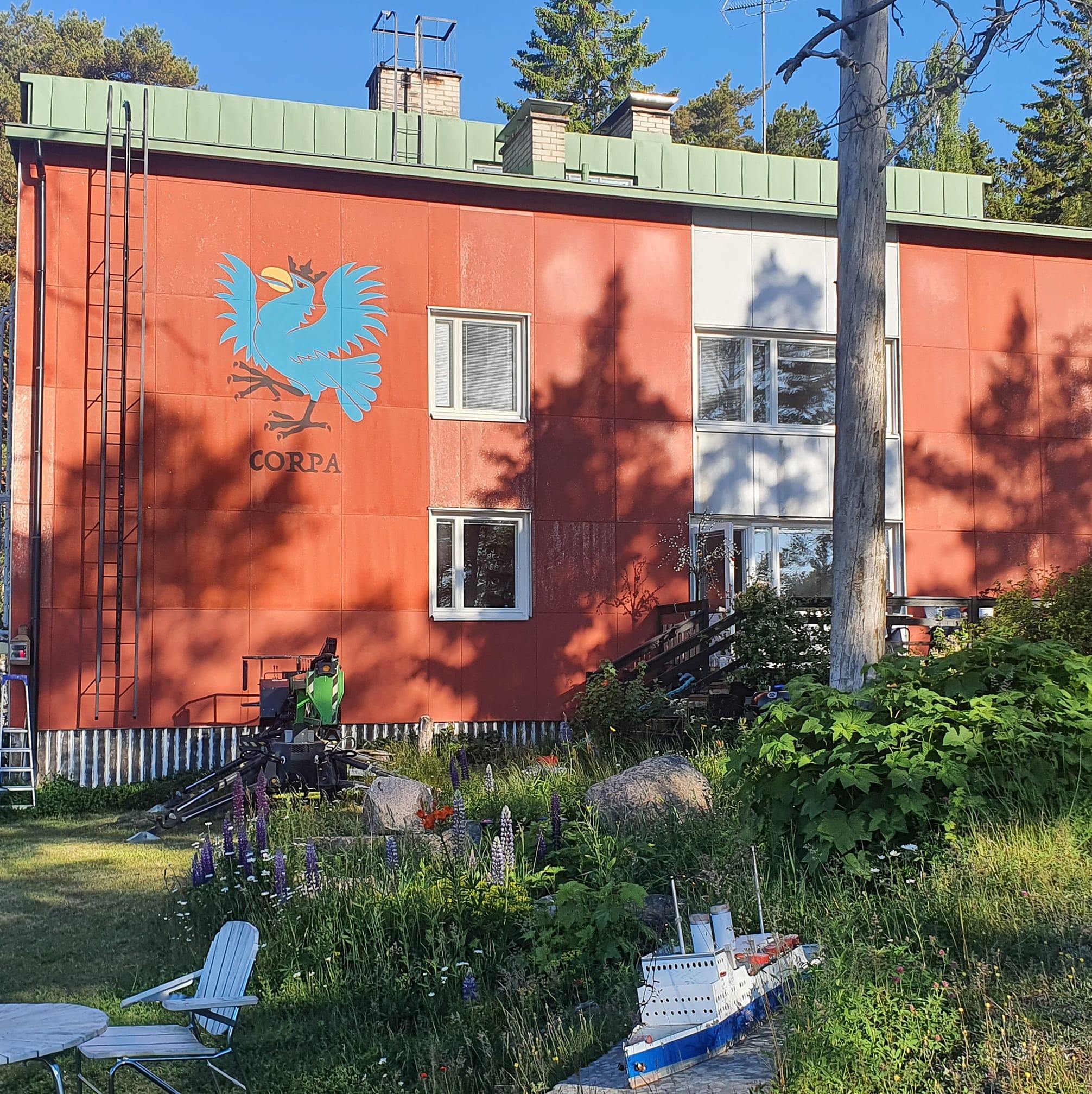
What it is: AARK is an artist-run, non-profit residency on Korpo, close to the sea and near the car ferry that links the islands. It was founded by contemporary artist Renja Leino and Bengt Andersson, and is listed on Res Artis and the Finnish Artist Residency Network.
Space and housing:
- Two apartments in a small 1960s building, each around 71 m²
- Each apartment usually has two bedrooms and a live-work space
- Right by the sea; close enough to walk to the ferry connection
The set-up is simple and practical. You sleep and work in the same space, and most residents treat the apartment as a combined studio, writing room, and base for fieldwork.
Daily atmosphere: AARK can feel like a quiet retreat or a small, temporary artist house, depending on who else is in residence. Artists Cook together, share walks, and sometimes organize things like potluck dinners or discussion nights around themes such as art and place. You can absolutely keep to yourself, but the layout and the island scale make it easy to run into each other and share ideas.
Who it suits:
- Visual artists, writers, sound artists, and researchers who do well with self-directed time
- People whose work thrives on walking, field notes, photography, drawing, listening, or slow experimentation
- Artists interested in island life, ecology, and community exchange without heavy institutional structure
Program structure and length: AARK typically offers flexible residency lengths. Various listings mention one to several months, sometimes stretching to medium-term stays. The exact options change by open call, so always check AARK’s website for current details on duration, costs, and expectations.
The residency is usually self-directed: no formal teaching, minimal required programming, and a lot of freedom. That said, the organizers are practicing artists themselves and may help connect you with local people or possibilities if your project has a clear link to the archipelago.
Costs and support:
- Accommodation and workspace are provided; other conditions vary by open call
- You generally cover your own materials, food, travel, insurance, and personal expenses
- Some cycles or partnerships may include partial support, but AARK is not usually framed as a fully funded residency
Why artists pick AARK:
- Artist-run ethos: decisions are grounded in artistic practice rather than bureaucracy
- Live-work apartments: you are not commuting to a studio in a different town
- Landscape at your front door: the sea, forest paths, and ferries become part of your daily routine
- Balance of solitude and community: you can be on your own or lean into informal group life
Korpo Archipelago Residency at Archipelago Centre Korpoström
What it is: The Korpo Archipelago Residency is run by the Pro Artibus Foundation in collaboration with the Archipelago Centre Korpoström, the Åbo Akademi marine biological research station, and other local partners. It is a more structured, research-linked residency than AARK.
Location and set-up:
- Workroom at the Archipelago Centre Korpoström, a public hub where art, science, and nature education meet
- Residency housing in Lillstugan, next to the centre
- Right by the water, surrounded by trails, docks, and research activity
Who it is for:
- Swedish-speaking professional artists and curators working in Finland, especially in the visual arts
- Practitioners interested in ecology, marine life, climate, or environmental research in a serious way
- Artists who want dialogue with scientists, educators, and public programming rather than just solitude
Structure and funding:
- Residency terms are generally fixed (for example, a multi-month stay) rather than a short retreat
- A working grant from the Swedish Cultural Foundation in Finland supports your time
- Expect some level of public-facing outcome, research focus, or collaborative aspect
Why this residency is different:
- Embedded in a knowledge ecosystem: marine research, biosphere programs, and environmental education are on-site
- Good fit if your practice already uses scientific methods, fieldwork, or archival research
- Suitable if language, minority cultures, or Swedish-speaking communities are part of your work
Compared with AARK, this residency is less about pure retreat and more about engaging with existing structures and communities around the Archipelago Centre.
Other Korpo-linked opportunities
Korpo is small, so you will not find a long list of separate residency venues. Instead, opportunities cluster around these hubs:
- AARK and its extended network of collaborators and visiting artists
- Pro Artibus projects and satellite programs connected to Korpoström
- Occasional site-specific commissions, exhibitions, or projects tied to regional festivals and institutions
New opportunities tend to surface through networks rather than big announcements. If you are already in Finland, staying in touch with Pro Artibus, Archipelago Centre Korpoström, and national listings like Res Artis and Reviewed by Artists can help you spot them early.
What the art scene feels like on a small island
Korpo does not run on galleries and openings. The art ecosystem is built around residencies, landscape, and crossovers between art, science, and local life.
Core elements you can expect:
- Residencies as anchors: AARK and the Korpoström programs are the main gravity points for contemporary art.
- Site-responsive practice: Installations in the forest, sound pieces by the sea, research-driven work about the archipelago itself.
- Regional connections: Links to Turku, Parainen/Pargas, and other archipelago islands for exhibitions and events.
- Intimate events: Open studios, artist talks, shared dinners, walks that double as work sessions.
Seasonality is real:
- Summer and late spring: More visitors, denser ferry schedules, more programming at Archipelago Centre Korpoström, and more informal social life.
- Autumn and winter: Quieter, darker, and more introspective. Perfect for writing, drawing, editing, and smaller-scale studio work. Logistics take a bit more planning.
If you need regular openings and big crowds, Korpo might frustrate you. If your ideal art conversation is a long one at a kitchen table after a day of walking and working, you will likely feel at home.
Practical living: costs, areas, and daily logistics
Cost of living and hidden expenses
Accommodation through the residency usually keeps your baseline costs manageable, but the island setting introduces a few extra variables.
Budget for:
- Travel to Finland and onward travel to Korpo (buses + ferries or car)
- Groceries and basic supplies, which can be a bit pricier than big-city supermarket chains
- Art materials, either brought with you or ordered in advance
- Occasional trips to Turku or Parainen for supplies or exhibitions
- Seasonal needs: warm clothing, good shoes, possibly extra equipment if you are working outdoors
There is usually at least one local shop for essentials, but specialist or larger materials are easier to source from Turku or by mail order. If your work depends on very specific tools or substances, plan to bring them or ship them ahead.
Where you might stay and work
Korpo is small, so instead of thinking in neighborhoods, think in functional zones.
- Near ferry and central services: AARK sits in this category: close to a ferry link, walkable to basics, connected but quiet.
- Korpoström / Archipelago Centre area: Best for the research residency; everything revolves around the Centre, the shoreline, and nearby trails.
- Seaside and village edges: Some housing is scattered along the water or slightly away from the center, offering more seclusion and direct landscape access.
The main questions to ask any host:
- Is a car recommended or optional?
- How far is the nearest shop, by foot and by bus?
- What is the winter situation like for roads, ferries, and walking paths?
- Is the studio heated and usable year-round?
Studio and workspace reality
In Korpo, your studio is usually part of the residency, not something you rent separately in the open market.
- AARK: Live-work apartments; good for writing, drawing, small sculpture, laptops, sound, and light to moderate mess.
- Korpoström residency: Dedicated workroom in the Archipelago Centre; better for research, installation planning, or work that benefits from public proximity.
If your practice involves heavy fabrication, hazardous materials, or very large works, check carefully what is possible. You might end up using a combination of lighter studio work, field recording, and portable processes while in Korpo, with major fabrication happening before or after the residency elsewhere.
Galleries, public venues, and how work reaches people
Korpo itself does not have a dense gallery grid, but it connects into a broader network.
Key spaces and contexts:
- Archipelago Centre Korpoström: Exhibitions, screenings, talks, and outdoor works that link art, science, and nature. If you are in the research residency, this is home base.
- AARK-related events: Open studios, informal presentations, and possible collaborations with nearby venues in the Turku archipelago region.
- Regional institutions: Museums and galleries in Turku or Parainen can become partners for work generated during your stay.
Many residency projects in Korpo are not conventional white-cube exhibitions. They might be:
- Temporary interventions on forest paths or shorelines
- Sound walks or maps
- Artist talks with local communities and visitors
- Research outputs published later, after you leave
If you need a clear exhibition at the end, discuss it upfront with the host. Otherwise, treat Korpo as a research and production phase that feeds into later shows.
Getting there and getting around
Typical route
Most artists arrive via either Helsinki or Turku.
- By air or long-distance train: Fly into Helsinki or Turku, or take a train if you are already in the region.
- To Turku / Parainen/Pargas: From Helsinki, you can continue by train or bus to Turku, then onward by bus toward the archipelago.
- To Korpo: A combination of roads and short ferries links the islands. Buses usually coordinate with ferries, but schedules can change by season.
Residency organizers often provide a suggested route and current bus lines; always cross-check with local transit websites and ask for the most recent advice, especially outside summer.
Car or no car?
Staying without a car works best if:
- Your residency location is walkable to a shop and bus stop
- Your practice is lightweight (laptop, sketchbooks, cameras, small gear)
- You are comfortable syncing your rhythm to bus and ferry timetables
A car is helpful if:
- You bring bulky materials, sound equipment, or tools
- You want to explore multiple islands or remote outdoor sites
- You are staying during a quiet season with sparse buses
Ferries in the archipelago are usually well-organized, but in winter and shoulder seasons the timetable can be tight. Build in buffers for travel days if you have flights, trains, or shipping deadlines.
Visas, paperwork, and money side
Requirements depend heavily on your citizenship and how long you stay.
- EU/EEA and Swiss citizens: Generally can stay and work in Finland without a visa, while still following local registration rules for longer stays.
- Non-EU/EEA citizens: Often need a Schengen visa for short stays or a residence permit for longer, depending on the residency length and whether a grant is involved.
Residencies can usually issue invitation letters that confirm your accommodation, dates, and any funding. If you receive a grant or stipend, ask your host about Finnish tax implications and what documents you will get for your home country.
When to go: choosing your season strategically
The same residency can feel like a different place depending on the month.
- Late spring to early autumn: Long days, accessible walking routes, more social life and visitors. Good for outdoor projects, photography, sound recording, and collaborations with local programs.
- Late autumn and winter: Shorter days, quieter island, potential snow and ice. Strong choice if you need deep focus for writing, editing, planning, or indoor experiments.
When you apply, match your proposed work to the time of year. If your project relies on greenery, outdoor installations, or fieldwork, be explicit about needing the lighter seasons. If you want solitude and atmosphere, explain how winter conditions support your process.
Community, events, and how to plug in
Korpo’s art community is small but connected through a handful of key actors.
People and organizations to know:
- AARK: Resident artists, local collaborators, and the founding team form a peer network you can tap into for feedback and shared projects.
- Pro Artibus and Archipelago Centre Korpoström: Curators, researchers, and staff who link your work to marine biology, ecology, and public programming.
- Regional cultural groups: Local heritage societies, environmental organizations, and cultural services in nearby municipalities.
Common ways artists engage:
- Open studios for local visitors and other residents
- Artist talks or short presentations at the Archipelago Centre
- Group dinners and potlucks as informal critique spaces
- Guided walks or field trips that become part of the work
Because the community is small, generosity and clear communication go a long way. If you want to host a workshop, give a talk, or invite locals to participate, tell your residency contact early so they can help coordinate.
Is Korpo a good fit for you?
Korpo residencies tend to work well if you:
- Enjoy quiet and long stretches of unstructured time
- Are curious about ecology, maritime culture, minoritized language, or island life
- Can adjust your practice to a relatively modest studio set-up
- Are comfortable managing practical details like ferries, weather, and limited shops
They may be less ideal if you need:
- Large fabrication facilities or industrial workshops
- Constant access to a dense gallery and nightlife scene
- A highly programmed residency schedule with daily events and formal instruction
If the idea of a quiet, bilingual island where your days revolve around working, walking, and a handful of deep conversations feels appealing, Korpo can be an excellent place to stretch your practice. Use your proposal to show why your work belongs in the archipelago, how you will use the landscape and local knowledge, and what you want to bring back from that time to the rest of your practice.