City Guide
Korpo, Finland
Korpo gives you sea, space, and serious time to work, with residency options that suit both quiet studio practice and research-led projects.
Korpo, or Korppoo in Finnish, is one of those places that artists talk about for good reason. It sits in the Turku Archipelago, so you get ferries, shoreline, skerries, pine forest, and long stretches of quiet that are hard to find in a city. For many artists, that mix is exactly the point: enough remoteness to think clearly, enough structure to keep the work moving, and enough connection to Turku that you are not cut off from the wider Finnish art scene.
If you are looking for a residency where the landscape is not just a backdrop but part of the work itself, Korpo belongs on your list. It suits practice that needs attention, walking, reading, listening, writing, drawing, field research, and long-form studio development. It is less about art-world noise and more about time, place, and process.
Why Korpo draws artists
Korpo is small, multilingual, and shaped by water. That matters. The islands give you a clear sense of place, and the local culture sits within Finland’s Swedish-speaking coastal belt, so you will often encounter both Finnish and Swedish in daily life. For artists working with identity, language, memory, ecology, or maritime culture, that setting can be rich without feeling overdetermined.
The other big draw is the pace. Korpo supports work that needs deep focus. You are not arriving for a constant stream of openings or gallery visits. You are arriving for space to think and the chance to let the surrounding environment inform the work. That is especially useful if your practice involves research, sound, installation, writing, environmental themes, or site-specific projects.
- Strong landscape presence: sea, ferries, shorelines, and island weather
- Small-scale community rather than a busy art scene
- Good fit for process-oriented and research-based work
- Access to regional networks through Turku and nearby institutions
Residency options in Korpo
AARK Archipelago Art Residency
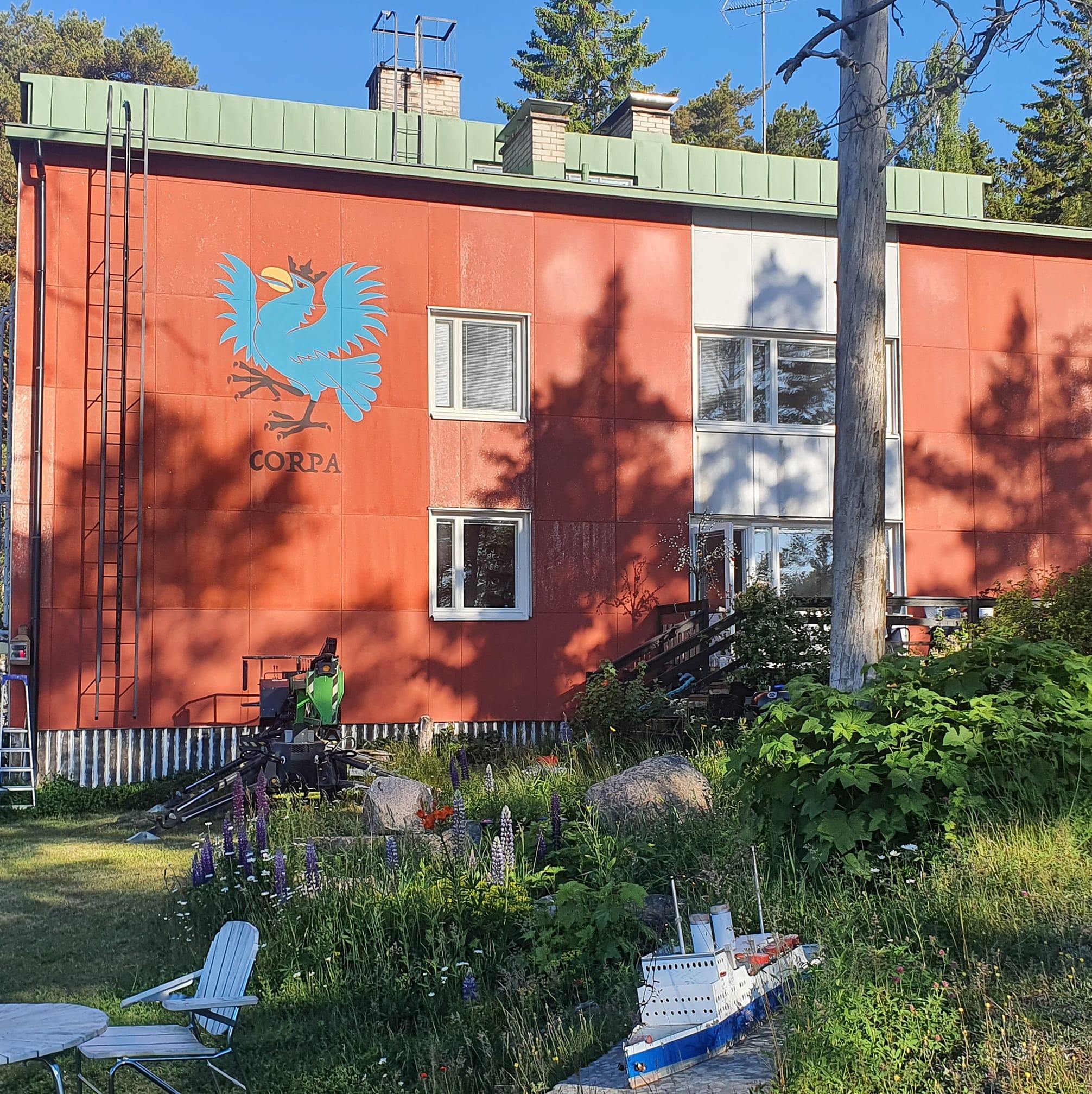
AARK is one of the most established artist-run residencies in Korpo. It is a non-profit program founded by artists, and that shows in the tone of the place: practical, grounded, and flexible. AARK offers a quiet retreat, but it can also become social depending on who is there at the same time.
The residency provides two apartments, each about 71 square meters, with two bedrooms and a live-work space. The setting is right by the sea, close to the ferry connection, which gives the residency a clear island feel without making arrivals overly complicated. Residency periods can vary according to the project, with stays generally ranging from three to eight months.
AARK tends to suit artists who are comfortable working independently and shaping their own time. Past residents often describe a strong sense of community, especially when several artists are present together. Shared meals, informal exchange, and conversations about place and process are part of the rhythm here.
- Good for visual artists, writers, and interdisciplinary practitioners
- Best if you want a self-directed stay with room for reflection
- Travel, materials, and maintenance costs are typically your responsibility
- Works well for projects shaped by landscape and local context
Korpo Archipelago Residency by Pro Artibus
This residency is more specific in its framing. Run by the Pro Artibus Foundation, it is designed for professional visual artists and curators working in Finland within the Swedish-speaking cultural sphere. It takes place at Archipelago Centre Korpoström and is closely linked to marine biology and environmental research partners, which gives it a strong research dimension.
The residency includes a workroom at the centre and accommodation in Lillstugan nearby. It is a good fit if your practice sits at the intersection of art, ecology, and institutional collaboration. If you want your residency to connect directly with marine research, protected archipelago landscapes, and cross-disciplinary dialogue, this is a compelling option.
What stands out here is how clearly the program frames its relationship to the site. This is not just studio time in a scenic location. It is a residency with an explicit conversation between art and the archipelago environment.
- Strong match for research-led visual art and curatorial work
- Especially relevant for Swedish-speaking artists in Finland
- Good for projects involving ecology, marine themes, or site-specific inquiry
- More institutional in feel than AARK, with clear research connections
What the working environment feels like
Korpo is not a place where you need to perform productivity. That can be a relief. The setting encourages a slower pace, but not a passive one. Many artists use the time to develop new work, test ideas, or shift their practice in a more research-driven direction. The landscape itself becomes part of your thinking: walking routes, ferry crossings, weather, light, shoreline textures, and the rhythms of island life all start to shape the work.
That said, Korpo is still practical. It has residency infrastructure, and that makes a real difference. You are not trying to improvise a studio in an unfamiliar village with no support. You are entering a place where artists have worked before, and where there is already a framework for making and living. That lowers the friction and lets you get to work sooner.
If your practice benefits from community, Korpo can provide that too, but in a small way. The conversations are more likely to happen over a shared meal, a walk, or an informal studio visit than in a packed event schedule. For many artists, that is exactly the right balance.
Getting there and getting around
Korpo is accessible, but you should plan the logistics carefully. Travel usually involves getting to Turku first, then continuing into the archipelago by road and ferry. Ferry schedules matter, especially outside the summer season, so build extra time into your arrival and departure days.
Once you are there, movement is slower and simpler. Walking and cycling are part of the experience, and that can be helpful if your work involves observation or field notes. If you are bringing materials, heavy equipment, or anything fragile, confirm transport details early with the residency host. The island setting is part of the appeal, but it also means you need to think ahead.
- Check ferry times well before travel
- Leave extra space in your schedule for delays
- Confirm material delivery options in advance
- Expect a slower rhythm once you are on site
When Korpo makes the most sense
Korpo is strongest for artists who want quiet without complete isolation. If you need a place where you can read, write, install, record, walk, and think without constant interruption, the island setting gives you that. It is especially good for work that responds to geography, ecology, language, and community in subtle ways.
It may be less suitable if you need a dense gallery circuit, a large local art market, or frequent access to specialized suppliers. The nearest major cultural hub is Turku, which helps, but Korpo itself is better understood as a working landscape than as a busy art district.
Korpo is a strong match if you are
- a visual artist, curator, writer, or interdisciplinary maker
- working with landscape, ecology, or maritime themes
- looking for time, space, and a low-distraction environment
- comfortable with a small community and self-directed pace
- ready to handle island travel and seasonal conditions
How to think about applying
Before you apply, get clear about what you want from the residency. In Korpo, the strongest applications usually read as rooted in place rather than generic. Say why the archipelago matters to your project. If you are interested in marine environments, island communities, language, or the relationship between fieldwork and studio work, make that connection visible.
Also be realistic about your working style. Korpo rewards artists who can make use of quiet time. If you need a built-in public program every week, you may feel underfed. If you can generate momentum internally and use the site as part of the process, the residency can give you a great deal.
For longer stays, check visa or residence-permit requirements early and confirm what documentation the host can provide. If the residency includes funding or a grant, make sure you understand how that affects your situation. The practical side matters as much as the artistic side, especially in a place where travel takes planning.
Where Korpo sits in the larger Finnish context
Korpo is part of a wider Finnish residency landscape that includes city-based programs, research-driven institutions, and remote rural sites. What makes Korpo distinct is the balance of remoteness and access. You are away from urban distraction, but not cut off from cultural infrastructure altogether. That makes it a smart choice for artists who want concentration without total retreat.
If you are comparing options, think of Korpo as a place for depth rather than breadth. It is not trying to give you everything. It gives you sea, work, time, and a clear frame. For the right project, that is more than enough.