City Guide
Korpo, Finland
Korpo gives you sea, quiet, and space to think—plus a few residencies that reward slow, place-based work.
Korpo, or Korppoo in Finnish, is not the kind of place you go for a crowded art scene. You go for time, weather, sea air, long walks, and the kind of concentration that only seems possible when the ferry schedule shapes your day. For many artists, that is the point. Korpo makes room for work that needs space to breathe.
The island sits in the Turku Archipelago, where the landscape feels active even when nothing is happening: water shifting, birds moving, light changing fast, weather rolling in. If your practice responds to environment, ecology, sound, writing, drawing, installation, or research-led processes, Korpo can be a strong fit.
Why artists choose Korpo
Korpo works well for artists who want a residency that feels both remote and grounded. It is small, but not empty. You are close to the sea, close to ferries, and close enough to other islands that movement becomes part of the experience.
- Quiet for concentration: The setting helps if you need uninterrupted studio time.
- Strong sense of place: The archipelago itself often becomes part of the work.
- Good fit for research-based practice: Ecology, marine studies, walking, mapping, and site-specific thinking all make sense here.
- Small-scale community: Residencies tend to be intimate, so you can have real exchange without getting lost in a big program.
- International but not overwhelming: You may meet artists from several countries, but in a setting that still feels manageable.
Korpo is especially useful if you want a residency that supports slowing down rather than performing productivity. If you need a dense exhibition circuit or daily access to a city art network, this is not the right match. If you want to build a project from the site outward, it is a very good one.
Residency options in Korpo
AARK Archipelago Art Residency
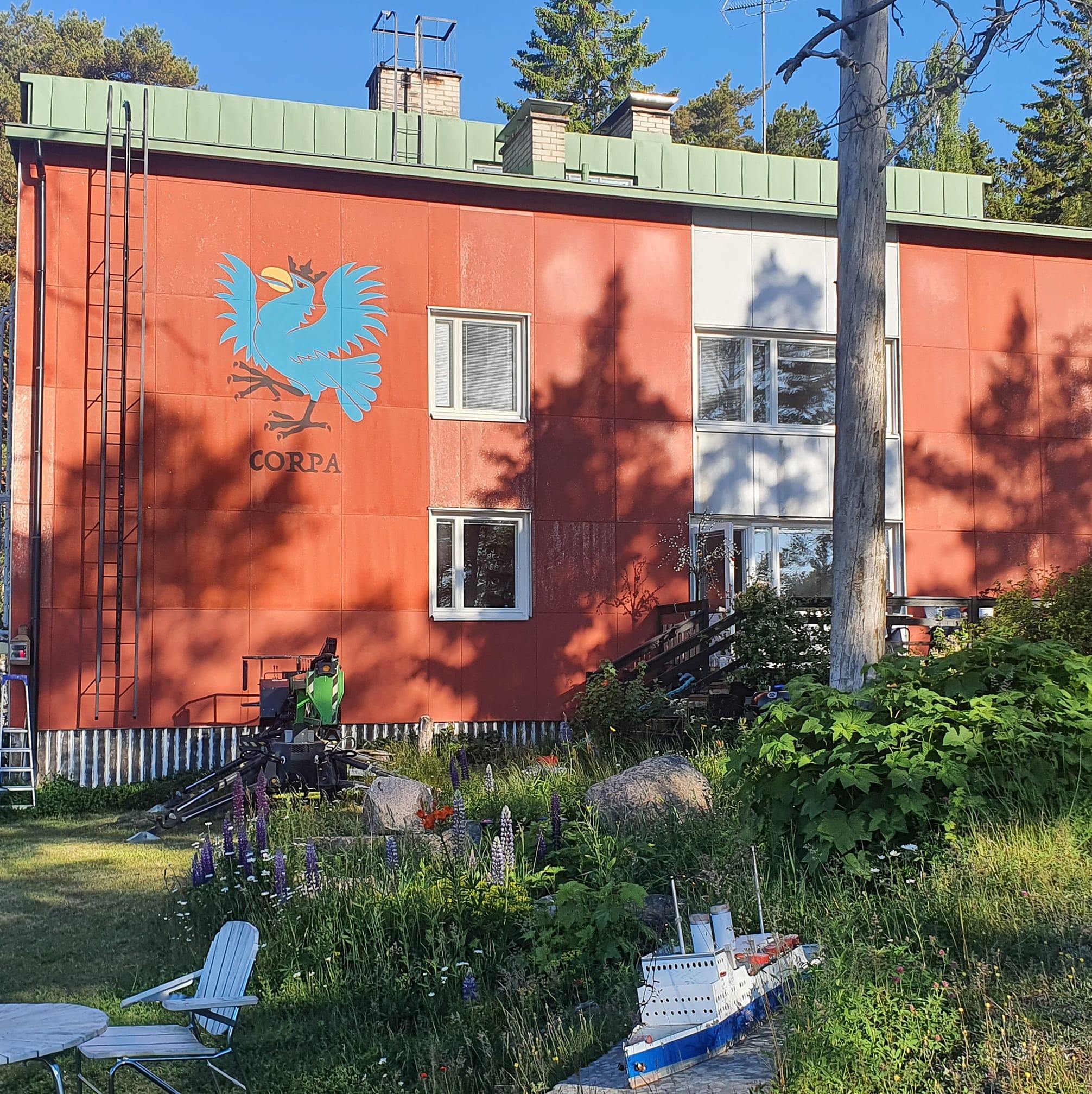
AARK is one of the most visible artist residencies in Korpo. It is artist-run, non-profit, and located right by the sea. The setting is practical as well as beautiful: two apartments, each about 71 square meters, each with two bedrooms and a live-work area. The building dates from the 1960s and sits near the car ferry connection between the islands, which makes travel and supply runs more manageable than you might expect in a remote place.
The residency suits artists who are comfortable working independently. It can also be social, depending on who else is in residence. That flexibility matters. Some artists want a quiet retreat; others want informal exchange, shared meals, and conversation. AARK can support both.
According to listed information, the residency period can vary and may extend for several months depending on the project and application. The artist typically covers materials, maintenance, and travel, so it is worth checking current conditions carefully before planning a stay. The program has also been described by visitors as a place where communal dinners and informal discussions naturally emerge, which can be a real plus if you like peer exchange without a rigid program structure.
Korpo Archipelago Residency at Archipelago Centre Korpoström
This is the more research-oriented option. It is linked to Pro Artibus Foundation and connected to the Archipelago Centre Korpoström, with collaboration that brings together art, marine research, and environmental context. The residency is designed as a pilot project connecting artistic work with the surrounding scientific and cultural infrastructure.
That makes it a strong match for artists and curators interested in ecology, marine issues, and cross-disciplinary work. It is especially relevant for Swedish-speaking professional artists and curators working in Finland. The program is more embedded than a simple retreat: you are not just in the landscape, you are in relation to institutions, research, and public context.
If your work needs conversation with scientists, environmental agencies, or educational settings, this residency stands out. If you are looking for total distance from institutional structures, it may feel more directed than AARK.
What the practical setup feels like
Korpo is small, so the practical side of your stay matters. Housing and studio arrangements vary by residency, but most artists should expect a simpler infrastructure than in a city. That is part of the appeal, but it helps to arrive prepared.
- Bring key materials with you: Supplies can be harder to source locally, and transport can be a factor.
- Check what is included: Ask about internet, linens, heating, utilities, shared tools, and laundry.
- Plan for ferry logistics: Moving work or equipment is easier when you know the route in advance.
- Expect a slower pace: Shop hours, transport, and access to services will not match a city routine.
Costs can be more manageable than in Helsinki, but not everything is cheaper in a rural island setting. Groceries, tools, and transport can add up, especially if your residency does not cover travel or materials. That is worth factoring into your application decision, not just your budget.
Getting there and getting around
Korpo is reached through the Turku archipelago route. In practice, that means getting to Turku first, then continuing by bus or car along the island connections and ferry system. The journey is part of the shift in pace. You leave the city behind gradually, and by the time you arrive, your schedule tends to feel different too.
A car can help if you are carrying materials or need to move around the island more freely. Cycling can work in warmer months, depending on where you are staying and what the weather is doing. Public transport exists, but it is not the kind of thing you build a flexible studio life around without checking timetables carefully.
If you are traveling with larger work, confirm vehicle access and loading conditions with the residency before arrival. That one step can save a lot of stress.
Who Korpo suits, and who it does not
Korpo is a good match for artists who want time to think, make, read, walk, and respond to landscape. It is especially strong for practices that can grow from observation and local context.
- Good fit for: visual artists, writers, sound artists, researchers, photographers, curators, and interdisciplinary projects
- Good fit for: artists who are comfortable self-directing their time
- Good fit for: work connected to environment, ecology, marine life, place, and slow production
- Less ideal for: artists who need a large social scene every day
- Less ideal for: anyone who depends on frequent urban networking or a dense gallery circuit
Visa planning also matters if you are coming from outside the EU or EEA. Residencies in Korpo can be several months long, so a short stay visa may not be enough. Make sure you understand the rules for your nationality early, and ask the residency whether they can provide an invitation letter or supporting documents.
When Korpo is at its strongest
The island changes with the season, and that changes the residency experience. Late spring through early autumn is usually the easiest time for travel and outdoor work. The light lasts longer, the ferry movement is simpler, and the landscape is especially open to field-based practice. Autumn has a strong atmosphere if you like weather, solitude, and a quieter pace. Winter is more demanding, but it can be excellent if your work benefits from near-isolation and you do not mind shorter days.
If your process depends on walking, observing, sketching, or recording, the warmer months will usually give you more to work with. If you want to disappear into the studio and come out with something shaped by silence, the colder season can be deeply productive too. The right choice depends on how you work, not just what looks beautiful in photos.
How to choose between the Korpo residencies
If you want a straightforward artist-run retreat near the sea, AARK is the obvious place to look first. It offers the kind of setting many artists hope for: independent space, a strong sense of place, and enough structure to support a serious project without over-programming it.
If you want a residency tied to marine research, environmental collaboration, and institutional exchange, the Archipelago Centre program is the better fit. It is more specific, more research-facing, and particularly relevant if your work already moves between art and ecology.
In both cases, the key is to match the residency to the way you actually work. Korpo rewards artists who can use the site well. It is not about arriving with a fixed idea of what an island residency should be. It is about letting the place shape the work without losing your own process.
If you want a residency that gives you sea, focus, and enough distance to hear your own thoughts again, Korpo is worth serious consideration.
Explore Finland
More city guides
Opportunity Intelligence
Ready to find your next residency?
Get a personalized shortlist — scored against your practice, discipline, and what you need right now.
See how Intelligence works →