
City Guide
Fogo Island, Canada
How to think about Fogo Island as an artist, not a tourist destination
Why Fogo Island is on so many artists’ lists
Fogo Island isn’t an art capital in the usual way. There’s no gallery crawl, no warehouse district, no cluster of museums. What it does offer is rare: deep time, wild landscape, and a residency system built around living closely with a small North Atlantic community.
If you’re looking at Fogo Island as a residency destination, think about it as a place to be absorbed by rather than a scene to plug into. The island is physically and mentally far from most art centers, which is exactly the point.
- Isolation and focus: The remoteness makes it easy to disappear into long-form work, reading, writing, editing, or research.
- Landscape as collaborator: Ocean, ice, fog, rocks, and fishing towns with distinctive vernacular architecture shape how you move, think, and work.
- Place-based themes: Sustainability, ecology, economy, fishing histories, migration, and belonging run through a lot of projects made here.
- Built-in support: Fogo Island Arts runs a mature residency structure, so you’re not inventing everything from scratch on arrival.
- Community contact: Public events, informal encounters, and everyday errands all become part of the residency.
Fogo Island is also deeply tied to Shorefast, a social enterprise that connects art, local economy, and hospitality. That means your work sits inside a larger conversation about how culture and community sustain each other.
The core residency ecosystem: Fogo Island Arts
Almost everything residency-related on Fogo Island passes through Fogo Island Arts (FIA). Understanding their structure helps you decide how (or if) to position yourself for this place.
Fogo Island Arts International Residency Program
Who it’s for: professional contemporary artists, writers, curators, filmmakers, musicians, designers, and other thinkers whose work already circulates publicly and is recognized by peers.
How it works:
- Residency focus: You get time and space to think and produce, with a strong emphasis on research, reflection, and context-aware work rather than pure production speed.
- Accommodation: Residents stay in traditional saltbox houses within Fogo Island communities, so daily life is embedded in the local rhythm.
- Studios: Individual studios are available for those who need them. They’re accessible 24 hours a day and located in scenic walk-in sites that are intentionally a little removed from everyday life.
- Public engagement: Residents are expected to share work or thinking with the community through a talk, workshop, performance, or similar public event.
- Selection routes: Artists come in through invited partnerships, institutional collaborations, and periodic open calls.
- Typical duration: Historically, residencies have ranged from roughly one to three months, depending on the route of selection.
FIA is not a training program or an early-student opportunity. Think of it as a research and production context for artists already comfortable working independently and speaking publicly about their practice.
Hnatyshyn Foundation – Fogo Island Arts Young Curator Residency
If your work is curatorial rather than strictly studio-based, there is a dedicated option: the Hnatyshyn Foundation – Fogo Island Arts Young Curator Residency.
- Who it’s for: emerging Canadian curators in a defined younger age range (25–30).
- Duration: about six weeks of on-island research and reflection.
- Focus: time to research, think, and engage with the island’s cultural and physical landscape, plus cross-disciplinary conversations with artists and community.
- Support: Travel to and from the island, accommodation in a heritage house, use of a vehicle on the island, and a weekly honorarium for food and incidentals are part of the typical offer.
For curators, this is less about staging a large exhibition on-site and more about building curatorial thinking shaped by a specific place, with space to consider how ecology, community, and presentation intersect.
Partnership residencies and prize-linked routes
Fogo Island Arts also works with partners, including prize organizations and artist-run centers. One often mentioned route is through an Ars Viva Prize Partnership. In those cases, artists are selected via the partner’s own process, then hosted on Fogo Island.
If you regularly apply to or are shortlisted for awards and institutional programs, keep an eye out for Fogo-linked partnerships in those networks. The terms (length of stay, support, expectations) follow that partner’s framework plus FIA’s residency norms.
What “the scene” actually looks like on Fogo Island
Fogo Island doesn’t function like a city. You will not be choosing between multiple residencies scattered across different neighbourhoods. Almost everything revolves around FIA, Shorefast, and a small group of venues.
Fogo Island Arts studios
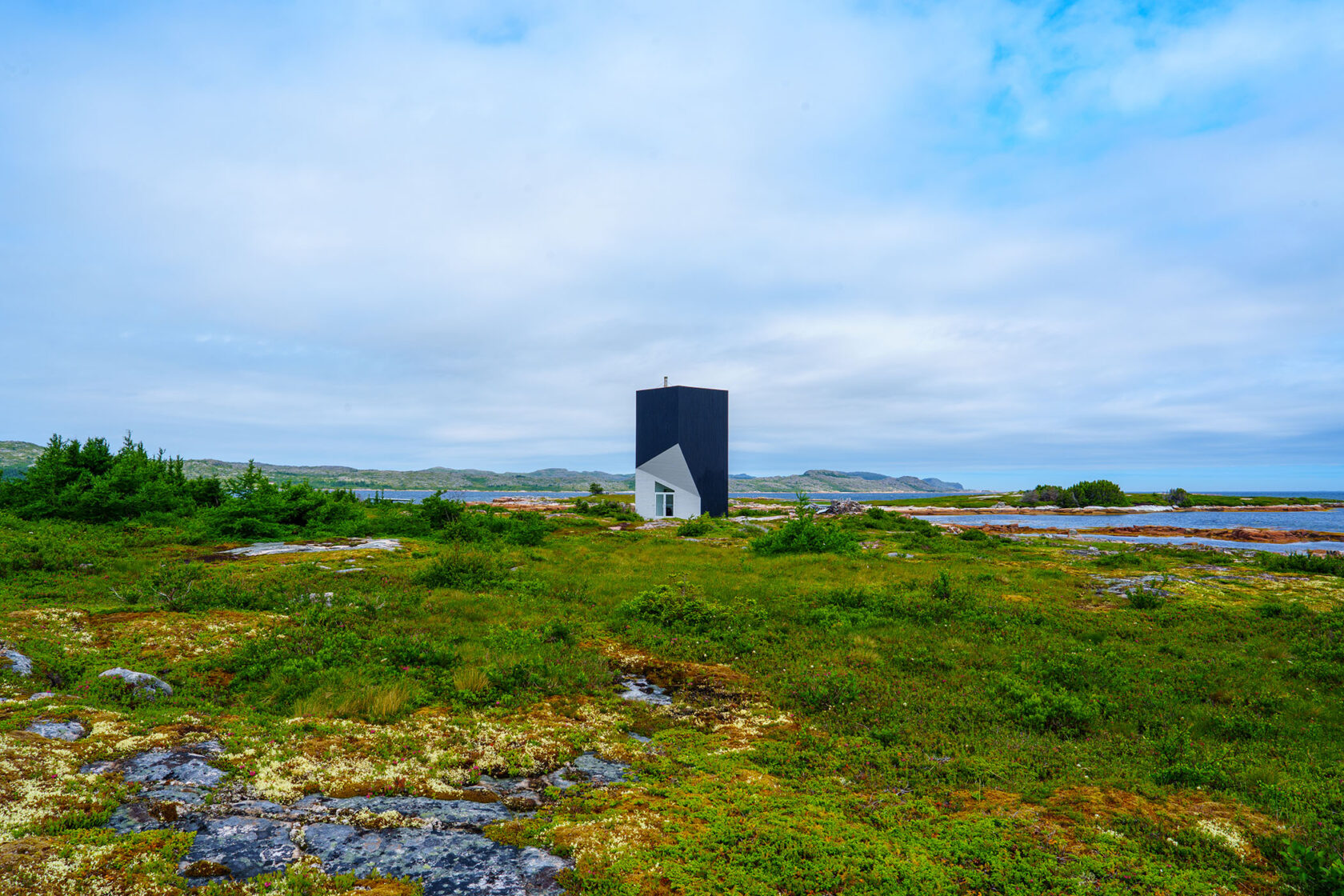
The studios are one of the most recognizable parts of the residency experience. Designed with strong architectural character and sited in remote or semi-remote landscapes, they shape how you work.
- Architectural studios: Purpose-built studios by Saunders Architecture are placed in dramatic landscapes around the island, accessible on foot from nearby communities.
- Renovated traditional buildings: Some working spaces are restored houses or heritage structures, tying your day-to-day process to the island’s built history.
- Access and use: Studios are available to residents around the clock, which matters if your working rhythm follows light, tides, weather, or insomnia.
These spaces are not generic white boxes. If you need absolute neutrality, factor that in. If you like context bleeding into your work, the studios are a strong reason to come.
Fogo Island Gallery and the Fogo Island Inn
The main public-facing exhibition venue is the Fogo Island Gallery, located inside the Fogo Island Inn.
- Program: Exhibitions feature new work by artists and curators who have taken part in the FIA international residency program.
- Audience: Shows reach both local residents and visitors staying at the Inn, a mix of art-aware travelers and people newly encountering contemporary work.
- Trajectory: For some residents, the gallery is a possible presentation platform, sometimes after the residency itself has ended.
The Inn is also a cultural venue in its own right, with art integrated into its spaces and a broader conversation about how art, hospitality, and community economics are interwoven.
Public programs and community events
Instead of a weekly gallery opening schedule, you’re more likely to encounter:
- Artist talks and public presentations by residents
- Workshops, studio visits, and small-scale performances
- Informal gatherings where new work or ideas are shared
- Occasional summer workshops and dialogues organized by FIA
These moments often matter more for the depth of conversation than for networking volume. You may speak to fewer people overall, but you’ll likely have more sustained exchanges with the ones you meet.
Living and working on the island
Because this is a remote place, it helps to treat the whole island as your “studio city.” Thinking ahead about logistics will free you up to focus on the work once you arrive.
Where you’ll be based
Fogo Island is made up of separate communities rather than a single central town. As a resident, you’ll generally live in one of these communities in a saltbox house or heritage home.
- Community immersion: You are not tucked away in an artist-only complex; you live alongside local residents, with everyday contact at shops, the ferry, cafés, and roadside encounters.
- Working locations: Your studio may be walkable from your accommodation or set slightly apart in a more isolated landscape.
- Named places: Communities like Joe Batt’s Arm often come up in residency descriptions, and your entry point to the island by ferry connects through the Farewell area on the mainland side.
Instead of worrying about being in a “cool” neighbourhood, think about how far you want to walk to the studio, how much quiet you need, and how easy you want it to be to bump into people.
Cost of living and what residencies usually cover
Remote islands tend to be more expensive for basics like groceries and transport, because everything has to get there by road and ferry. That said, the major residency programs cover a lot of the essentials.
Typical support may include:
- Accommodation in a house for the duration of your stay
- Studio access at no additional fee
- Sometimes: on-island transportation (a vehicle for residents or access to shared transport)
- Sometimes: travel support to reach Fogo Island
- Sometimes: a weekly honorarium or per diem for food and incidentals
The exact mix varies by program and partner. When considering an invitation or applying, clarify specifically:
- Is international or domestic travel covered, partially covered, or not covered?
- Is there a stipend or honorarium? How is it paid and in what amount?
- Is a vehicle included, and who pays for fuel?
- Are there any fees for the residency itself?
- What materials and equipment (if any) are provided on-site?
Having clear answers will help you budget and decide which projects are realistic to undertake while in residence.
Materials, fabrication, and working methods
Because Fogo Island is geographically isolated, expecting ready access to specialized materials or fabrication is unrealistic. This is a place for:
- Light, portable work (drawing, writing, sound, digital projects, editing, research)
- Fieldwork, interviews, documentation, and slower experimentation
- Using local materials and knowledge, when appropriate and done respectfully
If your practice relies on heavy fabrication, big installations, or very specific gear, consider adapting your approach for the residency: prototypes, models, writing, or pre-production work that leads into later fabrication once you’re back in a more resourced environment.
Getting to Fogo Island
Travel is part of the residency experience here, not just a hurdle. Build in extra time and treat the journey as a shift into a different pace of thinking.
Typical route
A common way to reach Fogo Island is:
- Fly to Gander Airport in Newfoundland and Labrador.
- Travel by car or shuttle (about an hour or so) to the Farewell ferry terminal.
- Take the ferry across to Fogo Island (or via Change Islands, depending on the route).
Residency organizers usually provide detailed guidance, but you’ll want to double-check ferry schedules and have a plan in case of delays due to weather or maintenance.
Weather and timing
Seasons on Fogo Island are dramatic, and they will shape both your work and your logistics.
- Summer and early fall: More stable weather, easier travel, and fuller access to landscape and outdoor research. Good if you want to move around a lot, photograph, or do community-engaged projects.
- Winter: Colder, windier, and more exposed, with a higher chance of weather-related delays. In exchange, you get stark light, ice, and a quieter environment that suits writing, reading, and introspective work.
When you’re offered or choosing dates, think about what kind of environment your project really wants. Some work thrives on the intensity of winter; some really needs more movement and outdoor time.
Visas and entry
Fogo Island is in Canada, so your entry requirements depend on your nationality.
- Check if you need a visitor visa or an Electronic Travel Authorization (eTA).
- Ask the residency organizers which visa category past residents have used and if your activities count as cultural, research, or work for immigration purposes.
- Confirm that the host can provide an official invitation letter outlining the residency, support, and duration, which can be helpful for border agents.
Handle this early; visa delays are one of the few things that can genuinely derail a residency you have already secured.
How to approach applying for Fogo Island residencies
Because FIA works with partners and cycles, there is not always a constant open call. You’ll need to treat this as a long-term relationship rather than a quick application sprint.
Where to watch for opportunities
- The Fogo Island Arts website, especially the Open Calls page
- Announcements from the Hnatyshyn Foundation for the Young Curator Residency
- Partner institutions, awards, and art centers that mention Fogo Island residencies in their calls
- Residency aggregators like Transartists, which often list basic information and links back to FIA
Cycles and deadlines shift. Assume that if a specific date is mentioned in an older call, it applies only to that year, not forever.
Positioning your practice for Fogo Island
When you put together an application (or respond to an invitation), a few angles tend to resonate with this context:
- Place-aware practice: Show that you pay attention to site, community, or context in your work. Fogo Island is not a neutral backdrop; the selection panels look for sensitivity to place.
- Sustainability and ecology: If your practice already engages with climate, resource use, or ecology, make that legible. It aligns naturally with the island.
- Independent working style: Highlight your ability to work without constant institutional hand-holding or big teams.
- Public conversation: Since residents usually give talks or events, demonstrate that you’re comfortable speaking about your work to mixed audiences.
Be specific about how you imagine using time there: research questions, methods, and what a “good” residency outcome looks like for you (which does not need to be a fully finished work).
Is Fogo Island the right fit for you?
Not every residency suits every practice. Fogo Island tends to work best for artists and curators who:
- Enjoy long stretches of solitude and self-directed time
- Are interested in ecology, coastal life, or community histories
- Can adapt their material needs to a remote environment
- Value conversation and slower, deeper relationships over rapid-fire networking
- Are comfortable with some logistical uncertainty due to weather and travel
It may be a tougher fit if you rely on dense urban networks, nightlife, large fabrication shops, or quick-turn exhibition cycles.
If the idea of a small island where your main distractions are weather, the ocean, and conversations with neighbours sounds like exactly what your practice needs, then Fogo Island is worth putting on your residency shortlist and actively tracking.
Explore Canada
More city guides
Opportunity Intelligence
Ready to find your next residency?
Get a personalized shortlist — scored against your practice, discipline, and what you need right now.
See how Intelligence works →