City Guide
Ballinskelligs, Ireland
How Cill Rialaig and the Ballinskelligs landscape actually function for artists on the ground
Why Ballinskelligs pulls artists in
Ballinskelligs is tiny, remote, and dramatic. You get cliffs, peat bogs, Atlantic storms, long quiet days, and very little else. That stripped-back setup is exactly why artists keep going there.
This is not a city residency where you hop between openings and project spaces. Ballinskelligs is where you step out of regular life, work intensely, and let the weather and land do their thing on your practice.
Most artists come for one main reason: the Cill Rialaig project. It anchors the art-life in the area and shapes how you experience Ballinskelligs.
Cill Rialaig: how the residency actually works
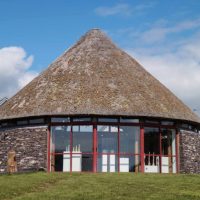
Cill Rialaig is a contemporary arts project built out of a restored pre-famine village on a cliff above the Atlantic. It combines a retreat-style residency village with an arts centre and exhibition space down the road.
The physical setup
The retreat is a cluster of stone cottages that function as live/work houses. Think:
- Seven house-studios: self-contained cottages where you sleep, cook, and work at the same big table.
- Meeting house (Tig an Comhra): a communal cottage for conversation, casual gatherings, and sometimes events with local people.
- Library: books and reference material, a useful reset when your project hits a wall.
- Utility house: practical support space linked to the village.
The cottages are simple but considered. Artists often mention generous work tables, good natural light, and details like a glass-roofed area in some units that turns into a de facto studio.
What the residency offers
The project is set up as a retreat, not a production factory. You can usually expect:
- Accommodation free of charge, with a small utilities/service fee.
- Live/work space rather than separate studios and bedrooms.
- No television, telephones, or in-house internet in the cottages, so your default mode is offline.
- Self-directed time with no strict output requirement.
- Informal studio visits and chats if you want them, not a rigid critique schedule.
- Access to a print shop in Ballinskelligs village for monoprinting and etching, by advance booking.
The residency has hosted thousands of artists since the early 1990s: painters, writers, filmmakers, photographers, printmakers, composers, choreographers, and others. You often share the village with a small mix of disciplines, which keeps things alive but not hectic.
Who it suits and who it doesn’t
Cill Rialaig works best if you thrive on independence and can build your own structure. It suits artists who are comfortable with quiet and who want a meaningful break from digital noise.
Good fit if you:
- Are a painter, printmaker, photographer, writer, composer, or mixed-media artist who can work on a table or in a modest studio.
- Want to work in silence and use the landscape as a recurring reference point.
- Like long stretches of unbroken time with no events calendar to distract you.
- Enjoy talking process with a small group rather than large social scenes.
Less ideal if you:
- Need high-speed internet in the studio every day.
- Depend on specialist equipment or large-scale fabrication facilities.
- Draw energy from big-city nightlife and a constant flow of openings.
- Dislike strong weather, isolation, or very quiet evenings.
Ballinskelligs as a place to work
Ballinskelligs is technically a village, but for artists it functions more like a wide-open working landscape with a few key anchors.
The main zones you’ll move through
You will mainly orbit three areas:
- Cill Rialaig village: the retreat itself, high on a cliff. This is where you live and work. It feels more like an outpost than a neighborhood.
- Ballinskelligs village and coastline: down the hill, with minimal amenities, a beach, and the print workshop connected to the project. Good for walks, photography, and small errands.
- Nearby service towns such as Waterville, Cahersiveen, Killorglin, and Killarney, which are key for groceries, pharmacies, and any materials you forgot.
The rhythm is simple: work in the cottage, stretch your legs on the headland or beach, do supply runs when needed, and occasionally drop into the arts centre or print shop.
Studios, galleries, and making spaces
Ballinskelligs is not about a cluster of galleries. The creative ecosystem is lean but focused:
- Live/work cottages at Cill Rialaig for most painting, drawing, writing, and small-scale construction.
- Meeting house and library as shared space for reading, reflection, and low-key group conversations.
- Print shop in Ballinskelligs village, which you need to pre-book if you want regular access for monoprinting or etching.
- Cill Rialaig Arts Centre, the public-facing side of the project, with exhibition and retail space. Many residents show work there during or after their stay.
If your practice relies on large kilns, elaborate sound stages, or heavy fabrication, you will need to radically scale down or treat the residency as a research and sketching phase. If you mainly need a table, good light, and time, you are in luck.
Daily life: costs, logistics, and weather reality
The residency accommodation itself is often free or low-cost, so your real variables are food, transport, and materials. Being remote makes each of those a bit more deliberate.
Cost of living and budgeting
Expect your budget to focus on:
- Utilities/service fee: a modest charge tied to your stay at the cottages.
- Food: basic groceries from nearby towns; selection gets better the farther you go.
- Transport: the big one. Public transport exists but is limited. Many artists find a rental car or shared car essential.
- Materials: basic art supplies can be improvised or sourced in larger towns, but specialized items should be packed and shipped ahead if possible.
- Weather-related costs: decent waterproof layers and warm clothing are not optional expenses here.
A good approach is to treat your first shopping run as a setup mission: get staple food, cleaning supplies, any missing tools, and anything that lets you avoid constant trips back and forth.
Transport: how you actually get around
Reaching Ballinskelligs typically involves airports such as Shannon or Cork, then trains or buses to Kerry, and then either a rental car or taxi. Once you are at the retreat, distances are short but not walkable for major errands.
On the ground, artists usually find that:
- A car makes life much easier, especially for grocery runs and trips to the arts centre or print shop.
- Taxis are fine occasionally but become expensive if used as a substitute for a vehicle.
- Roads can be narrow and weather-affected, so plan your trips in daylight if possible.
If you have mobility concerns, contact the organisers early to discuss access between cottages, common spaces, and local services. The village is on a slope and paths can be uneven.
Weather and seasons
The Atlantic is not subtle here. Light shifts quickly, rain is common, and wind can be intense. Many artists find that this weather feeds the work, but it does shape your planning.
Calmer periods in late spring, summer, and early autumn give you:
- Longer daylight for walking and field research.
- Slightly more predictable travel and road conditions.
- Higher chances of outdoor sketching, photography, or sound recording.
Colder months bring strong wind, rain, and chill in stone buildings. If you struggle with cold or find harsh weather distracting, aim for milder seasons or make sure your kit includes serious layers and indoor comfort items.
Community, connection, and showing work
Ballinskelligs doesn’t give you a dense arts scene. Instead, it offers a small, changing group of residents, a local Gaeltacht community, and the Cill Rialaig Arts Centre as a bridge between them.
Local art community
The community around Cill Rialaig often includes:
- Fellow resident artists from Ireland and abroad.
- Local artists and craftspeople with long-term ties to the project.
- The team that runs the arts centre and retreat.
- Neighbours and community members who engage through events and visits.
Conversations often happen in low-key ways: shared meals, chance encounters at the meeting house, or informal visits between cottages. The scale is small enough that you actually get to know who is there.
Open studios, talks, and exhibitions
Think of public sharing here as flexible, not guaranteed. Common patterns include:
- Informal open studios where residents show each other work-in-progress.
- Occasional public events or conversations at Tig an Comhra, depending on who is in residence and what projects are active.
- Exhibitions at the Cill Rialaig Arts Centre, sometimes connected to the residency or to artists who have spent time there.
For many artists, the most meaningful “outcome” is not a show during the stay but a body of work that later feeds exhibitions elsewhere. The residency is more about incubation than immediate visibility.
Visas, admin, and planning your stay
Since Cill Rialaig has always welcomed international artists, visa questions do come up, especially for non-European visitors. Rules can change, so treat this as a checklist, not legal advice.
Visa basics to confirm
Before you commit dates, confirm:
- Whether you need a short-stay visa for Ireland, based on your passport.
- How your stay is classified (tourism, cultural visit, or something similar) and what is allowed under that status.
- Maximum length of stay under your permission and whether you plan to travel elsewhere in Europe.
- Whether the residency provides formal invitation letters that you can use for visa applications.
The most reliable sources for this are the Irish Immigration Service, official government websites, and your local Irish embassy or consulate. The residency organisers can often confirm what previous artists in similar situations have done.
Planning timeline and prep
Because the retreat has limited cottages and high demand, it’s smart to think in terms of:
- Early contact to understand availability across seasons.
- Clear project framing in your application or proposal, focused on why you need quiet, time, and this specific landscape.
- Logistics planning for travel, transport from the nearest town, and first grocery run.
- Materials planning so your project is realistic with what you can carry, ship, or source locally.
Many artists design their projects so that heavy or fragile production happens before or after the residency, while Ballinskelligs carries the research, drawing, writing, editing, or prototype phase.
Is Ballinskelligs the right residency location for you?
Ballinskelligs is not for everyone, and that is part of its strength. It is well suited if you want to strip your days down to stone walls, a work table, and a shifting Atlantic horizon.
You are likely to get the most from it if you:
- Are ready for solitude and self-motivated studio time.
- Are curious about working inside a strong landscape and weather system.
- Can manage rural logistics without much hand-holding.
- See value in a low-pressure environment where outcomes are personal, not program-driven.
On the other hand, if your practice depends on daily access to galleries, industry events, or sophisticated tech infrastructure, Ballinskelligs is better as a short retreat, not your main work base.
Approached on its own terms, the area gives you something rare: time apart, in a place where cliffs, wind, and stone cottages quietly insist that you pay attention and make work that matches their honesty.