
City Guide
Ballinskelligs, Ireland
How to use Cill Rialaig and the Ballinskelligs coast as a serious working retreat
Why Ballinskelligs pulls artists in
Ballinskelligs, in County Kerry, is tiny, but the pull for artists is strong. You get big Atlantic weather, long views, and a pace that lets your nervous system drop a few gears. This is not a gallery-district residency scene; it’s a working retreat surrounded by cliffs, peat, sea, and Irish-language culture.
The main reason artists come here is the Cill Rialaig project: a restored pre-famine village of stone cottages turned into an artist retreat. The buildings sit high on a cliff, facing the Atlantic, with almost no visual noise around them. You work, you cook, you walk, you stare at the sea, and repeat. If your practice feeds off isolation, weather, ecology, or slow observation, Ballinskelligs makes a lot of sense.
The broader cultural context matters too. The area is in a Gaeltacht region, so Irish is part of daily life, alongside music, storytelling and local history. You are not in an anonymous rural zone; the place has a specific language and memory, and that tends to seep into the work you make here.
Cill Rialaig: the core residency you need to know
Cill Rialaig is the residency that defines Ballinskelligs for artists. It’s both a physical place (the clifftop artist village) and a wider arts project that includes an arts centre with exhibition and retail space.
What the residency actually offers
The retreat is made up of restored stone cottages from a former 18th–19th century village. Each cottage functions as a live/work house-studio. Expect:
- Seven house-studios – individual self-contained cottages where you live and work.
- Meeting house (Tig an Comhra) – a communal space used for conversation, informal gatherings, and sometimes events with local people.
- Library – books and reference material, useful when you hit the inevitable mid-project slump.
- Utility house – practical shared facilities.
- Basic but workable studio setups – large tables, good natural light, often a defined work area (one cottage is described as having a glass-roofed table that acts like a lightwell-studio).
The cottages are minimal on purpose: usually no television, no phone line, and no internet. You self-cater, keep the fire going when needed, and create your own rhythm. The absence of digital noise is by design, not an oversight.
Costs and what “free” really means
Accommodation at Cill Rialaig is offered free of charge for selected artists, with a small service fee for utilities. You cover:
- your travel to and from Ballinskelligs
- groceries and household supplies
- materials for your work
- fuel for heating where relevant
For most artists, this makes the residency relatively affordable compared with commercial rentals in scenic areas. But you do need a realistic budget for food, transport, and all the small things that add up when you are far from a big supermarket.
Who this residency suits
Cill Rialaig works well if you:
- are a visual artist, writer, composer, filmmaker, or cross-disciplinary practitioner who can work independently
- want long, uninterrupted stretches of time with minimal social obligations
- respond to strong landscape and weather as material, subject, or psychological backdrop
- are comfortable cooking for yourself and planning logistics in advance
- can work offline or with limited internet (e.g. by using mobile data in nearby towns instead of constant Wi‑Fi)
It is less suited to artists who need daily access to city-level resources: specialist fabrication labs, constant gallery openings, or reliable high-speed internet on site.
How “remote” it actually feels
The retreat is up a narrow road on Bolus Head, overlooking the Atlantic, away from other habitation. At night, you mostly have weather, sea, and the occasional light from another cottage. The nearest village, Ballinskelligs, is a drive away; you are not in walking distance of a supermarket.
That remoteness is the whole point. The ethos is often described as “eremitic-like” – closer to a contemplative retreat than to a residency with public programs and constant visitors. There can be informal gatherings at the meeting house, and sometimes local musicians or storytellers show up, but there is no pressure to put on a show.
Community and cross-pollination
Although the retreat is quiet, you are not alone in a literal sense. Artists come from Ireland and all over the world – painters, writers, photographers, choreographers, musicians, printmakers, and more. The rhythm is usually:
- long solo working days in your cottage
- occasional shared meals or chats with neighbours
- informal studio visits if you feel like it
- time in the meeting house or library to talk process and ideas
If you want intense daily socialising, this will feel sparse. If you want small, meaningful interactions around serious work, it can be ideal.
Studios, print facilities, and materials
The cottages themselves are the main studio environment. Expect solid work tables, natural light, and enough floor space for drawing, painting, writing, or small-scale object work. Storage and mess tolerance can vary by cottage, so if you work very large or very toxic (heavy solvents, dust, fumes) you should confirm what’s possible before you go.
There is a print shop associated with Cill Rialaig in Ballinskelligs village that has been described as spacious and equipped for monoprinting and etching. If your practice depends on print facilities, check directly with the residency about current equipment, access policies, and any additional fees or training requirements. Do this before you ship plates or paper.
Specialist gear like kilns, darkrooms, or large fabrication tools are not part of the default setup. If you need those, you either adapt your working method for the residency or coordinate access elsewhere in County Kerry, which usually means extra travel and careful planning.
Practical life: food, transport, and where to base yourself
Because Ballinskelligs is rural, logistics can make or break your residency. Planning them well means you spend more time working and less time worrying about how to get bread and paint.
Cost of living and budgeting
The main financial advantage is free accommodation. The main challenges are transport and supplies.
Build your budget around:
- Transport – flights or long-distance travel to Ireland, then car rental or arranged pickup. The last stretch to Ballinskelligs is not ideal by public transport.
- Groceries – you’ll likely shop in larger towns such as Waterville or Cahersiveen. Prices are normal for rural Ireland, but impulse top-ups are harder when the shop is a drive away.
- Utilities – small service fee at the residency, plus any fuel for heating if that applies during your stay.
- Materials – either bring them with you, order in advance to a reliable address, or factor in time and cost to source basics in Kerry.
Weather can delay travel and affect opening hours off-season, so have a bit of contingency cash and a few extra days in your schedule if your practice is time-sensitive.
How to get to Ballinskelligs
The usual route is:
- Fly into Dublin, Cork, or Shannon.
- Travel by train or bus to County Kerry (Killarney or Tralee are common hubs).
- Switch to car, taxi, or prearranged lift for the final leg toward Cahersiveen, Waterville, and Ballinskelligs.
Driving is by far the easiest way to handle daily life during a residency. Rural buses exist, but they are not ideal for hauling groceries, canvases, or tripods up and down a peninsula on a schedule that suits your work.
Living without constant transport
If you do not drive, you can still make it work, but you’ll need:
- a clear plan with the residency or local contacts for arrival and departure
- a big initial supply run for food and materials
- flexibility with walking and weather if you want to explore the surroundings
Some artists settle into a very contained rhythm: studio, short walks, occasional shared lifts to town. That can actually deepen the sense of retreat, but you need to be comfortable with limited movement.
Where artists actually stay and source things
Think of the area in rings rather than neighbourhoods:
- Cill Rialaig village – this is the retreat itself, perched on the headland. You live and work in your cottage here.
- Ballinskelligs village and coastline – the closest settlement, with very limited amenities. Good for walks, photography, and a sense of local life.
- Waterville – a small coastal town that often becomes your default place for groceries, cafés, and basic services.
- Cahersiveen – a larger town with more extensive services, banks, and shops. Useful for substantial supply runs or admin tasks.
- Killarney / Tralee – not close, but key hubs in Kerry if you need bigger stores, art supplies, or connection to wider Irish transport.
If you are not in residence at Cill Rialaig but want to use Ballinskelligs as a base, consider staying in Ballinskelligs, Waterville, or Cahersiveen and building your own informal working retreat with short trips along the coast.
Working, showing, and connecting while you’re there
Ballinskelligs is primarily a place to make work, not to show it extensively. That said, the Cill Rialaig project and County Kerry have structures that can connect your residency to audiences and peers.
Galleries and showing work
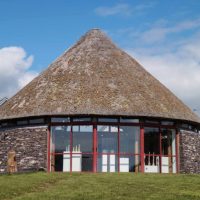
Locally, the key institutional anchor is the Cill Rialaig Arts Centre, which includes exhibition and retail space. It sits separate from the cliff-top retreat and functions as a public interface for the project. Many artists associated with the residency show there during or after their stay, often with work influenced by the area.
Beyond Ballinskelligs, you can look to:
- galleries and cultural venues in Killarney and Tralee
- seasonal or festival exhibitions in Southwest Kerry
- artist-run spaces elsewhere in Ireland that have links with the project
If your main goal is direct sales or building a collector base, this region is quieter than a capital city. Consider it as a production phase, with exhibition and sales happening later in Dublin, Cork, or abroad.
Local arts and culture ecosystem
The most immediate creative ecosystem is the temporary community formed by residents at Cill Rialaig. Within that, you can expect:
- cross-disciplinary conversations around process
- occasional shared events in the meeting house
- informal peer feedback instead of formal critiques
In the wider area, culture leans toward music, storytelling, and heritage rather than a dense visual arts infrastructure. You might find:
- music sessions in local pubs
- heritage talks, festivals, or community events in nearby towns
- County Kerry arts programming that you can tap into if timing lines up
If community engagement is a major part of your practice, you can often build it through small, respectful relationships with locals rather than through big organized projects.
Internet, admin, and staying connected
The cottages are designed to keep you mostly offline. If you need to send large files, hold online meetings, or do heavy research, you have a few options:
- use mobile data if your phone plan supports roaming and coverage is stable
- plan occasional trips to cafés or libraries in towns with better connectivity
- batch your online work to a single day each week so you can stay focused the rest of the time
Artists who prepare for this often get more done than they expect. Those who assume city-style connectivity can get frustrated, so it pays to be realistic.
Season, weather, and picking your moment
Season changes the feel of a residency dramatically:
- Spring and summer – longer light, more manageable weather, more options open in surrounding towns. Easier for plein air work, photography, and extended walks.
- Autumn – strong atmosphere, shifting light, fewer tourists. Excellent if you like drama in the sky and sea, as long as you are comfortable with storms.
- Winter – harsher conditions, short days, potentially intense isolation. Some artists love the pressure cooker of that; others struggle with the combination of darkness, wind, and limited services.
If your mood is sensitive to weather, choose timing that will support your mental health as well as your work.
Visas and permissions
Since Ballinskelligs is in Ireland, entry rules depend on your nationality. In many cases, short stays can be done on standard visitor status, especially when the residency is clearly a retreat rather than paid employment. But rules change, and situations differ.
Before you commit, check:
- Irish immigration guidance for your passport
- maximum stay periods for visitors
- whether any planned public events, sales, or paid workshops might require a different permission
- any advice the residency itself offers on typical visa paths for artists
Give yourself enough lead time so visa questions do not interfere with your creative planning.
Is Ballinskelligs the right residency location for you?
Ballinskelligs, through Cill Rialaig, is a strong match if you want to strip your life down to the basics for a while: a stone cottage, a table, your materials, and a lot of weather. It suits artists who can generate their own structure and do not need external validation every day to keep going.
You will probably thrive here if you:
- enjoy solitude and can sit with your work for long stretches
- draw energy from landscape, ecology, and slow observation
- are content with modest living conditions in exchange for time and space
- can adapt your practice to limited equipment and offline periods
You may want a different residency context if you:
- need industrial-scale tools or specialised labs for your practice
- depend on fast internet and dense networks of people for daily progress
- don’t drive and are uncomfortable with rural transport constraints
- prefer structured programs with frequent workshops, talks, and public events
If you recognise yourself in the first list, Ballinskelligs can be a powerful place to reset your practice and build a body of work that could not have been made anywhere else. The key is to treat it as a focused working retreat: plan logistics carefully, clarify what you need from the time, and let the isolation become a tool, not an obstacle.
Explore Ireland
More city guides
Opportunity Intelligence
Ready to find your next residency?
Get a personalized shortlist — scored against your practice, discipline, and what you need right now.
See how Intelligence works →