
City Guide
Alajärvi, Finland
A small Finnish town with strong residency support, quiet studio conditions, and an unusually rich architectural backdrop.
Why Alajärvi works for artists
Alajärvi is not the kind of place you go for a dense gallery circuit or a packed social calendar. You go for space. The town sits in Southern Ostrobothnia, in western Finland, and its residency scene is shaped by museums, architecture, and landscape rather than by a big urban art network.
That is exactly why many artists like it. The setting is rural, with lake views, open fields, forest, and long stretches of quiet. If your practice benefits from uninterrupted studio time, Alajärvi gives you that in a very direct way. It also has a strong built-environment story, especially through the Alvar Aalto connection, which makes it especially appealing if your work touches on space, site, design, memory, or architecture.
The main draw here is not variety. It is focus.
Nelimarkka Museum Residency: the anchor program
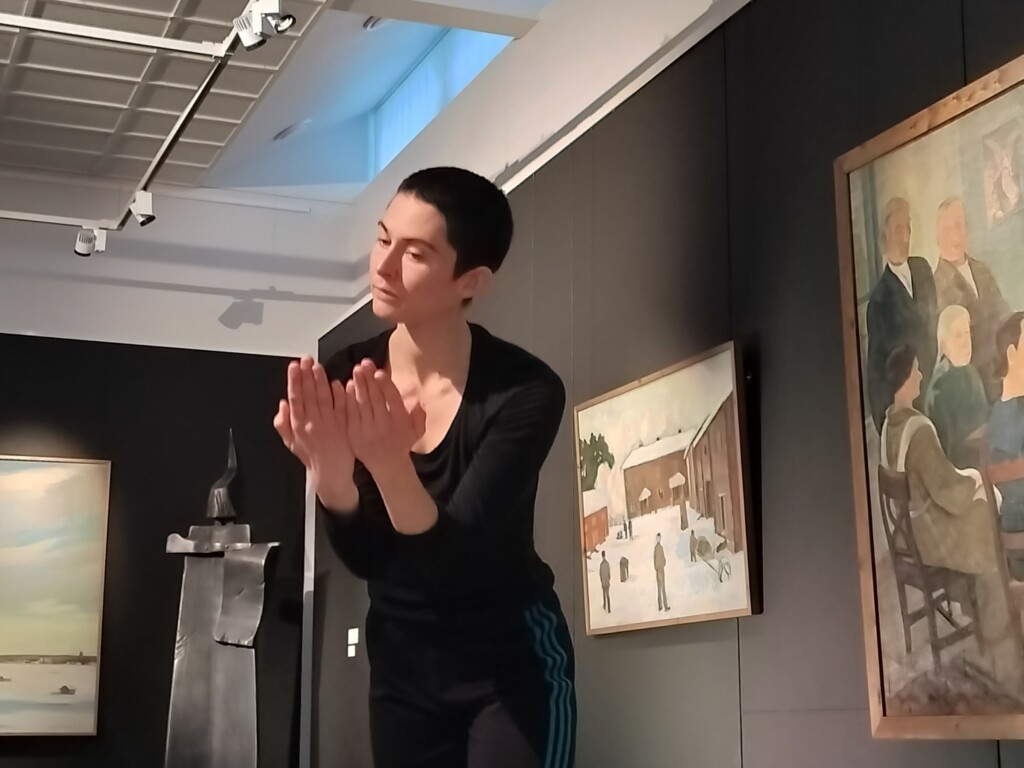
The core residency in Alajärvi is the Nelimarkka Museum residency, established in 1985. It welcomes professional artists from different fields, from Finland and abroad. The residency is based in Villa Nelimarkka, a studio villa built in 1932 by artist Eero Nelimarkka for his family. The building sits beside the museum, about four kilometres from the center of Alajärvi, with views over fields and a lake.
This is a strong residency if you work well with solitude and a self-directed rhythm. The house and its surroundings encourage you to slow down and pay attention to your immediate environment. In practical terms, that means the site itself can become part of your work rather than just the place where you make it.
Artists who tend to do well here are often:
- visual artists working in drawing, painting, print, or mixed media
- writers and researchers who need concentrated time
- interdisciplinary artists who can adapt to a specific setting
- artists who are comfortable working independently for long stretches
One useful detail: the residency includes a separate apartment shared with another artist, with two bedrooms, a shared kitchen, and a shared bathroom. There is also a grant attached to the residency in some cases, and the museum notes that the selected artist can meet other artists and visit studios. Exhibition opportunities may be possible, but those are usually arranged separately.
What the residency environment feels like on the ground
Alajärvi is small, and the residency setting reflects that. You are not dropping into a busy studio complex where everything happens at once. Instead, the experience is more measured and contained. That can be a gift if your work needs stillness, but it can also feel sparse if you depend on constant outside stimulation.
The rural setting is one of the residency’s biggest strengths. You have the museum nearby, nature around you, and enough distance from the town center to feel a real shift in pace. The museum itself adds structure without crowding the space. For many artists, that combination is ideal: enough institutional support to feel held, enough quiet to keep working.
You should expect to adapt your practice to the house and the site. That may mean using the surroundings as subject matter, source material, or working context. If your practice is highly equipment-dependent or requires a very specific technical setup, check carefully what is already available before you commit.
Villa Väinölä and the architecture-focused residency
Alajärvi also has a newer residency centered on architecture and spatial practice. This program is based at Villa Väinölä, a residence in the center of Alajärvi designed by Alvar Aalto for his brother and completed in 1926. The house has been carefully preserved, which makes it a particularly interesting place for artists and researchers who work with built form, interiors, site, and spatial experience.
This residency is open to architects, landscape architects, interior architects, urban planning and research professionals, and students from Finland and abroad. The duration is typically one to three months. It is a strong fit if you want to spend time thinking through architecture not just as subject matter, but as lived experience.
What makes this residency special is the chance to work inside an Aalto environment. That gives you a direct connection to Finnish modernism and to the spatial ideas that shaped much of Aalto’s work. If your practice includes installation, spatial drawing, architectural research, or writing about place, Villa Väinölä is worth serious attention.
Getting around, staying comfortable, and budgeting well
Alajärvi is rural, so mobility matters. A car is useful if you want flexibility between the residency, the museum, the town center, and nearby landscape. Walking works for short distances, but in winter you should plan for snow and ice. If you are used to city living, this is a place where simple logistics can take a little more planning.
Day-to-day costs are generally lower than in larger Finnish cities, especially for housing and basic food shopping. Still, you should confirm the practical details before you arrive:
- Is accommodation included?
- Is studio access included?
- Is there a stipend or grant?
- Are materials covered?
- Are travel costs reimbursed?
- What kind of equipment is available on site?
Those questions matter more in a place like Alajärvi because specialty supplies may need to be brought in or ordered ahead of time. If your practice depends on particular materials, do not assume they will be easy to source locally.
Who Alajärvi suits, and who may want a different setting
Alajärvi suits artists who like breathing room. If you want to think, test, read, sketch, write, and build without too many interruptions, this town can support that well. It is especially good for work that responds to place, architecture, landscape, and memory. It can also be a strong choice if you want a residency that feels genuinely separate from your usual routine.
It may be less comfortable if you need a thick social scene, regular public programming, or immediate access to a broad network of galleries and suppliers. That does not make it a narrow residency. It just means the energy is different. The value here is depth rather than density.
Artists who often thrive in Alajärvi are usually comfortable with:
- independence
- quiet and repetition
- small-town rhythms
- research-led or reflective work
- attention to the surrounding environment
If you need constant collaboration or urban momentum, you may find the town too calm. If you need a place that lets you hear your own thinking again, it can be a very good fit.
What to know about the local art context
Alajärvi’s art life is closely tied to institutions rather than a broad commercial scene. The most important names are the Nelimarkka Museum, Villa Nelimarkka, and Villa Väinölä. The museum does a lot of the cultural heavy lifting, and that matters for artists: you are not isolated in a vacuum, but supported by a host with a clear sense of place.
The town also carries architectural weight through Alvar Aalto and Elissa Aalto. That is not a side note. For many artists and architects, it is part of the reason to go. The built environment becomes a point of study, and the residency becomes more than just a workspace.
Public-facing opportunities can exist, including exhibitions or studio visits, but they are usually shaped by the residency host and local partners rather than by an open-ended arts district scene. If you want to share work locally, ask early how that usually happens.
Practical takeaways before you go
If you are considering Alajärvi, treat it as a place for focused work and close attention to site. Bring projects that can benefit from quiet. Bring enough materials to stay independent. And be ready to let the landscape, the museum context, and the architecture influence what you make.
Before applying or accepting a place, keep these points in mind:
- Check whether your practice fits a rural, low-distraction setting
- Confirm what the residency provides beyond the room and studio
- Ask about transport, especially in winter
- Consider whether the Aalto and museum context connects to your work
- Plan for a slower pace than you would get in a city residency
For the right artist, Alajärvi offers something rare: a residency that is quiet without feeling empty, and structured without feeling crowded. That balance is hard to find, and it is what makes the town worth a closer look.
For more on the residency host and current program details, see the Nelimarkka Museum residency page and the broader TransArtists listing.
Explore Finland
More city guides
Opportunity Intelligence
Ready to find your next residency?
Get a personalized shortlist — scored against your practice, discipline, and what you need right now.
See how Intelligence works →