Artist Residencies in Nijmegen
1 residencyin Nijmegen, Netherlands
Why artists choose Nijmegen over bigger Dutch cities
Nijmegen is one of the Netherlands’ oldest cities, but its art scene leans experimental and research-driven rather than museum-heavy. You get a walkable historic center, a big student population via Radboud University, and quick access to river landscapes and countryside. That mix makes it attractive if you want real work time plus connection to ideas, not just nightlife.
The draw is less about a huge gallery circuit and more about connectivity: artists, researchers, musicians, and socially engaged projects overlap a lot here. You can be in a relatively calm city and still have easy access by train to Amsterdam, Utrecht, Arnhem, and Germany.
If you like crossovers between arts, science, social history, and experimental sound or performance, Nijmegen can be a very good match.
Key artist residencies in Nijmegen
Nijmegen doesn’t have dozens of standardized residencies. Instead, there are a few core programs, plus a shifting set of project-based opportunities. Here are the main ones to know, and how they actually function for your practice.
AIR Besiendershuis: research, public programs, and the city as collaborator
Good for: conceptual and socially engaged artists, writers, journalists, and hybrid practitioners who like deep research and public-facing work.
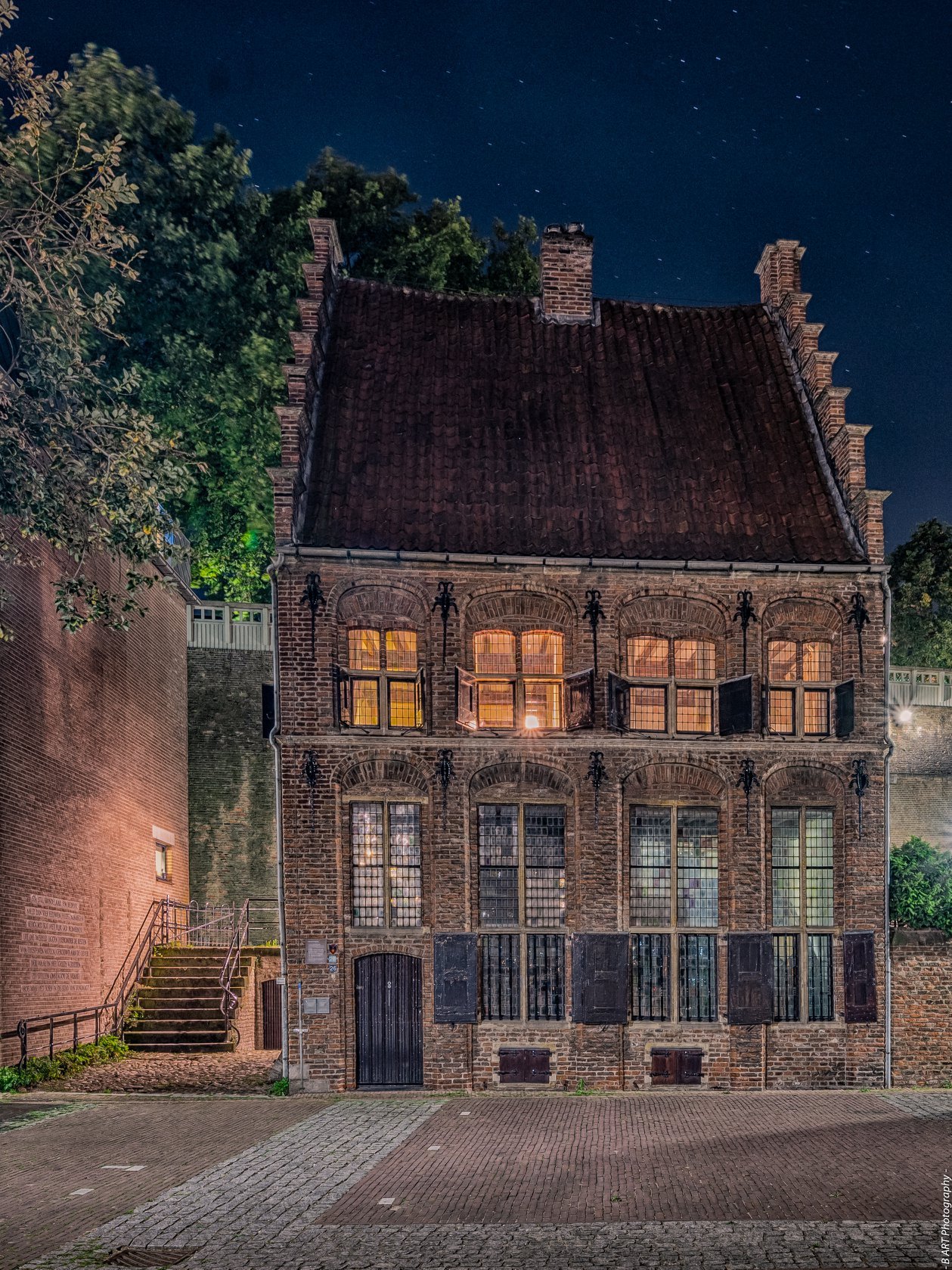
AIR Besiendershuis is based in the historic Besiendershuis building, right in Nijmegen. Residencies are often around two months, but the exact duration can shift depending on the project and the local partners involved.
What you can expect:
- Live-work setting in a historic house: the building itself is part of the experience and often part of the narrative of the work you make.
- Collaboration with host organizations: projects are often set up in partnership with groups like Radboud University or the Wereldmuseum, or with local cultural and heritage institutions.
- Public outcomes: instead of a quiet studio and a goodbye, you’re usually working toward talks, walks, lectures, or programmatic events connected to the city.
- Thematic focus: recurring themes include colonial history, memory, social issues, and arts-science intersections.
How it feels in practice:
This residency is less about isolation and more about context. You’re expected to spend time engaging with the city, the archives, the university, or community partners. If your practice is research-based or text-heavy, this can be ideal. If you want zero obligations and maximum privacy, it might feel too structured.
Who thrives here:
- Artists who like long conversations with historians, scientists, or activists.
- Writers and journalists who want to work slowly with local archives and memory.
- Anyone interested in how colonial, social, or political histories are lived in a specific city.
How to research it: go through Nijmegen-specific listings on Reviewed by Artists, then cross-check with Besiendershuis’ own site and any calls shared via Radboud University or Dutch residency platforms like TransArtists.
Extrapool & Knust: experimental sound, print, and performance culture
Good for: sound artists, performance artists, printmakers, artists’ books, and anyone into DIY/underground scenes.
Extrapool is a venue and art space in Nijmegen that has become a reference point for experimental sound, performance, and high-quality printed matter. It’s not always running a single, fixed residency with the same format every year. Instead, it has hosted various project-based residencies and series over time.
Past residency formats and series include:
- Brombron – sound residencies that brought musicians and sound artists together.
- Hausse – sound and performance-focused projects.
- Deelstaat, Destillaat – art residencies tied to exhibitions and public events.
- Projects via Knust (the famed Riso/print studio) such as Art Prison, Work Holiday, and A2<3D for artists working with print and artists’ publications.
What you can expect:
- Intimate and informal environment: small-scale events, close contact with organizers, and audiences who are genuinely interested in the experimental side of things.
- Active public program: concerts, workshops, book presentations, screenings. These provide natural entry points into the local scene if you’re in town.
- Non-mainstream focus: artists without big distribution networks or those operating at the margins often find Extrapool a welcoming context.
How to approach it as an artist:
- Look for specific calls via Extrapool’s website and social channels, and through platforms like TransArtists.
- If you work with sound, printed matter, or performance, consider attending events there even outside a formal residency: it’s a key networking spot.
- Think in terms of projects that can handle short, intense residency periods tied to public events or publications.
Playground Residence: for musicians and practice-based music research
Good for: professional musicians, composers, and sound-based researchers looking for structure, peers, and feedback.
The Playground Residence runs residencies focused on music and practice-based research, with editions hosted at venues such as De Basis Nijmegen, a music-focused hub in the city. It’s oriented around professional development rather than casual rehearsal time.
What you can expect (depending on edition):
- Structured program: not just a room and a key. Editions can include lectures, peer sessions, and input from professionals.
- Full board and local transport: some versions offer accommodation, meals, and public transport, which helps keep costs predictable.
- Collaborative focus: jam sessions, co-writing, and shared studio time rather than solitary retreat.
- Public presentation: often there is some kind of concert, showcase, or sharing moment at the end.
Who thrives here:
- Musicians who like intensive, time-bound programs.
- Artists exploring the border between composition, improvisation, and sound art.
- People who want feedback from peers and professionals, not just space.
Check Playground’s own site for current formats and locations, and cross-reference with De Basis and Nijmegen cultural calendars to see how the residency overlaps with local events and scenes.
SLAK guest studios and regional options
SLAK is a foundation in the region that provides studios and sometimes guest-studio setups for artists in various disciplines. While not always branded as a Nijmegen-only residency, the facilities and offers are relevant if you’re working in or around the city.
Why to keep it on your radar:
- Sometimes there are live-work guest studios with short or medium stays.
- It can be a route into longer-term studio access if you decide to base yourself in the area.
- Programs evolve, so checking current calls via DutchCulture, TransArtists, and SLAK’s own channels is useful.
If you’re flexible about being just outside Nijmegen proper, look at funded residencies like ARE in Enschede or artist spaces in nearby cities, and treat Nijmegen as part of a wider regional circuit you can visit by train.
Cost of living and practical budgeting
Nijmegen is cheaper than Amsterdam, but it’s still in the Dutch cost bracket. The key factor is always housing. If your residency includes accommodation, you’re in a much better position.
Typical cost considerations:
- Housing: market-rate rent can be high relative to many countries. Short-term rentals are often more expensive per month than long-term leases.
- Food: supermarket prices are moderate for Western Europe. Eating out regularly adds up, so shared cooking in a residency house is ideal.
- Transport: a bike keeps costs low. Public transport is reliable but not cheap for everyday short trips.
- Studio costs: if a residency does not include a studio, renting one privately for a short stay can be difficult or expensive.
For residencies that don’t pay a stipend, calculate a realistic monthly budget for living costs and local transport before applying. For funded programs, check what is covered (housing, per diem, travel, production budget) and what is not (insurance, visa, extra materials).
Neighborhoods and how the city is laid out
Nijmegen is compact and bike-friendly. That works in your favor: you don’t have to obsess about the perfect neighborhood in the same way you might in larger cities.
Areas artists often end up in or around:
- City centre / Binnenstad: close to bars, cultural venues, and the river. Good if you’ll be attending a lot of events or working with central institutions.
- Nijmegen-East / Hunnerberg / Oost: residential but close to the center, with cafes and green areas. Often attractive if you want quieter streets but easy access.
- Near the train station: practical for residencies where you’ll travel often, or if you’re combining Nijmegen with gigs elsewhere.
- Outer districts like Lindenholt / Dukenburg: less central but sometimes more affordable. Factor in bike distance and your tolerance for commuting.
Many residencies will fix your location for you, especially if they include housing on-site. If you’re arranging your own place, a 10–15 minute bike radius from the center will still keep you connected to most art spaces, Radboud events, and venues.
Studios, venues, and art infrastructure you should know
Even if you’re only in Nijmegen for a short residency, a few spaces are worth getting to know early on.
- Besiendershuis: important for research-based, publicly engaged projects. Follow their public programs and open events to understand how artists work in and with the building.
- Extrapool: a staple for experimental sound, performance, and print. Their events are often intimate, making it easier to actually talk to people after a show or talk.
- Knust: an influential print studio historically linked to Riso and artists’ books. If you’re into printed matter, this is a key local contact.
- De Basis Nijmegen: a hub for professional musicians. Relevant if you’re in Playground Residence or if you want to connect to the music community around rehearsals and studios.
- Radboud University: a resource for researchers and artists who want access to academic networks, archives, or arts/science collaborations. Keep an eye on lectures and interdisciplinary events.
Use these spaces as anchors. Even a short visit to an Extrapool concert or a talk linked to Radboud can quickly plug you into people who know about current calls and informal opportunities.
Transport: getting there and getting around
Inside Nijmegen:
- Bike: the default. Many residencies, like ARE in nearby Enschede, explicitly provide bikes; in Nijmegen itself, it’s often assumed you’ll get one or rent one.
- Bus: useful for bad-weather days or if you’re staying slightly outside the center.
- Walking: the historic center is very walkable and pleasant.
Arriving from elsewhere:
- Trains: connect Nijmegen to Amsterdam, Utrecht, Arnhem, Eindhoven, and Germany. This is what makes it workable even if your wider network or exhibition schedule is spread out.
- Airports: Amsterdam Schiphol and Eindhoven Airport are common entry points. Depending on your route, Düsseldorf or Weeze can also be practical.
If you expect to travel for performances or exhibitions while in residence, factor travel time and costs into your planning. The upside is that a show in a major Dutch city doesn’t necessarily require an overnight stay.
Visas, bureaucracy, and paperwork
If you’re from the EU/EEA, residency stays are usually straightforward, though longer stays may involve registration and health insurance considerations. Always check the current rules for your situation.
For artists from outside the EU/EEA:
- Ask residencies explicitly what kind of support they offer for visas or residence permits.
- Clarify whether your stay is framed as cultural, research, or work, especially if you’re receiving a stipend or fee.
- Request formal invitation letters and confirm how your name and dates will appear, to avoid issues at borders.
- Remember that taxes and social security rules may apply if you are being paid, even for short stays.
Residency staff are often helpful but may not handle all your paperwork. Plan extra time to understand your own visa and tax responsibilities.
Seasonality: when the city supports your process
Nijmegen works differently across the year, and that can affect how a residency feels.
- Spring: good light, rising energy, lots of bikeable days. Useful if you want to work outdoors or engage with the river landscape.
- Summer: more events, outdoor activities, and visitors. This can be great for public programs and performance-based work, but can also mean more distractions.
- Autumn: strong working season, with Radboud in full swing and a busy cultural calendar. Good for research and collaborations.
- Winter: colder and darker, but very productive for studio or writing-heavy projects. Plan for shorter daylight hours if you rely on natural light or outdoor shooting.
For project-based residencies like those in Besiendershuis or Extrapool, think carefully about where seasonal city life intersects with your work. A socially engaged project might thrive with local people around in autumn, while a solitary writing project might be perfect in winter.
Local art communities, events, and how to plug in fast
Nijmegen’s art community is not huge, which makes it easier to become visible if you show up consistently. You’ll encounter a mix of independent visual artists, sound artists, musicians, researchers, and local cultural organizers.
Useful ways to connect:
- Attend Extrapool programs: concerts, workshops, screenings, and book launches attract many of the city’s experimental practitioners.
- Follow Radboud events: public lectures, symposia, and interdisciplinary talks often include or attract artists.
- Engage with Besiendershuis projects: attending public events there gives a sense of how artists are engaging with local history and social issues.
- Look for open studios and project spaces: temporary exhibition spaces, pop-up shows, and artist-led initiatives often advertise via social media and local platforms.
Show up, introduce yourself, and talk about what you’re working on during your stay. In a smaller scene, a couple of genuine conversations can lead to studio visits, collaborations, or invitations to speak or perform.
Is Nijmegen a good fit for your practice?
Nijmegen tends to work best for certain kinds of practices and personalities.
Strong fit if you:
- Work in research-based visual art, writing, or journalism and want to engage with archives, history, or social themes.
- Are a sound artist, experimental musician, or performance artist drawn to intimate, non-commercial contexts.
- Value structured collaborations with institutions and communities over pure retreat-style residencies.
- Prefer a smaller, bikeable city where it’s realistic to attend most events that interest you.
Less ideal if you:
- Need a dense commercial gallery market and frequent sales to collectors.
- Want a secluded, no-obligations retreat in nature with zero public engagement.
- Rely heavily on a large local art-fair circuit or luxury market.
Where to look for current calls and openings
Residency structures and calls change. To stay up to date, keep a small set of bookmarks and check them regularly.
- Reviewed by Artists – Nijmegen for peer reviews and practical info on residencies that already exist in the city.
- TransArtists for Dutch and international residency listings, including Extrapool and regional options.
- DutchCulture for Dutch programs and cultural initiatives that may intersect with residencies.
- Direct sites and channels for Playground Residence, Besiendershuis, Extrapool, Knust, and De Basis.
- Radboud University’s cultural and arts pages for calls that tie artists to research projects or thematic programs.
If you’re considering Nijmegen, think about the kind of residency structure that actually serves your work: a research-heavy partnership like AIR Besiendershuis, an intense music program like Playground Residence, or a more experimental, project-based stay around Extrapool. Matching your project to the city’s strengths is what makes a Nijmegen residency genuinely productive.
Filter in Nijmegen
Been to a residency in Nijmegen?
Share your review