Artist Residencies in Bergen
3 residenciesin Bergen, Norway
Why artists choose Bergen for residencies
Bergen is compact, saturated with culture, and moody in a way that tends to work well for artists. You get big institutions, active artist-run scenes, and quick access to mountains and sea, all in a walkable city core.
For residency time, that combination matters. You can spend a morning troubleshooting a patch at a media lab, walk ten minutes to see an exhibition, then be at the waterfront or on a hillside before you lose daylight.
Artists are drawn to Bergen for a few recurring reasons:
- Dense ecosystem: museums, kunsthalls, media labs, and studio buildings are close together.
- Experimental-friendly: sound, performance, and technology-based work are well supported.
- Scale: big enough for variety, small enough that people remember your name.
- Landscape: dramatic weather, quick access to nature, and industrial harbour views feed a lot of practices.
If you are looking for a research-heavy stay with lots of talks and openings, Bergen can do that. If you want a quiet, dark winter to dig into a long-form project, it can do that too.
Key residency options in and around Bergen
This overview focuses on programs that repeatedly come up for visiting artists. Always check each residency’s site for the latest details before you plan.
BEK – Bergen senter for elektronisk kunst
Website: bek.no
BEK is a production and research hub for sound, video, electronics, and technology-driven art. If your work touches code, sensors, sound, or time-based media, this is one of the main structures you will want to know.
What the residency offers
- Access to a sound studio, video studio, electronics lab, and project space.
- Residencies for around 40 professional artists per year, local and international.
- Open calls announced 1–2 times a year.
- Technical and artistic feedback from staff, not just a key to the room.
- Possibility to present work-in-progress.
Who it suits
- Sound artists, media artists, and performers working with electronics or software.
- Artists probing the relationship between technology, society, and art.
- Practices that need gear, infrastructure, or expert troubleshooting, not only empty floor space.
How to approach it
- Make the technological angle of your project very clear in your proposal.
- Specify what kind of support or equipment you need, and what you can handle yourself.
- Mention any public sharing you are interested in (talk, listening session, demo) to show how your stay could connect to their community.
Artist in Residence Bergen at USF Verftet
Website: airbergen.no
USF Verftet is a former sardine factory turned multi-arts house on the waterfront. The residency places you inside this large cultural complex with studios and small apartments.
What the residency offers
- Usually 2–3 month residencies for professional foreign artists.
- Rent-free studio and additional accommodation.
- Two studio types: one for all-media / craft, one for clean, desk-based or computer work.
- Focus on building contact between visiting artists and Bergen’s art scene.
Recent funding changes mean there may be fewer residencies and shifting timelines, so treat any previous annual rhythm as flexible. The site currently encourages artists to email directly for updated information.
Who it suits
- Visual artists, writers, curators, filmmakers, performers, composers, and media artists.
- Artists wanting an embedded, cross-disciplinary environment in a cultural centre.
- Those who can work with relatively basic studios and arrange their own production budgets.
Accessibility note: the residency warns about a steep spiral staircase to the apartments, and it does not meet universal accessibility standards.
How to approach it
- Align your project with the residency’s stated aim: exchange and collaboration with Bergen-based artists.
- Show that you are proactive about meeting people and engaging with the house, not just using it as cheap housing.
- Budget separately for materials, travel, and living costs; the offer focuses on space, not full project funding.
Hordaland Kunstsenter residency
Website: search for Hordaland Kunstsenter’s residency page or check major residency platforms.
Hordaland Kunstsenter (HKS) runs one of the more established residency schemes in Bergen, active since the late 1980s. It is rooted in contemporary art and often bridges research, curating, writing, and artistic practice.
What the residency tends to include
- Residency periods often around 4–8 weeks.
- Accommodation and workspace.
- Usually some combination of travel support, stipend, and help with public presentation.
- Access to HKS’s exhibitions and professional network.
Who it suits
- Artists working with conceptual, research-based, or context-responsive practices.
- Curators, writers, and researchers needing time, a desk, and cultural access.
- Artists for whom conversations and studio visits are as important as square metres.
How to approach it
- Make clear why you want Bergen specifically for your research, not just any Norwegian city.
- Explain potential ways to share your work in dialogue with HKS’s audiences.
- Highlight any interest in curatorial exchange, writing, or public formats like talks and publications.
Kunstnarhuset Messen (KH Messen), Ålvik
Website: see its listing on Res Artis or search for "Kunstnarhuset Messen"
Not actually in Bergen, but part of the wider region, KH Messen sits in Ålvik, a small industrial village framed by fjords and mountains. Artists often connect visits here with time in Bergen before or after.
What the residency offers
- Living space and studios for around five individual artists plus one artist couple.
- Stays typically 1–3 months.
- Kids are welcome, which is rare and helpful for artists with families.
- A quieter everyday rhythm than the city, with strong landscape presence.
Who it suits
- Artists who want concentration and isolation with occasional trips to Bergen.
- Practices that respond to nature, industrial history, or rural communities.
- People comfortable with fewer immediate institutional contacts, relying more on self-organisation.
BIT / Bergen Internasjonale Teater residencies
Website: bitteater.no
BIT works with contemporary performing arts and has long been involved in European residency networks. It is developing dedicated residency facilities linked to Sentralbadet Scenekunsthus.
What the residency context offers
- Residency opportunities for performance makers, choreographers, theatre artists, and companies.
- Connections to international and local partners across Bergen and the Vestland region.
- Support that often includes rehearsal spaces, dramaturgical dialogue, and network-building.
Who it suits
- Artists working in contemporary performance who need institutional backing and partners.
- Ensembles developing longer-term projects, touring work, or co-productions.
- Practices that benefit from both studio time and public-facing formats like showings or discussions.
Other initiatives and short-term exchanges
Bergen also appears in various short-term or targeted residencies hosted by external organisations. An example is North Atlantic exchange programs where artists from another region spend a week in Bergen with a fee and production support, then present work back home.
These are often:
- Shorter (around a week).
- Heavily framed as research and networking opportunities.
- Tied to specific geographies or communities.
Keep an eye on organisations in your own region that announce Bergen residencies as part of international exchanges.
How to choose the right Bergen residency for your practice
There is no single “right” residency, only a better match between your needs and what each place actually offers. A quick way to decide:
- If you need tech, labs, and sound/video: prioritise BEK and related production contexts.
- If you want a studio plus housing in a big arts complex: look at AiR Bergen at USF Verftet.
- If you want curatorial dialogue, research, and structured support: consider Hordaland Kunstsenter.
- If you want quiet and landscape over city life: look at KH Messen in Ålvik.
- If you’re performance-focused: research BIT’s residency offers and partners.
Be realistic about what kind of environment you actually work well in. Some artists thrive in a busy waterfront complex with concerts downstairs; others get more done with a village, a fjord, and no neighbours who care what they are building at 2 a.m.
Living and working in Bergen during a residency
Cost of living and budgeting
Bergen is expensive by many artists’ standards. A studio covered by the residency does not automatically mean the stay is affordable.
Expect higher costs for:
- Food: groceries are manageable if you cook, eating out is pricey.
- Accommodation: if not included, renting a room or apartment can be a major line item.
- Transport: public transit is efficient but not cheap; taxis add up quickly.
- Materials: specialised supplies may require ordering or bringing them with you.
Residencies that combine housing, studio, and stipend are far easier to handle than those that only cover rent-free space. If the program offers only a studio, calculate your total costs honestly and look for external funding or grants to fill the gap.
Where you might stay and work
Bergen’s centre is compact. Walking between key art sites is normal, especially if you are based near the harbour or around the university areas.
Areas that often work well for visiting artists include:
- Sentrum (city centre): closest to galleries, museums, cafés, and the harbour. Higher rent, but ideal for short residencies.
- Nygård / Nygårdshøyden: near universities and cultural institutions; lots of students and academics, good for events and networking.
- Møhlenpris: a short walk from the centre, slightly more residential, with a younger feel.
- Nordnes: scenic and central, edged by water, close to USF Verftet.
Further out areas like Åsane, Fyllingsdalen, or Loddefjord can be cheaper but require more time on buses or light rail. For a short residency with a packed schedule, central locations usually pay off in saved time and energy.
Studios, labs, and production options
Outside the residency itself, Bergen has a web of places that can support production:
- BEK: for sound, video, electronics, and experimental tech projects.
- USF Verftet: for mixed practices, performance, and cross-disciplinary work in a large arts building.
- Hordaland Kunstsenter: for discourse, writing, and contemporary art exchange.
- Independent studios and project spaces: scattered across the city, often linked to artist-run groups.
If your residency does not include access to the facilities you need, consider reaching out early to ask about short-term studio rentals, lab bookings, or collaborations with local artists who have equipment.
Institutions and scenes to plug into
Your residency will be richer if you use the city’s institutions as research and meeting points. Names worth knowing:
- KODE Art Museums and Composer Homes: historical to modern collections and composer houses.
- Bergen Kunsthall: exhibitions, talks, and a strong contemporary program.
- Hordaland Kunstsenter: contemporary art, residencies, and discursive programs.
- USF Verftet: concerts, screenings, exhibitions, and studios in one complex.
- BEK: media art hub with workshops and events.
- BIT Teatergarasjen: contemporary performing arts, often linked to residencies and co-productions.
Most of these host openings, artist talks, festivals, or smaller gatherings. Showing up consistently is often how visiting artists build relationships that outlast the residency period.
Practical logistics: getting in, around, and set up
Transportation
Getting there:
- Bergen Airport Flesland (BGO): main entry point. The airport light rail (Bybanen) takes you straight into the city.
- Train: you can come in on the Bergen Line from Oslo; long but very scenic.
Getting around:
- The city centre is walkable; many artists live car-free during residencies.
- Bybanen light rail and buses cover most residential and studio areas.
- Bikes work for some people, but expect hills and frequent rain.
If your residency is outside the city, like KH Messen in Ålvik, ask the organiser about the closest public transport and how often it runs. Budget extra travel time for trips into Bergen for meetings or events.
Visas and entry
Requirements depend heavily on your passport and the length of your stay.
- EU/EEA or Swiss citizens: generally have freedom of movement but may need to register for longer stays.
- Non-EU/EEA citizens: often need a visa or residence permit depending on duration and whether the stay counts as work, study, or cultural activity.
Residency programs usually provide an invitation or confirmation letter but often do not manage the visa process for you. You will likely need to show:
- proof of accommodation (residency housing or rental contract)
- documentation of funding or stipend
- travel bookings or return plans
Always check the official guidelines on the Norwegian Directorate of Immigration (UDI) site and align them with what your residency can document.
Timing, seasons, and making it count
When to be in Bergen
Late spring to early autumn:
- Long days, mild weather, and more festivals and events.
- Easier to do outdoor or site-based projects.
- More chances to meet people at openings and public programs.
Autumn and winter:
- Darker, wetter, and often calmer socially.
- Good for deep studio focus and introspective projects.
- The atmosphere can be intense and atmospheric if your work thrives on that.
Think about how light conditions and social tempo feed your practice. A residency in January feels very different from one in June, even in the same studio.
Applications and positioning your work
Most Bergen residencies rely on open calls. They tend to ask for:
- project description tailored to their context
- artist statement and updated CV
- documentation of recent work
To stand out:
- Explain why Bergen matters for this project (institutions, landscape, scene, or specific people).
- Show how you will use what they offer: labs, spaces, networks, or audiences.
- Indicate how you plan to share something while there, even if it is just a small talk or work-in-progress showing.
Making the residency actually useful
A few habits tend to make a Bergen residency pay off long term:
- Be present: go to openings, talks, and performances. People notice the visiting artist who keeps showing up.
- Ask for studio visits: many local artists and curators are open to conversations if you reach out respectfully and clearly.
- Document the period: photos, notes, and recordings will help you translate the residency into future work, grants, or exhibitions.
- Leave a trace: even a small event, text, or online presentation can anchor your time in Bergen in other people’s memory.
Used well, a Bergen residency is not just a break from your normal routine; it can become a node in your practice that you reconnect to for years through collaborators, venues, and new projects.

Artist in Residence Bergen at USF Verftet
Bergen, Norway
The Artist in Residence Bergen at USF Verftet is a program offered by USF Verftet, a former sardine factory turned contemporary culture house in Bergen, Norway, providing 3-month residencies to professional foreign artists in all fields to foster collaborations with local artists. It includes a rent-free studio and accommodation, though artists must cover all other expenses like travel and materials. Note that as of January , Bergen municipality has withdrawn funding, leading to reduced residencies and a delayed application ; contact air@usf.no for updates.
Hordaland Art Centre
Bergen, Norway
Hordaland Kunstsenter in Bergen, Norway, has hosted an artist residency program since 1987, open to international artists, curators, writers, researchers, and other contemporary art professionals for research, production, and exchange with the local scene. Residencies typically last 1-2 months or 4-8 weeks, often themed (e.g., curatorial practices, writing), and include covered travel, furnished accommodation, stipend, workspace, and support for public presentations.
Stichting Simeon ten Holt
Bergen, Netherlands
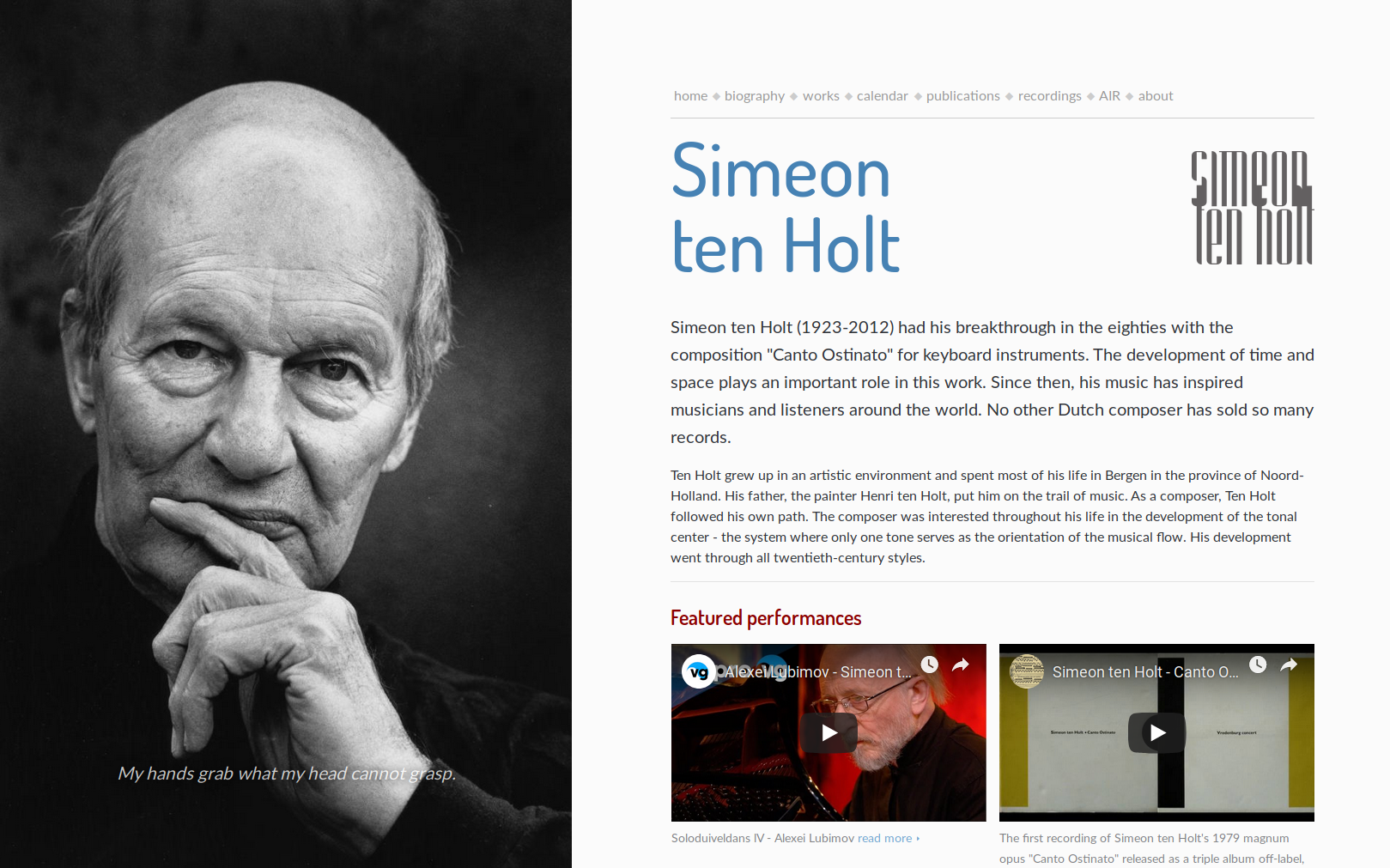
The Stichting Simeon ten Holt offers an artist-in-residence program at the Atelier Simeon ten Holt in Bergen, Netherlands, the former home and workspace of renowned Dutch composer Simeon ten Holt (1923-), where much of his work was created amid sea, forests, and dunes. It provides a one-person living and working space with a renovated Steinway grand piano, private bathroom, kitchen, garden, free WiFi, and is available from April to November for composers, musicians, writers, or other professional artists focusing on personal projects. Residencies last from one to four weeks, require a project proposal and recent work samples for application, and include a post-residency report.
Browse by discipline in Bergen
Filter in Bergen
Been to a residency in Bergen?
Share your review