
City Guide
Evergreen, United States
How to use Evergreen’s mountain town energy, CAE’s residency, and Denver’s orbit to fuel your work.
Why Evergreen works as a residency town
Evergreen is a small mountain town west of Denver, wrapped in pine trees, foothills, and lake views. For artists on residency, it hits a specific mix: quiet enough to focus, active enough to feel connected, and close enough to Denver that you can tap into a bigger arts network when you need it.
What draws artists here isn’t just the scenery. The town has a strong community arts center, a structured residency program, and an expectation that artists will bring their work into public space through workshops, talks, or open studios. You get both studio time and a real audience.
If your practice thrives on nature, community contact, and having a clear structure around your stay, Evergreen is a solid fit. If you want a totally anonymous retreat with no obligations, you’ll feel the community expectations pretty strongly here.
Center for the Arts Evergreen AIR: the core residency
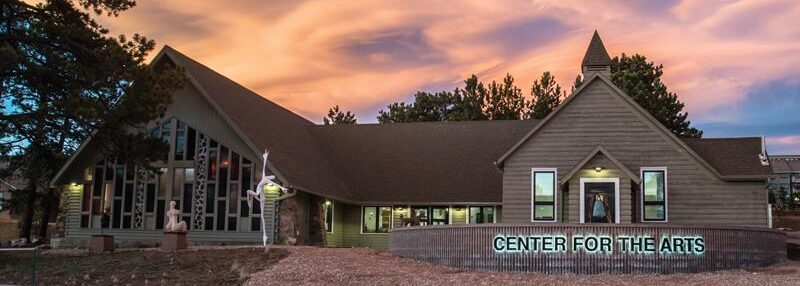
The main structured residency in town is the Artist-in-Residence program at Center for the Arts Evergreen (CAE). It’s a 12-week stay, offered three times per year, and it’s the residency that anchors Evergreen’s reputation with artists.
Program snapshot
- Location: Center for the Arts Evergreen, Evergreen, Colorado
- Duration: 12 weeks
- Frequency: Three sessions per year
- Disciplines: Visual arts, sculpture, music, writing, film, and cross-disciplinary practices
- Structure: Studio-intensive residency with a required community program
What CAE actually gives you
The residency is built so you’re not piecing together housing and workspace on your own. You get:
- Housing: A private 1-bedroom studio cottage with a full kitchen, about a 5-minute walk from Downtown Evergreen and the lake.
- Studio: A private studio or project space at CAE with 24-hour secure access.
- Stipend: $250 per month, paid upon completion, for a total of $750 for the 12 weeks.
- Professional opportunities: Paid teaching or workshop gigs, sales opportunities, space to exhibit, and an artist page on the CAE website.
- Community: Built-in expectation that you’ll design and lead a public program tied to your residency work.
Artists are responsible for getting themselves to Evergreen and handling local transport. Once you’re there, the big-ticket items of rent, studio, and basic infrastructure are covered.
Studios, tools, and facilities
CAE is set up more like a well-equipped community arts center than a barebones studio. Depending on your practice, some of these can be core to your project instead of just bonus perks:
- Ceramics: Workspace with electric wheels, slab roller, clay mixers, and an electric kiln.
- Painting and drawing: Dedicated painting area with easels, benches, and drying racks.
- Glass: Access to a glass kiln for small-scale glass work.
- Digital media: Photo and video editing suite.
- Tech basics: Free Wi-Fi and computer access in common areas.
If you work in ceramics, glass, mixed media, or installation, this setup can push your practice into directions that might not be possible in a less-equipped residency. For writers, musicians, or filmmakers, the quiet studio plus editing resources can be enough to build out a substantial project.
Housing: what the cottage is like
The artist cottage is a big part of why this residency works in Evergreen’s higher-cost setting. It’s described as:
- 1 bedroom / 1 bath studio with a full kitchen.
- Walking distance to Downtown Evergreen and Evergreen Lake.
- Shared yard with access to Cub Creek running alongside the property.
- About a 10-minute drive from the CAE studio.
- No smoking inside and no pets allowed.
Practically, that means you wake up in a residential pocket close to coffee, groceries, and the lake trail, then commute by car up to your studio. It’s a good balance of immersion and access, as long as you’re comfortable driving.
The community program requirement
One key feature of CAE’s residency: each artist is expected to design and run a community program tied to their residency plan. That might look like:
- A workshop in your discipline.
- A series of open studios or work-in-progress showings.
- A talk, reading, or performance.
- A participatory project involving local residents.
This is not an optional extra. You’re actively working with Evergreen’s community and the surrounding towns. If your practice already includes education, social engagement, or collaborative projects, that will feel natural. If you’re used to working alone, it’s still manageable, but you’ll want to plan your public component early so it doesn’t eat your studio time at the end.
Who CAE AIR really suits
Artists who tend to thrive here usually share a few traits:
- Self-directed: You can structure your own time without a rigid schedule or constant peer group.
- Community-minded: You are open to teaching, hosting, or sharing process with non-art-specialist audiences.
- Montage-style practice: You can integrate nature, community, and studio-based work into a coherent project.
- Medium-flexible: You can take advantage of the ceramics or glass equipment, or at least benefit from access to a well-equipped studio environment.
If what you want is deepest possible solitude, no public events, and zero teaching, this isn’t your match. If you want a balance of quiet work and structured engagement, it’s worth serious attention.
Evergreen as an arts ecosystem
To decide if Evergreen fits you, it helps to zoom out beyond the residency and look at how the town actually functions for working artists.
Center for the Arts Evergreen as the hub
CAE is the central arts anchor. Outside of the residency, it runs:
- Exhibitions and juried shows.
- Workshops and classes for all ages.
- Public programs, talks, and community events.
- Sales opportunities and small-scale markets or events.
As a resident artist, you’re plugged directly into this structure rather than working in isolation. You can build a local audience quickly and test new work in a live setting.
Relationship to Denver and the Front Range
Evergreen’s position near Denver gives you options. You can spend weekdays in the studio and still schedule visits to:
- Denver galleries and artist-run spaces.
- Museums and cultural institutions.
- Nonprofit arts organizations and potential collaborators.
- Events linked to Red Rocks Amphitheatre and the broader music and performance scene.
Evergreen can function as a retreat where you produce the work, while Denver becomes the place where you test, network, and pitch it. If you plan ahead with meetings, studio visits, or portfolio reviews, the residency can be a very strong launchpad, not just a pause.
Local vibe: audience and pace
Evergreen’s audience is a mix of long-term mountain residents, commuting professionals, and visitors passing through. That gives you:
- A regular local crowd for classes and community events.
- Tourist traffic, especially in warmer months, for exhibitions and sales.
- A slower daily pace than a city, which helps focus but still allows for casual connections.
If you enjoy conversations with people who might not be steeped in contemporary art language, Evergreen gives you that. Your work has the chance to land with fresh eyes, outside a strict art-world bubble.
Living and working in Evergreen during a residency
A residency is not just studio access; it’s the texture of your daily life. Evergreen has specific practical realities worth planning around.
Cost of living and money realities
Evergreen is a relatively expensive mountain town compared with more rural areas. Housing is the main cost, which is why the cottage is such a valuable part of the residency package. Still, you’ll want to budget for:
- Groceries and supplies: Prices can be somewhat higher than large-city discount chains.
- Gas and transport: You will likely drive regularly between cottage, studio, and surrounding areas.
- Personal extras: Coffee, eating out, occasional trips into Denver, and art materials not covered by any studio setup.
The stipend helps but won’t cover all living expenses. Treat it as a partial offset, not your entire budget. Plan ahead so you’re not taking on extra remote work during the residency unless that’s intentional.
Transportation and mobility
Evergreen is car-oriented. Public transit is limited, and the residency materials explicitly say artists are responsible for their own transport. Key points:
- Car recommended: The cottage is walking distance to downtown, but your studio at CAE is about a 10-minute drive.
- Rideshares: Services may be available but are not as dense or cheap as in a major city.
- Weather: Seasonal conditions can affect driving, especially in winter months.
If you absolutely do not drive, factor in higher transport costs or discuss with CAE whether any arrangements are possible. For most artists, having a car unlocks both the local area and quick trips to Denver.
Where you’ll likely spend your time
Even though you’ll have a cottage and a studio, it helps to understand the town layout. Evergreen is spread out, with a few core zones:
- Downtown Evergreen / Evergreen Lake: Cafes, small shops, lake trails, and community events. Good for informal meetings, sketching, or simply resetting your brain between studio sessions.
- CAE area: The arts center and your primary studio life. Expect most of your work time to be centered here.
- Residential hills and outer areas: Quiet, wooded settings that can feed landscape and environment-based work.
The residency essentially positions you with one foot downtown (cottage) and one foot in the institutional arts hub (CAE). It’s a comfortable triangle for most projects.
Seasonality and choosing your ideal session
Evergreen shifts a lot season by season. When you choose a session, you’re also choosing a working climate:
- Late winter–spring: Quieter, more introspective, with some weather unpredictability. Good for deep studio focus and indoor work.
- Late spring–summer: High energy around the lake and downtown. Strong for community programs, outdoor projects, and performance or public art testing.
- Late summer–fall: Still active, with cooler weather and changing foliage. Great for landscape work, photography, and open studios.
Match your project to the season. If you’re planning outdoor installations, field recording, or plein air work, it makes sense to aim for warmer months. If you want to disappear into the studio and write, paint, or edit, the quieter, colder period can be an advantage.
Making the most of a residency in Evergreen
Once you’re in, the question becomes how to use the 12 weeks so you leave with more than a pleasant mountain memory.
Design your project around the tools and context
Before you arrive, sketch out a plan that actually uses Evergreen’s specific offerings:
- Build a ceramics or glass component if those facilities support your existing work.
- Plan film, sound, or photo projects that use the lake, forest, and foothills as source material.
- Think through how your community program can also feed your main project instead of sitting off to the side.
- Use the artist page and exhibition opportunity as a stepping stone toward a broader portfolio update or grant application.
The more you design around what Evergreen gives you, the more cohesive and ambitious your residency project can be.
Community program strategy
Because a community program is part of your commitment, treat it as a core creative component, not just a requirement. You might:
- Use workshops to prototype participatory methods you want to take elsewhere.
- Test audience responses to new themes or formats you’re unsure about.
- Invite CAE staff and local artists into a collaborative event that seeds future projects.
Keep the format simple and repeatable so it doesn’t become a logistical burden. Focus on something that feels natural for you to lead and that aligns with your studio work.
Connecting with Denver strategically
While you’re based in Evergreen, think about your proximity to Denver as part of your professional plan:
- Schedule a couple of trips to visit galleries, nonprofits, and spaces that could host your work later.
- Reach out for studio visits, even if your current studio is at CAE.
- Use the quiet of Evergreen to prepare proposals, then use Denver to hand them to people in person.
Those connections can outlast your residency and turn a 12-week stay into a longer trajectory for your practice in the region.
International artists: visa and income questions
If you’re coming from outside the United States, pay special attention to visa status and how the residency structure fits:
- Confirm directly with CAE that non-U.S. artists are eligible in the cycle you’re applying for.
- Check whether your visa type allows participation in a residency that includes a stipend.
- Clarify if paid teaching or workshops are compatible with your visa conditions.
A quick conversation with the residency and, if needed, an immigration professional can save you from last-minute issues, especially around the paid engagement side.
Who Evergreen residencies are (and aren’t) for
Evergreen’s structure and vibe make it especially good for artists who want:
- Nature plus structure: Daily access to trails and lake alongside a clear residency framework.
- Housing and studio in one package: Less energy spent on logistics, more on work.
- Public-facing work: A built-in audience and institution to support events and teaching.
- Regional reach: A quiet base with relative proximity to a larger metropolitan arts scene.
It’s less ideal if you need:
- Urban transit: A car-free life is tough here.
- Large on-site cohort: You won’t find a big group of residents all living on one campus.
- High stipend support: The funding is helpful but not fully sustaining by itself.
- Total seclusion: The required community program means you’ll be visible and engaged.
If you want mountains, a committed arts center, and a chance to test your work in a live community while still slipping into Denver when needed, Evergreen’s residency scene lines up well. Treat it as both a focused production period and a way to position your practice within the wider Colorado arts ecosystem.
Explore United States
More city guides
Opportunity Intelligence
Ready to find your next residency?
Get a personalized shortlist — scored against your practice, discipline, and what you need right now.
See how Intelligence works →