
City Guide
Zundert, Netherlands
Quiet studios, Van Gogh’s landscape, and residencies built around deep focus instead of art-fair hustle.
Why Zundert is on artists’ radar
Zundert is a small town in North Brabant with an outsized influence on art history: it’s where Vincent van Gogh was born. You feel that immediately. Instead of a busy gallery circuit, you get a tightly focused ecosystem built around Van Gogh’s early life, the surrounding landscape, and a few residency spaces that take this context seriously.
If you’re looking for a month or two of concentrated work, framed by art history and rural surroundings, Zundert is worth considering. You trade big-city density for:
- Context: everything revolves around Van Gogh’s youth, his environment, and his legacy.
- Quiet: this is a working retreat more than a networking tour.
- Clear outcomes: residencies are usually tied to an exhibition or open studio.
The main player is the Vincent van GoghHuis and its two residency tracks: one in the historic Sexton’s House area and one out at the rural estate De Moeren. If you understand these two options, you’ve basically mapped Zundert’s residency scene.
Van Gogh artist-in-residence at Vincent van GoghHuis (Sexton’s House)
This is the residency at the heart of Zundert’s art life: a guest studio next to the church where Van Gogh’s father preached and near the house linked to his youth. The Vincent van GoghHuis runs it with a clear brief: work “in Van Gogh’s spirit.”
What the residency offers
In broad strokes, here’s what you can expect based on public information and past residents’ descriptions:
- Duration: usually around one month of focused work.
- Accommodation + studio: living quarters and a dedicated studio space next to the historic Sexton’s House and Van Gogh church area.
- Exhibition outcome: your residency typically ends with a presentation in the Van Gogh Gallery at the Vincent van GoghHuis.
- Deep historical setting: you’re working next to the church and the former home of Van Gogh’s family, within walking distance of the museum and its exhibitions.
- Self-directed structure: there’s a strong thematic frame, but your daily routine and artistic approach are largely self-managed.
The program is less about copying Van Gogh’s style and more about engaging with his context: rural life, light and color, memory, faith, mental states, and the idea of “following in footsteps” as a contemporary artist.
Who this residency suits
This setup tends to work well if you are:
- A painter, drawer, or printmaker exploring color, gesture, or figuration, who wants to respond to Van Gogh’s legacy in your own way.
- A conceptual or research-based artist interested in biography, place, archives, or reinterpretation of art history.
- Comfortable working alone in a quiet town, with a set exhibition date pushing you to resolve a body of work.
- Curious about translation: how a 19th-century rural environment turns into a 21st-century project.
If you need huge fabrication spaces, heavy machinery, or a big technical team, this might feel tight. If you mostly need time, a table, light, and a strong conceptual anchor, it can be ideal.
Strengths and limitations
From a working artist’s perspective, the main benefits are:
- Built-in narrative: curators, audiences, and future grant panels understand what Zundert is. “Work developed at the Van GoghHuis” carries immediate context.
- Clear end point: the exhibition or open studio gives your residency a natural climax, which can help structure your project.
- Access to the museum: the Vincent van GoghHuis exhibitions allow ongoing visual research alongside your studio practice.
Potential drawbacks to weigh:
- Limited local peer group: you’re not in a large shared complex with many residents; your peer circle may be small.
- Not production-heavy: think “concentrated studio time” more than “build a 10-meter kinetic sculpture.”
- Strong thematic framing: if you’re absolutely uninterested in Van Gogh or place-based work, another residency might fit better.
Van Gogh residency at De Moeren (Flemish Shed / Landgoed De Moeren)
The second branch of the Van Gogh residency happens at Landgoed De Moeren, in a monumental Flemish shed/barn. This is the immersive, nature-focused option, tied to the landscape that inspired Van Gogh’s letters and paintings.
What the residency offers
Key practical points about the De Moeren setup:
- Location: a rural estate outside town, part of the future Van Gogh National Park, surrounded by woods, heath, and agricultural land.
- Duration: typically around two months, giving you more time for slow research, walking, and iterative work.
- Live–work configuration: you live and work in the Flemish Shed itself, so your studio and home are fused into one rural base.
- Open studio weekend: the residency usually ends with an open studio event, bringing visitors out to the estate.
- Landscape-centric context: here the emphasis shifts from Van Gogh’s biography to his environment: fields, paths, trees, and weather.
Think of this as the “fieldwork residency” compared to the more museum-adjacent experience in the town center.
Who this residency suits
De Moeren tends to suit artists who:
- Work from environment: painters, photographers, installation artists, sound artists, writers, and performers who respond to landscape, ecology, or walking.
- Value slowness: two months is long enough for research, experimentation, failure, and a second attempt.
- Enjoy semi-isolation: you’re not in a cafe-heavy neighborhood; you’re surrounded by nature and a handful of people.
- Can work independently: you set your own schedule and balance between field time and studio time.
If your process depends on daily access to specialized tech labs, big fabrication shops, or a crowdsourced urban scene, De Moeren might feel too remote. If your work unfolds through walking and looking, it can be a strong fit.
Strengths and limitations
Advantages for your practice:
- Landscape as collaborator: the site itself gives you material every day: changing light, weather, sounds, and seasonal shifts.
- Extended residency length: two months gives your project room to breathe, which is rare for shorter retreats.
- Distinctive context: “Developed during a residency at a rural estate connected to the future Van Gogh National Park” is a strong line for future proposals and exhibition texts.
Things to keep in mind:
- Isolation: this can be deeply productive, but it’s not ideal if you rely on constant social stimulation.
- Practical errands: groceries and supplies may require planning, especially if you don’t have a car or bike.
- Weather: outdoor research can be affected by rain and cold; build flexibility into your project idea.
Cost of living and day-to-day realities
Zundert is generally cheaper than Dutch cities like Amsterdam or Rotterdam. You won’t face big-city rent prices or endless temptations to eat out or gallery-hop. That usually translates to:
- Lower daily expenses on food and basics, especially if you cook.
- Less production overhead if your work is light on materials or easily sourced locally.
- Fewer distractions eating into your budget and time.
The exact cost situation depends on the residency’s conditions: whether housing is fully covered, partially subsidized, or self-funded, and how much you spend on travel or materials. Always confirm with the host whether accommodation and studio are included, and whether any stipend or budget exists.
Areas and spaces you should actually know
Instead of big districts, Zundert offers a few key sites that matter to resident artists.
Town center and Van Gogh church area
This is where you find:
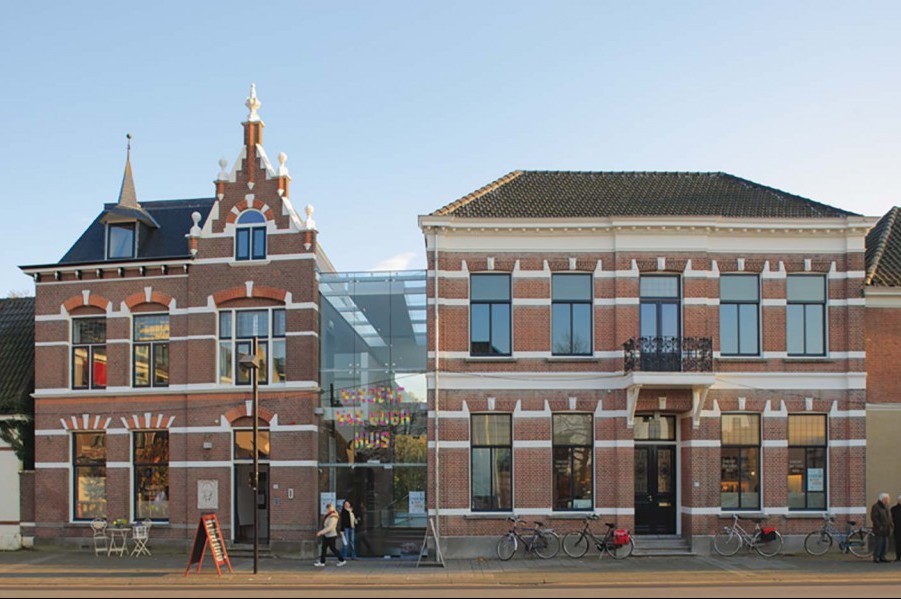
- The Vincent van GoghHuis, the museum and arts center.
- The Van Gogh Gallery, where many residency outcomes are shown.
- The Sexton’s House and nearby guest studio.
- The church connected to Van Gogh’s father and family history.
If you’re in the Sexton’s House residency, this is your immediate environment. You can expect short walks between your studio, the museum, and the main streets where you buy groceries or sit with notes and a sketchbook.
Landgoed De Moeren and future Van Gogh National Park
This estate is the anchor for the De Moeren residency:
- A monumental Flemish shed where you both live and work.
- Fields, woods, and heath that match landscapes described in Van Gogh’s letters.
- Part of the planned Van Gogh National Park, reinforcing its cultural and ecological significance.
If your project involves walking, site-specific installations, field recordings, or plein-air studies, this area becomes your extended studio.
Galleries, art viewing, and public presence
Zundert does not function as a traditional gallery circuit. Instead, exhibition opportunities flow mainly through the Van GoghHuis.
- Van Gogh Gallery: a key space for residency exhibitions, often featuring work made during your stay at the Sexton’s House residency.
- Exhibition spaces at the former Van Gogh home: used for contemporary art presentations and residency outcomes.
- Open studios at De Moeren: these events pull audiences into the landscape and let you show your work in situ.
You’re working in a context that balances heritage and contemporary practice. Visitors might be tourists, local residents, or people specifically following Van Gogh-related programs. That mix affects how you frame your work: clear texts, accessible hooks, and strong visuals can help bridge gaps between contemporary practice and broader audiences.
Getting to Zundert and moving around
Zundert sits in the southern Netherlands, close to the Belgian border. It’s not a major hub, so you usually route through a bigger city first.
Typical routes
For most artists traveling in, this is the general pattern:
- Arrive in the Netherlands via a larger city such as Breda or Eindhoven (or from farther away via Amsterdam or Rotterdam).
- Take regional transport (bus or car) to Zundert.
- Coordinate final arrival with the residency host for key handover and access.
A bicycle can be very useful once you are there, especially for De Moeren or other rural movements. If you don’t cycle, let the host know during planning, so you can figure out how to manage groceries and studio runs.
International artists and visas
Zundert is in the Schengen Area. If you’re coming from outside the EU/EEA/Switzerland, think through:
- Length of stay: most Zundert residencies sit under the 90-days-in-180-days short-stay window, but check specifics.
- Visa needs: depending on your nationality, you may need a Schengen visa.
- Documentation: ask the residency for an invitation letter or contract that you can show to consular authorities if needed.
Visa rules change by country and situation, so verify with the Dutch consulate and the residency coordinator early in your planning.
When to be there: seasons and application timing
Your ideal season depends on your practice:
- Spring and early summer: strong light, manageable temperatures, and vivid landscape. Great for plein-air painting, photography, walking-based research, and early-morning fieldwork.
- Late summer and autumn: rich colors, softer light, and more pronounced seasonal shifts. Good for landscape research, film, and text-based work around change and cycles.
- Winter: quiet, introspective, and sometimes stark. Studio-heavy practices can benefit from fewer distractions, but outdoor work becomes more weather-dependent.
Residency calls and cycles can shift, so instead of targeting a specific date, think in seasons. Decide when the environment would support your work best, then track the Vincent van GoghHuis announcements and related listings.
Local art community, events, and how you’ll show work
Zundert’s art ecosystem is built less on a big resident artist crowd and more on a steady flow of visiting artists anchored by the Van GoghHuis.
Community and exchange
You’re stepping into a context that centers on:
- Van Gogh-focused programming and exhibitions at the museum.
- Temporary residents showing work and exchanging with staff, visitors, and local audiences.
- Educational and cultural events that tie Van Gogh’s legacy to current practice.
If you want to connect more deeply while you’re there, you can:
- Offer an artist talk, workshop, or informal studio visit for local groups.
- Engage with visitors during your open studio or exhibition, asking how they relate to Van Gogh and the region.
- Use the museum’s program schedule to see what else is happening and who else is around.
Presentation formats
Expect one of two main formats:
- Gallery exhibition at the Van Gogh Gallery or another space linked to the Vincent van GoghHuis.
- Open studio, sometimes at De Moeren, where you present work-in-progress or finished pieces in the working space itself.
Both options are valuable. A gallery show provides clean documentation: installation views, a finished presentation, and texts you can reuse. An open studio shows your process, invites dialogue, and can produce strong process shots and notes for future work.
Is Zundert the right fit for your practice?
Residencies in Zundert make the most sense if you are looking for:
- A short, focused retreat with clear beginning, middle, and end.
- A strong conceptual frame rooted in Van Gogh, landscape, and rural life rather than a generic “time and space” residency.
- Quiet surroundings where your main commitments are your studio, the site, and your final presentation.
- Public visibility through a gallery show or open studio, without the pressure of a massive art fair audience.
Zundert might be less ideal if your priority is:
- A large urban art network with frequent openings, studio visits from curators, and commercial gallery circuits.
- Heavy production facilities like industrial fabrication shops, advanced media labs, or big technical crews.
- A big stipend or full-coverage funding as a non-negotiable requirement. Some Dutch residencies are funded or partially supported, but always confirm specifics with the host.
How to position yourself for a Zundert residency
When you’re ready to consider Zundert, a strong application will usually include:
- Clear link to Van Gogh or Zundert: not imitation, but an honest explanation of why this context matters to your work.
- Concrete project outline: what you want to explore during one or two months, and how the setting supports that.
- Evidence of self-direction: past projects where you worked independently and brought a body of work to completion.
- Good documentation: concise portfolio, strong images, and clear texts that show how you think.
If your practice is already circling themes like landscape, memory, art history, mental health, faith, rural spaces, or color and light, Zundert can be more than a nice line on your CV; it can become a deeply aligned working stretch that feeds your next few years of work.
Explore Netherlands
More city guides
Opportunity Intelligence
Ready to find your next residency?
Get a personalized shortlist — scored against your practice, discipline, and what you need right now.
See how Intelligence works →