
City Guide
West Palm Beach, United States
How to plug into residencies, studios, and art life in West Palm Beach, Florida
Why West Palm Beach works as a residency city
West Palm Beach sits in a sweet spot: close to Miami and Palm Beach, but with its own pace and ecosystem. For artists, that means you get access to collectors, institutions, and a growing contemporary scene without feeling swallowed by a mega-city.
Residencies here tend to connect studio time with public programming, education, or museum context. You’re not just dropped into a quiet studio; you’re plugged into a network that includes the Norton Museum of Art, Armory Art Center, New Wave, and a mix of galleries and artist-run spaces.
If you’re weighing where to invest your time, West Palm Beach is strong for:
- Short, focused residencies with institutional credibility
- Longer-term studio and teaching-based programs
- Paid opportunities that actually support your practice
- Public-facing work and community engagement, not just closed-door studio time
Key artist residencies in West Palm Beach
Here’s a breakdown of the main residency options that regularly bring artists into West Palm Beach, how they work, and who they actually serve well.
Norton Museum of Art — Artist in Residence (AiR)
Best if you want: Museum context, short but intense studio time, and housing that can work for families.
The Norton Museum of Art runs an Artist-in-Residence program that invites a small number of artists each year for stays between roughly two and eight weeks. It’s focused on the visual arts in a broad sense, so you’re not boxed in by medium.
What the residency tends to offer:
- Short-term stays (weeks, not months)
- Housing, often with the ability to bring family
- Access to two flexible studio spaces
- A museum setting: curators, staff, and an engaged audience
- A program structure that emphasizes creative and intellectual growth
- Commitments to parity, including dedicated residencies for women artists and a residency for an artist of color
How it feels on the ground: Think of this as a focused block of time where you can research, prototype, or push forward a specific project under museum support. It’s not a years-long immersion, but the museum context and visibility can be a big boost for mid-career or established artists, or emerging artists with a solid track record.
Good fit if you:
- Work in any visual medium and want institutional backing for a project
- Benefit from conversations with curators and museum staff
- Need housing and potentially family-friendly arrangements
- Value short but intense bursts of production or research time
How to prep your application: Aim to show how your practice ties into the museum’s context. Proposals that clearly articulate how you’ll use a short residency window often read stronger than vague "time-to-make" statements.
Armory Art Center — Artist-in-Residence Program
Best if you want: A long-term studio anchor, teaching experience, and full integration into a local art community.
The Armory Art Center runs one of the more “full-time job” style residencies in West Palm Beach. It’s not a quick retreat; it’s a life chapter. Residencies generally run for many months, often in the 9 to 18 month range, and are structured around studio work plus teaching and community engagement.
What the residency typically includes:
- Individual or shared studio space on campus
- Daily, evening, and weekend access to facilities
- A monthly stipend
- Paid teaching opportunities in classes, workshops, and community programs
- Access to a group exhibition for residents
- Exposure to visiting master artists and cross-department studios
Archived calls show a structured schedule, including a minimum number of weekly hours on site, plus service and teaching commitments. Expect a mix of studio time, departmental support, and community-facing duties like open studio monitoring, events, or workshops.
Media focus: Calls often specify departments such as 2D (painting, drawing, printmaking, digital, fiber, and mixed media), alongside other areas in different years. Check the current call for which disciplines are open.
Good fit if you:
- Want a serious, structured residency that functions like a professional appointment
- Enjoy teaching and want to build that side of your practice
- Can commit to living in West Palm Beach for an extended period
- Want time to develop a body of work, not just a single project
Application strategy: Treat this like applying for a hybrid of a residency and a teaching position. Emphasize both your studio practice and your ability to design, lead, and communicate in classes or workshops.
New Wave Art Residency
Best if you want: A compact, well-funded residency with housing, a studio, and travel covered, plus solid public-facing programming.
New Wave Art Residency is a nonprofit program supporting emerging and under-represented artists. It’s rooted in Palm Beach County but closely plugged into broader contemporary art conversations.
What the residency offers:
- Residency around six weeks in length
- A $5,000 unrestricted stipend
- Housing and a studio in West Palm Beach
- Domestic travel covered
- Public programs and community engagement opportunities
The core mission is to support under-represented artists across diverse backgrounds, and the residency is designed to give you both material support and a real platform. Historically, they also connect with broader regional events and collectors’ circuits.
Who it suits:
- Emerging or early-mid-career artists building visibility
- Artists from under-represented communities looking for strong institutional support
- Artists whose work is a good fit for public programs, talks, or community projects
New Wave also runs related initiatives, including a student residency and a curatorial residency in partnership with The Bunker Artspace, where a curator develops an exhibition from Beth Rudin DeWoody’s collection. Knowing these parallel tracks can help you frame your application with an eye toward the broader program.
CityPlace / Related Ross artist programming
Best if you want: High public visibility in a dense, city-center environment.
CityPlace (sometimes branded as Rosemary Square) is a commercial and cultural district in downtown West Palm Beach. Through partnerships with organizations like New Wave, it has hosted artist-in-residence style programming and public art projects.
Why it matters:
- Huge foot traffic compared to a typical studio complex
- Exposure to audiences who don’t usually seek out galleries
- Potential connection to commercial partners and patrons
CityPlace-based projects can be ideal for installation, performance, socially engaged work, or practices that benefit from constant public interaction. The trade-off is less privacy and a more “on” presence during open hours.
Nearby: Lighthouse ArtCenter / 3 Wings Visiting Artist Fund
This one sits in Palm Beach County, not strictly West Palm Beach, but it’s often on the same radar. The 3 Wings Visiting Artist Fund supports an established ceramic artist for a two-week residency and workshop at Lighthouse ArtCenter’s ceramics studio. It typically includes a $2,500 stipend, a public lecture with Q&A, a multi-day workshop, and daily studio time.
If you’re a ceramic artist who enjoys teaching and wants a short, intense period of both instruction and personal work, this is worth tracking alongside West Palm Beach options.
How to choose the right residency for your practice
West Palm Beach offers very different residency models. To keep it simple, think in terms of time, money, structure, and visibility.
- Short-term, high-prestige, museum context: Norton Museum of Art AiR
- Long-term, structured, teaching + studio: Armory Art Center AiR
- Short-term, all-inclusive (stipend + housing + travel): New Wave Art Residency
- Public-facing city-center exposure: CityPlace programming (often via New Wave)
- Specialized ceramics + teaching nearby: Lighthouse / 3 Wings Visiting Artist Fund
Ask yourself:
- Do you need income and teaching experience? Aim for Armory or teaching-heavy opportunities.
- Do you mainly want visibility and institutional credibility? Norton or New Wave will likely do more for your CV.
- Do you want a quiet production block or public interaction? Armory and Norton offer more controlled studio environments; CityPlace and New Wave programming often put you in front of audiences.
Living and working in West Palm Beach during a residency
Residencies here don’t exist in a vacuum; the city itself shapes your experience. Understanding the basics of cost, neighborhoods, and transport will help you decide if a residency is feasible and how to budget.
Cost of living and budgeting
West Palm Beach is generally cheaper than Miami, but it’s still not a low-cost city. The biggest variable is rent and short-term housing, especially in winter and early spring when seasonal visitors flood the area. This is where housing-inclusive residencies like Norton and New Wave become especially valuable.
If you’re self-arranging housing for a long-term residency like the Armory, consider:
- Looking outside the most waterfront or touristy zones
- Exploring options west of I-95 for more affordable rents
- Building in a buffer for seasonal price spikes
Residency stipends can help, but they rarely cover everything. Treat them as part of a stack: savings, freelance, teaching, or remote work, plus the residency’s support.
Neighborhoods to know
Certain areas make more sense for artists, especially if you want quick access to institutions, studios, and events.
- Downtown / Clematis / CityPlace area: Walkable, near the Norton, CityPlace, and various galleries. Ideal if you’re at Norton, New Wave, or doing city-center projects.
- El Cid: Historic, close to the Intracoastal and downtown. Atmospheric and convenient, though often on the pricier side.
- Northwood: Known for its creative energy and local businesses. Good if you want more of a neighborhood feel.
- Flamingo Park and South End: Residential, near the water, with a mix of older homes and some potential live/work possibilities.
- Areas west of I-95: Often more affordable, but with less walkability. A car becomes more important here.
If your residency includes housing (like Norton or New Wave), you can focus more on neighborhood character and less on chasing the absolute lowest rent.
Studios and making space
Most residencies in West Palm Beach provide studios or access to production spaces. Outside of that, the local ecosystem includes:
- Armory Art Center studios and workshops
- Norton residency studios for AiR participants
- New Wave-provided studios for its artists
- Independent and artist-run spaces, often tied to collectives or galleries
If you’re staying beyond a residency, it can be worth asking current residents and local artists where they find studios. Institutional staff are usually happy to point you toward shared spaces, live/work setups, or under-the-radar options.
Galleries, venues, and where to actually show up
Residency life is partly studio time, partly showing up. West Palm Beach gives you a cluster of places that are worth knowing before you arrive.
- Norton Museum of Art: Major exhibitions, talks, and of course the AiR program. Even if you’re not in residence there, it’s an anchor for the local art conversation.
- Armory Art Center: Exhibitions, classes, resident shows, visiting artists, and steady community traffic.
- New Wave Art Residency: Public programs, artist talks, and seasonal projects that can attract Palm Beach and Miami audiences.
- The Bunker Artspace: A private collection space with curated exhibitions, sometimes tied to New Wave’s curatorial residency.
- CityPlace: Public art, activations, and occasional residency-style projects with visible, non-specialist audiences.
- The Peach: An arts collective and event space that has hosted resident artist work connected to local foundations.
Your residency may plug into one or more of these spaces. Either way, they’re useful for networking, seeing what’s being shown, and understanding the local context your work will sit in.
Getting around: cars, trains, and reality checks
West Palm Beach has a walkable downtown core, but once you step outside that, the city stretches quickly. Transportation affects how realistic certain residencies feel, especially long-term ones.
Main options:
- Car: The easiest way to move between studios, housing, and teaching sites.
- Brightline: High-speed rail connecting West Palm Beach to Miami, Fort Lauderdale, Boca Raton, and Orlando. Useful if you’re pairing your residency with opportunities in those cities.
- Tri-Rail: Regional rail with stations along South Florida, more utilitarian than Brightline but functional.
- Palm Tran buses: County bus network that can work if you’re patient and plan routes carefully.
- Walking and biking: Most feasible in and around downtown, Clematis, CityPlace, and some nearby neighborhoods.
If your residency studio, housing, and teaching site are not tightly clustered, a car may shift from “nice to have” to necessary. If you’re car-free, ask the residency directly how past artists have managed transit; they usually know the real answer.
International artists and visas
Several West Palm Beach residencies offer stipends, travel support, and teaching or workshop duties. That’s great financially, but it means you need to be careful with visa choices if you’re not a U.S. citizen or permanent resident.
Common visa categories for artists include visitor visas, O-1 for individuals with extraordinary ability, or J-1 if a program is formally structured as an exchange. The correct option depends heavily on whether the residency counts as employment, how the stipend is structured, and what your duties are.
Direct questions to ask residency staff:
- Do they sponsor visas, and if so, which type?
- Are international artists eligible, and how have they handled visas in the past?
- Is the stipend considered compensation for services, or is it framed differently?
- Are teaching, lectures, or workshops required, and how do those interact with visa rules?
Residency organizers can’t give legal advice, but they can often tell you how previous international residents have structured things.
When the city is most alive for artists
West Palm Beach’s art life pulses with the seasonal rhythms of South Florida. Things generally pick up in the cooler months, when visitors arrive and regional art events stack up. That’s when museums, galleries, and public spaces often run their most visible programs.
On the other hand, quieter, hotter months can be ideal if you want low-distraction studio time and potentially lower costs for self-funded housing. Long-term residencies like the Armory often span multiple seasons, which can give you a sense of both modes: high activity and deep-focus stretches.
Who West Palm Beach residencies are really for
West Palm Beach is a good match if you’re drawn to at least one of these:
- You want teaching to be part of your practice and résumé.
- You’re ready for a long-term, structured residency that feels like a job (Armory).
- You want a short, fully supported residency that doesn’t wreck your finances (New Wave or Norton).
- You care about being in a collector-rich, institution-heavy region without being based in Miami itself.
- You enjoy public engagement and are comfortable with your work being seen by broad, non-art-specific audiences.
The city can support deep studio work, but it particularly rewards artists who are open to teaching, speaking, and engaging with communities beyond the art school bubble. If that sounds like you, West Palm Beach is worth putting on your residency map.
Residencies in West Palm Beach
Armory Art Center
West Palm Beach, United States
The Armory Art Center's Artist-in-Residence Program is a highly competitive 9-18 month residency that attracts emerging artists with at least a BFA to teach classes, develop their own work in provided studio space, and participate in community events. Residents work 35+ hours weekly (including 15 hours of departmental duties), teach workshops and eight-week classes, and receive compensation for teaching plus a monthly stipend.
Artists in Residence
West Palm Beach, United States
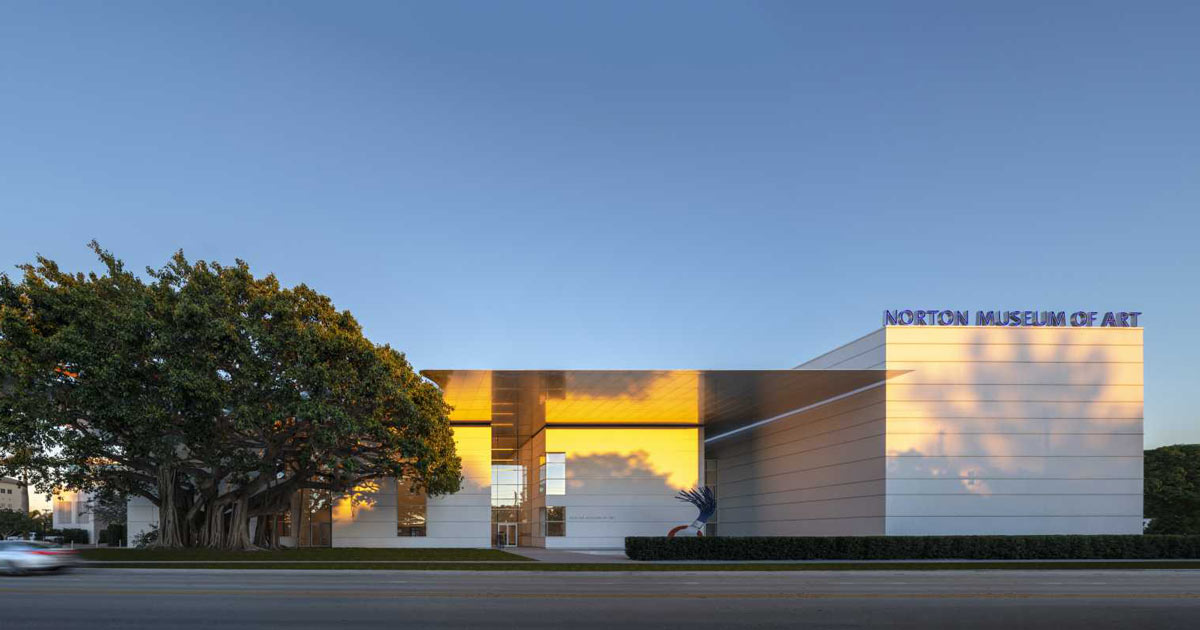
West Palm Beach artist-in-residence programs include the Norton Museum’s invitation-only visual arts residency and the Armory Art Center’s teaching residency with studio space, exhibit opportunities, and support for emerging artists.
Explore United States
More city guides
Opportunity Intelligence
Ready to find your next residency?
Get a personalized shortlist — scored against your practice, discipline, and what you need right now.
See how Intelligence works →