City Guide
Vernon, Canada
How to use Vernon’s residencies, landscape, and arts scene to actually get work made
Why Vernon works as a residency city
Vernon sits in the North Okanagan, surrounded by lakes, mountains, orchards, and vineyards. The combo of strong daylight, quiet neighbourhoods, and an active arts community makes it a surprisingly practical place to hole up and make work.
The key advantages if you’re coming in for a residency:
- Landscape as material: Lakes, rolling hills, and orchards give you strong source material for painting, photography, sound, or writing. Even if you don’t work with landscape directly, the space and views can be a reset for your brain.
- Size of the city: Big enough to have galleries, an arts centre, cafés, and supplies; small enough that your days aren’t eaten by transit and noise.
- Arts infrastructure: The Caetani Cultural Centre, Vernon Public Art Gallery, and Vernon Community Arts Centre are all active. That means options for residencies, classes, networking, and showing work.
- Community orientation: Many programs encourage workshops, readings, or small exhibitions, so you can test work in front of a real audience instead of only online.
If you’re looking for a residency that actually supports production time rather than just adding another line to your CV, Vernon is worth a serious look.
Caetani Cultural Centre: Self-directed Artist-in-Residence
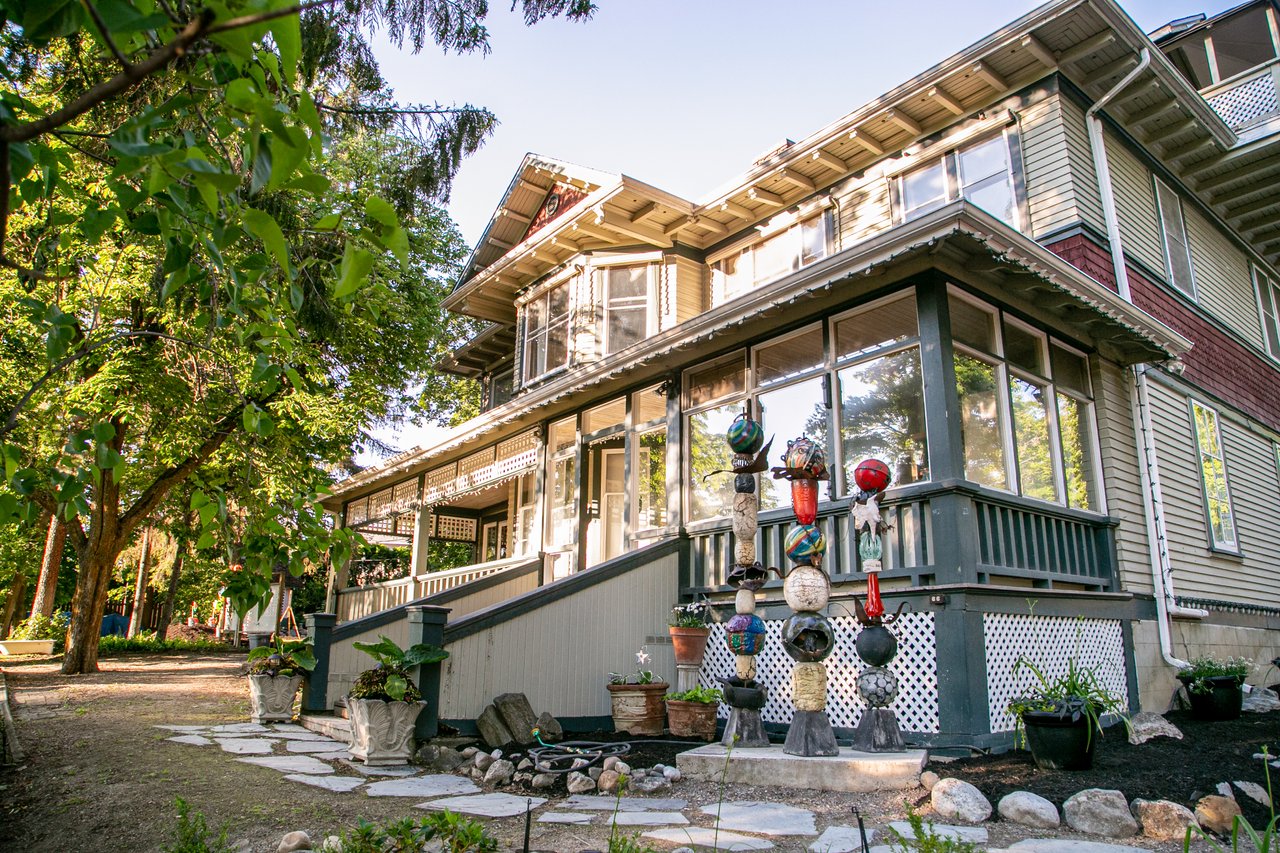
The Caetani Cultural Centre is usually the first stop for artists researching Vernon. It’s a historic heritage house on a park-like property, a short walk from downtown, with an ongoing self-directed residency program.
What the Caetani residency actually looks like
The Self-Directed Artist-in-Residence program is designed for artists who can set their own structure. You choose your timeline and bring your own project; the centre provides space, basic facilities, and a soft landing in the local scene.
Core features typically include:
- Flexible length: You can usually stay anywhere from about two weeks up to around three months, depending on availability.
- Shared suite accommodation: Resident artists stay in a three-bedroom suite on the upper floor of the Caetani house. Each artist has a private bedroom and shares a kitchen, bathroom, and living room with other residents.
- Optional studios: There are separate backyard studios that can be booked for an additional fee. One has a sink, useful for painters or anyone working wet or messy; the other is more general-purpose.
- Work where it suits you: Writers and digital artists often work from their rooms; painters and mixed-media artists tend to book a studio to keep mess contained.
- Ongoing applications: The centre accepts applications year-round and usually gives a fairly quick response, which is helpful if you’re trying to coordinate other jobs or travel.
The overall vibe is low-drama and self-directed. You’re not micro-managed, and you’re expected to arrive with a sense of what you want to do.
Who this residency suits
Caetani is a solid fit if you are:
- A visual artist or writer who thrives on independence: There’s no set curriculum. You build your own schedule, pace, and goals.
- Comfortable with shared living: You’ll have your own bedroom but share the kitchen, bathroom, and living spaces. If you absolutely need full privacy, factor that into your expectations.
- Okay with basic facilities: This is not an industrial fabrication hub. It’s ideal for drawing, painting, mixed media, writing, digital work, and small-scale projects.
- Looking for a reset: If you’re burnt out from gigs, teaching, or city overload, the combination of quiet, nature, and an on-site creative bubble is helpful.
Medium-specific notes for Caetani
Some quick reality checks by discipline:
- Painting / mixed media: Book a backyard studio if you use solvents, large canvases, or anything messy. Ask about ventilation, storage, and whether you can staple into walls or need alternative hanging systems.
- Drawing / illustration / printmaking (small-scale): You can likely work from your room or a studio. Ask about tables, lighting, and whether any presses or specialized equipment exist off-site.
- Digital / new media: Good for laptop-based work. Confirm internet reliability and any restrictions on late-night work noise if you’re editing audio or video.
- Writing / research: The house, garden, and nearby cafés are enough for many writers. The on-site library and quiet rooms make it straightforward to build a daily writing habit.
- Ceramics and sculpture: The Caetani site itself is not set up as a full ceramic or heavy fabrication studio. You’re encouraged to combine your stay with the Vernon Community Arts Centre for clay facilities and technical support.
Connecting with the local scene from Caetani
Caetani is an easy launchpad into the rest of the Vernon arts community:
- Vernon Public Art Gallery (VPAG): Visit exhibitions, meet staff at openings, and get a feel for regional contemporary practices.
- Vernon Community Arts Centre (VCAC): Explore classes, memberships, and possible studio access, especially if you need clay, kilns, or community print/ceramic facilities.
- Workshops and readings: Artists staying a bit longer are sometimes invited to run a workshop, reading, or pop-up. This is useful if you want to test teaching or share work-in-progress with a public audience.
You’re close enough to downtown that you can treat the whole city as an extended campus: studio at Caetani, meetings and cafés downtown, and materials from local suppliers.
Mackie Lake House: Heritage, solitude, and gallery partnership
The Mackie Lake House Foundation runs an artist-in-residence program in partnership with the Vernon Public Art Gallery. It centres on a historic lake house setting and has a more contemplative feel than an urban live–work loft.
What defines the Mackie residency
While program details can shift over time, a few themes stay consistent:
- Heritage setting: The house and grounds connect your work to local history and stories of the Okanagan. The environment itself becomes part of your research material.
- Solitude and focus: The foundation frames the residency around quiet time for creativity and reflection. This is good if you need sustained concentration more than constant events.
- Connection to VPAG: Because the Vernon Public Art Gallery is a key partner, there is generally some link to exhibition, public programming, or community engagement, depending on the specific call.
Residencies may vary year to year, so treat older calls as a general template, not fixed rules. Always confirm the current structure directly with the foundation or gallery.
Who benefits most from Mackie Lake House
This residency can be especially powerful if you are:
- A Canadian artist working with place and history: If your practice deals with landscape, heritage, memory, archival material, or site-specific work, the context of the house supports that.
- Drawn to slower, reflective work: The emphasis is on solitude, not a packed schedule. Perfect for deep writing, drawing, or research-heavy projects.
- Comfortable working semi-independently: There is structure through the partnership with the gallery, but daily studio rhythm is largely up to you.
What to verify before applying
Because Mackie’s program can change with funding and partnerships, do a quick checklist before you put time into an application:
- Housing and studio: How is accommodation arranged? Is there a dedicated studio, or do you work within the house?
- Expectations: Are there required public events, open studios, or an exhibition outcome at VPAG?
- Eligibility: The program typically focuses on Canadian artists; confirm current eligibility if you’re based elsewhere.
- Support versus self-funding: Clarify what is covered (if anything) and what you must budget for, such as travel, food, materials, and local transport.
If you’re comfortable with a quieter rhythm and want your work to sit inside a strong sense of place, this residency is worth the admin effort.
Vernon Community Arts Centre: Youth Artist in Residence
While not a professional residency for adults, the Youth Artist in Residence (YAR) program at the Vernon Community Arts Centre is part of the city’s cultural ecosystem and shows how deeply the community invests in young artists.
What the youth residency offers
The YAR program is designed for artists roughly in the 16–18 age range living in the North Okanagan. Key elements generally include:
- Summer residency structure: Selected youth artists work intensively over the summer in connection with the arts centre.
- Small cohort: Usually a handful of artists are chosen, which means closer attention and mentoring.
- Honorarium support: A modest honorarium, often supported by local organizations, helps offset supply costs.
If you’re a younger artist in the region, this is a good first experience of what a residency can feel like. If you’re an older visiting artist, it’s helpful to know this pipeline exists; you may cross paths with past YAR participants in other programs or events.
Studios, galleries, and support systems around the residencies
Residencies live inside a broader ecosystem. Knowing the key players in Vernon helps you extend your residency from a single room into a network of resources.
Vernon Public Art Gallery (VPAG)
VPAG is the main contemporary visual arts venue in Vernon. It is known for exhibitions, talks, and community programming.
- For residency artists: Use VPAG to research regional artists, see how curators frame local work, and attend openings to meet people.
- For proposals: If your residency project has a strong public or research component, you may later shape it into a proposal for a gallery like VPAG, in Vernon or elsewhere.
Vernon Community Arts Centre (VCAC)
VCAC is a hub for making. It offers classes, memberships, and access to equipment that you may not have at a residency.
- Ceramics: Clay membership and kiln access are especially relevant to Caetani artists who need wet facilities. Always confirm current rules and costs.
- Classes and workshops: Short courses can jump-start a new technique during your stay or give you a structured break from your own project.
- Community: Studio users are a mix of amateurs, emerging artists, and professionals. Casual conversations in these spaces often lead to material tips, local advice, and new contacts.
Other support and groups
- Okanagan Artists of Canada Society (OACS): A long-standing artists’ group that supports exhibitions, bursaries, and community events. Even if you are only in Vernon temporarily, attending a show or meeting artists through OACS can extend your network across the region.
- Independent galleries and studios: Downtown Vernon and the surrounding area host a mix of commercial galleries, co-ops, and private studios. Treat walks through town as scouting missions: note spaces that resonate with your work for future proposals or collaborations.
Choosing where to stay and work
If you are deciding between residencies or mixing a residency with independent accommodation, think in terms of how you work day to day.
Location in the city
Practical areas for visiting artists include:
- Near downtown: Walking access to cafés, supplies, galleries, and transit. Good if you rely on external spaces for your work routine.
- Pleasant Valley / central Vernon: Convenient if you’re at Caetani; you can walk or bike easily and still reach downtown without a car.
- Near Okanagan College or cultural facilities: This can work well if you are combining residency time with classes or research.
If you are staying outside the centre of town, factor in transport time and costs. Long commutes eat into your studio hours quickly.
Studio needs and compatibility
Match your practice to the facilities at each residency:
- Quiet desk work: Writing, planning, drawing, animation, and digital editing are very compatible with Caetani and with more contemplative setups like Mackie Lake House.
- Messy, wet work: Painters and mixed-media artists should secure studio access with sinks and ventilation. At Caetani, that usually means booking a backyard studio; at other sites, you may need VCAC or another off-site space.
- Heavy or large work: If you work with stone, metal, large sculpture, or installations needing fabrication, you’ll likely need to scale projects down or split them across multiple residencies, using Vernon more for research, drawing, or maquettes.
Costs, visas, and logistics
Residencies in Vernon tend to be accessible compared with major international programs, but they’re not necessarily fully funded. Planning ahead reduces stress once you arrive.
Cost of staying and working
Costs will vary by program and season, but you can expect:
- Residency fees: Programs like Caetani typically charge a fee for accommodation, sometimes with additional studio charges. Rates can shift with room type and time of year.
- Living costs: Groceries and everyday essentials are comparable to many Canadian mid-sized cities. Eating out can add up, so having a kitchen is a real advantage.
- Transport: If you stay close to your residency site, you may avoid renting a car. Bikes and e-scooters can cover a lot of ground; public transit fills the gaps.
If your budget is tight, aim for programs that include housing and use your studio time to focus on projects that don’t require expensive new materials.
Getting to and around Vernon
Most visiting artists arrive by air at Kelowna International Airport (YLW) and then travel by bus, shuttle, or car to Vernon. A car gives you freedom for lake trips and hikes, but isn’t essential if you’re centrally located.
Once you’re in Vernon:
- Walking and biking: Very realistic if you’re near downtown or Caetani. Some programs even offer access to a bike.
- Transit: There is local bus service; check routes between your residency, downtown, and any off-site studios.
- E-scooters: These can be a quick way to cover mid-distance trips, especially for errands or visits to galleries.
If your work involves shipping canvases or equipment, confirm with your residency that they can receive packages, and plan return shipping or transport for finished work.
Visa and work-permit questions
For Canadian citizens and permanent residents, residencies in Vernon are straightforward. There is usually no additional immigration paperwork beyond normal travel within Canada.
If you are coming from outside Canada, consider:
- Length of stay: Short visits may fit under visitor or eTA status, depending on your nationality.
- Paid activity: If the residency includes stipends, teaching, or fees for public events, check whether that shifts you into “work” territory in immigration terms.
- Public presentations and sales: Clarify with the host and consult official guidance if you plan to sell work or be paid for programming while in Canada.
Residency organizers usually expect you to handle your own immigration, so it’s smart to verify requirements well before travel.
When to be in Vernon as a resident
Vernon is a year-round city, but the feel of your residency will change with the season.
- Late spring and summer: Long days, vibrant colour, and strong sunlight. Great for plein air work, photography, and anyone who draws energy from being outdoors. Also a popular time, so accommodation can be in higher demand.
- Early fall: Rich colour in the orchards and hills, slightly fewer visitors, and still pleasant weather. Ideal if you want landscape access without peak-season crowds.
- Winter and shoulder seasons: Quieter, and potentially better availability and rates, depending on the program. Good for deep studio hibernation, writing, and research-heavy projects.
If your work relies heavily on natural light or outdoor activity, prioritize late spring through fall. If you crave isolation and focus, consider the off-peak months.
Who Vernon residencies are best for
Vernon shines for artists who want a balance of solitude and light community contact, rather than an intense urban residency.
You are likely a good match if you are:
- Self-directed: Comfortable building your own structure and not needing constant deadlines from staff.
- Medium-scale in your material needs: You can work with what a heritage house, small studio, or community arts centre can realistically support.
- Interested in landscape, history, or sense of place: Both Caetani and Mackie offer environments that reward slow looking and local research.
- Drawn to smaller communities: You want an active arts scene but don’t need a big-city gallery district outside your door.
If you require a fully funded, large-scale production residency with heavy fabrication facilities and intensive curatorial mentorship, Vernon may feel too modest. If your priority is affordable time, space, and a supportive yet low-pressure environment to actually make work, these residencies are well worth your attention.
Explore Canada
More city guides
Opportunity Intelligence
Ready to find your next residency?
Get a personalized shortlist — scored against your practice, discipline, and what you need right now.
See how Intelligence works →