
City Guide
Ventspils, Latvia
How to use this quiet Baltic port city for focused, funded creative time
Why Ventspils works as a residency city
Ventspils is a small port city on Latvia’s Baltic Sea coast, with long beaches, dunes, and a compact historic center. It’s calm, walkable, and set up for concentrated work rather than constant social overload. You get infrastructure and culture, but you’re not fighting distractions every time you sit down to write, draw, code, or think.
The city is known mainly for its literary residency ecosystem, but it also sits close to some unusual research and technical sites, including the Ventspils International Radio Astronomy Center near Irbene. That mix of coastline, quiet, and technical infrastructure makes Ventspils appealing if your work leans into text, translation, ecology, or art-and-science.
If you’re looking at residencies here, you’re basically choosing between:
- deep-focus literary work in the historic center
- interdisciplinary / media / eco-art tied to field trips and radio astronomy sites (usually via programs based in Riga but connected to Ventspils)
- self-organised stays where you use the city as a quiet base while working independently
International Writers’ and Translators’ House (Ventspils House)
This is the residency most people mean when they talk about Ventspils as a creative city: the International Writers’ and Translators’ House, often called Ventspils House.
What the residency actually feels like
The house is in the former town hall, an 18th-century building in the cultural and historical center of Ventspils. It combines solitude and low-key social contact: you have your own room to work and rest, plus shared areas where you bump into other residents in the kitchen, reading room, or garden.
Key features you can expect based on official descriptions and residency listings:
- 7–9 residential rooms for professional writers and translators
- Desks and internet suitable for long writing days
- Shared kitchen for self-catering
- Reading room / small library, with residents encouraged to leave books
- Garden, sauna, and small recreation areas for breaks
- Central location in Ventspils, close to parks and the old town
The setup is tuned for people who need concentration: novelists, poets, essayists, translators, and researchers. Your room is both your bedroom and your studio, so the vibe is closer to a retreat house than a messy visual-arts compound.
Funding and who gets supported
Several funding schemes are mentioned in open calls and partner listings, which often run in parallel:
- Scholarship around 320 EUR for up to four weeks, supported by the State Culture Capital Foundation (aimed at creative literary work while living at the house).
- Grants around 440 EUR per four weeks plus covered travel for writers and translators from Nordic countries, via Nordic Culture Point.
- A two-month residency with a Latvian language course in cooperation with Ventspils University, often aimed at translators from Latvian or writers connected to Latvian literature.
Exact amounts and schemes can shift, so treat these figures as a ballpark and check the current terms when you apply. The crucial thing is: this residency isn’t just a room; there are paths to partial funding and covered travel, especially if you fall into specific categories like Nordic writers or translators working with Latvian.
Who this residency is actually good for
You’ll get the most out of Ventspils House if you are:
- a writer (novelist, poet, essayist, playwright)
- a literary translator (any language combination, but there’s strong support for those working with Latvian)
- a researcher whose work is grounded in literature or translation studies
- a visual or interdisciplinary artist whose practice is heavily text-based (for example, writing a script, theory-driven work, or creating a book project)
It’s not ideal if you need a large studio, noisy experimentation, heavy tools, or messy materials. This is a house for people who can do most of their work at a desk and laptop, with quiet walks and reading as their “studio breaks.”
Day-to-day rhythm
You can expect a pattern of:
- working in your room or in the reading room
- breaks in the garden or sauna
- walks through the old town, parks, or down to the beach
- occasional readings, small events, or informal sharing with other residents
The house often collaborates with Ventspils University and local programs, so there can be invitations to give talks, readings, or workshops, depending on your profile and the season.
Art, science, and the Ventspils / Irbene connection
Alongside the literary scene, there is a quieter but growing track of artists who connect with Ventspils through art-and-science and techno-ecological work. This is where organizations like RIXC come in.
RIXC Baltic–Nordic Art, Science & Techno-Ecologies Residency
The RIXC residency is formally based in Riga, but residency descriptions highlight trips to Ventspils-area sites:
- Ventspils Radiotelescope / Irbene Radiotelescope (Ventspils International Radio Astronomy Center)
- RIXC Fields residency, a rural “greenhouse” location connected to ecology and landscape
The structure of the RIXC Baltic–Nordic residency (as described in their calls) usually includes:
- Two-month residencies with three artists in total
- Artist fee around 3000 EUR for each residency period
- Free accommodation
- Covered travel and local transportation
- Technical assistance and some production budget tied to public presentation
- Access to media labs, digital equipment, and RIXC Gallery for exhibitions or performances
The field trips to Irbene and related sites are not just sightseeing; they are baked into the residency logic. Artists are expected to develop new work that responds to techno-ecologies, signal environments, radio, infrastructure, or environmental questions.
Why this matters if you want Ventspils
If you are a visual or sound artist, this is where Ventspils enters your orbit. The radio astronomy center near Ventspils is unique: huge antenna dishes in a forest, traces of Cold War infrastructure, and a very particular sound and spatial environment. For work about signals, listening, satellites, deep time, or planetary tech, it is a rich site.
Even if you’re based in Riga for the residency, your fieldwork days near Ventspils can become the backbone of your project. Think of Ventspils here as an extended research zone rather than the place where you sleep every night.
Is this for you?
This kind of residency fits if you:
- work with media art, sound, or digital installation
- have a practice around art and science, especially astronomy, radio, or environmental systems
- enjoy research-heavy projects with field recording, data collection, or conceptual mapping
- are comfortable presenting your work publicly at the end (installations, performances, talks)
It is less suited to someone who just wants a quiet space to paint; RIXC expects you to engage with the research frame and the partner sites.
How Ventspils feels as a place to live and work
Residencies can sound great on paper, but they succeed or fail on the ground: do you feel safe, supported, and able to work? Ventspils tends to deliver on that, especially if quiet concentration is your priority.
City scale and atmosphere
Ventspils is compact and easy to understand. You can walk from the historic center to the beach through green parks, and you quickly learn the main routes to shops, cafés, and the bus station. The city invests in public space: parks are maintained, the beach infrastructure is decent, and there’s a visible mix of past and present in the architecture.
For artists, two things stand out:
- Low noise and distraction: no endless nightlife strip right under your window.
- Immediate access to landscape: beach, dunes, and forested areas for long walks, photography, field notes, or environmental studies.
Cost of living basics
Compared to many European cities, Ventspils is manageable, especially if your residency covers accommodation.
- Accommodation: if the residency hosts you, that’s your biggest cost solved. If not, short-term rentals tend to be cheaper than in Riga, especially outside peak summer.
- Food: supermarkets are affordable; cooking at home is the norm. Cafés and restaurants exist but are not dense.
- Local transport: the city is walkable and bike-friendly. Some residencies provide bicycles.
- Materials and printing: basic stationery, prints, and small-scale production are possible locally. Specialized materials or equipment might mean ordering online or connecting with institutions in Riga.
If you budget carefully, you can live modestly on a relatively small stipend, particularly if your work is primarily writing or laptop-based.
Where you’re likely to be based
Ventspils is not a huge city of neighborhoods, but a few areas matter practically:
- Historic center: this is where the Writers’ and Translators’ House is located. You have quick access to the river, parks, shops, and cultural venues.
- Beach and coastal zone: great for daily walks, photography, sketching, and sound recording. Many artists use this as their “thinking space.”
- Institution-adjacent areas: if you collaborate with the university, schools, or local cultural centers, you’ll be moving between the center and these institutional nodes.
You’re rarely more than a short walk or bike ride from what you need.
Art scene, presentation options, and community
Ventspils does not operate like a big art capital with dozens of galleries. Instead, you’re working with institution-led programming, festivals, and occasional project spaces.
What kind of art activity exists locally
Across city descriptions and residency materials, Ventspils tends to emphasize:
- Literary life centered on the Writers’ House and its events
- Public art and sculpture in parks, squares, and along walking routes
- Seasonal festivals with music, performance, and family-oriented programming
- Educational links with Ventspils University and other institutions, especially for translation and creative writing
The practical reading: this is a city where you can give a reading, lead a workshop, or contribute to a small festival or institutional event, but you’re not likely to be hopping between ten contemporary art openings in one evening.
Presenting your work
How you present your work depends heavily on your residency:
- Writers’ and Translators’ House: readings, conversations, or small public events are common. Sometimes work leads to publication or translation opportunities rather than a traditional “show.”
- RIXC and related programs: here the main presentation venue is usually RIXC Gallery in Riga, with fieldwork ties to Ventspils and Irbene. You might show documentation or installations that reference Ventspils, even if the final exhibition is in the capital.
- Independent projects: possibilities include small presentations at local cultural centers, informal open studios, or online releases tied to your time in the city.
If public presentation is important to you, clarify the expectations before you accept a residency: is there a formal output, is it optional, and what kind of support (tech, budget, PR) is on the table?
Getting there, visas, and practicalities
How to reach Ventspils
Most international visitors arrive in Latvia through Riga International Airport. From Riga to Ventspils, the usual route is:
- Bus: regular intercity buses link Riga and Ventspils. The ride is a few hours and straightforward.
- Car: renting a car gives you flexibility to explore rural areas and the Irbene region, but it’s not essential for city life.
There is no major passenger rail link to Ventspils, so you’ll likely plan around bus schedules.
Getting around the city
On arrival, getting oriented is quick:
- Walking covers most daily needs within the city center.
- Bicycles are very practical; some residencies provide them, or you can arrange a rental.
- Local buses exist, but most artists rely on walking and cycling unless they need to travel out of town.
Visas and paperwork
Your visa situation depends on your passport and the length of your stay:
- EU/EEA/Swiss citizens generally don’t need a visa for short stays, though longer residencies may require registration or documentation.
- Non-EU citizens may need a Schengen visa or another type of permit. Many residencies provide invitation letters to help support your application.
Before committing, ask the residency:
- Can they issue an official invitation letter for visa purposes?
- Is the stipend gross or net, and is any tax withheld locally?
- Do they require you to carry specific health insurance during your stay?
Sorting these details early removes a lot of stress later.
When to go and what kind of artist Ventspils suits
Seasonal differences
Time of year changes how Ventspils works for you:
- Late spring to early autumn: long days, access to the beach, and more outdoor cultural events. Ideal if you want to walk, photograph, or do fieldwork.
- Late autumn and winter: quieter streets and shorter days, which many writers use as a built-in structure for deep focus. The coastal weather can be rough, but that intensity can feed certain projects.
If your practice relies on outdoor research or filming, target the warmer months. If you’re finishing a manuscript or translation and want minimal distraction, the colder seasons can work well.
Who Ventspils is great for
You’ll likely thrive in Ventspils if you are:
- a writer or literary translator wanting quiet and some institutional support
- a research-based artist interested in ecology, language, or media infrastructures
- a sound or media artist drawn to radio, astronomy, or signal environments
- someone who prefers slow, concentrated work over intensive networking and constant events
It may feel limiting if you need:
- a large commercial gallery scene and art-market circulation
- heavy fabrication facilities (metal workshops, large-scale printmaking labs, etc.)
- a dense calendar of openings and parties to feel connected
How to use this city intentionally
To make a residency in Ventspils work for you, it helps to decide in advance what the city is doing for your practice. A few ways to frame it:
- As a writing lab: a place to finish a draft, translation, or book project, using the Writers’ House as your base.
- As a research base: where you alternate focused desk work with walks along the coast and trips to Irbene and other sites for field notes, photos, and recordings.
- As a reset: time away from your usual city, building a new routine and allowing ideas to surface in quieter conditions.
If you go in with a clear intention, Ventspils tends to meet you halfway: the infrastructure is there, the distractions are low, and the landscape is waiting whenever you need to step away from the desk.
Residencies in Ventspils

International Writers’ and Translators’ House
Ventspils, Latvia
International Writers’ and Translators’ House offers 7 residential rooms for professional writers and translators from the whole world.Thanks to the support of the State Culture Capital Foundation, Ventspils House offers the opportunity to apply for a scholarship (320 EUR) for the undertaking of creative literary work, while living at the House for up to four weeks.Thanks to the Nordic Culture Point since 2009 Vriters House invites writers and translators from the Nordic countires to apply for t
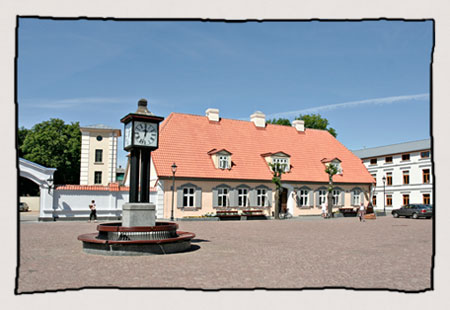
Ventspils House
Ventspils, Latvia
The International Writers’ and Translators’ House in Ventspils, Latvia, is a unique residency for professional authors, translators, and researchers connected to literature. The residency lasts for 4 weeks, providing a serene environment for creative work at a cost of €30 per week for accommodation. Each room in the house is equipped with private bathrooms, Wi-Fi, and essential amenities. Residents enjoy shared kitchen, library, laundry facilities, and bicycles. Applications are accepted anytime and reviewed every two months. Financial support includes a €320 grant post-taxes for selected residents.
Explore Latvia
More city guides
Opportunity Intelligence
Ready to find your next residency?
Get a personalized shortlist — scored against your practice, discipline, and what you need right now.
See how Intelligence works →