City Guide
Ventspils, Latvia
How to use Ventspils, Latvia as a quiet, well-supported base for writing, art–science projects, and deep studio time.
Why Ventspils works so well for residencies
Ventspils is a small Baltic Sea port city on Latvia’s west coast, and it’s built for concentrated work. You get sea air, long walks, and a calm pace that supports writing, reading, and research-heavy projects. Instead of a buzzing gallery scene, you get a few strong institutions and a lot of space to think.
The city combines three things that matter when you’re on a residency:
- Quiet and focus – fewer distractions, slower rhythm, compact city.
- Nature and coastline – the beach, weather, and Baltic light are part of daily life.
- Institutional backing – especially strong for writers, translators, and artists working with science and ecology.
If you’re looking for clubs, galleries on every corner, and non-stop events, Ventspils will feel too slow. If you want time, sea, and a structured framework for work, it fits surprisingly well.
International Writers’ and Translators’ House: the core residency in Ventspils
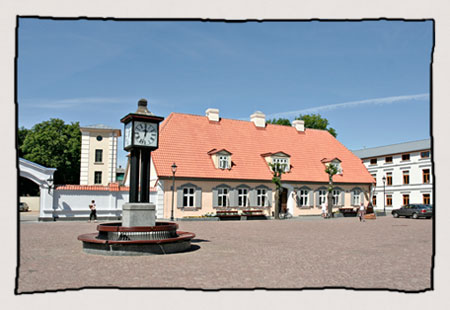
The main residency anchor in Ventspils is the International Writers’ and Translators’ House, often called Ventspils House. It’s a literary residency in an 18th-century former town hall right in the city’s historic center.
Who the residency is for
This program is built for professional literary work. It suits you if your practice centers on language in any serious way:
- Fiction, poetry, non-fiction writers
- Playwrights and scriptwriters
- Literary translators (any language combination, including to/from Latvian)
- Researchers whose work is tied to literature or literary culture
- Artists whose practice is text-driven: hybrid writing, conceptual text, experimental publications
The residency is open to Latvian and international residents. Different funding schemes exist for local, international, and especially Nordic participants, so it’s worth checking multiple sources:
- The house’s own site: Ventspils House
- TransArtists profile: TransArtists – Ventspils House
- Res Artis listing: Res Artis – International Writers’ and Translators’ House
What the residency offers
Ventspils House is designed so you can live and work without juggling logistics all day. Key practical points:
- Accommodation: seven residential rooms within the house, with space for around nine residents at a time. Some twin rooms, with at least two adapted for people with special needs.
- Work environment: quiet rooms suited to writing; shared reading room for focused work or browsing the library.
- Shared facilities: kitchen, washing machine, towels, basic household equipment, small garden, and recreation areas.
- Extras that actually matter: sauna, bicycles, internet, parking.
- Accessibility: some rooms and spaces have been adapted for wheelchair users.
On the funding side, different programs and partnerships have offered:
- Grants for up to four weeks of residency, with a modest stipend for living expenses.
- Specific funding for residents from Nordic countries that may include a stipend plus travel costs.
- A two-month residency option that can include an intensive Latvian language course in partnership with Ventspils University.
The details shift by program and year, so treat the official site and partner listings as your primary reference and always check the latest conditions.
What daily life looks like
Imagine living and working in a small literary compound wrapped into the old town. You walk down the stairs and you’re in a shared kitchen making coffee next to a translator working on a novel, a poet editing a manuscript, and maybe a researcher preparing a lecture.
Your days might look like this:
- Morning: writing in your room or the reading room, with minimal interruptions.
- Afternoon: a walk to the beach through a park, or a bike ride around town.
- Evening: emails, reading, sauna, or a quiet drink with other residents in the common areas.
The rhythm is very suited to long-form projects: novels, translations, research monographs, or slow, iterative text-based art. If you want to build a new manuscript from scratch or finish an overdue book, this environment supports that kind of focused stretch.
How public your residency is
Ventspils House leans toward concentration over constant public output, but you can expect some opportunities for sharing work:
- Readings or talks arranged by the residency
- Participation in festivals or seminars linked to the house
- Informal sharing with other residents and visiting guests
Ask ahead how often public events happen and whether there’s any expectation for you to present. That lets you plan whether to bring a nearly finished project or something more exploratory.
Ventspils through the RIXC network: art, science, and the radiotelescope
Ventspils is not only about literature. Through the RIXC network, it plays a specific role in art–science projects, especially those dealing with radio, signal, and ecology.
RIXC Baltic–Nordic Art, Science & Techno-Ecologies residency
The RIXC Baltic–Nordic Art, Science & Techno-Ecologies Residency is formally based in Riga, but it builds Ventspils directly into its structure. The residency has offered:
- Two-month stays for Baltic and Nordic artists working with art, science, and technology.
- A 3000 EUR fee for each residency period.
- Free accommodation, covered travel, local transport, and technical support.
- Production support for a final public presentation at the RIXC Gallery.
The part that connects you to Ventspils is the research component:
- Trips to the Ventspils International Radio Astronomy Center / Irbene Radiotelescope.
- Short stays at the RIXC Fields Residency, focused on ecological and agricultural research.
This means that while your main base is RIXC’s residency studio in Riga, your project can extend into the Ventspils region. If you work with sound, radio, networks, infrastructure, climate, or techno-ecologies in any form, this combination is unusually rich.
What the Ventspils radiotelescope adds to your work
The Ventspils radio astronomy center is a large, visually striking scientific site in a rural setting near Ventspils. For artists, it can be used as:
- A field site for recording sound or video around a massive, functioning technological object.
- A conceptual anchor for thinking about signal, space, and infrastructure.
- A partner institution if your project involves data, scientific collaboration, or more experimental research.
Residency access typically comes with support from RIXC and scientific collaborators, so you’re not just a tourist walking around the dish; you can often frame more specific research or experiments if your project needs that.
Who this setup is right for
Consider this route if you are:
- A media artist dealing with sound, radio, or electromagnetic phenomena.
- An eco-artist working on landscape, agricultural systems, or climate.
- A researcher or artist building tools, installations, or performances tied to data or infrastructure.
- Comfortable with a split structure: urban base in Riga, field days in Ventspils region.
It’s less suited if you need a single, stationary studio or you primarily want a literary community. In that case, Ventspils House is a better fit.
Living and working in Ventspils: what to expect
The success of a residency often comes down to everyday logistics. Ventspils is manageable and human-scale, so you can spend more time on your work and less on transport and errands.
Cost of living and budgeting
Compared with Riga, Ventspils tends to be more affordable. Key points for budgeting:
- Accommodation: often covered by the residency. If you extend your stay independently, city prices are typically lower than in the capital.
- Food: supermarkets and markets keep costs reasonable; self-catering is very doable, especially at Ventspils House with its shared kitchen.
- Transport: local buses and bikes (often provided by the residency) reduce day-to-day costs dramatically.
- Materials: literary work mostly needs time and a laptop. For visual or media artists working in the Ventspils region, factor in shipping or sourcing materials from Riga if your needs are specialized.
If you have a grant or stipend through the residency, living modestly is very possible. Even without a large stipend, the combination of covered housing and a small town economy can stretch your budget.
Where you’ll actually be based
Most residency visitors spend their time in three kinds of environments:
- Historic center: where the International Writers’ and Translators’ House is located. Walkable streets, historic buildings, and easy access to shops, cafes, and public spaces.
- Coastal and park areas: green parks leading out toward the beach, good for walking, thinking, and sketching or field notes.
- Rural scientific and field sites: for those working with RIXC and the radio astronomy center, your working “neighborhood” may temporarily be fields and technical facilities rather than the city itself.
The city is compact enough that you can move between the old town, the park, and the sea on foot or by bike. That makes daily rituals—like a morning walk before writing or an afternoon break at the beach—easy to build into your routine.
Studios and workspaces
Ventspils is not packed with standalone artist studios, so residencies are the main way to access structured work space. When you apply, it helps to clarify:
- Type of workspace: at Ventspils House you mainly work in your room or the reading room; it’s set up for writing, not large-scale fabrication.
- Privacy vs. shared space: you’ll have a private bedroom, but common working areas are shared. Good if you like quiet company, less ideal if you need messy or noisy production.
- Technical needs: if your project needs specific equipment (sound recording, electronics, fabrication), check whether you should bring gear, partner with Riga-based labs, or adapt your project.
For text-based projects, the existing infrastructure is more than enough. For installation or media-heavy work, you may want to treat Ventspils as a research and writing phase and handle build/production elsewhere.
Getting there, visas, and practical planning
How to reach Ventspils
Most international residents arrive in Latvia via Riga and then continue west:
- Fly to Riga International Airport.
- Bus from Riga to Ventspils: regular intercity buses connect the capital to the coast.
- Car rental or shared rides are an option if you have more equipment.
The journey from Riga to Ventspils is not long in distance but does take time, so plan your arrival with a buffer day if you can, especially in winter.
Getting around locally
Once you are in Ventspils, movement is simple:
- Walking: most daily needs can be met on foot, especially from the city center.
- Bikes: Ventspils House shares bicycles with residents, which really extends your range for beach visits and errands.
- Public transport: local buses cover broader routes if you need them.
For art–science projects at the Irbene Radiotelescope or rural sites, transport is often arranged through the residency or partnering institutions. Confirm this early if your project depends on repeated visits.
Visa questions to sort early
Latvia is part of the Schengen Area. How you handle visas depends on your passport and length of stay:
- EU/EEA/Swiss citizens: can typically live and work in Latvia without a visa, though you should still have your documents and residency paperwork in order.
- Non-EU artists: may need a Schengen visa or residence permit if your stay exceeds visa-free limits.
In all cases, ask the residency for:
- An official invitation letter specifying dates and program details.
- Confirmation of who covers what (housing, stipends, transport).
- Any previous experience they have supporting artists from your country with visa applications.
Because rules change and depend on nationality, always cross-check with the Latvian embassy or consulate that covers your region. Start this process early, especially for multi-month stays.
Community, events, and what kind of artist Ventspils suits
Local artistic ecosystem
Ventspils does not pretend to be a major commercial art center. Its strength lies in institutions and focused communities:
- International Writers’ and Translators’ House: core literary hub hosting a rotating cast of writers and translators.
- Ventspils University: connects via language courses and academic events; a good entry point if your work intersects with research or education.
- Ventspils International Radio Astronomy Center: for art–science and media projects connected through RIXC.
- RIXC network: based in Riga but stitching together urban, rural, and scientific contexts across Latvia, including the Ventspils region.
Events tend to be curated rather than constant. Think readings, seminars, occasional festivals, and residency presentations instead of an endless calendar of openings.
Open studios and sharing work
Ventspils is better for focused work than constant exposure, but there are still ways to show what you are doing:
- Final readings or presentations organized by Ventspils House.
- Talks, seminars, or small exhibitions linked to residency programs.
- Presentations and exhibitions organized by RIXC in Riga that incorporate Ventspils-based research.
If public engagement is important for your project, ask in your application:
- Can you host an open reading, talk, or workshop?
- Is there a chance to collaborate with local schools, universities, or cultural centers?
- How often does the residency invite the public into its spaces?
Who Ventspils is really good for
Ventspils suits you if:
- You are a writer, translator, or literary researcher needing quiet time and basic comforts.
- Your practice is text-based, and you mostly need a desk, a bed, and a library.
- You’re an artist or researcher working with sound, radio, ecology, or infrastructural themes that connect well with the radiotelescope and rural sites.
- You prefer a structured, low-distraction environment over a dense art scene.
It’s less ideal if:
- You need large fabrication facilities on-site.
- You rely on a big commercial gallery network and heavy nightlife for your work.
- You want constant studio visits and industry events.
How to use Ventspils strategically in your practice
Think of Ventspils as a strong node in a wider practice rather than a standalone solution to everything.
- For writers and translators: use Ventspils House to draft, edit, or finish major projects, and then connect that work to festivals, publishers, or further residencies elsewhere.
- For art–science and media artists: treat RIXC’s Ventspils connections as a research lab—gather data, recordings, and concepts there, then build the final work in a studio setting with the right equipment.
- For hybrid practices: you can use Ventspils to develop the narrative, research, and text backbone of a broader project that later becomes installation, performance, or publication.
If you align your expectations with what Ventspils does best—calm, sea, focused infrastructure, and a few strong partners—you can get a lot done here, and leave with work that feels deeper and more considered rather than rushed.