
City Guide
Vagamon, India
A quiet hill station in Kerala where studio time, landscape, and community projects can all meet.
Vagamon is not an art district in the usual sense. That is exactly why some artists go there. In the hills of Kerala, about 1100 meters above sea level, you get rolling meadows, shola forest, tea gardens, and a slower pace that makes room for actual making. If you want a residency that feels closer to retreat, fieldwork, and concentrated studio time than to a busy urban arts scene, Vagamon is worth your attention.
This guide focuses on what you need to know before choosing a residency there: the main programs, the studio setup, travel realities, and how the local art ecosystem works.
Why Vagamon draws artists
Vagamon sits in Idukki district in the Western Ghats, one of Kerala’s most scenic hill regions. The landscape is a major part of the appeal. You are working around open grasslands, forest edges, valleys, lakes, and changing weather that can shape how you think and make. For some practices, that quiet is the point.
Artists usually come here for a few clear reasons:
- focused studio time away from city noise
- landscape-driven inspiration for painting, writing, photography, sound, and performance
- small-group exchange with other residents
- lower costs than major Indian metros
- space for community-based or school-linked projects
Vagamon can suit you if your work benefits from distance, observation, or a slower rhythm. It is less useful if you need a dense gallery scene, fast access to specialist suppliers, or a constant stream of events.
Main residency to know: Palette People Artists Residency
The central name in Vagamon is Palette People Artists Residency, run by Palette People International Art Foundation. The foundation has long-standing roots in Kerala and also runs galleries in Kochi, which matters if you want a bridge between a rural residency and a more active city-based art network.
The residency is open to a wide range of creative fields, including visual art, sculpture, writing, music, theatre, film, photography, and performance. That interdisciplinary approach is one of its strengths. It is not built for a single medium, so you are more likely to find a mixed group and a flexible atmosphere.
Public listings describe a spacious shared studio, usually around 1200 to 1500 sq ft, with open work areas overlooking hills and forest. Accommodation is typically provided on site, and some program formats include food, a caretaker, and helper support. The setup feels practical rather than luxurious, which suits artists who care more about working conditions than polished finish.
The foundation also says residents may be able to exhibit work free of charge in its Kochi galleries, including The Art Corridor at Hotel Le Méridien and a second gallery in Mattancherry. If you are hoping for some kind of public-facing outcome after the residency, that link to Kochi is useful.
Who tends to fit well here
- artists who want quiet and studio time
- people working across disciplines
- artists interested in ecology, landscape, or site-based work
- residents who value community exchange over formal institutional structure
- artists who may want an exhibition pathway in Kochi after the stay
What the housing and studio setup is actually like
Residencies in Vagamon are usually built around shared, rural infrastructure. Expect a common studio, a handful of rooms, a kitchen, and open-air working space rather than separate private apartments with urban amenities.
Older public listings for Palette People mention:
- three rooms on single or twin sharing basis
- one common studio of about 1200 sq ft
- two smaller studios
- open space in rolling meadows and tree-covered areas
- caretaker, cook, and helper support
- in-house kitchen facilities
More recent descriptions mention a larger shared studio, around 1200 to 1500 sq ft, with room for up to five artists working at the same time. That gives you a sense of the scale: comfortable for a small cohort, not a large cohort with private booths.
If your practice needs clean separation, silence, or fixed equipment, ask detailed questions before you commit. If you work well in a shared studio with a bit of foot traffic and a strong outdoor component, Vagamon can feel generous.
Questions worth asking the host
- How many artists are usually on site at once?
- Is the studio shared all day or booked in blocks?
- What kind of lighting, tables, power outlets, and storage are available?
- Is there reliable internet and mobile service?
- What happens during monsoon if roads or power become unstable?
- Can large works, wet work, or messy processes be supported?
Budget, fees, and supplies
Vagamon is generally less expensive than a major city, but the exact cost depends on the residency model. Historical public listings for Palette People showed a fee structure that included food, accommodation, studio space, and caretaker support. That kind of all-in format can make planning easier, especially in a rural area where daily logistics are otherwise hard to predict.
At the same time, you should budget for:
- travel to Kerala and local transfers
- art materials and consumables
- specialty tools or equipment
- extra snacks or personal supplies
- shipping if you need to move finished work
One thing to keep in mind: Vagamon itself is not likely to stock specialty art materials in the way Kochi or larger cities might. If your project depends on specific pigments, printmaking supplies, digital gear, or large sculptural components, plan ahead and bring what you can.
If the residency includes food, that can simplify budgeting a lot. If not, ask how the kitchen works and how easy it is to shop locally. Rural convenience can vary more than the listing suggests.
Getting there and moving around
The nearest major city is Kochi, usually referenced as being about 90 to 105 kilometers away depending on route and exact site. Most artists arrive through Cochin International Airport and continue by road. You may also route through Kottayam, Pala, or Erattupetta depending on where the residency sits.
Road travel is the main mode once you get close. Some sites may be easy to reach by taxi, while others may require a final stretch on less predictable hill roads. That matters if you are carrying materials, instruments, or finished work.
Monsoon can complicate access. Roads may be slow, slippery, or affected by weather. If your arrival is tight or your project is material-heavy, check conditions before you leave Kochi.
Inside Vagamon, don’t expect city-style transport. A residency in the hills usually means walking, short taxi rides, or arrangement by the host. The landscape is part of the experience, but it also means you need to think like someone working in a remote site, not an urban studio block.
Local art context: small in Vagamon, stronger in Kochi
Vagamon’s art scene is not large or highly visible on its own. The local energy is more residency-based, educational, and project-led. That can be a strength if you want to work with a specific community or develop a place-based project.
Publicly mentioned examples include wall art and mural projects in local schools, including work at St. Thomas LP School in Pullikkanam. Those kinds of projects suggest that a residency here can connect to education and public-facing work, not just studio production.
The broader art network sits in Kochi. That city matters because it has the galleries, curators, and exhibition ecosystem that Vagamon itself does not. If you want to extend your residency into a larger professional context, Kochi is the obvious next stop.
For many artists, that combination is the real draw: a quiet working base in the hills, then a connection to a more active city scene through the residency host.
Visa and administrative basics for international artists
If you are traveling from outside India, check your visa category early. A residency may look straightforward on the host side, but your visa status still needs to match what you will actually do. The safest route is to confirm directly with the residency whether your stay is treated as cultural exchange, sponsored participation, or a professional engagement with any paid component.
Ask for an invitation letter if you need one, and verify the rules with the Indian consulate or embassy relevant to your passport. If the residency includes teaching, performances, exhibitions, or compensation, do not assume a tourist visa is enough.
For unpaid, low-key cultural exchange stays, artists sometimes travel on tourist visas, but this is exactly the kind of detail that should be checked in advance. It is much easier to sort out before booking flights.
When Vagamon works best for your practice
Vagamon makes the most sense if you want time, quiet, and a landscape that feels active in your workday. It is especially good for:
- painting and drawing
- writing and research
- photography and video
- sound work and field recording
- performance or movement-based experimentation
- site-responsive and community-oriented projects
The setting is less ideal if you need heavy infrastructure, quick city access, or a highly programmed studio culture. Think of it as a place to slow down and make work with attention, not a place to be constantly networked.
That distinction matters. Vagamon is strongest when you want the residency itself, not just the address.
How to approach a Vagamon residency well
Bring work that can respond to place. Leave space in your plan for weather, travel delays, and the possibility that the landscape will change your project. If you come with a rigid production schedule, the setting may frustrate you. If you come with a flexible structure, the residency can open things up.
A few practical habits help:
- pack more materials than you think you need
- save project files offline
- keep backup power options in mind for digital work
- ask about shipping and storage before arrival
- clarify food, kitchen access, and local transport early
- be ready for a mixed cohort and shared spaces
Vagamon is a strong fit for artists who like working with the environment rather than just beside it. If that sounds like you, the residency options there are worth a serious look.
For the moment, Palette People Artists Residency is the key name to know. It combines studio access, a nature-rich setting, and a link to Kochi’s gallery scene. That combination is rare enough to matter.
Residencies in Vagamon

Greenmeadows Vagamon
Vagamon, India
Greenmeadows Vagamon is an artists residency program run by Palette People, a charitable trust, located in the scenic hill station of Vagamon, Kerala, India, offering a serene natural setting for creative individuals including writers, artists, musicians, performers, theatre and film personalities, as well as nature lovers and environmentalists. Established in , it provides shared accommodation, a spacious studio of around 1200-1500 sq ft, open spaces in rolling meadows, and facilities like a caretaker, cook, and kitchen, with stays typically ranging from 10 days to 3 months on a fee-paying basis. Artists can optionally exhibit their works for free in Palette People's galleries in Kochi.
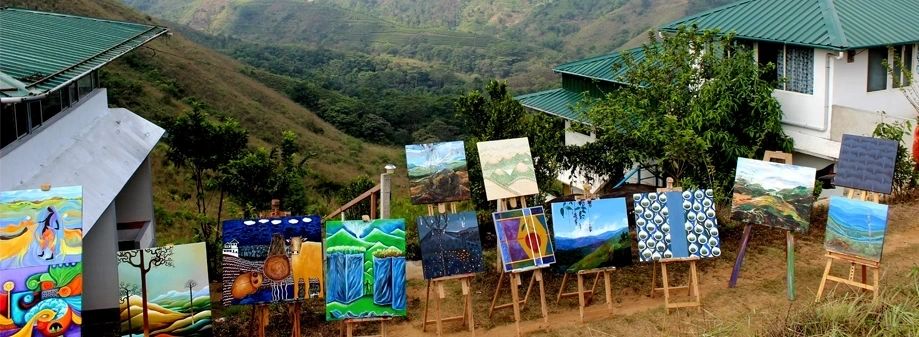
Palette People International Art Foundation.
Vagamon, India
Palette People Artists Residency.Palette People Artists Residency Programme is open to all from all creative fields like visual artists ,painters,sculptors,writers,musicians, theatre and film personalities,photographers, performers etc. of all nationalities and others connected with art.The residency is in a remote location in Vagamon an upcoming hill station in the western ghats of Kerala which is considered to be the hottest hot spot of Biodiversity.(105 kms from Kochi),We h
Explore India
More city guides
Opportunity Intelligence
Ready to find your next residency?
Get a personalized shortlist — scored against your practice, discipline, and what you need right now.
See how Intelligence works →