City Guide
Østermarie, Denmark
Quiet island life, a focused studio, and a surprisingly vibrant art community in a tiny Danish village.
Why Østermarie is on artists’ radar
Østermarie is a small village on Bornholm, a Danish island in the Baltic Sea. You go there for focused studio time, clear light, and an art community that’s scattered across an island rather than concentrated in a city block.
The draw is simple: you get enough infrastructure to work seriously, but not so much noise that you’re pulled in ten directions at once. The island is known for ceramics, design, photography, and contemporary craft, and Østermarie taps into that ecosystem while staying low-key and quiet.
If you’re looking for night openings, big institutions, and a dense gallery scene, Østermarie will feel sparse. If you want a calm base with nature, a solid workspace, and time to actually finish something, it can be ideal.
Beast Artist in Residence: the main program in Østermarie
The core residency in Østermarie is Beast Artist in Residence, attached to the art space Beast in the village center. It’s the obvious anchor if you’re planning a residency-based stay there.
Setting and facilities
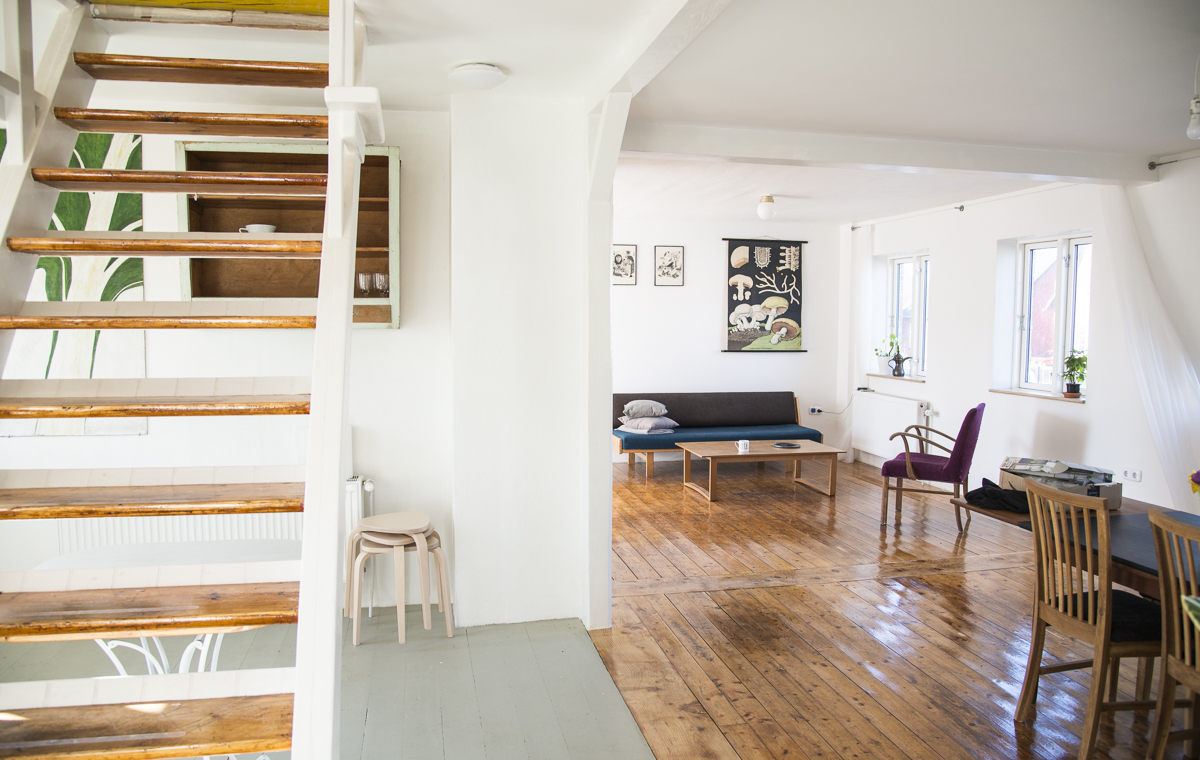
Beast Artist in Residence sits right next to the Beast art space in Østermarie, a short walk from a grocery store and public transport, and a bike ride away from forests and the Baltic Sea. Expect a mellow, rural village with enough services to keep daily life smooth.
On the practical side, the residency offers:
- Residency length: typically 1–3 months
- Housing: accommodation included in the residency house next to the art space
- Studio: shared workspace, suitable for visual and digital practices
- Digital tools: external screen, calibration tool, scanner, and an A2 inkjet printer
The digital setup makes it especially functional for photographers, image-based work, and artists who need to print tests or small editions. Production on the inkjet printer is paid by you, so factor that into your budget if printing is central to your project.
Who this residency actually suits
Beast is formally open to artists working in all disciplines, but the infrastructure clearly leans toward photography and image-making. It’s a good match if you are:
- A photographer wanting to work with local landscape, staged imagery, or experimental processes with digital support
- A visual artist (drawing, painting, installation, video) who needs uninterrupted time, basic studio space, and access to nature
- A multidisciplinary artist combining text, image, or digital media, especially if you benefit from the calibration and scanning tools
- A small collective or duo comfortable sharing space and self-organising work rhythms
The residency information suggests flexibility: artists can stay alone, with family, or as part of a group. If you’re planning to bring kids or collaborators, clarify sleeping arrangements, work hours in the shared studio, and any noise constraints around the house.
What you will not get
Based on available listings and reviews, you should not expect:
- A stipend or fee: housing is included, but no financial support is clearly advertised
- Heavy fabrication facilities: there’s no indication of woodshops, metal shops, or large-scale fabrication tools
- A packed public program: events can happen, but the default is calm and self-directed
Think of Beast as a focused, mid-budget work retreat with a strong digital-image backbone, not a fully equipped production center or a festival-style residency.
Public engagement: open studios and talks
Artists at Beast may choose to give an open studio talk, workshop, or similar event, but this is optional rather than required. That flexibility matters:
- If you want quiet, you can keep the residency inward-focused.
- If you enjoy sharing process, you can propose a talk or small workshop with the art space.
Either way, it’s a good idea to arrive with a simple statement about what you’re working on and how public you want your time there to be. That makes it easier to communicate boundaries and opportunities with the host.
Living and working in Østermarie
Østermarie is less about neighbourhoods and more about the distance from your studio to food, bus stops, and the sea. You’ll mainly live between three zones: the residency house, the village center, and the nearby landscape.
Daily life and cost of living
Bornholm can be a touch pricier than mainland Denmark for some groceries and goods because everything arrives by sea or air, but the overall feel is still rural and relatively modest compared to a big city.
Budget-wise, plan for:
- Food and supplies: expect standard Danish supermarket prices, sometimes slightly higher; eating out is limited and not cheap, so cooking is usually the default
- Transport: public buses exist but don’t run constantly; a bike is your most useful tool once you arrive
- Production costs: paper, ink, specialist materials, and any large works are your responsibility
Because housing is covered at Beast, your main costs are getting to Bornholm, food, and materials. That puts the residency in a middle zone: not fully funded, but much more manageable than paying full rent plus studio in a city.
Studio rhythm and isolation
The atmosphere is quiet. You’ll likely spend long stretches alone or with just a few people. For many artists, that’s exactly the point, but it’s worth being honest with yourself about how you handle silence and limited social options.
To keep the residency productive and mentally balanced, consider:
- Planning a loose work structure before you arrive: phases for research, production, reflection
- Bringing non-digital reading or drawing materials for days when screens feel heavy
- Scheduling regular walks or bike rides as part of your studio routine
The island’s nature can be part of your practice or simply a way to reset between intense work sessions.
Connecting with Østermarie and Bornholm’s art community
Østermarie itself is described as having a vibrant art community, but it’s not “vibrant” in a loud, urban way. You’re more likely to encounter other artists through studio visits, informal gatherings, and the wider Bornholm network.
Beast art space and local networks
The Beast art space is your first point of contact. It can be:
- A place to see contemporary work and understand local tastes and interests
- A platform if you want to show work-in-progress or run a small event
- A connector to other artists on the island
Before you arrive, it helps to:
- Look up recent or current shows at Beast to sense what kind of work moves through the space
- Prepare a short project description and images to share with the host and potential visitors
- Think about one or two simple formats for sharing your work, in case opportunities come up organically
Bornholm-wide opportunities
While your base will be Østermarie, the broader island has a long-standing community of makers, especially in ceramics, crafts, and visual arts. Useful touchpoints include:
- Galleries and artist-run spaces in other towns on Bornholm
- Ceramic studios and workshops, especially if material or craft references matter in your work
- Museums and local cultural centers, which can give context to the island’s history and aesthetics
Exploring these doesn’t need to be intensive. Even a few half-day trips during your stay can give you enough context and contacts to feed into your practice.
Transport: getting to and around Østermarie
Reaching Østermarie takes one extra step beyond arriving in Denmark, but the routes are straightforward once you plan them.
Getting to Bornholm
You typically reach Bornholm by:
- Ferry: from the Danish mainland or nearby countries, arriving in Rønne, the main town on Bornholm
- Flight: to Bornholm Airport, then bus or car across the island
After that, you take a bus or car to Østermarie. The residency is close to public transport, so arriving by bus is realistic if you pack strategically.
Moving around locally
For day-to-day life in Østermarie:
- Bike: ideal for reaching forests, the coast, and nearby villages; the island is well-suited to cycling
- Bus: useful for longer trips around Bornholm, but check schedules and don’t assume late-night service
- Car: helpful if you’re bringing heavy equipment or planning frequent trips, but not essential for everyone
If your work involves transporting bulky objects, wet canvases, or fragile sculptures, ask the residency about storage and loading options so you’re not wrestling with oversized pieces on a bus.
Visas and admin: what to consider
Visa needs depend heavily on your passport, but there are some general points that many artists share.
Denmark is in the Schengen area, which affects how long non-EU visitors can stay and whether the residency is considered “work.” For a 1–3 month stay, artists often fit under short-stay rules, but that varies by nationality.
Before committing, you’ll want to:
- Check your country’s rules for entering Denmark or the Schengen area
- Confirm if your intended stay length is allowed under a tourist or short-stay visa
- Ask the residency for an official invitation letter if you need to apply for a visa
- Clarify whether you’ll receive any fee or stipend that might count as income from Danish sources
EU/EEA/Swiss artists usually have more straightforward entry but still need to think about health insurance and any tax or registration implications if staying longer or receiving funding.
When to be in Østermarie
Beast Artist in Residence often runs residencies in cooler, quieter parts of the year, with a focus on months where the island isn’t overrun by summer tourism. That aligns well with using the time for concentrated work rather than social events.
Seasonal differences
Each season gives a different working context:
- Early year: still, subdued landscapes, shorter days, and fewer distractions; great for deep studio work and planning
- Spring: more light, milder weather, and clearer walks; helpful if your work depends on outdoor research or photography
- Autumn: strong atmosphere, changing colours, and a slight sense of retreat as the island slows down again
- Winter: potentially very quiet and dark; intense but rewarding if you thrive on isolation
Summer sits outside the most commonly mentioned residency windows, and is typically when Bornholm is full of visitors. If your practice needs solitude, the off-peak seasons suit better.
Planning your project for Østermarie
To make the most of Beast Artist in Residence and Østermarie, treat the residency as a defined project phase rather than a vague retreat.
Project types that work well
Based on the setting and facilities, strong fits include:
- Photography projects that respond to landscape, light, or slow-paced daily life, with on-site editing and A2 printing
- Writing-heavy practices (essays, scripts, book projects) that benefit from calm surroundings and a reliable workspace
- Drawing and painting, as long as you don’t need industrial-scale ventilation or huge wall heights
- Research and conceptual work that needs time to think, walk, and reframe, rather than constant external input
If your practice depends on loud sound systems, messy toxic processes, or monumental sculpture, contact the residency early and be specific about your technical needs so no one is surprised.
How to prepare your application and stay
When you’re putting together an application or planning a confirmed stay, it helps to:
- Articulate why an island setting and quiet village are integral to the phase of work you’re proposing
- Explain how you’ll use the digital tools (scanner, calibration, printer) if relevant
- Show that you can work independently and structure your own time
- Mention any interest in engaging with the community through talks or workshops, while keeping expectations realistic
Clarity on these points reassures the host that you know what you’re signing up for and that the residency is the right tool for your project.
Key takeaways if you’re considering Østermarie
If you strip it down, Østermarie offers:
- A calm village base on an artist-heavy island
- Housing and shared studio through Beast Artist in Residence
- Digital and photo-friendly tools for image-based work
- Optional, not mandatory, public engagement
- Access to nature and an informal, island-wide art network
It’s a strong choice if you want concentrated studio time, are comfortable with rural quiet, and don’t need a stipend to make it work. If you need more options or want to compare with other Danish residencies, you can browse programs across Denmark on Reviewed by Artists and use Østermarie as one point on a longer residency path.