City Guide
Østermarie, Denmark
A focused guide to making the most of a quiet, photography‑friendly village residency on Bornholm
Why Østermarie works so well for residencies
Østermarie sits on the Danish island of Bornholm in the Baltic Sea, just far enough from city life to slow you down, but not so remote that daily life becomes a project of its own. You get a grocery store, public transport, a nearby art space, and bike access to forests and coastline. That mix is exactly why residencies have started clustering around this small village.
The draw is not a big institutional art scene. It is the combination of:
- Nature and quiet – forests, fields, and the Baltic Sea a short ride away.
- Artist-run energy – small, independent initiatives rather than heavy programming.
- Space to think – residencies on Bornholm tend to prioritise time and focus over production quotas.
- Photography-friendly infrastructure – in Østermarie, one of the main residencies is specifically set up to support digital image work.
If you are looking for a place to push a project from draft to clarity, test new work away from your usual context, or simply work in a slower rhythm, Østermarie is a solid contender.
Beast Artist in Residence: the core program in Østermarie
The anchor residency in Østermarie is Beast Artist in Residence, hosted next to the art space Beast. It is a small, self-directed program that quietly serves a very specific kind of artist: someone who wants time, reliable housing, and a good digital workspace more than a long list of perks.
Basic setup and rhythm
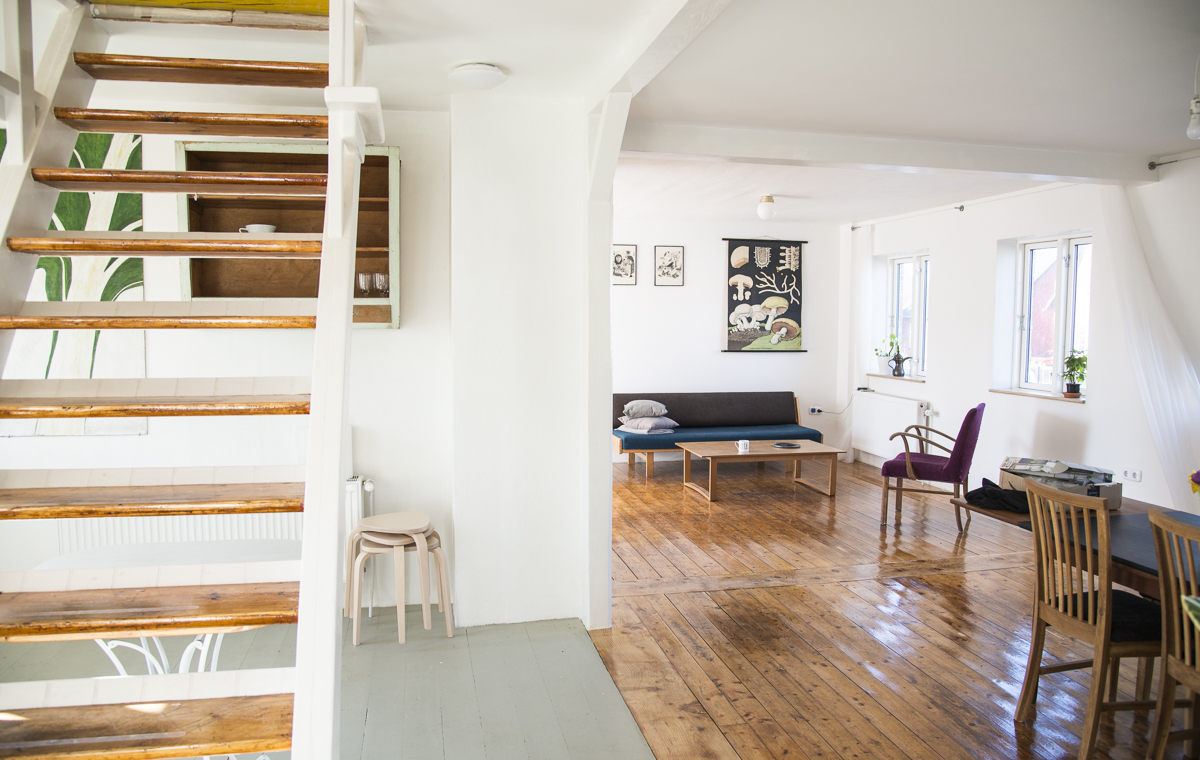
Beast Artist in Residence is based in a house next to the art space Beast in Østermarie. You live and work on site, with easy access to the center of the village and a short bike ride to nature.
Key structural points:
- Length: residencies typically run 1–3 months.
- Season: the program usually hosts artists in two main blocks during the year, skipping the peak summer tourist season.
- Disciplines: open to all fields, but with a clear emphasis on photography and image-based practices.
- Housing: accommodation is provided as part of the residency.
- Stipend: there is no stipend; you cover your own living costs and materials.
There is no residency-wide daily schedule. You organise your own workday and use the facilities as you need them. The host may invite you to give an artist talk or workshop, but participation is usually voluntary.
Studios, digital tools, and production
Beast Artist in Residence is particularly interesting if your practice includes digital images, photography, scanning, or small-scale print production. The residency is set up with a shared studio and a digital workspace, typically including:
- Shared workspace / studio area.
- External screen for accurate image editing.
- Calibration tool so your colours are reliable.
- Scanner for negatives, drawings, or documents.
- A2 inkjet printer for test prints, editions, or mock-ups.
Production and printing costs are not included, which matters for budgeting. Expect to pay for your own paper, ink, and any intensive use of the equipment. The residency setup suits artists who want to test prints, prepare a publication, or build a portfolio in a quiet environment, then bring that work back to their own networks afterwards.
Living arrangements and who you might share with
The housing is flexible by design. Depending on your proposal and the current calendar, you might:
- Live and work alone.
- Come with a partner or family.
- Share the house with another selected artist.
- Come as a small group working on a shared project.
This makes Beast unusual among residencies that are otherwise small-scale and independent: it is relatively friendly to artists with caregiving responsibilities or collaborative practices that need more than one person on site.
Daily life is straightforward. The grocery store is close, there is public transport, and if you have a bike you can move between village, forest, and coast with little effort. There are no elaborate communal facilities, but the essentials are covered so your energy can go into the work.
Who Beast is ideal for
Beast Artist in Residence tends to suit artists who:
- Work with photography, digital images, or print-based media.
- Want a self-directed residency with minimal mandatory programming.
- Can self-fund living costs and production.
- Are comfortable working in a small village rather than a city.
- Value access to digital tools over access to large fabrication shops.
If your practice depends heavily on large-scale metal or wood fabrication, industrial workshops, or big city exhibition calendars, this setup will feel limited. If your work thrives on time, light, and a good screen and printer, it is a strong match.
The wider Bornholm context: why Østermarie benefits from the whole island
Østermarie makes more sense when you zoom out. Bornholm as a whole has a reputation across Denmark for being a creative island: many working artists, a strong craft tradition, and a culture that quietly supports independent making.
Bornholm’s art ecology in brief
Across the island you will find:
- Visual arts and photography – galleries, small museums, and project spaces presenting local and visiting artists.
- Ceramics and craft – a long-term tradition, with studios, workshops, and initiatives such as the ceramic programs connected to Hjorths Fabrik in Rønne.
- Artist-run spaces – smaller initiatives that work seasonally or project-by-project.
- Seasonal exhibition and tourist routes – especially active in the warmer months.
Østermarie is not the cultural “capital” of Bornholm, but it plugs into this network easily. A bus ride or drive opens up studio visits, craft workshops, and island-wide events, while you still come home to a quieter village in the evening.
How Beast connects to the local scene
The Beast art space is your most direct gateway. Exhibitions, talks, and events hosted there can connect you to:
- Other artists based on Bornholm.
- Visitors from mainland Denmark and abroad.
- Curators or organisers interested in residency work.
Depending on timing, you might be able to coordinate an open studio, an artist talk, or a small workshop. These are typically optional rather than obligations, so you can decide how much energy you want to invest in public-facing activity versus studio work.
Working with nature and light
Bornholm’s landscape is a major asset for artists using Østermarie as a base. Once you have a bike or access to a car, you can treat the island as an extended studio:
- Coastline with cliffs, beaches, and harbours for photography, drawing, or performance.
- Forests and fields close to Østermarie for walking, writing, and quiet research.
- Seasonal light shifts that affect how you shoot, print, or install work.
Many artists use the residency to gather material outdoors, then spend concentrated time in the studio editing, printing, or composing from that raw material.
Practical planning for a residency in Østermarie
The romantic part is easy: quiet village, Baltic light, time to work. The practical side is what will make or break your stay. Planning in detail means you can actually use the residency for your practice, not just for logistics.
Budgeting and cost of living
Denmark is generally on the expensive side, and Bornholm can add a slight island premium. Because Beast covers housing, your main costs are:
- Travel – flights or trains plus ferry or direct flights to Bornholm.
- Daily living – groceries from the local store, occasional trips to cafés or restaurants.
- Transport on the island – renting or bringing a bike, and possibly occasional bus or car hire.
- Production – paper, ink, film, materials, and any paid use of residency equipment.
For a one-month stay, many artists aim for a budget that gives them some room to experiment without stress: enough to print tests, travel around the island a bit, and still feel comfortable buying food that supports a long studio day. If your practice is production-heavy, plan for a higher materials and printing budget from the start.
Transport: getting there and moving around
Bornholm sits in the Baltic Sea, near Sweden. Getting there usually means:
- Ferry routes from mainland ports.
- Flights from selected cities into Bornholm’s airport.
Once on the island, Østermarie is reachable by road and public transport. Inside Østermarie and the immediate surroundings:
- A bicycle is often the most practical tool for everyday life and access to nature.
- Public buses connect the village with other towns, but schedules can vary by season, so checking timetables early is wise.
- A car is helpful if you need to move heavy materials or work at multiple sites, but not essential for a standard residency stay.
If your work involves fragile or bulky materials, factor in shipping time and customs for anything you do not want to carry personally, and coordinate with the residency host for deliveries.
Visas and residency length
Because Østermarie is in Denmark, your visa situation depends on your nationality and the length of your stay.
- EU/EEA/Swiss citizens typically do not need a visa for short stays, but longer residencies may involve registration requirements.
- Non-EU artists may need a Schengen visa or another type of permit depending on length of stay and nature of the residency.
Even though Beast does not advertise a stipend, you are still attending for professional purposes, which may count as work under some regulations. To avoid surprises:
- Confirm requirements with the residency hosts.
- Check official guidance from the Danish immigration authorities.
- Contact a Danish embassy or consulate in your country if you are unsure.
Sorting this early means you can concentrate fully once you arrive.
Making the most of your time in Østermarie
Once you have secured a residency slot and solved the logistics, the question becomes: how do you actually use a quiet village on Bornholm to move your practice forward?
Setting a structure that suits Østermarie
Because the program at Beast is self-directed, it is useful to create your own loose structure before arrival. For example, you could:
- Define one main project and one secondary, low-pressure thread.
- Block out days that are mainly for studio work and days for exploration on the island.
- Set realistic goals: a finished dummy, a body of prints, a portfolio edit, or a research archive.
- Build in time for printing tests and reflection rather than pushing only for “final” work.
The environment supports deep focus; your structure should protect that rather than overloading your calendar with commitments.
Connecting with local artists and spaces
Østermarie’s scale makes it easier, not harder, to meet people. A few simple strategies:
- Use the Beast art space as a meeting point: attend events, talk to organisers, and let them know what you are working on.
- Visit other towns on Bornholm for galleries, craft studios, and museums; keep a simple list and tackle a few each week.
- Offer an open studio or talk if you have the capacity; it can generate unexpected conversations and future invitations.
The goal is not to “network” in a forced way, but to let your presence be visible enough that the residency connects to your practice long-term.
Balancing solitude and community
A key question for Østermarie is how much solitude you actually need. You can shape your experience in different directions:
- Lean into solitude: long studio days, quiet walks, minimal social commitments.
- Shape a small community: if sharing the residency, agree on shared meals or critique sessions.
- Use the island’s seasonal events as gentle anchors: exhibitions, open studios, or festivals.
Thinking about this before you arrive can help you choose whether to request a solo stay, a joint stay with a collaborator, or a family-friendly arrangement.
Who Østermarie is right for (and who it is not)
Choosing a residency is about fit, not prestige. Østermarie tends to be a very specific kind of fit.
Artists who tend to thrive here
- Photographers and image-makers who will actually use the scanner, calibrated screen, and A2 printer.
- Visual artists who benefit from quiet, nature, and a slower rhythm.
- Writers, researchers, and curators who want time to think, edit, and plan future projects.
- Artists with families or collaborators who need flexible housing rather than an individual studio only.
- Self-directed artists who do not need a structured program, daily critique, or institutional framing.
Artists who might prefer somewhere else
- Those needing large urban infrastructure: big museums, frequent openings, or a collector scene.
- Artists who rely on heavy fabrication or industrial workshops.
- Those who require a stipend or fee to make a residency viable.
- Anyone who feels constrained without tightly programmed schedules and external prompts.
If you recognise yourself in the first group and can manage the financial side, Østermarie can be a strong, quiet pivot in your practice: a period where you reset your relationship to time, work in depth, and leave with work that could not have been made anywhere else.
Next steps
If Østermarie feels like a fit, the next move is simple: research Beast Artist in Residence directly, read through their current information, and start sketching a project that makes use of the specific tools and environment they offer. Treat the island’s nature, the digital workspace, and the slow rhythm as part of your material, not just the backdrop.
Handled that way, a residency here is less a retreat and more a recalibration: a chance to work on your own terms, with enough quiet to hear what your practice actually needs next.