
City Guide
Staryi Merchyk village, Ukraine
How to use a small Kharkiv-region village as a serious base for focused, research-driven work
Why Staryi Merchyk is on artists’ radar
Staryi Merchyk is a small village about 40 km from Kharkiv, on the way to Poltava, in the Slobozhanshchyna region. On paper, it looks quiet and ordinary: a river, some reservoirs, forests, ravines, and the ruins of an old estate in the center. In practice, it’s become a meaningful site for artists who want to work slowly, think deeply, and ground their projects in the realities of eastern Ukraine.
The village is best known in the art context for the Slow River House residency run by NGO Cultural Traffic. Instead of a big institutional campus or a busy gallery scene, you get:
- Time and space away from city distractions
- Immediate access to nature and landscape research
- A context shaped by war, resilience, and cultural memory
- Connection to Kharkiv’s contemporary art networks, but at a distance
If your practice leans into research, writing, socially engaged work, or long-term thinking about territory and history, this village can become a kind of quiet engine room for your work.
Slow River House: the residency that anchors the village
The key residency in Staryi Merchyk is Slow River House, run by Kharkiv-based NGO Cultural Traffic. It’s a rural residency more than a formal institution, and that’s part of the appeal.
Core focus and atmosphere
Slow River House is designed as a space where you can both work and recover. The emphasis is on process rather than polished output. The residency supports:
- Multidisciplinary practices – visual art, writing, research, performance, socially engaged work
- Research-based projects – especially those tied to local culture, history, or ecology
- Socially engaged art – work that speaks to communities, memory, or post-conflict realities
- Rest and reflection – time to step back from production pressure
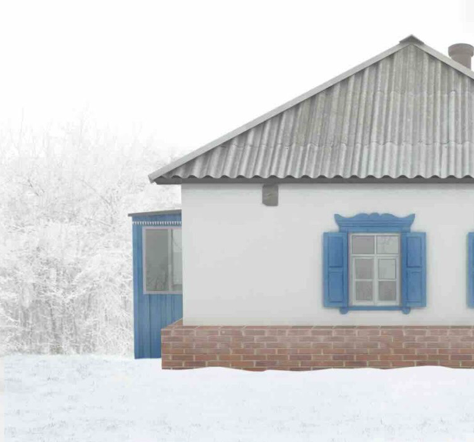
The setting is rural: you’re surrounded by fields, the slow Mokryi Merchyk river, reservoirs, ravines, and forests. The idea is that the landscape itself becomes part of the studio, archive, and conversation.
What the residency typically offers
Based on available descriptions and artist accounts, you can expect something along these lines:
- Housing provided – staying on site in the residency’s rural house
- Working space – not necessarily a white-cube studio, but functional spaces for writing, research, and smaller-scale making
- Access to the outdoors – walking routes, river and reservoirs, nearby forests and ravines
- Time for experiments – trying new techniques, working with text, or testing ideas without exhibition pressure
The residency is not built around high-end production facilities. Think laptop and notebook, portable materials, maybe small-scale installation or performance, rather than large fabrication or heavy technical setups.
Who the residency is for
Slow River House prioritizes cultural workers from eastern regions of Ukraine, reflecting its roots in the Kharkiv art ecosystem. Artists from other parts of Ukraine and international artists can also take part, especially when their proposals connect meaningfully with the local context.
You’re a strong fit if you:
- Have a research-driven or conceptual practice
- Want to build work out of landscape, memory, or rural heritage
- Are developing socially engaged or documentary projects that touch on eastern Ukraine
- Need a stretch of uninterrupted time for writing, reading, or planning a larger body of work
The residency asks that foreign participants understand the risks of being in a border-region area affected by war. This is not a neutral countryside retreat; the context is part of the work.
The village as your extended studio
Staryi Merchyk is compact. There’s no arts district, but the village itself functions as research material. Think of it as a site you read slowly, through walking, talking, and observing.
Landscape: working with slowness and distance
The name “Slow River House” hints at the tempo of the place. The nearby Mokryi Merchyk river is thought to be named for its slow flow, and that sense of slowness shapes the residency’s rhythm. You can build a practice around:
- Daily walks – tracing the same routes and watching details shift over time
- Field notes and mapping – drawing, photographing, or writing about reservoirs, ravines, and forest edges
- Seasonal observation – light, plants, water levels, and human activity across different months
- Acoustic work – recording soundscapes, local languages, or the contrast between quiet and distant infrastructure
This is ideal for artists working with ecology, site-specific sound, video essays, and photographic series, as well as writers who build narratives from place-based research.
History and rural heritage
In the center of the village stand the ruins of the Shydlovskyi estate, a late 18th-century palace surrounded by a landscape-style garden. The first Cossack settlers in the area date back to the 17th century. These layers give you entry points into themes like:
- Colonial and feudal histories in the region
- Decay and preservation – how built heritage collapses or gets reused
- Landscape as archive – reading gardens and ruins as historical documents
- Continuity and rupture – how current war overlays older histories
If your work engages with memory, ruination, or rural architectures, you’ll have plenty to research, draw, film, or write about within walking distance.
Local community and social practice
Staryi Merchyk is not an anonymous village; it’s linked into Kharkiv’s cultural life through NGO Cultural Traffic and the broader network of artists and cultural workers who pass through. Socially engaged artists can build projects around:
- Everyday conversations with villagers
- Shared walks or storytelling sessions
- Small-scale workshops or collaborative mapping
- Focusing on rural routines – agriculture, crafts, or seasonal work
Any community-based work here should be slow, ethical, and grounded in real relationships. The residency framework can help you with introductions, context, and sensitivity to local dynamics.
Daily logistics: what life actually looks like
Because Staryi Merchyk is small, planning ahead on practical matters makes your stay smoother and frees more energy for work.
Cost of living and budgeting
Village living is generally more affordable than city life, but it also means fewer options. Expect to spend on:
- Transport – getting to and from Kharkiv, and your initial arrival/departure
- Food and basic supplies – some local options, with bigger shops in Kharkiv
- Art materials – most specialized items will need to be bought in the city or brought from home
When the residency covers accommodation, your primary ongoing costs are food, occasional trips to Kharkiv, and project-related expenses. It’s smart to do a big supply run in Kharkiv at the start of your stay so you’re not constantly thinking about logistics.
Where you’ll actually stay
The main option is to live on-site at Slow River House. This keeps your daily radius simple: home, walks, work, maybe a small shop, then back to the residency. If for some reason you find other accommodation in the village, aim to stay within easy walking distance of the residency house and village center.
Commuting from Kharkiv daily is technically possible but not realistic for most artists. You’d lose the sense of immersion that makes the residency powerful, and travel time plus security considerations would cut into your studio time.
Studios, galleries, and where to show work
Staryi Merchyk itself is about process, not an exhibition circuit. You won’t find a row of galleries, but you do have a few options and extensions:
- On-site work space in the residency house or adjacent spaces
- Informal presentations – talks, screenings, or walks with other residents and local guests
- Kharkiv connections – using Cultural Traffic and other contacts to later show your work in the city or online
If you need printing, framing, or fabrication, plan that part in Kharkiv or back home. The residency period is often better used for research, prototyping, and groundwork, with final production happening later in a more equipped environment.
Getting there, staying safe, and visas
Because Staryi Merchyk is in eastern Ukraine, travel and safety planning deserve real attention, especially for international artists.
Transport from Kharkiv
The village is about 40 km from Kharkiv, on a route toward Poltava. Access typically involves:
- Road transport – car or van
- Possibly a local bus or marshrutka, depending on current routes
- Occasional pickups arranged by the residency, if they offer this
Before you travel, ask the residency for current instructions. Conditions can shift, so find out:
- Which route they recommend
- What time of day is best for arrival
- Where exactly you’ll be dropped off and how to reach the house from there
Safety and risk awareness
The residency explicitly mentions that artists should understand the risks of being in a border-adjacent region affected by war. For your planning:
- Check current travel advisories for Ukraine and the Kharkiv region for your home country
- Confirm what kind of shelter or safety protocols the residency has in place
- Make sure your health and travel insurance covers the region and your activities
- Keep your schedule flexible in case conditions change
This context is not a backdrop; it shapes how you move, listen, and work. Many artists find that this reality becomes part of their research or practice, even if that wasn’t the original plan.
Visa and entry basics
Visa requirements vary by nationality, so you’ll need to check the Ukrainian consular information that applies to you. Key points to clarify before you apply for the residency:
- Whether you need a visa for your entire stay, including possible extensions
- If the residency can provide an official invitation letter for your application
- Any registration requirements once you arrive in Ukraine
- Whether your project activities (e.g., filming, public events) require any additional permissions
Residencies used to handling international guests can usually give guidance and sample documents, so ask early in your correspondence.
When to come and how to use the time
The residency’s application cycles can vary, and conditions in the region change, so timing tends to be flexible. Instead of fixating on specific months, think about matching your project to the season and context.
Seasonal character of the village
Different periods of the year support different types of practice:
- Late spring to early autumn – best for long walks, outdoor research, photography, and ecological projects
- Summer – more daylight and more activity outdoors, helpful if you want to interact with local life
- Autumn – rich colors, a sense of transition, and a quieter atmosphere for writing and editing
- Winter – harsher conditions and more logistical challenges, but powerful if you need isolation and a stripped-back landscape
When you pitch a project, align it with what the season makes possible. For instance, don’t build a fieldwork-heavy proposal for deep winter unless you truly mean to work under those conditions.
Structuring your residency period
To make the most of a stay in Staryi Merchyk, it helps to decide what the residency will be in your longer arc of work. Some ways to frame it:
- Research phase – collecting material, interviews, recordings, and sketches for a later project
- Writing block – drafting a book, thesis, essay, script, or grant-heavy portfolio
- Prototyping – testing forms, making models or maquettes, trying performance structures
- Recovery and reorientation – stepping away from overproduction, reorganizing your archive, and rethinking your practice direction
Being clear about this in your application also shows the residency that you understand what the village actually offers.
Connecting beyond the village: Kharkiv and wider networks
Even though Staryi Merchyk is small, you’re not cut off from contemporary art entirely. The residency is plugged into a larger circuit.
Kharkiv as your urban counterpart
Kharkiv is the nearest major city and a key cultural center. It has art spaces, institutions, and independent initiatives that have been adapting to wartime conditions. Through NGO Cultural Traffic and fellow residents, you can tap into:
- Curators and cultural managers who understand the region’s context
- Potential partners for future exhibitions, publications, or events
- Suppliers for any materials you couldn’t bring with you
Even if you don’t present work publicly during your stay, the contacts you build through Staryi Merchyk can shape what happens to your project later in Kharkiv or abroad.
Positioning your project in a broader conversation
Residencies in and around Ukraine, such as the Ukraine Solidarity Residencies programme and other initiatives aimed at Ukrainian and Ukraine-based artists, show that there is a growing network focused on long-term support rather than short visits. When planning your time in Staryi Merchyk, you can imagine it as:
- One chapter in a longer sequence of research and production residencies
- A way to ground your practice directly in eastern Ukrainian experience instead of working at a distance
- A bridge between local realities and international conversations about war, ecology, and culture
Mentioning this broader trajectory in your application can show that you’re thinking beyond a two-week or one-month stay and toward a sustained practice.
Is Staryi Merchyk the right residency context for you?
This village is not a universal fit, and that’s part of its strength. Saying yes to Staryi Merchyk usually means you’re choosing:
- Quiet over constant social activity
- Research and reflection over immediate exhibition outcomes
- Rural specificity over big-city anonymity
- Working in a conflict-shaped context instead of abstract neutrality
You’ll likely get the most out of this residency if:
- Your practice can thrive with simple facilities and a strong sense of place
- You’re comfortable building a project out of walking, listening, and close observation
- You’re ready to think seriously about risk, ethics, and responsibility in a region affected by war
- You see value in connecting with Kharkiv’s artistic community from a rural base
If that sounds like the kind of pressure and possibility your work needs, then Staryi Merchyk and Slow River House can be a powerful part of your practice, not just a quiet break.
Residencies in Staryi Merchyk village
Explore Ukraine
More city guides
Opportunity Intelligence
Ready to find your next residency?
Get a personalized shortlist — scored against your practice, discipline, and what you need right now.
See how Intelligence works →