
City Guide
St. Louis, United States
How to plug into St. Louis residencies, neighborhoods, and art infrastructure without wasting time
Why artists choose St. Louis for residencies
St. Louis is one of those mid-sized cities where the arts infrastructure is serious, the scene is relational, and costs are still comparatively manageable. You get institutions, community projects, and artist-run spaces in the same week, without feeling like you’re shouting into the void of a mega-city.
Artists usually come to St. Louis residencies for a few reasons:
- Lower costs than New York, LA, or Chicago, which means your stipend or savings stretch further.
- A dense network of galleries, museums, universities, and nonprofits that actually talk to each other.
- A strong culture of community engagement, social practice, and research-based work.
- Distinct neighborhoods like Cherokee Street and Grand Center / Midtown that make it easy to orient yourself quickly.
The city is also a rich context for artists interested in race, labor, migration, and urban change. Residencies here often encourage you to engage with those histories instead of just passing through.
The Luminary Residency: short, funded, research-focused
Good for: artists, writers, curators, and small collectives who want an intensive, two-week research residency with no pressure for a finished piece.
Organization: The Luminary
Location: 2701 Cherokee Street, St. Louis, MO
Length: Around two weeks
Type: Process-based, self-directed, research-focused
What the residency actually feels like
The Luminary is very clear: the residency is about process and inquiry, not production. You’re there to ask questions, test ideas, and engage with St. Louis as a site for research.
Key features:
- Housing: A three-bedroom, one-bath apartment with kitchen, dining area, living room, and free laundry, located directly above the gallery on Cherokee Street.
- Financial support: A weekly stipend for your project and funded travel to St. Louis.
- Focus: Rest, reflection, and research; no requirement to present a final product.
- Community connection: Optional coffee dates, studio visits, or small-scale public programming with the Luminary team.
The organization welcomes a broad range of practitioners: artists, curators, writers, designers, educators, arts administrators, and people with non-traditional backgrounds. MA, MFA, and PhD students can apply, but the residency assumes you’ll be fully present in St. Louis for that period.
Who this suits (and who it doesn’t)
This residency is a strong fit if you:
- Have a project that needs fieldwork, reading, and thinking time more than studio production.
- Want to test ideas connected to social, cultural, or political issues.
- Are comfortable working semi-independently with an option to plug into the local scene.
- Value being in a neighborhood with everyday life right outside the door (restaurants, grocery, bars, vintage shops).
It may be less ideal if you need:
- Specialized fabrication facilities (metal, wood, ceramics, etc.).
- Guaranteed large-scale exhibition or high-production output.
Practical considerations
The Luminary notes that St. Louis is not very accessible by public transit. Cherokee Street itself is fairly walkable, but if your project involves multiple sites across the region (universities, archives, parks), factor in:
- Access to a car, or
- Planned use of rideshare and biking (where safe and feasible), or
- Consciously designing a project that is hyper-local to Cherokee and nearby areas.
More information: The Luminary
Longer, structured residencies: Craft, sculpture, and public practice
If you want more time and infrastructure than a short research stay, St. Louis has several longer, more structured residency models.
Craft Alliance – Whitaker Artists-in-Residence Program
Good for: craft-based artists who want almost a year of studio access, teaching experience, and a final exhibition.
Organization: Craft Alliance
Length: 11 months
Slots: Up to two artists per year
Focus: Craft, teaching, and professional development
What you get:
- Studio: A private studio shared between residents.
- Facilities: Access to six main studio areas outside of class time (ceramics, metals, fibers, etc.).
- Support: Monthly materials stipend, a professional development reimbursement fund, and tuition waivers for certain workshops.
- Teaching: Opportunities to teach workshops and classes, building both income and experience.
- Exhibition: A culminating group exhibition at the Craft Alliance Staenberg Gallery.
This program suits emerging and mid-career craft artists who want a mix of production, pedagogy, and community. The work you make can feed directly into a final show, while the teaching side can help solidify your CV and local network.
More information: Craft Alliance – Whitaker Artists-in-Residence
Laumeier Sculpture Park – In Residence, Visiting Artist
Good for: accomplished artists working with sculpture, installation, public art, or site-responsive practice who want deep engagement with a park and its communities.
Organization: Laumeier Sculpture Park
Length: Typically long-term (often around a year)
Tracks: Community Artist, Cultural Thinker, Visiting Artist
The Visiting Artist component is what most artists think of as the residency. It is a research and community-engagement period that culminates in:
- An exhibition or special project shaped by time spent in the region.
- Public programs, workshops, or talks connecting your work to visitors.
- Space to explore environmental, social, or site-specific questions in relation to the park.
Laumeier is especially useful if your practice involves:
- Large-scale outdoor work.
- Ecology, landscape, or environmental issues.
- Community-engaged projects that require recurring presence rather than a quick visit.
More information: Laumeier Sculpture Park – In Residence
Residencies rooted in community, teaching, and equity
Not every St. Louis residency is a live-work apartment with a studio. Some are paid roles or structured engagements embedded in schools, health systems, or neighborhoods. These can be powerful if you’re building a social practice or need teaching experience.
Community Health Commission of Missouri + RAC – AIR of Equity
Good for: artists already in the St. Louis region who want to work directly with communities around health and equity.
Organization: Community Health Commission of Missouri (CHCM) with the Regional Arts Commission of St. Louis (RAC)
Focus: Health equity, storytelling, community collaboration
This Artist in Residence program embeds arts into justice and health work. It invites artists from multiple disciplines:
- Visual, literary, performance, multimedia.
- Music, dance, and interdisciplinary practices.
Key traits:
- You should live or work in the St. Louis region.
- The emphasis is on community engagement, not just studio production.
- Projects are framed around listening, healing, and collective action for health equity.
If your practice is already rooted in local relationships and social practice, AIR of Equity is very aligned with that trajectory.
More information: AIR of Equity
Kranzberg Arts Foundation residency ecosystem
Good for: artists and arts organizations seeking rehearsal, exhibition, or performance space in Grand Center / Midtown rather than a short-term retreat.
Organization: Kranzberg Arts Foundation
Focus: Long-term and project-based support; venue access
Kranzberg is an infrastructure backbone in St. Louis arts. It runs and supports multiple venues and residency-style relationships that may include:
- Long-term studio or office space.
- Access to theaters, galleries, and performance venues.
- Partnerships with over a hundred arts organizations and presenters.
This is less a single residency you apply to for a month away, and more a network you tap into if you:
- Plan to be in St. Louis for a while.
- Need consistent presentation space or rehearsal time.
- Work in performance, music, theater, or interdisciplinary projects.
More information: Kranzberg Arts Foundation residencies
Contemporary Art Museum St. Louis – Resident Teaching Artists
Good for: local artists who want paid teaching experience with youth and teens in a contemporary art museum context.
Organization: Contemporary Art Museum St. Louis (CAM)
Format: Teaching residency roles, not housing-based
CAM hires Resident Teaching Artists (RTAs) to lead programs like:
- LEAP Middle School Initiative – weekly after-school sessions with middle school students.
- New Art in the Neighborhood (NAN) – a 12-week Saturday program with high school students.
- ArtReach – teaching in partner schools.
RTAs develop curriculum, get hourly compensation for prep and teaching, and meet regularly as a cohort for skill-sharing and professional development. It’s a strong path if you want:
- Museum-connected teaching experience.
- Community and youth engagement.
- A stable, local commitment rather than a one-off residency stay.
More information: CAM Resident Teaching Artists
Jazz St. Louis – Artist Residency Program
Good for: professional jazz musicians and educators interested in an intensive week of teaching and performance.
Organization: Jazz St. Louis
Length: About one week per residency
Focus: Jazz performance and education
During a residency week, artists typically:
- Lead masterclasses and clinics with middle and high school musicians.
- Perform for younger students.
- Offer community concerts and, in some cases, virtual engagements.
- Close out the week with two nights of performances at the venue.
If you are a touring jazz artist or ensemble, this kind of residency combines paid outreach, pedagogy, and venue performances in a concentrated block of time.
More information: Jazz St. Louis Artist Residency Program
How the city supports your residency: neighborhoods and infrastructure
The success of your residency will be shaped as much by the city’s layout and communities as by the program itself. St. Louis has several key zones artists tend to orbit.
Cherokee Street
Anchor: The Luminary
Cherokee Street is a corridor of small businesses, galleries, studios, bars, restaurants, and vintage shops. It has an independent, creative energy and is walkable in a way that helps you settle in quickly during a short residency.
If you stay above The Luminary’s gallery, you’re literally embedded in this environment. That makes spontaneous social contact and casual research a lot easier.
Grand Center / Midtown
Anchors: Kranzberg Arts Foundation venues, Contemporary Art Museum St. Louis, Jazz St. Louis, the Fox Theatre, St. Louis Symphony, the Pulitzer Arts Foundation.
This district is the city’s main arts hub. On a single block you might have a performance venue, a museum, and a bar with a show afterward. If your residency is tied to Kranzberg, CAM, or Jazz St. Louis, this is likely where you’ll be spending most of your time.
Pros:
- Dense art activity and events.
- Easy to stack performances, openings, and studio visits.
Cons:
- More car-dependent than it looks on a map.
- Housing near the district can be pricier than in some South City neighborhoods.
Central West End, Downtown, and South City
Central West End: Walkable, with cafes, restaurants, and proximity to universities and hospitals. Good if you want a more polished, central feel with easy museum access.
Downtown / near-downtown: Mixed; can have lofts and live-work spaces but varies block by block. Good access to events, but do your research on safety and amenities.
South City and surrounding pockets: Often where artists look for more affordable housing or informal studio spaces. Many areas are car-dependent, so factor transport into your planning.
Practical logistics: costs, transit, and visas
Cost of living snapshot
Compared with major coastal cities, St. Louis tends to offer:
- Lower rent, especially outside the most in-demand neighborhoods.
- More accessible studio spaces for long-term residents.
- A scene where social and professional networks are easier to enter and maintain.
Short-term residency artists benefit most from subsidized or free housing. Long-term or repeat visitors should budget for:
- Transportation costs (especially if you need a car).
- Groceries and daily expenses, which are generally moderate.
- Occasional equipment or studio access if your residency doesn’t provide it.
Transportation: build this into your project
St. Louis has some light rail and bus lines, but in practice, many artists treat it as a car city.
Key tips:
- Ask the residency exactly where you’ll stay and what is walkable from there.
- If you don’t drive, design your project around a tight geographic radius or budget for rideshare.
- Biking is possible in some areas, but infrastructure is inconsistent; check local routes before committing.
For residencies like The Luminary, being based above the gallery softens some of this. For dispersed engagements (Laumeier, multiple Kranzberg venues, schools for CAM or Jazz St. Louis), build transit time and cost into your schedule.
Visa questions for international artists
If you’re applying from outside the United States, you’ll want clarity on how each residency classifies your stay and payments.
Before committing, ask the program:
- Do you provide an official invitation letter?
- Is any stipend treated as an honorarium or employment?
- Are international artists regularly hosted?
- Do they recommend a specific visa type, or do they expect you to manage that independently?
Programs like The Luminary explicitly welcome international applicants and can usually explain how past residents have handled visas, but legal decisions are ultimately yours (or your attorney’s).
How to decide which St. Louis residency fits you
Use your own practice as the filter:
- If you want quiet research and conceptual development: Look seriously at The Luminary.
- If you’re a craft artist building a body of work and teaching chops: Aim for Craft Alliance’s Whitaker residency.
- If you’re focused on sculpture, public art, or environmental work: Explore Laumeier Sculpture Park.
- If you’re a jazz musician-educator: Consider the Jazz St. Louis Artist Residency.
- If your practice is community and equity-focused and you’re already local: Check out AIR of Equity.
- If you want long-term integration into the city’s arts venues: Learn how Kranzberg Arts Foundation works with artists.
- If you want to solidify teaching experience with youth in a museum: Look into CAM’s Resident Teaching Artists.
St. Louis is manageable enough that once you’re in one residency, it’s possible to connect with others: visit Cherokee Street while you’re at a craft residency, see a jazz performance while you’re teaching with CAM, or explore Laumeier during a research stay. Treat the city as an extended campus, and each residency as a different way to move through it.
Residencies in St. Louis
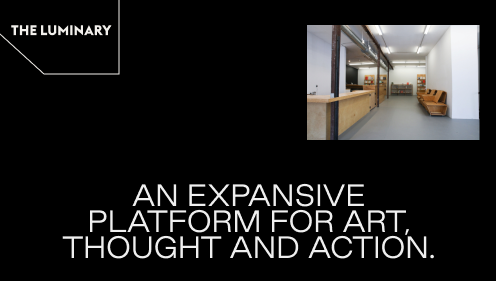
The Luminary's Residency
St. Louis, United States
A nationally recognized, research-driven residency supporting emerging and mid-career artists, curators, and critics in developing new work through focused inquiry and engagement with St. Louis's cultural landscape.

Washington University
St. Louis, United States
Washington University's Sam Fox School of Design & Visual Arts offers multiple artist residency programs, including Paris Studio residencies at the Cité internationale des arts (minimum two months) and the Island Press Artist Research Fellowship (one-week printmaking residency). These programs support students, alumni, and faculty across various artistic disciplines to develop their work, expand international networks, and engage in intensive artistic practice.
Explore United States
More city guides
Opportunity Intelligence
Ready to find your next residency?
Get a personalized shortlist — scored against your practice, discipline, and what you need right now.
See how Intelligence works →