
City Guide
San Sebastián, Spain
A compact coastal city with serious institutional support, strong film culture, and a residency scene that rewards research-driven work.
Why San Sebastián works so well for artists
San Sebastián, or Donostia, is small enough to feel manageable and active enough to keep you alert. That combination matters. You can cross the city on foot, get to the studio without losing half your day, and still be surrounded by a real cultural network. For artists, that means more time making, reading, thinking, and meeting people — less time wrestling with a huge city.
The city’s strength is not volume, but density. Tabakalera anchors a contemporary culture ecosystem that stretches into film, publishing, research, exhibitions, and public programming. Around it, you’ll find San Telmo Museoa, Koldo Mitxelena Kulturunea, EQZE, Chillida Leku, and the pull of the San Sebastián International Film Festival. If your work moves between visual art, moving image, sound, writing, or socially engaged research, this is a place that can actually hold that kind of practice.
The Basque context also gives the city a specific texture. Language, memory, politics, landscape, and regional identity are not background details here. They shape how the city feels and how institutions frame their programs. If you like residencies that feed your work through place rather than simply hosting you, San Sebastián is a strong choice.
The residency programs to know
Tabakalera artist and creator residencies
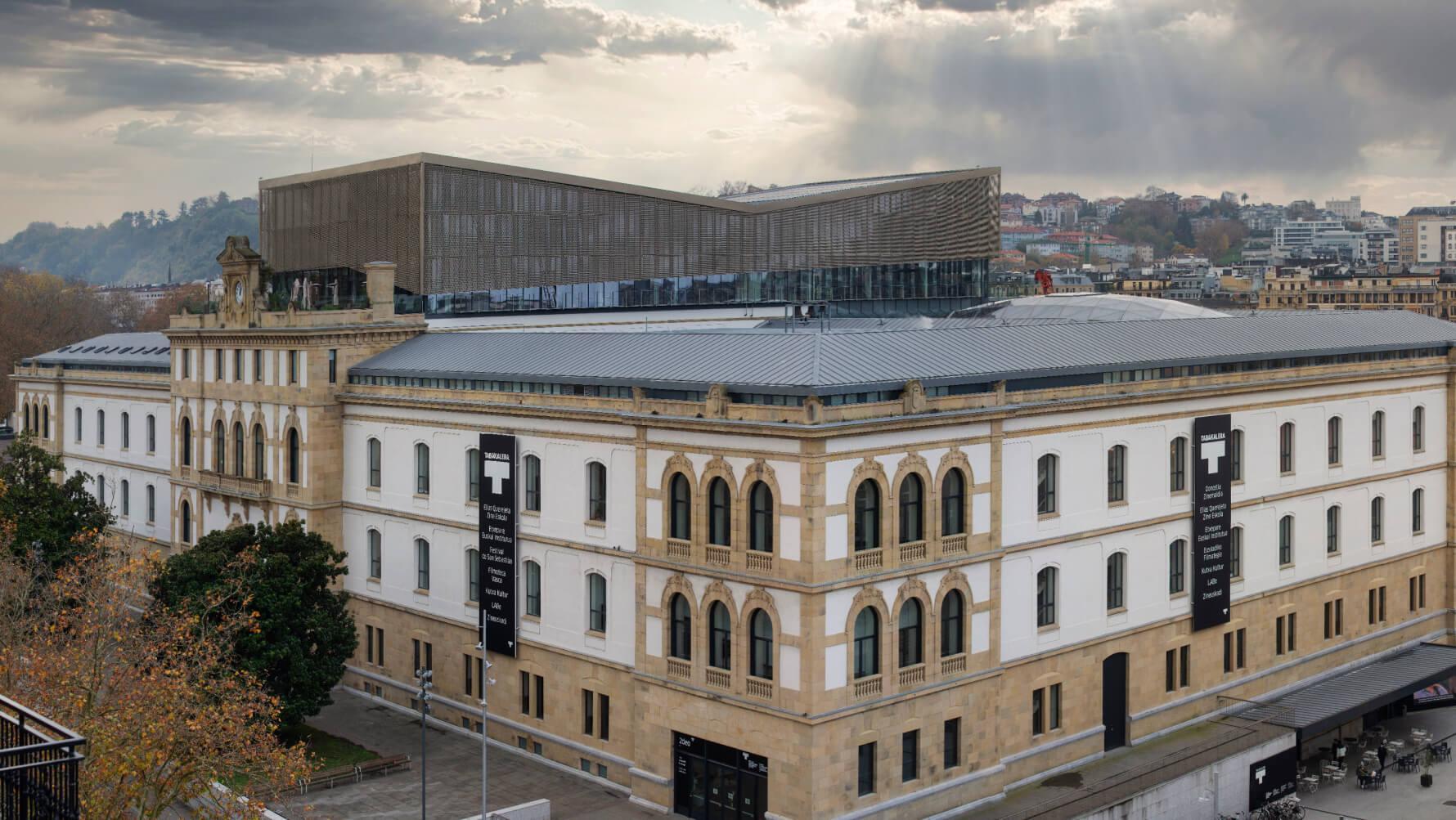
Tabakalera is the city’s central residency hub and the first place most artists should look. Housed in a former tobacco factory, it functions as a contemporary culture center, not just a studio building. That matters because the residency is tied to a larger public-facing institution with curatorial, technical, and programmatic depth.
Tabakalera residencies typically offer accommodation, work space, equipment, and project support. Depending on the call, you may also get production support, technical assistance, or curatorial guidance. This makes the program especially useful if you need more than a quiet room and a bed. It suits artists in a research phase, artists building a body of work, and anyone whose practice depends on infrastructure.
It is also a good fit for interdisciplinary work. Film, sound, installation, hybrid publishing, digital media, and socially engaged research all sit comfortably within the Tabakalera ecosystem. The building itself gives you access to a range of conversations, and that can be as valuable as the formal support.
Art, Science, Technology and Society residency
This Tabakalera program, developed with partners such as Goethe-Institut Madrid and Sónar+D, is aimed at artists working between art, science, technology, and society. It is one of the most structurally supportive opportunities in the city for research-led practice.
What makes it stand out is the balance between conceptual and practical backing. The support package has included travel, accommodation, insurance in some cases, a monthly living allowance, a project fee, workspace, technical help, curatorial support, and production funding. For artists whose projects need both ideas and resources, that combination is rare and useful.
This program is especially relevant if your work sits at the intersection of digital culture, technological systems, critical research, or collaborative inquiry. It is not a generic studio residency; it is built for artists who can think across disciplines without losing clarity.
Tabakalera and Chillida Leku: art and landscape
The Tabakalera/Chillida Leku residency brings another layer to the city: landscape, site, and sculpture. If your work is shaped by place, ecology, material thinking, or spatial research, this is one to watch. The partnership between Tabakalera and Chillida Leku gives you access to two distinct but connected environments, each with its own energy.
Support has included accommodation, studio space, travel support, living expenses, production funds, insurance in some cases, access to sound and image editing resources, and curatorial support. That kind of structure allows you to work seriously without turning every decision into a budget problem.
The setting matters here. Chillida Leku carries the legacy of Eduardo Chillida, so the residency naturally invites thinking about sculpture, land, memory, and the relationship between art and site. If your work is attentive to material, space, and context, this residency can give it real depth.
Ikusmira Berriak
For film and audiovisual artists, Ikusmira Berriak is one of the most relevant programs in the city. It sits within the San Sebastián Film Festival ecosystem and is connected to Tabakalera and EQZE, which gives it strong institutional and industry relevance.
This is especially useful if your practice is moving-image based, experimental, or still in development. The program is built to support project growth, not just final outcomes. If you are making a film, a hybrid audiovisual work, or something that sits between cinematic form and visual art, it belongs on your radar.
What makes it attractive is the bridge it builds between artistic development and broader visibility. You are not isolated from the field; you are working near one of the most internationally visible festival circuits in Spain.
What the city feels like in practice
San Sebastián gives you a good rhythm for making work. It is compact, walkable, and close to the coast, so daily life tends to feel less fragmented than in larger cities. That can be a real advantage during a residency. You can move from studio to museum to meeting to beach without a complicated commute hanging over the day.
The city is also unusually strong for its size when it comes to cultural life. You do not need to hunt for significance. It is already there in the institutions, the festival calendar, the conversations around moving image and contemporary art, and the broader Basque cultural context. For artists who like to research as they make, that density is useful.
At the same time, this is not a place that feels anonymous. The city has a clear identity, and that can be productive. You may find yourself working with ideas about language, borders, memory, food culture, landscape, or local political history even if you did not arrive planning to. That is part of the appeal.
Where to stay if you are based in the city
Neighborhood choice in San Sebastián is usually about convenience, atmosphere, and budget. For visiting artists, three areas tend to make the most sense.
- Centro and Amara: practical and central, with easy access to the train and bus station and to Tabakalera.
- Gros: lively, creative, and close to Zurriola Beach and the festival zone; a good balance of energy and livability.
- Egia: close to Tabakalera and a little more local in feel, which can be ideal if you want to stay near the city’s cultural core.
Parte Vieja is attractive if you want intensity, food, and nightlife, but it can be noisy and heavily touristed. Antiguo is calmer and more residential, which suits longer stays if you prefer a quieter base. If your residency includes housing, take that seriously — San Sebastián can be expensive, and short-term rentals are often the most difficult part of the trip.
Cost, transport, and the practical side
San Sebastián is one of Spain’s pricier cities, especially for accommodation. That does not make it out of reach, but it does mean that funded residencies matter. If housing is provided, your budget becomes much more manageable. If not, plan carefully and expect summer to be harder on your wallet.
Food can be reasonable if you cook, though the city’s restaurant culture is strong enough to tempt you into spending more than planned. Local transport is simple because the city is compact. You will probably walk more than you expect. Buses are useful, and cycling is possible, though the terrain and weather make walking the default for many people.
San Sebastián also connects well to the wider Basque and northern Spanish network. Bilbao, Biarritz, Bayonne, and other nearby cultural sites are within reach, which is useful if your project benefits from regional research.
Who tends to fit this city best
San Sebastián is especially good for artists who want a residency to do more than provide quiet. It rewards people who are open to conversation, institutional exchange, and place-based thinking. If your practice is research-heavy, moving-image oriented, interdisciplinary, or shaped by landscape and cultural context, the city has a lot to offer.
It is also a strong match if you value a high quality of life while working. The coast, the scale of the city, and the cultural infrastructure make it easier to stay focused without feeling cut off. You can work hard here and still breathe.
If you are comparing residencies in Spain, San Sebastián stands out for the way it combines serious support with a distinctive sense of place. It is not a city that tries to be everything. That is part of why it works.
What to check before you go
- Accommodation: confirm exactly what is included and where it is located.
- Studio access: ask what kind of space and equipment you will actually have.
- Production support: find out whether this is cash, materials, technical help, or all three.
- Language: check whether the residency runs in English, Spanish, Basque, or a mix.
- Visa and insurance: if you are coming from outside the EU, sort this early and ask for written documentation.
That practical detail matters because it shapes the whole stay. A strong residency in a city like this should give you not only a place to work, but enough clarity to use the city well. San Sebastián does that better than many places of its size.
Explore Spain
More city guides
Opportunity Intelligence
Ready to find your next residency?
Get a personalized shortlist — scored against your practice, discipline, and what you need right now.
See how Intelligence works →