
City Guide
Saché, France
How to use Saché—and Atelier Calder in particular—as a focused production base in rural France
Why Saché matters for artists
Saché is a tiny commune in Indre-et-Loire, Centre-Val de Loire. On paper it looks like quiet countryside; in practice, it’s a serious destination if you’re heading into a production-heavy phase of your work, especially in sculpture or installation.
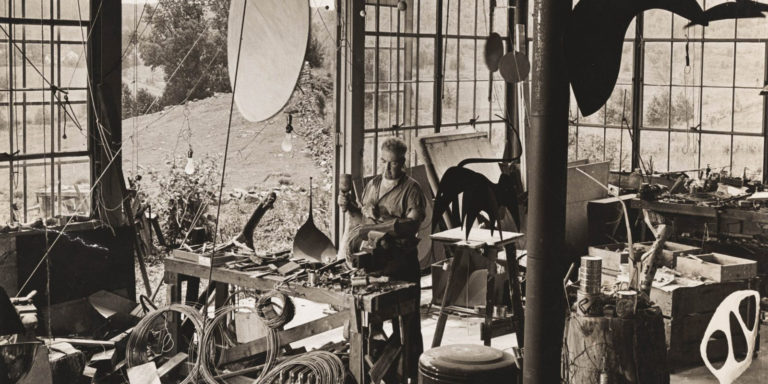
The reason is simple: Saché is home to Atelier Calder, the former studio and house of Alexander Calder, now one of France’s most respected artist residencies. You’re not going for galleries, openings, or a packed calendar. You go to Saché for uninterrupted work time, space to build ambitious projects, and the symbolic weight of working on the grounds of an artist whose practice literally reshaped sculpture.
Think of Saché as a focused residency node plugged into the wider Loire Valley cultural network rather than a city you “move to.” Your days there revolve around studio, countryside, and targeted trips into nearby towns like Tours and Azay-le-Rideau.
Atelier Calder: how it actually works
Atelier Calder is the main reason artists land in Saché. It’s a residency built around one core idea: give serious visual artists the space, resources, and time to make work that would be hard or impossible to do at home.
Program overview
Atelier Calder was founded in 1989 and is run in partnership with the Calder Foundation and French public partners such as DRAC Centre-Val de Loire and the Centre-Val de Loire Region. It’s often described as one of the oldest residency programs of its kind in France and has hosted names like Marina Abramović and Sarah Sze.
Residencies are typically organized in three-month blocks. Calls for applications are published in advance, sometimes grouped by year (for example, two residencies within the same calendar year). The structure is stable: a small number of residents per year, each getting a dedicated period.
What you actually get
The core offer is generous and production-oriented:
- Duration: usually three months of focused work
- Studio: access to Calder’s original studio, around 300 m² (3,200 sq ft) over two levels, equipped with tools and set up for large-scale production
- Accommodation: a furnished house of about 450 m² (5,000 sq ft) on site
- Financial support: a stipend (for example, around €5,000) plus a dedicated production budget (around €6,000) as indicated in recent calls
- Technical assistance: help sourcing materials, fabricators, and practical problem-solving for ambitious builds
- Transport: a vehicle for local use, if you have a driver’s license valid in Europe
- Public outcome: open studio or public presentation at the end of the residency, with the possibility of project extensions via partner institutions
The combination of space, equipment, and cash support means you can realistically treat the residency as a full working season, not just a retreat.
Who it’s actually designed for
Atelier Calder is clearly aimed at artists with a professional track record who want to push a project to the next scale. The typical profile, based on their calls, includes:
- Visual artists (installation, sculpture, spatial practices, and related media)
- Artists with a confirmed professional career (exhibition history, projects with institutions, etc.)
- French or international artists; there is no age limit
- Artists who can fully commit to the residency period with no other professional obligations such as regular teaching
This is not a residency for a quick “try-out.” The expectation is that you arrive with a strong proposal and leave with a substantial body of work or a significant stage of a project that can travel to other institutions.
Selection and expectations
A board made up of Calder Foundation representatives, art historians, curators, and institutional partners oversees selection. Practically, this means your application lives in a curatorial and institutional frame, not just a peer jury. You want to present a project that:
- Makes clear use of the specific assets of the residency (space, tools, time, context)
- Shows you have the experience to execute what you propose
- Has a credible public outcome (on-site open studio and, ideally, future exhibitions or collaborations)
Toward the end of your stay, you host an open studio in Saché. In some cycles, there may also be ties to regional events or festivals, for example participation in initiatives like AR(t]CHIPEL mentioned in recent calls.
What it’s like to work and live in Saché
Daily life in Saché is shaped by its rural scale and the fact that Atelier Calder is the main cultural anchor for contemporary art there. This can be a huge advantage if your practice thrives on focus and physical work, as long as you know what to expect.
Rhythm and atmosphere
Saché is quiet. Your primary social environment will be the residency team, occasional visitors, and whoever you invite or connect with in the region. There are no clusters of galleries, no dense nightlife, and limited casual networking. What you do get is:
- Long, uninterrupted studio days
- Direct contact with the surrounding landscape
- A strong sense of working inside a historic studio with a clear sculptural legacy
If your practice involves fabrication, construction, or experimentation that usually clashes with city constraints—noise, dust, space, storage—Saché can feel unusually liberating.
Cost of living and money realities
Compared with major French cities, the cost of living in and around Saché is relatively low. Because the residency usually covers accommodation, studio, and provides a stipend plus production budget, your main out-of-pocket costs are:
- Travel to and from France
- Groceries and day-to-day living
- Project materials that exceed the provided production budget
- Shipping work or components before and after the residency
- Insurance for works, equipment, and possibly health coverage depending on your status
- Extra transport (fuel, tolls, or occasional car hire if you don’t use the residency vehicle)
If you budget well, it’s reasonable to treat these three months as your main job, especially if you supplement the stipend with savings or external project funding from your home country.
Where artists actually stay
Most residents live on site in the Atelier Calder house. If you are visiting Saché outside a residency, or planning to base yourself nearby while collaborating or researching, your basic options are:
- Saché itself: closest to the studio and the quietest option. Limited services, so you’ll rely on nearby towns for many needs.
- Azay-le-Rideau: a picturesque town with more shops, restaurants, and daily services. It’s still a short drive from Saché and gives you a bit more life outside the studio context.
- Tours: the regional city and transport hub. More cultural options, art spaces, and amenities. Working in Saché while living in Tours only makes sense if you have consistent transport and don’t mind the commute.
If you’re in residence at Atelier Calder, the on-site accommodation is part of the experience. The scale of the house means you can work on models, sketches, writing, or quieter processes indoors and keep large fabrication in the studio.
Art infrastructure: Saché and the surrounding region
Saché’s art infrastructure is basically built around Atelier Calder, but the wider Centre-Val de Loire region fills in the gaps—especially for exhibition visits, supplies, and long-term networking.
On site in Saché
Within Saché itself, Atelier Calder is the key site. For you as an artist, this means:
- Your main institutional relationship during the residency is with the Atelier and its partners
- The public moment for your project is the open studio and any related local programming
- Community engagement is more focused than broad; you’re not fielding constant public traffic like in a city-based residency
This kind of structure is ideal if you want to build depth in the work and curate a few strong encounters with audiences, curators, and peers instead of navigating an endless stream of drop-ins.
Tours and the regional ecosystem
Tours acts as your cultural and logistical support city. There you can find:
- Art centers, museums, and occasional contemporary art programming
- Artist-run spaces or smaller galleries that may be useful for studio visits and informal exchanges
- Practical resources such as framing services, art supplies, and logistics providers
- Train connections for day trips to Paris or other cities for meetings, research, or exhibitions
The broader Centre-Val de Loire region includes historic monuments, châteaux, and heritage sites that sometimes host exhibitions, commissions, or cultural events. Atelier Calder’s institutional partners may activate these networks, especially when they collaborate on post-residency exhibitions.
Getting to Saché and moving around
The rural setting is part of Saché’s appeal, but it also means transport planning is crucial—especially if your project involves heavy or fragile materials.
Reaching the residency
The standard route for international artists is:
- Arrive in France via Paris or another major city
- Take a train to Tours (or the nearby station Saint-Pierre-des-Corps, often used for high-speed trains)
- Continue by car, taxi, or arranged transport to Saché
Atelier Calder’s offer of a vehicle (if you have a valid European license) is a major asset. It turns the residency into a workable base for supply runs, museum visits, and potential site research in the region.
Working without a car
If you do not drive, plan carefully:
- Discuss transport options with the residency early, especially airport/station pickup and regular supply trips
- Research taxi availability and costs in the Tours–Saché area
- Consider the implications for scale and weight of your materials and works
A non-driving resident can still have a strong residency, but it requires more coordination and may nudge your project toward materials and processes that are easier to source and move without constant private transport.
Visas, admin, and paperwork
Visa planning can quietly make or break a residency timeline, especially for non-European artists. Because Atelier Calder residencies are often around three months long, you should treat the legal side as part of your project planning.
What to clarify early
Before committing to dates, clarify the following with both the residency and your local French consulate or embassy:
- Whether your stay falls under a short-stay Schengen visa or requires a long-stay visa
- How the stipend is treated (grant, income, or other category) and whether that affects your visa type
- What documentation you’ll receive from Atelier Calder (invitation letter, proof of accommodation, funding confirmation)
- Health insurance requirements for the duration of your stay
Many artists cover their practice with patchwork gigs and self-employment. Make sure whatever you declare in your visa application is consistent with your actual situation during the residency—especially if you’re expected to be free of other professional obligations.
When to go and when to apply
Two overlapping questions: when is Saché most comfortable to work in, and when do you usually see open calls.
Seasonal feel
Saché and the Loire Valley are particularly pleasant during late spring, summer, and early autumn. For studio-heavy work, that means:
- Comfortable temperatures to be in the studio all day
- Extended daylight for fabrication and outdoor processes
- An environment that supports walks and thinking time between making sessions
Winter can be quieter and more introspective. If your practice involves digital work, writing, or experimentation that doesn’t rely on a lot of climate-sensitive processes, an off-season residency might still suit you well.
Application timing
Atelier Calder typically announces calls well ahead of the residency year. A recent example set a deadline in early February for residencies scheduled more than a year later. That pattern suggests:
- You should look for calls or announcements many months before the actual residency period
- Winter is a common moment for deadlines
- Preparing a strong proposal—especially for large-scale projects—takes longer than a few weeks
Build in time for budgeting, timelines, and perhaps letters of support from institutions that might partner on exhibitions after your residency.
Local art community, events, and how to connect
Even though Saché itself is small, you’re not working in a vacuum. Your residency can plug you into local, regional, and international circles—if you treat those connections as part of the work.
Open studios and public moments
At the end of your residency, you present your work in an open studio format. This is more than a casual walk-through; it’s often the primary local encounter with what you’ve built in Saché. You can use this moment to:
- Test installation strategies in a large, flexible space
- Invite curators, writers, and artists from Tours and beyond
- Gather documentation (photo, video, interviews) that will help you share the project after you leave
Some residency periods may also intersect with regional festivals or cultural events, sometimes mentioned directly in calls. That can add another layer of visibility and collaboration.
Building relationships in the Loire Valley
Because Atelier Calder is well-respected, an invitation often functions as a calling card with regional institutions. It’s worth:
- Researching museums and art centers in Tours and nearby towns before you arrive
- Reaching out to propose studio visits while your work is up and accessible
- Thinking early about which parts of your Saché project could travel or adapt to other sites
The combination of rural focus and institutional backing can be a strong platform for future collaborations if you plan your outreach intentionally.
Is Saché the right fit for your practice?
Saché, via Atelier Calder, is less about casual exploration and more about committing to a specific period of intense, well-supported making. It tends to suit artists who:
- Have a mid-career or established practice
- Work in sculpture, installation, or materially complex visual art that benefits from large-scale studio space
- Are comfortable being in a rural environment for several months
- Can step away from teaching or regular side jobs and treat the residency as their primary focus
- Want to connect their project to institutional contexts and future exhibitions
It’s less aligned with artists who need daily access to a dense gallery scene or who rely on urban social energy to keep their practice moving. But if you’re ready to build something substantial, and the idea of working in Calder’s studio resonates with you, Saché gives you the kind of structure that’s hard to find elsewhere: real space, real support, and time that’s intentionally cleared for the work.
How to use this guide
If Saché and Atelier Calder are on your radar, treat this as a framework for planning:
- Map your project to the specific assets of the residency (space, tools, budget, institutional context)
- Start visa and logistics conversations early, especially around driving and transport
- Budget for your own travel, daily costs, and any materials beyond the production support
- Research Tours and regional institutions as part of your outreach plan
- Use the open studio as a key professional moment, not just the end-of-residency ritual
Saché won’t hand you a hyper-social art scene, but it will give you something rarer: concentrated time and resources to build work that can carry you into your next phase.
Explore France
More city guides
Opportunity Intelligence
Ready to find your next residency?
Get a personalized shortlist — scored against your practice, discipline, and what you need right now.
See how Intelligence works →