City Guide
Omalo, Georgia
Remote mountains, slow time, and one residency that turns a tiny village into an art lab.
Why artists go to Omalo
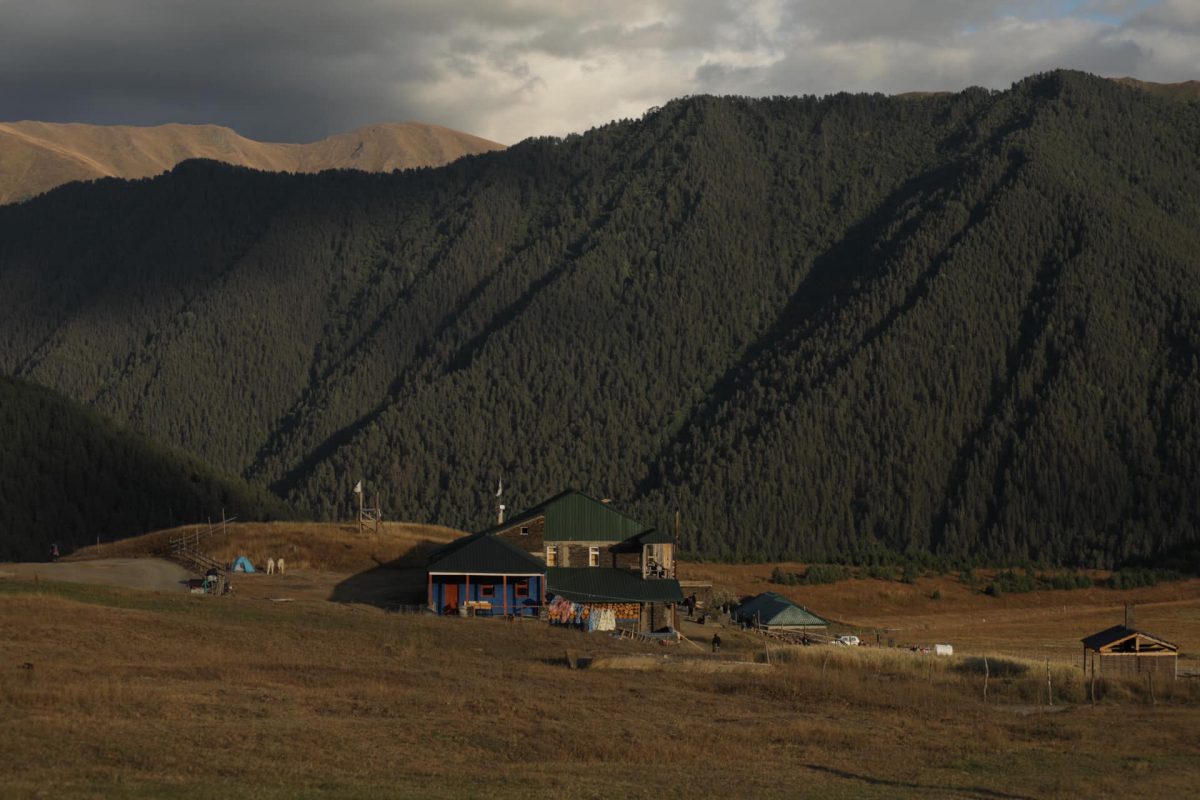
Omalo is not a city. It is a highland village in Tusheti, northeastern Georgia, perched in the Caucasus Mountains and reachable only by a challenging mountain road for part of the year. That remoteness is exactly what draws artists in.
If you’re used to residencies in big urban hubs, Omalo flips the script. Here, the studio stretches into landscape and village life: medieval stone towers, shepherding routes, seasonal migration, and strong oral traditions. You’re surrounded by steep valleys, grazing animals, unpredictable weather, and stories that travel through song more than social media.
Instead of gallery openings and museum crawls, Omalo offers quiet, altitude, and time. You get long days to work, walk, read, and talk. The art scene here is residency-based and seasonal, powered by visiting artists, local collaborators, and the people who choose to spend their summers in one of Georgia’s most remote regions.
Think of Omalo as a field studio for projects that need context: sound, writing, anthropology-inflected practice, photography, film, performance, and installation work that responds to place. If your work feeds on landscape, community, and long conversations, Omalo is a strong match.
The main residency: Aqtushetii / AqTushetii
When people talk about artist residencies in Omalo, they’re usually talking about Aqtushetii (also spelled AqTushetii) — a residency and festival program that effectively anchors contemporary arts activity in the village.
What Aqtushetii is
Aqtushetii is a hybrid: part residency, part festival, part gathering for artists and thinkers. It’s built around Tusheti’s landscape and cultural heritage, and it invites residents to work across disciplines rather than in isolated silos.
The program typically hosts:
- Visual artists (painting, drawing, installation, photography, video)
- Sound artists and musicians
- Writers and poets
- Dancers and performers
- Researchers in philosophy, anthropology, and related fields
- Artists who blur art, science, and ecology
Instead of a strict theme, the residency encourages you to respond to Tusheti as a living context: its songs, rituals, architecture, weather patterns, and local knowledge. Many projects end up being site-specific, research-based, or collaborative.
How the residency is set up
Public listings describe a fairly complete setup for making work in a remote environment. Facilities have included:
- Shared and private studio spaces
- A library or shared working room for reading, writing, and research
- Outdoor work areas where you can build, rehearse, or experiment
- Technical equipment for sound and music, with a recording studio
- Darkroom facilities for photography
- Ceramics equipment, including a kiln and tools
- Painting and printmaking spaces, sometimes with a press
- Internet access in some form (expect it to be functional but not city-level fast)
- Gallery or performance space for presentations and small exhibitions
Accommodation usually ranges from capsule or dorm-style shared rooms to private rooms in nearby guesthouses. Catering or shared meals are often included, which matters a lot when the nearest supermarket is a multi-hour mountain drive away.
The recommended minimum stay is often around three weeks. That length helps you actually settle, gather material, and adjust to the slower rhythm of Tusheti instead of spending your whole residency just arriving and re-acclimating.
Expectations and public engagement
Aqtushetii is not a silent retreat where nobody sees your work. The residency leans into exchange. Artists are usually expected to:
- Give a talk, presentation, or informal artist talk
- Offer a workshop or some sort of skill share
- Participate in a group exhibition, performance, or public event if the timing aligns
- Engage with other residents across disciplines
There is often a sense of building a shared archive or permanent collection: some artists leave a work behind, others leave documentation, publications, or recordings. You become part of the residency’s long-term memory, not just a guest who passed through.
Who Aqtushetii suits
This residency is a good fit if you:
- Work in sound, music, performance, writing, film, photography, or installation
- Have a research-based or context-driven practice (ethnography-adjacent, ecological, or socially engaged)
- Can live simply in a remote mountain village without constant shops and nightlife
- Enjoy collaboration and are open to working with people outside your discipline
- Want your work to be shaped by landscape, weather, and local stories
It can be challenging if you rely on fast internet, specialized fabrication labs, or daily access to professional-grade printing and framing. Materials are not impossible to manage, but you plan ahead, travel light, and adapt to what is available.
What Omalo feels like as an artist base
Omalo is small, and that’s part of the appeal. Instead of choosing a neighborhood or district, you land in a compact village where everything is walkable: residency compound, guesthouses, trails, and local gathering points.
Landscape as studio
Expect the landscape to influence your work more than any built art infrastructure. Daily life might include:
- Watching weather shift across ridgelines while you sketch or write
- Recording ambient sound: wind, animal bells, distant songs, streams
- Walking out for fieldwork and coming back with images, recordings, or notes
- Using stone towers, old houses, or paths as anchors for site-specific work
This goes beyond scenic views. The altitude, thin air, and long daylight stretch your perception of time and attention. Many artists find that work slows down in a useful way here; projects open up room for detail and reflection.
Community context
Tusheti has a strong sense of cultural identity, built on:
- Polyphonic singing and music
- Seasonal rituals and festivals
- Traditional architecture and craft
- Knowledge of herding, land use, and ecology
Residency programs typically encourage respectful engagement with local people: listening, learning, collaborating when invited. This is not a place to parachute in, stage a spectacle, and leave. Projects that work well tend to be attentive and slow: recordings, portraits, quiet performances, installations that respond to existing spaces instead of dominating them.
Because the local population is small and many households are busy with seasonal work, it helps to stay flexible and open to informal, small-scale encounters rather than expecting large, polished public events every week.
Practical logistics: life in Omalo during a residency
Cost of living
Omalo’s costs are shaped by remoteness, not urban prices. Some basic realities:
- Housing: If you are in a structured residency, accommodation is usually arranged or included. Booking independently in high season can be pricey relative to average Georgian costs, because supply is limited and transport is complex.
- Food: Groceries and meals tend to cost more than in lowland towns; everything arrives via mountain road. Many residencies include catering or communal meals, which simplifies budgeting.
- Cash: Assume you will need cash. Card payment may be limited, and ATMs are not a given in remote villages. Withdraw money before heading up to Tusheti.
If you join a residency that bundles housing and food, Omalo can be surprisingly manageable. Traveling independently for a long stretch, paying guesthouse rates and transport on your own, can add up quickly.
Transport and getting there
Getting to Omalo is an adventure in itself. The standard route uses the Abano Pass, a high mountain road linking the Kakheti region (often from Telavi or nearby towns) to Tusheti.
- The pass is seasonal. Snow and weather dictate when the road is open.
- Travel usually happens in 4x4 vehicles with experienced local drivers.
- The road can be long, rough, and exposed. Many people choose not to drive it themselves.
Some seasons, special programs organize access by helicopter as part of an early-spring session, but that is not standard and tends to be arranged specifically through the residency.
For planning:
- Build in buffer days on either side of your residency in case of weather-related delays.
- Avoid scheduling international flights immediately after your planned descent from Tusheti.
- Ask your residency organizers which drivers or transport options they recommend.
Seasonality and timing
Residency life in Omalo essentially follows the mountain season:
- Late spring to early autumn: Main period for residencies, village life, and open roads. Best for hikes, fieldwork, and outdoor projects.
- High summer: More activity, more visitors, brighter conditions, and easier logistics for group events.
- Shoulder seasons: Colder but quieter, with changing light and color that many photographers and writers appreciate. Travel risks increase as weather shifts.
- Winter: Road access usually closes, and standard residencies pause unless a specialized program exists with alternative access.
When you consider applying, think about what your project actually needs: constant outdoor access, or a quieter, colder time with fewer distractions? Tusheti’s mood shifts dramatically with the season.
Working conditions: studios, tech, and materials
Studios and workspaces
You can expect some combination of indoor and outdoor studios, including:
- Shared studios for painting, drawing, and mixed media
- Dedicated rooms for sound or recording work
- Spaces that can be adapted for performance, rehearsal, or small concerts
- A library-like space for reading, writing, planning, and group meetings
The aesthetic is more practical than polished: think functional workrooms rather than pristine white cubes. A lot of the magic happens when you treat the village, the surrounding hills, and the residency environment as parts of one large studio.
Equipment and materials
Residency descriptions for Aqtushetii mention access to:
- Recording gear and music equipment
- A darkroom and photo tools
- Ceramic kiln and basic clay tools
- Printmaking equipment, including a press
Some residencies in Omalo have historically provided basic art materials as part of the fee or program, but you should always confirm current conditions. The safest approach is:
- Bring any specialized tools or materials you rely on.
- Plan projects that can adapt to simple, locally available resources.
- Use found or natural materials thoughtfully, with respect for local ecology.
Internet exists, but treat it as limited. You can usually handle messaging and some research, but constant high-bandwidth streaming or large uploads may not be realistic. Many artists use the residency as a chance to unplug from heavy digital work and focus on offline making.
Project ideas that work well in Omalo
To make the most of a residency in Omalo, match your project to what the place can uniquely offer instead of trying to recreate a city studio experience.
Place-based and research projects
- Field recording and soundscape work: Capture pastoral sound, weather, voices, and micro-acoustics that would be impossible to reproduce in a studio.
- Photographic or film essays: Work with shifting light, fog, and the relationship between village life and landscape.
- Writing and poetry: Use long quiet hours for drafting, editing, and responding to the environment in text.
- Ethnography-informed projects: Build careful, consent-based collaborations around oral histories, songs, or everyday routines.
Collaborative and cross-disciplinary practice
- Music and performance collaborations: Work with other residents on improvised sets, small concerts, or movement-based work that responds to terrain.
- Workshops with peers: Share tools, methods, and ideas across disciplines, from printmaking to sound design.
- Shared installations: Create temporary works that live in or near residency spaces, documenting them carefully due to weather and wear.
Projects that require a large audience, complex staging, or heavy infrastructure (like large-scale fabrication, advanced projection systems, or delicate tech that hates dust and humidity) are harder to sustain here. If your work normally relies on that kind of setup, consider a smaller, more portable version tailored to Omalo.
Visas, paperwork, and admin
Georgia’s entry policies are relatively open for many nationalities, often allowing visa-free stays for extended periods. That said, rules can change, so you check current regulations for your passport before you book anything.
For a residency stay in Omalo, it usually looks like this:
- Short, unpaid residencies often fit under standard tourist entry for many visitors.
- If you receive a stipend, fee, or formal income, check whether that triggers different regulations.
- If you are bringing substantial equipment or plan to do formal filming or data collection, ask about any permits or special documentation in advance.
Always request an official invitation or confirmation letter from the residency detailing your dates, accommodation, and contact person. It helps with border questions and grant applications, and gives you a clear document for your records.
Is Omalo right for your practice?
Omalo tends to suit artists who want immersion and are okay trading convenience for depth. It can be a powerful choice if you:
- Need time and isolation to write, compose, or think through a long-term project
- Want to work directly with landscape, ritual, or ecological themes
- Enjoy sharing space with other artists and researchers
- Can adapt your practice to limited infrastructure and slower pace
It might be less ideal if you:
- Depend daily on specialist gear, labs, or city-level internet
- Need a large urban audience or commercial gallery network during your residency
- Prefer highly predictable logistics and easy airport connections
If Omalo lines up with your current questions and methods, it can reshape your practice in a way that carries far beyond your time there. The work you start in Tusheti often continues to echo through later projects, exhibitions, and collaborations long after you return to your usual studio.