
City Guide
Matsudo-city, Japan
A compact city guide to Matsudo’s residency scene, with the key details artists actually need before they apply.
Matsudo sits just east of Tokyo, but it feels like its own working city rather than a spillover neighborhood. That balance is part of the appeal: you get access to Tokyo’s networks, transit, and institutions, while keeping a bit more room to think, test, and build work. For artists looking for a residency that makes space for process and public exchange, Matsudo is a useful place to know.
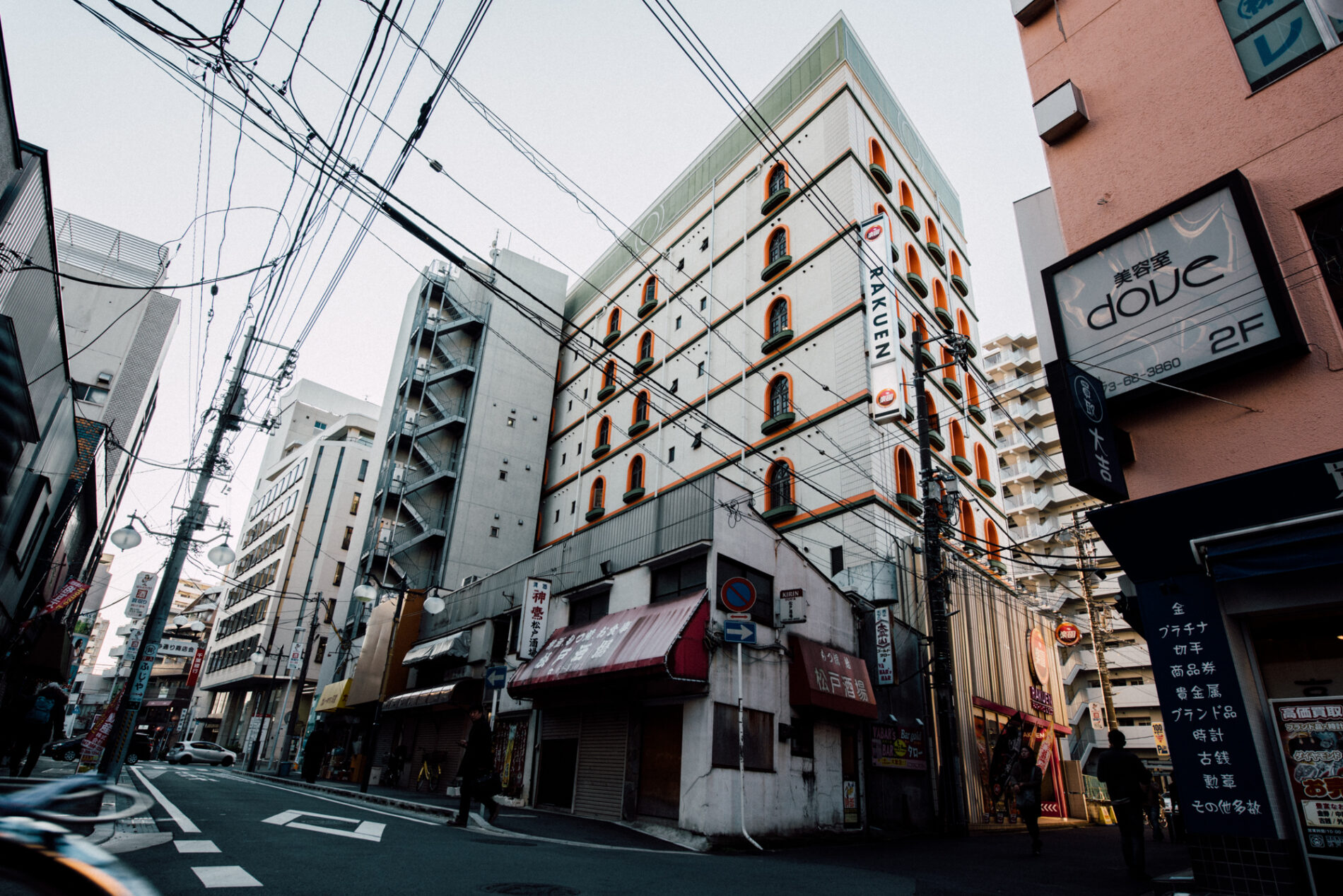
The city’s residency scene is shaped most clearly by PARADISE AIR, a program housed on the vacant floors of a former hotel above a pachinko parlor. The building is memorable, but the program matters more: it connects artists with Matsudo’s residents, local spaces, and civic rhythms. If you want a residency that pushes work outward into the city instead of keeping it inside a studio bubble, this is the central name to look at.
Why Matsudo works for artists
Matsudo is in northwestern Chiba Prefecture, inside the greater Tokyo metro area, but it has a more local pace than central Tokyo. That matters when you are trying to make work. It can be easier to focus, easier to move around, and easier to imagine a project that is rooted in place rather than rushed by the city’s speed.
The city also has a built-in idea of transit and exchange. Matsudo was once a post town along the old Mito Road, and that history still fits the present-day residency culture. Artists pass through, stay, make something, and often leave behind a trace in public memory. That makes Matsudo a strong match for site-responsive, socially engaged, and research-driven practices.
- Close to Tokyo, without being swallowed by it
- Good for community-facing work and public presentations
- Useful for artists who want a quieter base for making and researching
- Strong fit for installation, performance, workshop, and participatory work
PARADISE AIR: the residency that defines the city
PARADISE AIR is the key residency in Matsudo and the one most artists will encounter first. It operates with a clear idea: “One Stay, One Art.” In practice, that means you receive a residency stay and, in return, make a public-facing work, event, or presentation for the city.
The program is not only for artists. It also welcomes curators and researchers in some of its formats, which broadens the kind of work that can happen there. If your practice includes fieldwork, interviews, public programming, or community exchange, you are likely to find the structure useful rather than restrictive.
SHORTSTAY
The SHORTSTAY program is the flexible entry point. It is typically around three weeks and is open to artists, curators, and researchers. The core idea is simple: use the residency to make a project, then share it with Matsudo residents in some public form.
That public outcome can take different shapes:
- an exhibition
- a performance
- a workshop
- a talk or presentation
- another public event that fits the project
This format suits artists who want a shorter, sharper residency with enough structure to stay focused. It also works well if you are testing a new method or developing a project that depends on local contact rather than long studio isolation.
LONGSTAY
The LONGSTAY program is a deeper commitment, usually around three months. It offers broader support, including travel, accommodation, language support, and production assistance. For artists who need time to build trust, adjust to the city, and develop work gradually, this is the more expansive option.
This format is especially good if your project depends on sustained exchange, repeated visits, or a slower build. It is also the better choice if you know you will need help navigating logistics in Japan.
LEARN
LEARN is the program most focused on city connection. It emphasizes learning through interaction, so it is well suited to artists whose work grows through conversation, participation, or shared process. If your practice overlaps with education, social practice, or interdisciplinary research, this can be a strong fit.
Across all three programs, the underlying logic stays consistent: the residency is not just a place to make work, but a way to exchange with Matsudo itself.
What the residency environment is really like
PARADISE AIR’s setting gives the program its character. The vacant floors of a former hotel, above the Rakuen pachinko parlor, create a strange and specific atmosphere. That kind of setting is useful if your work responds to architecture, urban memory, or layered public spaces. It is less useful if you need a highly conventional studio or a sealed-off retreat.
The residency is also tied to the city in a practical way. Public programming, resident interaction, and local collaboration are part of the model. That means you should expect to think about audience, presentation, and place from the beginning.
For many artists, that is the attraction. Matsudo gives you room to make work that has a direct social life. If your practice is already moving toward participation, neighborhood exchange, or site-specific research, the city gives that work a real context.
Practical planning: housing, costs, and transit
One of Matsudo’s biggest advantages is simply that it is easier to manage than central Tokyo. Costs are generally lower, and the city is well connected by rail. That makes it practical for artists who need occasional access to Tokyo but do not want to pay central Tokyo rates or work in a constant state of overstimulation.
Residency support varies by program, but PARADISE AIR listings indicate that some stays include accommodation, travel support, and per diem depending on the open call. In other words, the financial burden can be modest if you are selected, but you should still check what is actually covered before assuming anything.
- Matsudo Station is the main transit hub to know
- Shin-Matsudo Station can also be useful for regional movement
- Rail access to Tokyo makes day trips, meetings, and supplier runs manageable
If you are self-funded, budget for food, local transport, materials, and shipping. If your project needs heavy fabrication, large storage, or special equipment, ask early about what the residency can realistically support.
Who gets the most out of Matsudo
Matsudo is a strong fit for artists who can work with place rather than around it. That includes people working in socially engaged practice, performance, installation, research, public art, and workshop-based projects. It also suits curators and researchers who want to build a project around a city rather than a single venue.
You will likely do well here if you are comfortable with:
- public presentation as part of the residency
- working with residents or local partners
- a project that can adapt to a specific site
- a city that feels active but not overwhelming
Matsudo may be less suitable if you need a very private retreat, a dense independent gallery district, or a highly equipped fabrication environment. It is not trying to imitate Tokyo. That is part of why it works.
Visa, timing, and application planning
If you are coming from outside Japan, the details depend on your nationality, the length of stay, and whether any part of the residency is paid work. Short stays may fit a short-term visitor status for some artists, but you should confirm this with the program and, if needed, with the Japanese embassy or consulate that handles your case.
Before applying, ask a few direct questions:
- Is any support paid as a stipend, honorarium, or reimbursement?
- Will the residency include a public presentation or workshop?
- Will you need documentation for visa purposes?
- Can the program provide an invitation letter if needed?
The SHORTSTAY option is described as open year-round, which makes it the most flexible route. For longer or more structured programs, it is smart to plan well ahead so you have time for visas, shipping, and research preparation.
How to think about Matsudo as a working city
Matsudo does not present itself as a polished arts district, and that is part of its value. The city feels lived in, transit-linked, and open to projects that meet people where they are. If you are used to residencies that separate art from daily life, Matsudo may feel refreshing. If you want a place where the residency is in conversation with the city from day one, it is a good match.
For many artists, the strongest reason to choose Matsudo is simple: you can work with fewer distractions, but without losing access to one of the most active art centers in the region. That combination is rare enough to pay attention to.
For more on the main residency, start with PARADISE AIR, and compare listings through TransArtists and Res Artis. Those pages are useful for checking program structure and current support details before you reach out.
Explore Japan
More city guides
Opportunity Intelligence
Ready to find your next residency?
Get a personalized shortlist — scored against your practice, discipline, and what you need right now.
See how Intelligence works →