City Guide
Matfield Green, United States
How to plug into the tiny Flint Hills town that punches way above its weight for residencies.
Why Matfield Green is on artists’ radar
Matfield Green is a ranching and farming town of about 50 people in the Flint Hills of Kansas, surrounded by one of the last big stretches of native tallgrass prairie. It looks quiet on the map, but it’s become a magnet for artists, writers, and cultural organizers who are interested in land, ecology, and rural life.
Instead of a row of galleries and coffee shops, you get a small, interconnected ecosystem: artist residencies, a few key community spaces, local open studios, and a landscape that pretty much takes over your field of vision. The emphasis here is on place-based practice, slow time, and conversation across the Great Plains.
If you’re looking for a residency that’s about prairie, rural culture, and the relationship between land and art, Matfield Green is unusually focused and concentrated for such a small town.
Core residencies: Tallgrass and Prairieside Outpost
Tallgrass Artist Residency
Website: tallgrassartistresidency.org
The Tallgrass Artist Residency is run through the Kansas Arts Commission and centered in Matfield Green, with a program structure built around the prairie itself. Artists stay at Matfield Station, a restored railroad site just outside town, and spend an intensive 10 days working, researching, and engaging with the tallgrass ecosystem.
What it offers
- 10-day residencies in a rural setting focused on tallgrass prairie and place-based work
- Lodging at Matfield Station in a private casita with a kitchen, private bathroom, and a shared porch
- Time for studio or field work plus structured public engagement
- At least one public program, often at the Tallgrass Prairie National Preserve, such as a talk, walk, workshop, or other artist-led event
- Connections to local partners across the Flint Hills region
What the day-to-day feels like
- Quiet, rural days with big sky, changing light, and long views of prairie grass
- Field visits to the Tallgrass Prairie National Preserve for research, sketching, sound recording, writing, or photography
- Time in your casita to work, edit, or process what you’re collecting outside
- Occasional events, meetings, or open studios coordinated through the program
Who it’s ideal for
- Artists whose work touches ecology, climate, agriculture, geology, or rural studies
- Artists interested in site-specific or research-based practice
- People who appreciate a short, focused residency rather than a month-long stay
- Artists who are comfortable offering a public program and talking about their work with non-arts audiences
How the prairie focus shapes your work
Tallgrass isn’t just a rural backdrop. The program is explicitly about the tallgrass prairie ecoregion, and has prioritized artists from prairie or prairie-adjacent regions to build a contemporary portrait of this landscape. That means your project can sit in conversation with other artists who are also thinking about grasslands, land use, fire regimes, ranching, biodiversity, and regional histories.
Key partners and spaces you’ll encounter
- Matfield Station – Your lodging and an informal gathering point with a communal porch where residents cross paths.
- School for Rural Culture & Creativity – Housed in the old 1938 grade school building; used for exhibitions, presentations, and the residency’s Fall Gathering.
- Matfield Green Works – A local nonprofit organizing open studios and community events, tied into the residency season.
- Tallgrass Prairie National Preserve – A core site for research and your public program; the prairie is both subject and collaborator here.
- Regional partners like the Marianna Kistler Beach Museum of Art – Past collaborations connect the residency to a wider institutional network.
Prairieside Outpost
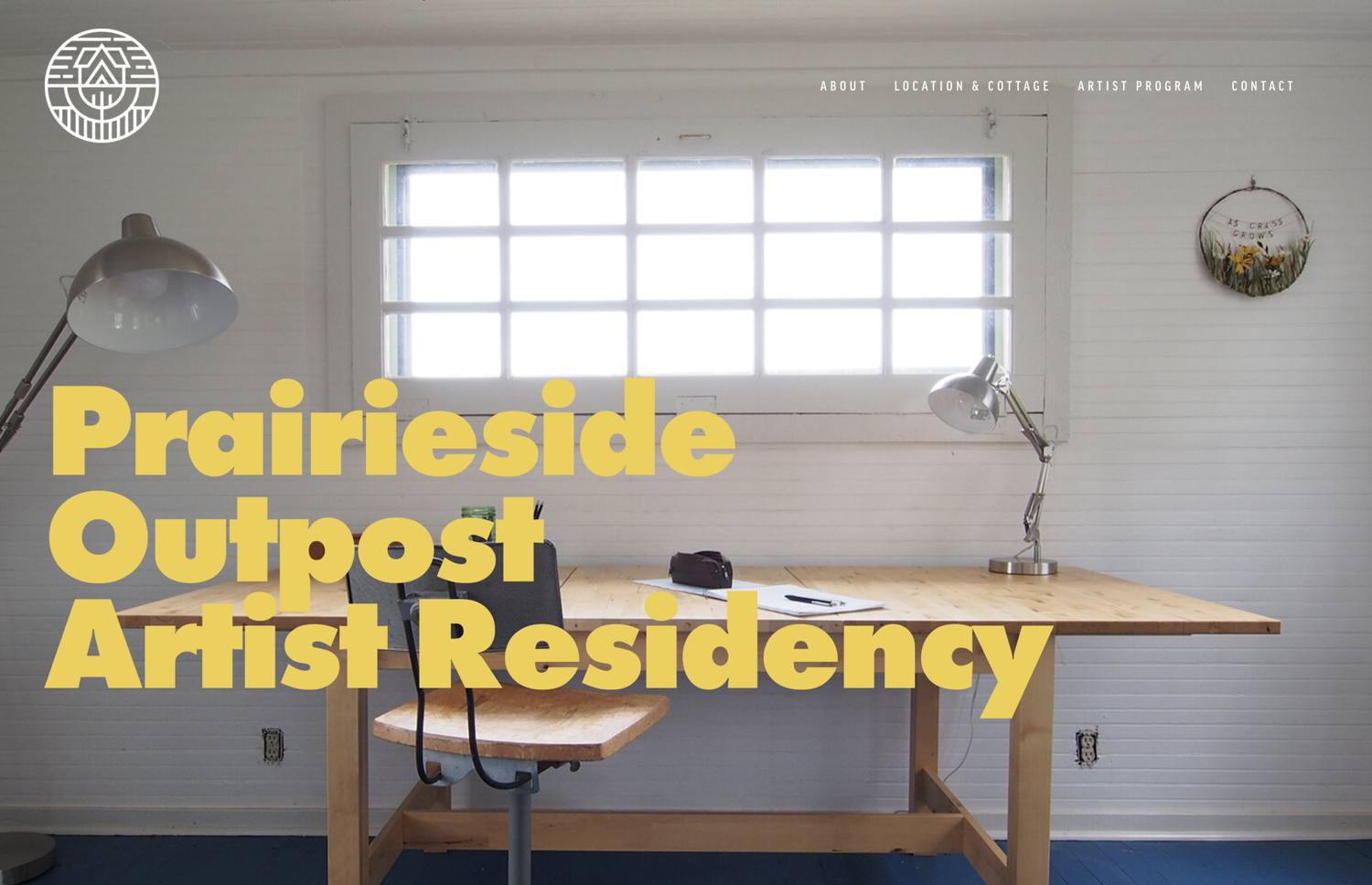
Prairieside Outpost is another Matfield-area residency that functions more as a retreat space for visual artists and writers, with a strong emphasis on solitude, family inclusion, and flexible use of time.
What it offers
- Residency stays of roughly 7–10 days (based on reporting by Kansas City Art Institute)
- A separate studio and house setup, so you can work privately while family or collaborators are nearby
- A quiet, isolated-feeling property with views over open prairie
- No required output; the residency supports anything from deep studio time to research and field walks
What the day-to-day feels like
- Very quiet days with minimal scheduling from hosts
- Self-directed rhythm: long studio sessions, reading, writing, or hiking the land
- Meals and downtime in the house with whoever you’ve brought with you
- Less public-facing obligation than programs like Tallgrass
Who it’s ideal for
- Visual artists and writers wanting a focused retreat without external demands
- Artists traveling with partners, children, or collaborators who need to share the space
- Artists who work best in quiet isolation with a strong relationship to the surrounding landscape
Why it’s distinctive
Family-inclusive residencies are still relatively uncommon. Prairieside Outpost was set up with the idea that artists might want or need to bring their people along, and that creative practice doesn’t always look like one person in a cabin. If you’ve skipped residencies in the past because they didn’t fit your caregiving or family reality, this kind of model is worth a close look.
What the town and art ecosystem actually feel like
The scale and rhythm of Matfield Green
Matfield Green is small enough that you’ll recognize most faces within a few days. There isn’t a main drag packed with venues; instead, the “scene” is distributed between a handful of buildings, studios, and homes. The focus is on long-term relationships, repeat visits, and seasonal events rather than constant programming.
Key ingredients you’ll encounter:
- Matfield Station – Not a formal gallery, but a residency hub and lodging site for Tallgrass artists. The shared porch functions like a small common room for conversations and informal critiques.
- The School (School for Rural Culture & Creativity) – A developing space in the old school building for art, agriculture, and place-based ideas. Used for exhibitions, artist talks, and the Fall Gathering.
- Matfield Green Works – A nonprofit that has historically hosted exhibitions at The Bank Art Space (currently closed for renovations) and organizes open studios and events that pull local and visiting artists together.
- Local studios – Individual artists’ studios in and around town occasionally open for tours, especially during residency-related events.
Open studios, Fall Gathering, and public programs
Instead of a constant calendar of openings, Matfield runs on clusters of events:
- Open Studios – Organized by Matfield Green Works and partners, often during the residency season. Visitors move through town and the surrounding area, visiting multiple artists’ spaces, seeing work in progress, and talking directly with artists.
- Fall Gathering – Hosted at The School, this is a recurring moment where Tallgrass residents and local artists converge. Expect exhibitions, presentations, and a shared meal built around local food.
- Public programs at Tallgrass Prairie National Preserve – Tallgrass residents lead walks, talks, or workshops on the preserve, introducing visitors to both their work and the prairie landscape.
For you as a resident, these events can be the bridge between solitary work time and community connection, giving you feedback and context without overwhelming your schedule.
Practical living: cost, logistics, and where you’ll actually be
Cost of living and daily expenses
Matfield Green is low-cost in terms of day-to-day spending, but you do need to plan around the lack of big-city convenience.
- Housing – For residency stays, housing is usually handled by the program (Matfield Station for Tallgrass, the cottage/studio for Prairieside Outpost). There’s not much of a conventional rental market in the village itself.
- Food – Expect to cook most meals. Groceries are usually picked up in nearby towns; you’ll want to stock up rather than assume frequent quick runs.
- Gas and transit – Transportation is one of your main costs. The region is spread out, and a car is functionally necessary.
- Other costs – There are limited opportunities to spend money impulsively. You’re more likely to spend on art materials, reference books, and occasional trips to larger towns.
If you’re used to an urban residency where you walk to everything, factor in the mental shift: planning grocery runs, keeping an eye on gas levels, and timing trips around weather and daylight.
Where artists actually stay and work
Matfield Green is too small for neighborhood distinctions, so think of it in terms of three overlapping zones:
- Matfield Green core
A cluster of homes, a few public buildings, studios, and small-scale gathering spots. This is where the School, some local studios, and previously The Bank Art Space sit or have sat. - Matfield Station area
On the edge of town, Matfield Station provides lodging in casitas for Tallgrass residents. It’s both a place to sleep and a social anchor, with a shared porch for talking, sketching, or just watching the landscape. - Wider Flint Hills region
If you’re thinking long-term, your housing or studio might actually be in another town within driving distance. The Flint Hills region—as an extended studio and research zone—is more relevant than a specific Matfield street.
Transportation and getting there
Access is car-based. There’s no practical public transport option that will reliably get you to and around Matfield Green for a residency.
- Arriving from outside Kansas – The usual pattern is to fly into a regional or major airport, then rent a car for the drive into the Flint Hills.
- Once you’re there – Daily life assumes you have a car: to reach the Tallgrass Prairie National Preserve, to buy groceries, or to visit nearby towns and hardware or art supply stores.
- Planning ahead – Stock up food and materials in bigger towns when you pass through. Weather can be variable, so think about storm systems, intense heat, or strong winds when scheduling long drives.
Timing, visas, and picking the right fit
When to go for the prairie itself
The tallgrass prairie transforms throughout the year, and that matters if your work will be field-based.
- Spring – New growth, cooler temperatures, and a sense of the prairie waking up. Good for drawing, photography, and noticing subtle changes in color and species.
- Summer – Strong visual drama, tall grasses, storms, and heat. Great for big-sky photography, sound recording, and robust fieldwork if you’re prepared for weather.
- Fall – Grasses shift color, light gets lower, and programming often ramps up, especially around the Fall Gathering and open studios.
- Winter – Some programs are less active during winter. The prairie can be stark and striking, but you’ll need to be ready for harsher conditions.
Visa and international considerations
If you’re a U.S.-based artist, you can treat Matfield Green like any other domestic residency destination. International artists need to pay closer attention.
- Visa type – Short, unpaid residencies sometimes fit under visitor status, but the correct category depends on your citizenship, whether the program includes stipends or fees, and whether you’re teaching or performing.
- Ask the residency directly – Programs like Tallgrass and Prairieside Outpost can tell you how past international residents have handled visas and what is compatible with their funding structure.
- Don’t assume a tourist visa is fine – Public programs, honoraria, or teaching elements can complicate things. Treat immigration requirements as part of your early planning, not an afterthought.
Which Matfield residency fits you?
Both Tallgrass and Prairieside Outpost sit in the same landscape but serve different working styles.
- Choose Tallgrass if you want:
- A structured, 10-day residency with clear expectations
- Built-in public engagement and community interaction
- Strong ties to the Tallgrass Prairie National Preserve and regional partners
- To frame your work explicitly around prairie, ecology, or place-based research
- Choose Prairieside Outpost if you want:
- A quieter, less programmed retreat
- Space for family or collaborators to stay with you
- No formal demands on output or public presentation
- A self-directed residency that supports deep studio immersion
Who Matfield Green residencies serve best
Residencies here are especially resonant if you:
- Work with land, ecology, agriculture, rural sociology, or environmental history
- Want a setting where the landscape is an active collaborator, not a backdrop
- Prefer quiet and concentrated time to big-city distraction
- Value conversation with local residents, ranchers, and regional artists as part of your process
- Are curious about how art can be woven into small-town life and community events
They can be less ideal if you need:
- Frequent gallery openings and a commercial market for immediate sales
- Public transit or walkable urban infrastructure
- Large industrial studio facilities for heavy fabrication
- Nightlife and steady social stimulation
If your work thrives in quiet, context-rich environments and you want your studio practice to sit shoulder-to-shoulder with land and community, Matfield Green’s residencies are a strong match. If you’re craving dense urban energy, they’re probably a better future retreat than a primary production base.
Explore United States
More city guides
Opportunity Intelligence
Ready to find your next residency?
Get a personalized shortlist — scored against your practice, discipline, and what you need right now.
See how Intelligence works →