City Guide
Marshall, United States
Quiet mountain time, strong maker culture, and residencies that actually support getting work done.
Why Marshall is on artists’ radar
Marshall, North Carolina sits on a bend of the French Broad River in Madison County, about a half-hour drive north of Asheville. It’s small, rural, and very focused on making: clay, fiber, wood, music, writing, and hybrid practices that don’t fit cleanly into categories.
If you’re looking for a residency that feels like a retreat but still plugs into a real arts ecosystem, Marshall is a good candidate. You get:
- Lower housing and land costs than Asheville, which means more live–work compounds and DIY setups.
- Rural, mountain landscape with river access, quiet roads, and dense forest.
- Deep craft and maker culture tied to the Southern Appalachians.
- Easy access to Asheville for galleries, supplies, and events, without living in the city.
Marshall isn’t packed with big-name residencies. Instead, you’ll find a small set of structured programs, artist-built properties, and regional centers that function like residencies, plus a local scene that acts more like an artist village than a formal institution.
Key residencies and retreat-style options
Marshall’s residency footprint is small but targeted. Programs tend to emphasize retreat, focused work time, and nature over social overload.
French Broad Institute (of Time & the River)
Good for: sound, music, writing, and quiet exploratory work
The French Broad Institute, often called “The FBI,” sits in a repurposed church on the river. While details shift over time, several core traits show up consistently:
- Site: A former church building with strong acoustics and character, right by the French Broad River.
- Spaces: Studio and performance-friendly sanctuary, a shared writers’ room, and cabin-style lodging.
- Seasonality: Often active in the warmer months; some listings mention March–November.
This kind of setup is especially useful if your practice needs:
- Sound-friendly architecture for music, voice, or installation.
- Quiet writing space with options for informal exchange with others on-site.
- Immersion in the river landscape for ecology- or site-responsive work.
Because much of the information is directory-based, you’ll want to confirm current details directly with the organizers: length of stay, fees or stipends, how the shared spaces are used, and expectations around public events or sharing work.
Makers Circle
Good for: photographers, mixed-media artists, and anyone who needs serious technical facilities
Makers Circle is a rural artist residency center in the Southern Appalachian region near Asheville, often used by artists who base themselves in or around Marshall. It started with a focus on traditional and alternative photographic processes and expanded into a broad, multi-disciplinary maker space.
Core offerings include:
- Darkrooms for silver and alternative processes.
- Digital studio with large-format printers.
- Flexible workspaces for painting, mixed media, and fiber.
- Extensive library and art collection you can actually use.
- Partially subsidized residencies with reduced weekly fees, including a private room.
- Community collaboration opportunities if you want to engage locally.
What stands out here is the intensity of the technical resources in a rural setting. If you’re a photographer working across analog and digital, or a mixed-media artist who needs both computers and hand processes, this is a smart pick.
Residencies here tend to prioritize:
- Time and facilities over big public programs.
- Skill development alongside production.
- Manageable fees for a private-room setup.
Before applying, ask about:
- How much dedicated access you have to darkrooms or printers.
- Whether there are mentored components or it’s fully self-directed.
- Any extra costs for materials, printing, or specialized equipment.
Trillium Arts and Township10 (nearby but highly relevant)
Two nearby programs that shape how artists use Marshall as a base are Trillium Arts and Township10.
- Trillium Arts (Mars Hill, NC) offers solo retreat residencies. You’re typically the only artist on-site, which is ideal if you need deep, uninterrupted time for writing, choreography, or studio research. Optional mentoring and community layers can be built in, but the baseline is quiet.
- Township10 sits on a former farm in a mountain cove and centers ceramics but welcomes other disciplines. The feel is intimate, rural, and focused on craft and material exploration.
Both are within a reasonable drive of Marshall and often get woven into a broader Western North Carolina residency circuit—especially if you want one intensive retreat and one more communal experience in a single trip.
Marshall Artists’ Residence (artist-built live/work compound)
Good for: inspiration if you’re dreaming of building your own rural studio setup
The Marshall Artists’ Residence isn’t an open-application program. It’s a purpose-built home, studio, and planned artist cabins designed by Altura Architects for an artist and a musician/contractor just outside Marshall.
The property includes:
- A modest but carefully designed home emphasizing light and views.
- A dedicated studio and workshop space.
- Room to add small artist cabins and creative structures over time.
This type of project shows what Marshall attracts: people investing in long-term, land-based creative infrastructure. If you’re thinking about building your own retreat, this is a useful reference for scale, layout, and how to combine living, making, and hosting.
Azule Art Residency and the regional arts corridor
Azule is a rural arts and community residency near Hot Springs, NC, still within the broader Madison County/Appalachian corridor that artists in Marshall often tap into.
It offers:
- Hand-built, highly idiosyncratic architecture.
- Multidisciplinary residencies for artists, writers, and activists.
- A mix of solo time and conversational, communal evenings.
If you want a residency that feels more like a living artwork you inhabit, with a strong sense of community and place, Azule is a good complement to a quieter, more solo-focused stay elsewhere in Marshall’s orbit.
Studio life and community in Marshall
Residencies around Marshall sit inside a larger culture of working studios, informal collectives, and regional institutions.
Marshall High Studios
Marshall High Studios is a restored school building on an island in the French Broad River with around two dozen studios and an event space.
You’ll find:
- Painters, fiber artists, ceramicists, and printmakers.
- Designers, movement studios, musicians, and bodyworkers.
- Periodic events and openings, depending on the season.
For residency artists, this space matters even if you’re not renting a studio there. It’s a local hub where you can:
- Meet working artists living in Marshall year-round.
- See how people adapt a small mountain town to contemporary practices.
- Get a realistic sense of what staying longer-term might look like.
Asheville as your resource extension
Marshall is quiet. Asheville, half an hour away, carries most of the region’s infrastructure:
- River Arts District: dense studios and galleries.
- Southern Highland Craft Guild & Folk Art Center: anchors for clay, fiber, wood, and glass.
- Black Mountain College Museum + Arts Center: a node for experimental and historically engaged work.
- Art supply stores, frame shops, digital print services, and performance venues.
The usual pattern is: you make work in or near Marshall, then show, document, or network in Asheville. When evaluating a residency, ask how they connect you to these broader resources—some programs arrange informal visits, critiques, or outings; others keep it fully DIY.
What it’s like to stay: costs, housing, and timing
Marshall is less expensive than Asheville but still influenced by regional tourism and second-home dynamics. That means housing can be both limited and seasonal.
Cost of living and budgeting for a residency
When you factor in a residency here, think about:
- Housing: If your residency includes a room or cabin, that’s a big budget win. Short-term rentals in rural mountain towns can be pricey and book out in peak seasons.
- Food and basics: Groceries are similar to other small U.S. towns. Eating out tends to be cheaper than Asheville but not deeply discounted.
- Transportation: You’ll almost certainly need a car, which means gas, rental, or rideshare costs.
- Studio materials: Basic supplies are easier to find in Asheville, so plan for at least one supply run or shipping materials ahead.
Makers Circle and similar programs often list weekly fees that cover both housing and facility access, which can actually be more affordable than piecing together an Airbnb plus separate studio rental.
Where you’ll actually be staying
Most Marshall-area residencies fall into one of these categories:
- In-town rooms or apartments: Easy access to the river, Marshall High Studios, and small businesses. Good if you like to walk to a coffee shop or bar after studio hours.
- Rural cabins or farmhouses: More isolation, big views, and very quiet nights. You’ll need a car and comfort with dark, winding roads.
- On-site housing at the residency: Cabins, rooms in a central building, or live-work setups where you just walk across a yard to your studio.
When you’re comparing programs, ask specific questions:
- Is housing private or shared?
- How far is it from housing to studio in bad weather?
- Are there kitchen facilities and basic cooking gear?
- What’s the internet situation like for uploads, remote teaching, or live events?
Best seasons for a residency in Marshall
Western North Carolina has four distinct seasons, and your experience will change a lot depending on when you go.
- Spring: Wildflowers, rain, and fresh green. Great for hiking and landscape-based work.
- Summer: Lush, long days, often humid. Rivers and swimming holes are especially inviting.
- Fall: Dramatic color changes and clear air. Popular for visitors, so housing can be competitive.
- Winter: Quieter, more introspective, and sometimes icy in the higher elevations. Ideal if you want minimal distraction and don’t mind weather.
If you want maximum studio focus and fewer tourists, shoulder seasons or winter can be ideal. If your work depends on being outdoors, spring and fall are usually the sweet spot.
Getting there, getting around, and visas
Transportation basics
To reach Marshall, most artists:
- Fly into Asheville Regional Airport (AVL).
- Rent a car or coordinate a pickup with the residency.
- Drive 20–30 minutes north via I-26 and local roads.
Within Marshall and the surrounding mountains, public transportation is very limited. Rideshare coverage thins out as you leave Asheville, and rural roads can be steep, winding, and dark at night.
If you don’t drive, ask the residency directly:
- Do they offer airport or bus station pickups?
- Is there anything walkable from housing (grocery, café, post office)?
- Can they connect you with other residents for rides to town or Asheville?
Visa and international artist issues
Most Marshall-area residencies are U.S.-based, artist-run or nonprofit programs without dedicated visa departments. That means:
- They may or may not accept international artists, so always ask.
- Visa sponsorship is unlikely; you’ll typically need to arrange your own status.
- Many artists use visitor categories, but requirements depend on your country and the residency structure.
Before committing, confirm:
- Whether the program can issue a letter of invitation or residency confirmation.
- If there are payments, stipends, or sales involved that might affect visa type.
- What kind of public programming is expected—workshops, performances, or only internal sharing.
For complex setups (paid performances, teaching, substantial fees), it’s worth talking with an immigration professional or a legal clinic connected to an arts organization before you book travel.
Choosing the right Marshall-area residency for your practice
Each program in and around Marshall has a distinct flavor. Matching your needs to the right situation will make or break the experience.
If you’re a sound artist, composer, or performer
You’ll likely get the most out of:
- French Broad Institute for acoustics and the church setting.
- Residencies with large, open studios in rural locations where you can work at odd hours without noise complaints.
Ask about sound tolerance, neighbors, and access to performance or recording gear if that’s relevant.
If you’re a photographer or print-based artist
Makers Circle is a strong fit when you need:
- Darkrooms for traditional and alternative processes.
- Digital lab access and large-format printing.
- A combination of tech-forward and hands-on craft workflows.
Clarify what’s included in your fee, how booking for specialized equipment works, and whether there’s any tech support or orientation when you arrive.
If you prioritize solitude and uninterrupted time
Look for:
- Solo retreat residencies like Trillium Arts, where you’re the only artist in residence.
- Rural cabins with on-site studios, ideally with no overlapping residents.
- Winter or off-peak sessions when fewer people are around.
Check expectations carefully: some residencies are quiet but still require teaching, public events, or social participation. If you want to stay as internal as possible, choose programs that explicitly support that mode.
If you want community, collaboration, or public engagement
In and around Marshall, you’ll find this more through regional networks than one big institution:
- Residencies that partner with Marshall High Studios or local schools.
- Programs that mention community collaboration and built-in outreach projects.
- Nearby hubs like Asheville’s galleries, craft centers, and museums.
When you’re in touch with a residency, ask for concrete examples of recent artist projects: workshops, outdoor installations, performances, or collaborative pieces with local residents. That will tell you quickly how active they are on the community side.
How to prep and what to ask before you commit
To keep your Marshall residency productive and low-stress, clarify these points with any program you’re considering:
- Daily rhythm: Are there set studio hours, group meals, or mandatory events?
- Facilities: Exactly what tools, spaces, and resources will you have? Any restrictions?
- Costs and support: What’s covered by fees, what’s subsidized, and what you need to bring or pay for separately.
- Transportation: How you’ll get to and from the site, and how you’ll move around once you’re there.
- Community: Will you overlap with other artists, or is it designed as solo time?
- Outcomes: Are there expectations for a final sharing, open studio, or public event?
Marshall and its neighboring programs suit artists who want a mix of serious making, contact with land and water, and access to a larger arts scene when needed. If that combination lines up with your practice, it can be a powerful place to work.
Residencies in Marshall
French Broad Institute (of Time & the River) aka The FBI
Marshall, United States
Artist residency in repurposed church building on French Broad River banks. Studio space with good acoustics, shared writers room, log cabin accommodation. Open March-November.
Makers Circle
Marshall, United States
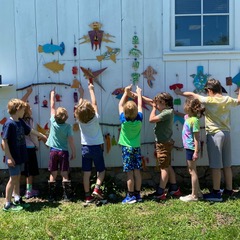
Makers Circle is a rural artist residency center in the Southern Appalachian region near Asheville, North Carolina, originally founded for photographers using traditional, alternative, and silver processes but now expanded to include painting, mixed-media, fiber-art, and other media. It offers individualized studio, retreat, and residency programs for makers at all skill levels, with flexible studios, darkrooms, a digital studio with large format printers, an extensive library, and art collection. Residencies are partially subsidized, with reduced fees of $295-$350 per week including a private room, and opportunities for community collaboration.
Explore United States
More city guides
Opportunity Intelligence
Ready to find your next residency?
Get a personalized shortlist — scored against your practice, discipline, and what you need right now.
See how Intelligence works →