
City Guide
Manaus, Brazil
How to plug into Manaus’ Amazon-frontier art scene, residencies, and field-based research opportunities
Why Manaus is compelling for residencies
Manaus sits where a dense Amazonian forest context meets a big, complex city. You get a metropolitan center with over two million people, plus direct access to rivers, forest, and Indigenous and riverine territories. For artists, this doesn’t translate into a classic white-cube circuit. It translates into fieldwork, interdisciplinary projects, and collaborations that cross into ecology, science, and social research.
If your work is moving toward environmental questions, more-than-human relations, or territory and memory, Manaus gives you a setting where those aren’t side themes but the main conversation. You’ll find:
- Immersive programs in forest and river environments
- Connections to researchers and local communities
- Historic architecture tied to the rubber boom and extractive history
- Current debates around deforestation, climate, and Indigenous rights
Most residencies here emphasize process: listening, observing, testing ideas, and collaborating in situ. Expect less of a solitary studio retreat and more of an intensive learning environment with other artists, researchers, and local partners.
Key residency programs in Manaus and the Amazon region
There are a few names that keep appearing when artists talk about residencies in and around Manaus. Some are in the city, some are a boat or car ride away, but Manaus is the main gateway for all of them.
LABVERDE: Art immersion in the Amazon
Website: labverde.com
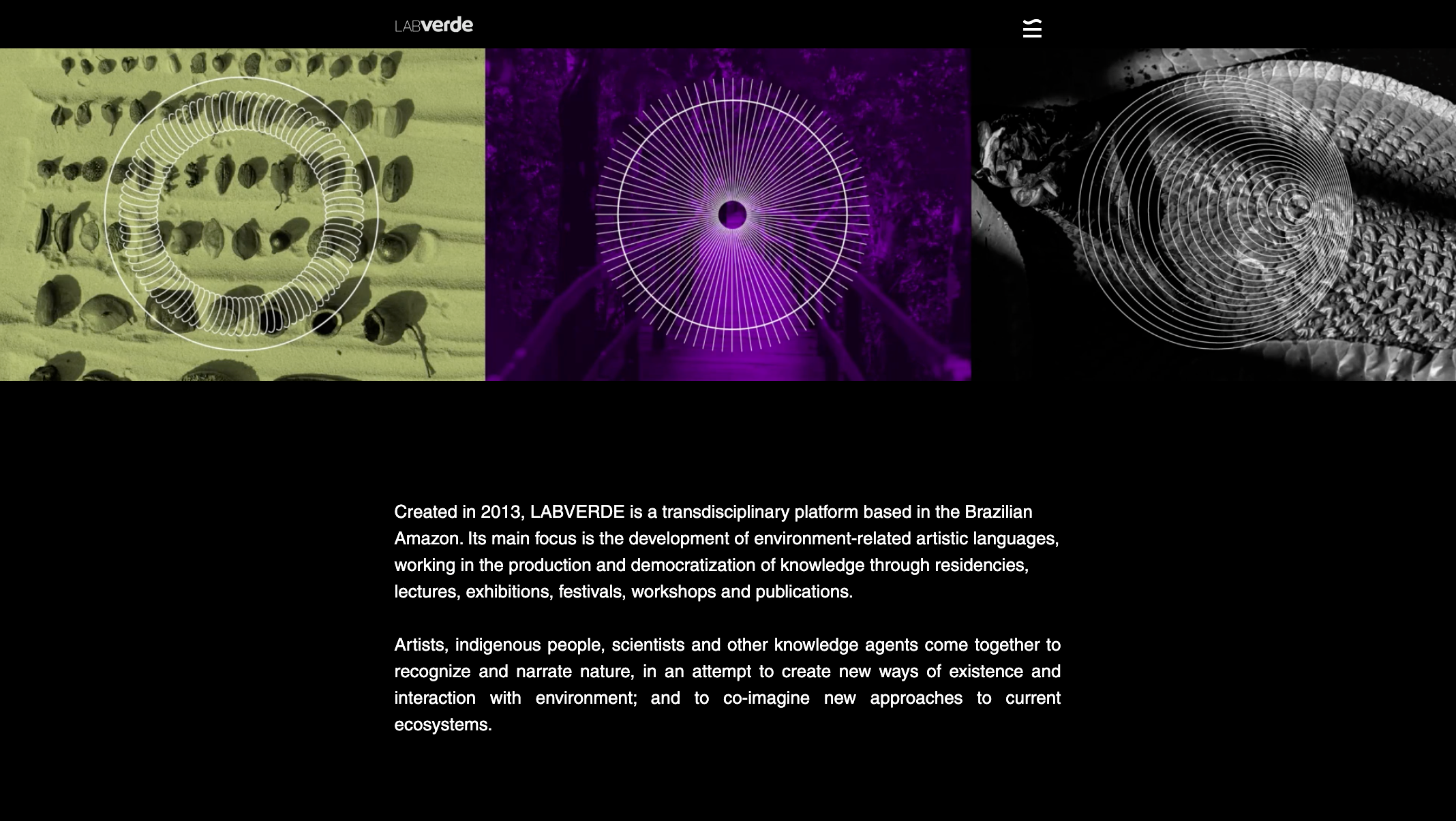
LABVERDE is often the first residency that comes up when people research art in the Amazon. It’s described as a transdisciplinary platform based in the Brazilian Amazon, focused on creating environment-related artistic languages. The program is typically short and intensive rather than a long-term studio stay.
You can expect a curated schedule built around:
- Seminars and talks with researchers, local experts, and guest artists
- Guided forest walks and river excursions
- Boat trips and work on and around the water
- Workshops, collective exercises, and field experiments
- Time set aside for your own recording, writing, or creative responses
Instead of a residential studio routine where you quietly work alone, LABVERDE tends to function like a moving field laboratory. Activities might happen in Manaus, in surrounding forest fragments, or in more remote sites accessible from the city. The emphasis is on immersion and exchange, not producing a finished body of work on a tight deadline.
Who this suits
- Artists interested in ecology, climate, biodiversity, and environmental justice
- Sound artists, writers, filmmakers, photographers, and performers working with landscape and research
- Artists who enjoy group dynamics, shared schedules, and being outdoors
- People comfortable adapting to heat, humidity, and basic field conditions
Practical tips
- Treat it as an immersion: prepare reading, questions, and open-ended project ideas, not a fixed script.
- Bring field-friendly gear: notebooks, waterproof bags, power banks, backups for audio and photo equipment.
- Clarify what the program covers in terms of accommodation, meals, and transport between Manaus and field sites.
Manifesta Art and Culture and the LABVERDE platform
LABVERDE is connected to Manifesta Art and Culture in Manaus, which supports art-and-ecology projects and partnerships with research institutions. Even if your main interest is LABVERDE, it helps to understand this wider platform, because it anchors the residency within a network of local collaborations.
What this ecosystem offers
- Bridges between contemporary art, scientific research, and environmental debate
- Connections to institutions such as the National Institute for Amazonian Research (INPA)
- Potential contacts with local curators, educators, and community projects
When you apply or participate, highlight how your work speaks to ecology, territory, and research. These programs tend to favor projects that contribute to long-term conversations rather than short, extractive visits.
Casa do Rio: Tupana and Careiro hubs
Website: casadorio.org.br
Casa do Rio is not in downtown Manaus, but it’s one of the most relevant regional residency and research models connected to the city. The project started when three artists moved to the banks of the Tupana River, about 170 km south of Manaus, and restored a riverside house as a hub for art, community, and ecology.
The initiative is now described as two interconnected hubs:
- Casa do Rio Careiro – an NGO structure focusing on education, agroecology, and artisanal practices
- Casa do Rio Tupana – the main site for artistic residency programs
Residents often move between the two, engaging with local communities, environmental practices, and territory-based research. Daily life is slow and deeply tied to the forest and river, encouraging you to rethink pace, productivity, and how you relate to more-than-human presences.
Typical activities
- Individual or collective creative processes tied to local context
- Field laboratories and river-based research
- Workshops, discussion circles, and exchanges with residents and local practitioners
- Projects grounded in reciprocity, care, and community engagement
- Studies on Amazonian cosmologies and ways of life
Who this suits
- Artists working with community-based or socially engaged practices
- Creators interested in agroecology, craft, and traditional knowledge
- Researchers intersecting art, ecology, anthropology, or decolonial studies
- People willing to live simply and respect local rhythms and responsibilities
Connection to Manaus
Manaus acts as your logistical entry point: flights, supplies, and usually the starting leg of the journey to Casa do Rio. Many artists combine time in Manaus (for institutional visits, archives, and city research) with a residency period on the river.
Related Amazon-focused art & science residencies
You’ll also see calls framed around Amazonian forests that may not be located directly in Manaus but relate to the same ecosystem and debates. One example is an Art & Science residency on Amazonian forests initiated by partners such as the Wyss Academy for Nature, Istituto Svizzero, and Swissnex in Brazil. These programs may unfold in places like Tambopata Province in Peru with later stages in Europe.
They matter for artists looking at Manaus because they outline a growing transnational network of Amazon-focused residencies. It’s becoming more common to see hybrid programs where you work in an Amazonian context first, then continue the project in a different city or country, bringing forest-based research into other institutional settings.
Reading Manaus as an art city
Manaus doesn’t function like Rio or São Paulo. The art market is smaller, and a lot of the most interesting work happens in collaborations between artists, scientists, educators, and community organizers.
Institutions and spaces to know
- Museu da Amazônia (MUSA) – A key point if your residency work intersects with ecology, botany, or environmental education. Part forest, part museum, it offers observation towers, trails, and curated public programs. Even if you’re based in the city, it’s worth aligning fieldwork here.
- Instituto Nacional de Pesquisas da Amazônia (INPA) – A major science institution, not an art space, but crucial if your project includes scientific collaboration. Many art-and-ecology projects in the region engage with researchers here.
- Teatro Amazonas – Iconic opera house from the rubber boom era, symbol of extractive wealth and cultural ambition. It’s important both as architecture and as a layered site for thinking about memory, coloniality, and spectacle.
- Palácio Rio Negro and Centro Cultural Palácio da Justiça – Heritage buildings used as cultural centers and exhibition spaces. Good places to see how art, history, and public programming connect.
- University art and humanities departments – Spaces linked to humanities and arts programs often host exhibitions, talks, and temporary labs that visiting artists can plug into.
The scene is often project-based: festivals, workshops, seminars, and independent initiatives that surface, run, then mutate into something new. When you come for a residency, the most useful thing you can do is ask your host to connect you with local groups working around territory, education, and culture rather than only chasing a gallery list.
What Manaus is great and not-so-great for
Great for:
- Field-based and site-specific research
- Environmental, ecological, and climate-oriented practices
- Sound, moving image, experimental documentary, and writing rooted in place
- Working with Indigenous and riverine perspectives (when done responsibly and with proper permissions)
- Collaborative, process-driven residencies
Less ideal if you need:
- Dense commercial gallery circuits and art fairs
- Frequent sales opportunities and a large collector base
- Highly polished white-cube exhibition infrastructure around every corner
Where to stay and work: neighborhoods and practicalities
If your residency doesn’t prescribe accommodation, it helps to understand the city layout. Manaus is spread out, and the heat and humidity can make long commutes tiring.
Neighborhoods artists often use as a base
- Centro – Historic center with older architecture, markets, and cultural buildings. Good daytime access to theatres, squares, and heritage sites. It can feel intense and patchy in terms of safety at night, so check local advice and housing reviews.
- Adrianópolis and Vieiralves – More upscale zones with apartment buildings, cafés, and restaurants. Convenient if you want everyday comforts and easier access to services. Usually more expensive than outer districts.
- Nossa Senhora das Graças and nearby central-west areas – Mixed residential and commercial neighborhoods that many visiting professionals use, balancing comfort and practicality.
- Ponta Negra – Riverfront area with newer developments and leisure spaces. Nice for walking and river views, but farther from some central cultural institutions.
If your residency has a strong field component, you might be in guesthouses, shared houses, or institutional accommodation closer to research sites instead of a classic city neighborhood. Always ask your host if staying near the residency site is more important than being near downtown.
Cost of living and budgeting
Manaus generally costs less than São Paulo or Rio, but there are some specific factors to budget for:
- Accommodation: Mid-range apartments or guesthouses can be reasonable, especially outside the most central or touristy areas. Residencies sometimes negotiate better rates with partner housing.
- Food: Eating at local restaurants and cooking with market produce is affordable. Imported products and specialty items can increase your daily spending.
- Transport: Ride-hailing apps and taxis are widely used and often more straightforward than navigating buses as a visitor. Field and river travel costs can add up, especially if you’re renting boats or organizing independent trips.
- Climate control: Air conditioning has a real impact on comfort and sometimes on cost. Confirm whether it’s included in your accommodation and factor energy surcharges into your budget if relevant.
For a self-funded residency or independent stay, it helps to budget a buffer specifically for last-minute river trips, extra equipment, and health-related costs (like medical supplies, mosquito repellent, and any vaccines or medications you choose to update in advance).
Working conditions, permissions, and ethics
Residencies around Manaus often intersect with Indigenous territories, protected areas, community land, and sites with complex histories. That makes ethics and permissions part of your practice, not an afterthought.
Permissions and research access
- If your work involves filming, recording, or photographing in protected or research areas, check what permits your host can secure.
- Projects involving Indigenous or riverine communities should be planned with local partners, including informed consent and clear communication about how the results will be shared.
- If you plan to publish, exhibit, or circulate material internationally, discuss that upfront with collaborators and communities.
Residencies like LABVERDE and Casa do Rio usually have frameworks and relationships already in place; use those structures and respect their pace, rather than trying to shortcut your own access.
Visas and formalities
Visa rules depend on your passport, and they change, so you always need to double-check current conditions. Many nationalities can stay in Brazil visa-free for short periods, which often covers shorter residencies. If your stay is longer, or if you are receiving a stipend or formal payment, clarify with the residency whether you need a specific visa type.
Ask your host for:
- An invitation letter outlining your residency dates and purpose
- Guidance on what previous residents have used in terms of visa category
- Any documentation needed for accessing field research sites or institutional libraries
Movement, timing, and seasonal rhythms
Forest-based residencies are heavily shaped by the climate and water levels. Manaus is hot and humid all year, but rain and river conditions shift the feel of the city and surrounding territories.
Climate cycles and your project
- Rainier months tend to mean more dramatic skies, fuller rivers, and incredibly lush vegetation. If your work thrives on water, sound, and atmosphere, this can be a powerful period.
- Drier months often bring more manageable logistics for longer hikes, outdoor installations, and equipment that doesn’t love constant moisture.
Residencies often time their programs to periods when it’s easier and safer to move groups in and out of forest and river sites. When you read their schedules, assume those dates are chosen with real environmental logistics in mind.
Transport and daily movement
- Arrival: You’ll fly into Eduardo Gomes International Airport (MAO). Residencies sometimes coordinate pickups; if not, ride-hailing apps are widely used.
- Within Manaus: Ride-hailing and taxis are usually the simplest. Public buses exist and are heavily used by locals, but can be less intuitive for visitors without local guidance.
- To field sites: This might involve private vans, pickups, boats, and organized transfers. Always clarify what’s included and what you’re expected to pay or arrange.
Plugging into local communities and staying connected after
The strongest experiences in Manaus and the Amazon often come through relationships, not just the residency structure. Give yourself time to talk to people, attend public events, and follow projects beyond your stay.
How to connect during your residency
- Ask your residency coordinator for introductions to local artists, curators, and educators working around territory and ecology.
- Look for public talks, open studios, and screenings linked to museums, universities, and cultural centers.
- Offer accessible presentations of your work-in-progress; many communities appreciate seeing how visiting artists are thinking through the Amazon, not just the final results later in another country.
Keeping the relationship alive
- Share documentation and publications with your hosts and local collaborators, ideally in Portuguese or with a summary they can use.
- Stay in touch with residency alumni networks; LABVERDE, Casa do Rio, and similar programs often have ongoing communities.
- When you exhibit or publish work that came from your residency, credit the residency, local partners, and communities clearly.
Quick shortlist to start your research
If you are just beginning to map out options related to Manaus and the Amazon, these are strong anchors:
- LABVERDE – Transdisciplinary art and ecology immersion based in and around Manaus, focused on environmental languages and research.
- Manifesta Art and Culture / LABVERDE platform – Manaus-based structure supporting art, science, and ecology projects, often in collaboration with research institutions.
- Casa do Rio (Tupana and Careiro) – River-based residency and NGO network south of Manaus, centered on community, agroecology, and territory-based art practices.
Treat Manaus less as a backdrop and more as a collaborator. The city, the river systems, and the forest will shape your process as much as any studio or gallery. If you choose a residency here, arrive with questions, openness, and a willingness to adjust your methods to what the territory asks of you.
Explore Brazil
More city guides
Opportunity Intelligence
Ready to find your next residency?
Get a personalized shortlist — scored against your practice, discipline, and what you need right now.
See how Intelligence works →