
City Guide
Lethbridge, Canada
How to plug into Lethbridge’s residencies, studios, and arts community as a visiting artist
Why base a residency in Lethbridge?
Lethbridge is a mid-sized city in southern Alberta with more arts infrastructure than you might expect for its scale. You get a serious art ecosystem without the big-city cost or noise. That balance is a big part of its appeal if you want time to work, access to facilities, and a community that actually shows up.
A few things you can expect:
- Lower costs than major centers like Vancouver or Toronto, especially for studios.
- Real institutional support through Casa, the Southern Alberta Art Gallery (SAAG), and the University of Lethbridge.
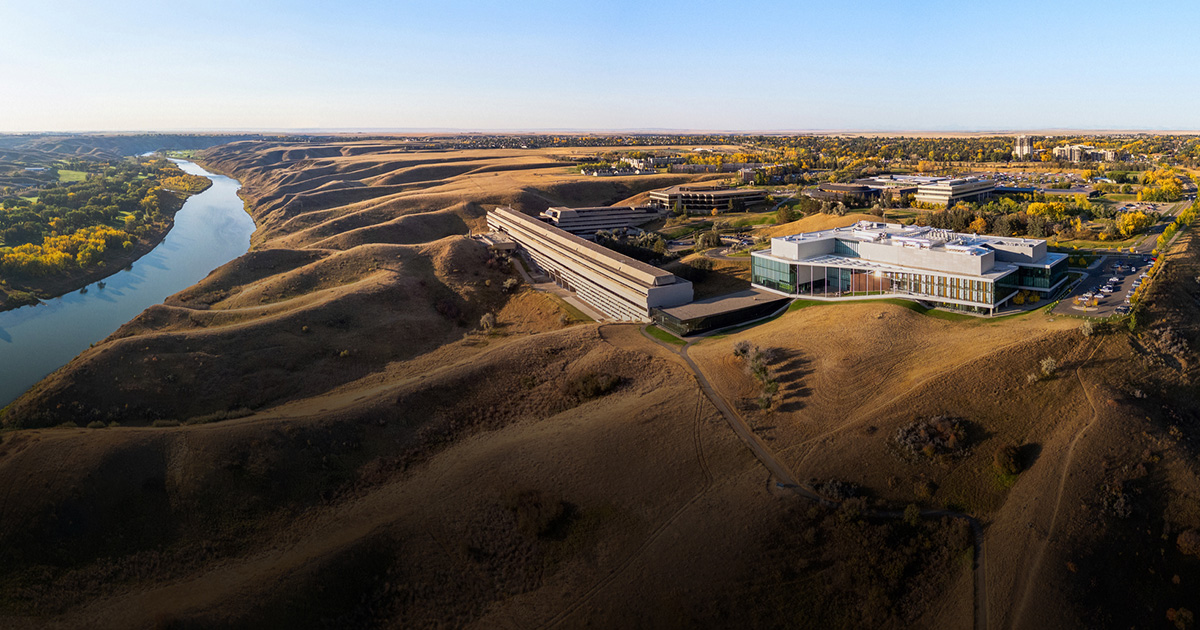
- Landscape that shifts quickly from coulees and river valley to open prairie, with the Crowsnest Pass and foothills within reach.
- Community engagement as a norm: artist talks, open studios, workshops, and approachable local audiences.
- Cross-disciplinary energy—visual artists, dancers, media artists, writers and scholars all circulate through the same spaces.
If you want a residency that feeds both your studio work and your sense of connection, Lethbridge is a strong candidate.
Casa AiR: The city’s central residency hub
Casa, run by the Allied Arts Council of Lethbridge, is the residency most artists mean when they talk about an “artist residency in Lethbridge.” It sits downtown and functions as a community arts center, exhibition space, and studio facility.
Who the Casa AiR suits
The Casa Artist in Residence (AiR) program is built for artists who want to work inside a public-facing, multidisciplinary space. It’s not a remote retreat; you’re embedded in a building that’s constantly used by community members.
Casa AiR works well if you are:
- Emerging or recently graduated and looking for a first or early residency experience.
- Mid-career or established and craving focused time with built-in community engagement.
- Cross-disciplinary—visual arts, media, dance, performance, installation, textiles, ceramics, and hybrids.
- Interested in teaching, workshops, or public-facing projects as part of your practice.
What Casa offers
While exact details can shift from year to year, the core of the Casa AiR generally includes:
- Free studio space during your residency period.
- Access to facilities such as 2D studios, printmaking support, 3D/woodworking, ceramics (wheels and kilns), textiles, and performance/dance space, depending on availability and fit.
- Technical support from staff, especially around using equipment and navigating the building.
- Community engagement options: artist talks, informal workshops, open houses, demonstrations.
- Visibility through Casa’s communications and the broader Allied Arts Council network.
Studio space being free is a rare gift; your main costs become living, travel, and materials.
Expectations and obligations
Casa AiR is not a residency where you hide out and never see anyone. The program typically expects you to:
- Be self-directed in your work, managing your own schedule and production.
- Run at least two public engagement activities (such as a talk, informal workshop, demo, or open studio).
- Donate a work created during the residency to support future programming (confirm current policy when applying).
That structure is ideal if you thrive on dialogue and like testing ideas with real audiences.
Costs and funding strategy at Casa
Casa provides space, but not living expenses. You typically cover:
- Accommodation in Lethbridge.
- Travel to and from the city.
- Per diems and materials.
The program encourages you to seek external funding. You can often request:
- Letters of support for grant applications.
- Documentation to back up your project plan and budget.
If you’re based in Canada, think about pairing Casa with municipal, provincial, or federal arts council funding. International artists should look at home-country grants that support research or international residencies.
Gushul Residency: The Lethbridge-linked retreat in the mountains
The Gushul Residency isn’t in Lethbridge itself, but it is deeply tied to the University of Lethbridge and SAAG, so it sits in the same artistic ecosystem. The studios are located in Blairmore, in Alberta’s Crowsnest Pass, surrounded by mountain and foothill terrain.
What Gushul actually is
The site is composed of two main buildings:
- Gushul Artist's Studio: a larger live/work space with abundant north light. It can accommodate two working artists and additional non-working occupants.
- Writer's Cottage: a one-bedroom, fully equipped building for one to two people, adjacent to the studio.
The property is a registered historic site with strong Ukrainian-Canadian heritage, which adds context for artists interested in place, migration, or local histories.
Who the Gushul Residency suits
The Gushul program is designed for artists and writers who want a quiet, concentrated residency with fewer formal community obligations than Casa. It’s aimed at:
- Professional artists and writers with an established or clearly developing practice.
- People looking for retreat-style focus: long writing projects, research-heavy work, or studio production that needs space and silence.
- Artists who want landscape and regional context—mountains, small-town rhythms, and southern Alberta’s layered histories.
How the Gushul Residency works
Key structural points from the University of Lethbridge program:
- Applications are accepted year-round for the Artist’s Studio and Writer’s Cottage.
- A Residency Program Committee made up of artists and scholars reviews proposals on a rolling basis.
- Assessment emphasizes professional experience, quality of work, and potential for a productive residency.
- You can apply for half-month or full-month stays, with corresponding rental fees.
Residents pay their own way:
- Travel, food, and materials are on you.
- Rental fees are charged for both the Artist’s Studio and the Writer’s Cottage, calculated per half-month or month and including GST.
Financially, Gushul is closer to renting a dedicated live/work property that happens to be wrapped in a curated residency structure.
SAAG’s Gushul connection and invited residencies
SAAG also uses the Gushul site as part of its exhibition program. Artists developing particularly ambitious or regionally focused exhibitions may be invited to do a month-long Gushul residency in connection with their show.
Those invited stays generally include:
- Accommodation and studio space for a month.
- Time to deepen research on southern Alberta, local histories, and the surrounding community.
This route is usually by invitation and tied to SAAG’s curatorial priorities, not an open call you can simply apply to, but it shows how Gushul links back to Lethbridge’s institutional scene.
Living and working in Lethbridge during a residency
Beyond the programs themselves, it helps to understand how life feels on the ground while you’re in residency.
Cost of living and budgeting
Lethbridge is generally more affordable than large Canadian cities, but you still need a realistic budget. Expect:
- Housing: cheaper than big-city rents, but short-term furnished housing can be pricier per month than a long-term lease.
- Food: comparable to other mid-sized Canadian cities. Groceries are manageable; dining out can add up depending on your habits.
- Transportation: minimal if you live and work downtown; higher if you’re in outer neighborhoods without a car.
- Studio and materials: Casa AiR studio space is free, which can offset costs if your work needs larger space or equipment.
For residencies that don’t include lodging, your biggest line items are usually travel, accommodation, and materials. If you’re applying for grants, build in shipping or local material purchases early.
Where to stay as a visiting artist
If you’re doing a residency in Lethbridge (especially at Casa), location matters. Popular areas for artists include:
- Downtown Lethbridge: closest to Casa and SAAG, most walkable, with cafes, restaurants, and some nightlife. Ideal if you don’t have a car.
- Central / South Lethbridge: generally practical for access to services, still reasonable for transit or biking to downtown.
- Near the University of Lethbridge: better if your project involves campus resources or academic collaborators.
- West Lethbridge: more residential and newer, which can mean quieter but less walkable to downtown arts facilities.
If your residency is at Gushul, you’ll be in Blairmore, not Lethbridge. Plan for a more self-contained life there: groceries, walking, and maybe a car if you want to explore beyond town.
Studios and facilities you can tap into
Casa is central to studio access in Lethbridge. Depending on your project and availability, you may access:
- 2D studios for painting, drawing, and mixed media.
- Printmaking facilities for certain types of print work.
- 3D and woodworking tools for fabrication.
- Ceramics studios with wheels and kilns.
- Textile spaces for fiber work.
- Dance / performance / blackbox-style spaces for movement research and small-scale performance.
Gushul, by contrast, offers more traditional live/work space. Think large, light-filled rooms and home-like working conditions, rather than a full fabrication lab.
Community, galleries, and how to plug in
You won’t be working in a vacuum unless you choose to. Lethbridge’s arts community is relatively tight-knit, and the main institutions are used to visiting artists cycling through.
Key art spaces and organizations
Names you’ll want to know:
- Casa and the Allied Arts Council of Lethbridge – the heart of community arts, residencies, workshops, and the Gallery at Casa.
- Southern Alberta Art Gallery (SAAG) – contemporary art exhibitions, often with ties to Gushul and broader regional context.
- University of Lethbridge Fine Arts – academic-linked galleries, visiting artist talks, and student/staff networks.
Between these, you can expect artist talks, open houses, workshops, panel discussions, and pop-up events.
How visiting artists typically engage
As a resident artist, you’re likely to be folded into:
- Artist talks about your practice or project.
- Open studio events where locals can see what you’re working on.
- Workshops or demos that align with your skills and interests.
- Informal gatherings and conversations with local artists, students, and community members.
This can be especially useful if your work benefits from testing ideas in public or you’re building relationships for future collaborations, exhibitions, or teaching.
Getting to and around Lethbridge
Transportation will shape your residency experience, especially if you’re carrying materials or planning site-specific work.
Arriving in Lethbridge
Artists typically arrive by:
- Car, especially if coming from elsewhere in Alberta or nearby provinces.
- Bus from larger hubs.
- Air + ground connection, flying into a larger nearby airport and then driving or taking ground transport to Lethbridge.
If you’re heading to the Gushul site, factor in additional travel from Lethbridge or your arrival city to Blairmore and the Crowsnest Pass region.
Getting around during your stay
Within Lethbridge:
- Public transit exists but is not as frequent or extensive as in larger cities.
- Walking and cycling are very workable if you live near downtown and your residency is at Casa.
- Rideshare/taxis can fill gaps but aren’t ideal for daily commuting from far-flung neighborhoods.
For Gushul, life is more walkable at the small-town scale, but a car gives you much more freedom to explore the region for research or fieldwork.
Visas, timing, and planning your residency arc
If you’re coming from outside Canada or juggling multiple commitments, there are a few more layers to think about.
Visa and entry considerations
If you are not a Canadian citizen or permanent resident, check:
- Whether you need an electronic travel authorization (eTA) or a visitor visa to enter Canada.
- How your residency activities are classified: unpaid artistic development often fits within visitor status, but teaching fees or other paid work can complicate things.
- What kind of documentation the residency can provide (letters of invitation, confirmation of acceptance, etc.).
Always confirm the current rules for your passport country before you commit to flights or shipments.
When to go and how to time your application
Seasonally, your project might fit better at certain times of year:
- Spring and summer: great for walking, cycling, site visits, and landscape-based work.
- Fall: strong for studio focus with reasonable weather and active programming.
- Winter: excellent for concentrated indoor work, but expect colder temperatures and potential weather-related travel issues.
Program timing:
- Casa AiR tends to operate on call-based intakes. Calls and application windows are posted through Casa and the Allied Arts Council. Plan your application around your project calendar and grant cycles.
- Gushul Residency accepts applications year-round, which makes it flexible if you need to align with teaching breaks, sabbatical plans, or long-term projects.
Which residency fits your practice?
If you’re choosing between a Lethbridge-based residency and Gushul—or thinking of pairing them—it helps to map them against your priorities.
Casa AiR fits you if you want:
- Community contact and regular foot traffic in your orbit.
- Technical facilities you can’t easily access at home.
- Public programming built into your residency (talks, workshops, open studio).
- A base inside the city with easy access to galleries, cafes, and services.
The Gushul Residency fits you if you want:
- Quiet, independent time with minimal obligation to engage publicly.
- A live/work space where you can immerse yourself in a project or text.
- Landscape and small-town context instead of a city.
- A retreat feel, with access to the broader Lethbridge arts network through institutional links rather than daily in-person contact.
Both options connect you to the same broader art ecology—Casa, SAAG, and the University of Lethbridge—just from different angles. If you’re planning a larger project, you can even imagine a sequence: a community-forward residency at Casa followed by a deep-focus stretch at Gushul, or vice versa, depending on your process.
Next steps
To move from research mode to planning mode, it helps to:
- Clarify your project needs: public engagement vs solitude, heavy facilities vs basic studio, city vs small town.
- Sketch a budget, including travel, accommodation, materials, and a buffer for unexpected costs.
- Check the latest residency details and calls on the Casa, Allied Arts Council, SAAG, and University of Lethbridge websites.
- Line up funding applications that match your timeline and residency choice.
If you treat Lethbridge as an ecosystem rather than a single program, you can shape a residency experience that matches your practice: studio time, community contact, landscape, and enough support to actually make the work you’re going there to make.
Residencies in Lethbridge

CASA
Lethbridge, Canada
The Artist in Residence (AiR) program at Casa in Lethbridge, Alberta, offers a supportive and community-based atmosphere for artists from various disciplines and experience levels, including recent undergraduates. The program includes workshops, installations, open houses, and artist talks, fostering community engagement and new perspectives. Artists are provided with space free of charge and are encouraged to seek funding for travel, lodging, and per diems from granting agencies. Casa assists with public engagement opportunities and supports successful candidates in their grant applications. The application deadlines are January 15 and June 15 each year, with residencies scheduled between June and December or January and June of the following year. Casa is managed by the Allied Arts Council of Lethbridge, a non-profit arts organization and registered charity.
Gushul Residency
Lethbridge, Canada
The Gushul Residency, owned by the University of Lethbridge and located in Blairmore, Alberta, provides private studio and living spaces in the Artist's Studio and Writer's Cottage for professional artists and writers amid the inspiring Crowsnest Pass landscape. Opened in 1988/1991 and managed by the Gushul Residency Program Committee, it hosts residents year-round on a competitive or rental basis, with durations typically from one to four months. Residents cover all fees, travel, and supplies, though select student prizes offer funded stays.
Explore Canada
More city guides
Opportunity Intelligence
Ready to find your next residency?
Get a personalized shortlist — scored against your practice, discipline, and what you need right now.
See how Intelligence works →