
City Guide
Le Mas-d'Azil, France
How to use Caza d’Oro and this small Ariège town as a serious working base
Why Le Mas-d’Azil is on artists’ radar
Le Mas-d’Azil is a small town in the Ariège region of southwestern France, but its arts presence is strong for its size. The main draw is Caza d’Oro, an international contemporary art center that anchors a modest but very real local scene. If you’re looking for a funded residency in a quiet rural setting, this town deserves a close look.
The area is known for the prehistoric Grotte du Mas-d’Azil, the surrounding Arize and Lèze valleys, and a cluster of artist and craft workshops scattered through nearby villages. That mix of landscape, archaeology, and contemporary practice makes the context quite specific: you’re not just dropped into countryside, you’re working inside a place with a long, layered history.
Why artists choose Le Mas-d’Azil
- Rural working conditions: You get time, space, and a slower rhythm, with fewer distractions than in big cities.
- Funded production: Caza d’Oro offers a stipend and production budget, making it a realistic option for artists who can’t self-fund months away.
- Contextual practice: The residency encourages engagement with the territory, local audiences, and social initiatives.
- Distinct character: Prehistoric sites, river valleys, and small-town life create a strong sense of place.
- Alternative to urban residencies: You can focus on research and production without feeling pressure to be “seen” daily by a big-city art crowd.
The local arts ecosystem is not dense like Paris, Marseille, or Toulouse, but if you’re looking for depth over quantity, Le Mas-d’Azil can work very well.
Caza d’Oro: the residency to know
Caza d’Oro is the reason most artists end up in Le Mas-d’Azil. It functions as both a contemporary art center and an artist residency, with a clear focus on artistic research, production, and public engagement.
Basic profile
- Location: Le Mas-d’Azil, Ariège, southwestern France
- Type: International contemporary art center and artist residency
- Disciplines: Visual arts, multidisciplinary, interdisciplinary, plus dedicated opportunities for art critics and writers
Official information is published via several sources, including their own website cazadoro.org and the French residency network Arts en Résidence.
What the residency offers
According to current published descriptions, the standard package at Caza d’Oro includes:
- Residency formats:
- Three-month residencies for visual artists
- A six-month residency for an art critic or writer
- Funding:
- Residency grant of about €1,200 per month as a living allowance
- A separate production budget of about €2,000 for materials and project costs
- Housing and studio:
- Furnished apartment of roughly 50 m²
- Dedicated studio space of about 50 m²
- Artistic and public program:
- Support for research and production
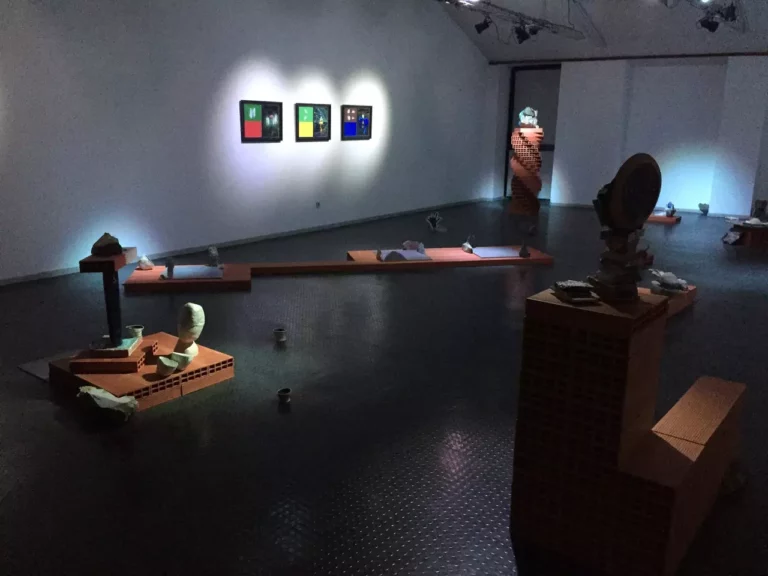
- Exhibition of work at the end of the residency
- Outreach and promotional activities linked to your project
- Opportunities for encounters with local audiences and the wider region
The center describes itself as an “intermediate space in a rural context,” which gives you a good sense of the balance: you’re not isolated in a cabin, but you’re not in a busy city center either.
What kind of work fits here
Caza d’Oro tends to suit artists who are comfortable working with context and slower processes. Good fits include:
- Research-based practices that benefit from fieldwork, archival work, or site-responsive thinking.
- Production-heavy projects that need funded time for making and testing.
- Artists interested in community contact — even if your work is not explicitly social practice, you should be open to dialogue with local audiences.
- Art critics and theorists wanting concentrated time with the support of an art center, rather than a literary-only residency.
- Mid-career and emerging artists who already manage their own projects and can work independently in a rural town.
If you need daily access to large fabrication workshops or a dense peer group on-site, this might feel small. If you want calm, support, and one serious institutional partner, it can be ideal.
Applications and planning
Some listings describe Caza d’Oro’s applications as open year-round. Always check directly with Caza d’Oro for the current application setup, as formats and calendars can change. You’ll usually find details on how many residents they host per year, criteria, and what they expect in terms of project proposals.
When planning your application, think through:
- How your project relates to place: the Ariège landscape, local history, rural context, or social dynamics.
- Scale of production: what can realistically be produced with the stipend, production budget, and local resources.
- Public outcome: how your work can translate into an exhibition and outreach activities that make sense locally.
The clearer you are about these points, the easier it is for the selection committee to understand why Le Mas-d’Azil is the right context for you.
Life as an artist in Le Mas-d’Azil
Le Mas-d’Azil is small, but that can work in your favor. Most of what you need as a resident is concentrated within walking distance if you’re based near the center, and the residency itself covers the big pieces (housing and studio).
Cost of living and day-to-day rhythm
Compared to major French cities, the cost of living in this part of Ariège is generally lower. Your largest expenses are often travel, materials, and any extra trips to larger cities. With Caza d’Oro’s stipend and housing included, many artists can manage the residency period without needing additional income.
Budget for:
- Groceries and small-town shops: Prices are often reasonable, but specialty items may require trips to bigger towns.
- Transport: Train or bus to reach the area, plus potential car rental or shared rides.
- Production costs beyond the grant: Oversized works, complex fabrication, or expensive materials might surpass the residency’s budget.
- Shipping: If you plan to send work in or out, build those costs into your project.
The rhythm is quiet and rural: less nightlife, more time to work, walk, and think. If your practice benefits from long, uninterrupted stretches in the studio, that rhythm is a gift.
Where artists tend to be based
Le Mas-d’Azil is compact enough that formal neighborhoods aren’t really the issue. What matters is proximity to:
- The town center (shops, services, casual encounters with locals)
- Caza d’Oro (your studio and main work site)
- Main roads leading to other Ariège towns and to Toulouse
During the residency you’re usually housed in the accommodation provided by Caza d’Oro. If you plan to extend your stay or bring collaborators, look at rentals:
- Within Le Mas-d’Azil town center
- Nearby villages in the Arize valley
- Other local communes like Carla-Bayle or Montégut-Plantaurel, depending on transport options
For extended off-residency stays, local tourism sites and regional rental platforms are useful starting points.
Studios, exhibition spaces, and local art contacts
The main professional-grade space you’ll interact with is Caza d’Oro itself, which combines:
- Studio space for residents
- Exhibition spaces for contemporary art
- Public programming and outreach activities
Outside of that, you’ll find a looser network of:
- Artist workshops and craft studios promoted by local tourism offices for the Arize and Lèze valleys
- Artisan and maker spaces where you can source materials, collaborate, or simply observe local techniques
If you’re proactive about meeting other makers in the area, you can build a small but solid local network during your stay. This is especially valuable for artists working with ceramics, traditional crafts, or material-specific research.
Getting there, visas, and timing
Because Le Mas-d’Azil is in rural southwestern France, transport and paperwork deserve early attention, especially if you’re traveling from outside Europe.
How to reach Le Mas-d’Azil
The closest major urban hub is Toulouse, which usually acts as the main gateway.
- International arrival: Fly or take the train into Toulouse.
- Regional leg: From Toulouse, continue into Ariège via regional train, bus, or car. Services may be limited, especially on weekends or holidays.
- Final stretch: Many artists choose car rental or arrange pickups for the last leg into Le Mas-d’Azil.
Public transport in rural Ariège can be infrequent. A car often makes life easier for supply runs, visiting nearby towns, or exploring the landscape for site-specific work. If you don’t drive, ask Caza d’Oro early on how they support resident mobility: pickups, shared rides, or advice on workable public transport routes.
Visa and paperwork
If you’re based in the EU/EEA/Switzerland, you typically won’t need a visa for a residency of this length. Artists from other regions should plan ahead.
- Short stays (around three months): Often covered by a short-stay Schengen visa, depending on your nationality.
- Longer stays (for the six-month critic residency): Usually require a long-stay visa and possibly additional documentation.
- Funding and contracts: Because the residency includes a grant and production support, some artists may need to clarify tax or contractual obligations in their home country.
When you apply or once you’re accepted, ask Caza d’Oro for:
- Official invitation letter
- Confirmation of accommodation and dates
- Breakdown of financial support (stipend and production budget)
These documents are often required for visa applications and can also help with external funding applications or institutional leave requests.
When to go, and when to apply
The town and surrounding landscape are especially appealing in spring and early autumn, when the weather is milder and there’s a good balance between activity and quiet. These periods can be ideal for fieldwork, walking-based practices, and photography or video that depends on outdoor conditions.
Since some sources mention that Caza d’Oro accepts applications year-round, aim to apply well in advance of your preferred residency period. This is particularly useful if:
- You need time to secure visas
- You plan to coordinate the residency with another exhibition or project
- You are applying for additional grants in your home country
Think of the residency not just as three or six months, but as a larger project arc: preparation before arrival, the concentrated production period, and dissemination or follow-up after you leave.
Local community, events, and how to engage
Caza d’Oro is not just a place that gives you a studio key and disappears. Its mission is tied to the town and region, which shapes what your residency can look like day-to-day.
Caza d’Oro’s community role
The institution aims to:
- Introduce contemporary creation to local audiences through exhibitions and events
- Encourage encounters between artists and residents across generations
- Connect artistic work with the identity of the territory, rather than treating it as an isolated bubble
As a resident, you can expect some combination of:
- Public presentations of your work-in-progress or completed projects
- Open studio moments or informal visits with local visitors
- Community-facing activities, depending on your practice and the residency’s needs
If you enjoy speaking about your work and adapting it to different audiences, you’ll probably find this aspect rewarding. If public engagement is less central to your practice, it’s still useful to think about how to present your research clearly and accessibly.
Wider creative ecosystem around Le Mas-d’Azil
The Arize and Lèze valleys host a spread of artist studios and craft workshops, often highlighted by regional tourism offices. That means you can tap into:
- Craft-based knowledge (ceramics, textiles, woodworking, and other artisanal practices)
- Informal studio visits and exchanges if you reach out
- Local materials and techniques that can feed into your project
Nearby villages such as Carla-Bayle are known for their artistic and craft activity, which can complement your residency at Caza d’Oro with day trips, networking, or collaborative experiments.
Who Le Mas-d’Azil works well for
Overall, Le Mas-d’Azil suits artists who want:
- A funded residency that covers housing, studio, and basic living costs
- A quiet, rural context with a strong sense of place
- Time for deep research and production, rather than fast exhibition turnover
- Connection to a local community, via exhibitions and outreach, rather than a purely internal studio retreat
- An institutional ally that actively supports contemporary practice in a small town
If you need the constant buzz of a big art city, Le Mas-d’Azil may feel remote. If you’re craving focus, supported production, and a way to tie your work to landscape and local context, it can be a powerful base.
Quick recap: key points about residencies in Le Mas-d’Azil
To keep it simple, here’s what to remember when you’re considering residencies in Le Mas-d’Azil:
- Caza d’Oro is the central residency and contemporary art center in town.
- It offers three-month residencies for visual artists and a six-month residency for an art critic.
- You receive around €1,200/month as a living allowance, plus about €2,000 in production support, along with housing and a studio.
- The context is rural but engaged: you work quietly but in relation to a real local community.
- Access is easiest via Toulouse, and local transport often benefits from having a car.
- For non-EU artists, visa planning needs to start early; ask the residency for the documents you’ll need.
- The surrounding Arize and Lèze valleys provide additional artist and craft contacts, plus a rich landscape for site-specific work.
If your next project needs time, funding, and a context where landscape, community, and contemporary art intersect, Le Mas-d’Azil is a strong candidate.
Explore France
More city guides
Opportunity Intelligence
Ready to find your next residency?
Get a personalized shortlist — scored against your practice, discipline, and what you need right now.
See how Intelligence works →