City Guide
Krems, Austria
How to use Krems, AIR Niederösterreich, and the Kunstmeile to actually move your work forward
Why Krems is on a lot of residency shortlists
Krems an der Donau is small, but it’s dense with culture. You get a UNESCO-listed Danube landscape, a historic city core, and a surprisingly concentrated arts infrastructure along the Kunstmeile. That combination makes it appealing if you want real studio time and institutional contact, without the distraction level of a big capital.
The city sits about 80 km from Vienna, which means you can do day trips for exhibitions, research, or meetings, then go back to a quieter base to work. Around the Kunstmeile you’ll find museums, galleries, architecture and literature institutions, and the main residency hub: AIR – Artist in Residence Niederösterreich.
If you’re choosing between urban overload and rural isolation, Krems sits right in the middle: walkable, calm, but plugged into serious institutions.
The main residency: AIR – Artist in Residence Niederösterreich
When artists say they’re going “to Krems” for a residency, they usually mean AIR – Artist in Residence Niederösterreich (often shortened to AIR Niederösterreich or AIR NÖ). It’s the core program in the city and shapes most of the local scene you’ll interact with.
Program profile
Type: Multidisciplinary, curated residency program
Disciplines: Visual arts, architecture, music, literature, culture, and digital media
Location: Kunstmeile Krems, between Krems old town and Stein, right by the Danube
The program has been running since around 2000 and invites up to roughly fifty fellows per year. Selection is handled with partner institutions and subject-specific advisors, so you’re stepping into a structured network rather than a random studio sublet.
What AIR actually offers
Here’s what you can expect as a selected artist, based on public info and partner listings:
- Residency length: Generally five-week sessions, with some descriptions mentioning one to three months depending on specific partnership agreements.
- Funding: A grant around the €1,950 mark for a five-week stay is commonly mentioned. Earlier materials sometimes list €1,300 per month or a similar monthly rate; amounts can vary by partner program or year, so always check the current call.
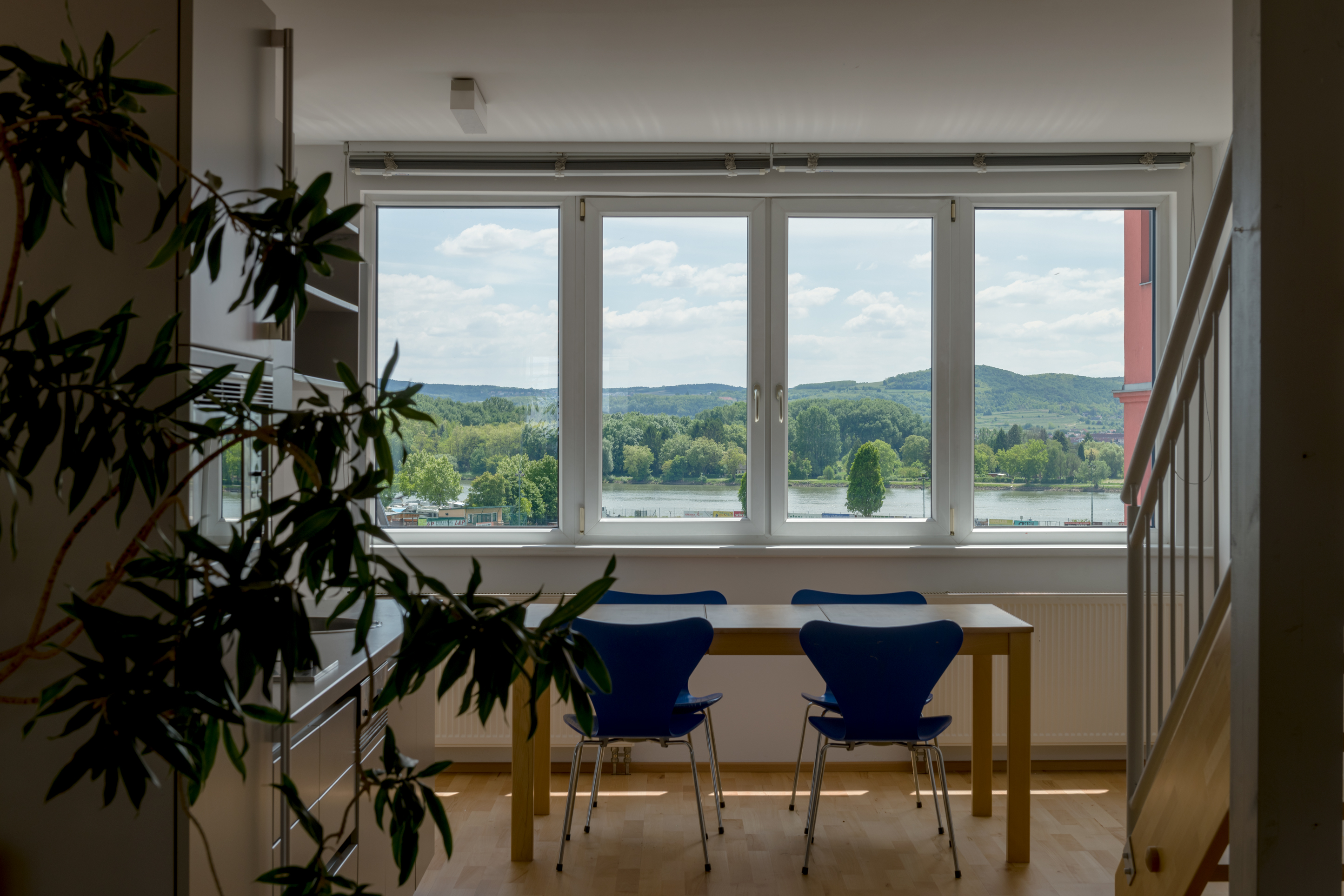
- Housing and studio: One of five fully equipped live-work apartments in the attic of a former carpet factory. You live where you work, with private kitchen, bathroom, sleeping and working space. Some units have terraces with Danube views.
- Shared infrastructure: A large communal space (often referred to as AIR Base), event rooms, a small library, and technical gear such as projectors, a sound system, and a piano. The setup supports readings, small shows, screenings, and concerts.
- Professional support: Curatorial assistance and ongoing staff support to help you develop and show work while you’re there. There is usually an orientation at the beginning of each session, plus coordination for public presentations.
- Public outcomes: Opportunities to present work through project presentations, exhibitions, concerts, readings, or workshops. These can be at AIR itself or in collaboration with nearby institutions.
What AIR does not cover
The grant and housing go far, but you still need to plan for:
- Travel costs: Getting yourself to and from Krems.
- Material costs: Production, printing, framing, props, instruments, and so on.
- Food and daily expenses: Groceries, occasional dining out, and local transport if you use it.
- Health insurance: A valid policy is required for your stay and usually must be documented before arrival.
Treat the grant as a strong subsidy, not a full production budget. If your project needs expensive materials, fabrication, or large-scale tech, plan to bring additional funding or simplify your approach to what’s available locally.
Who AIR suits best
In practice, AIR is a good fit if you:
- Enjoy cross-disciplinary conversation and are open to talking about your work with musicians, writers, and architects, not just other visual artists.
- Want a short, intensive period to focus and experiment rather than a long retreat.
- Are comfortable with public engagement: talks, readings, concerts, open studios, or exhibitions as part of your practice.
- Work in a way that benefits from institutional proximity – research, curatorial dialogue, or context-driven projects.
- Are happy in a structured program with set session dates and clear expectations, rather than an entirely self-directed, isolated retreat.
Exchange and partner residencies
AIR also runs exchange programs with partner institutions in Europe, the US, and Australia. For example, there is a long-running exchange with Nida Art Colony in Lithuania. In those cases, artists are selected on the partner’s side and then sent to Krems for a defined period, often five weeks with a stipend that includes or references travel coverage.
If you are based in Lower Austria, these exchanges are especially relevant because AIR also sends local artists abroad under comparable conditions. If you are based elsewhere, they’re mainly a sign that the program is integrated into a broader, reliable residency network.
The art ecosystem around Kunstmeile Krems
One of the main strengths of Krems is how tightly everything is clustered. AIR is literally built into the Kunstmeile, a cultural corridor along the Danube that connects Krems and Stein. For a small city, the density of institutions is high and directly accessible.
Key institutions you’ll likely interact with
- Kunsthalle Krems – A major venue for contemporary art exhibitions, often showing international and Austrian artists at a high production level. Useful if you want to see how work is contextualized regionally and internationally.
- State Gallery of Lower Austria (Landesgalerie Niederösterreich) – A central institution for regional and contemporary art, with exhibitions that often connect historical and current positions. It’s a good reference point if you want to understand how Lower Austria presents its art history.
- Karikaturmuseum Krems – Focused on caricature, comics, illustration, and satire. Strongly relevant if you work with drawing, graphic storytelling, or political imagery.
- Artothek Niederösterreich – An art lending and support structure that connects artists and local audiences. Interesting for understanding how art circulates in the region beyond museum contexts.
- Unabhängiges Literaturhaus NÖ – The independent literature house of Lower Austria. Important for writers, translators, and anyone working with text-based, performative, or spoken-word practices.
- ORTE Architekturnetzwerk Niederösterreich – An architecture network that organizes talks, exhibitions, and critical discourse around built space. Relevant if you work with spatial practice, city research, or site-specific projects.
- Galerie Stadtpark – A project partner of AIR that selects some visual arts fellows and organizes exhibitions. This is one of the venues where residency outcomes can occasionally appear.
Because the city is small, getting to these places is easy – you can walk between AIR, the major museums, and the river in a single afternoon. That proximity encourages spontaneous visits and informal meetings, which are often where future invitations and collaborations start to form.
What kind of scene Krems actually has
The local art life is driven more by institutions and residencies than by a large independent gallery or club scene. That makes it especially attractive for:
- Research-heavy, context-sensitive practices that need archives, curators, and focused time.
- Artists who want to produce work with public outcomes (exhibitions, readings, concerts) in dialogue with institutions.
- Cross-sector projects that sit between visual art, architecture, music, and literature.
If your ideal residency is a party-heavy, nightlife-based environment, Krems will feel quiet. If your priority is concentration and access to structured cultural resources, the city works well.
Living and working in Krems as a resident
Beyond the brochure language, the day-to-day details shape how productive your stay will be. Krems is manageable and calm; planning for logistics in advance keeps you focused on your work once you arrive.
Studio and housing conditions at AIR
AIR’s studios are built as live-work apartments. Typical features include:
- Private space: Your own apartment with kitchen, bathroom, living/bedroom and workspace. You’re not in a dorm; you have a door you can close.
- Basic equipment: Internet access, standard furniture, and access to shared technical gear such as projectors and sound equipment. The technical inventory can shift, so if you rely on specific kit, confirm in advance and consider bringing key items.
- Communal space: A large shared room used for informal gatherings, group presentations, and public events. This is where a lot of peer-to-peer exchange happens.
- Setting: The studios are in the attic of a converted factory along the Kunstmeile. The building and surroundings are industrial-historic rather than suburban; the Danube and river paths are close by.
Because this is a shared building, it’s good to assume some noise during events and presentations but generally a calm environment at night. The mix of private apartments and common space makes it easier to choose how social or quiet you want your day to be.
Cost of living and budgeting
Krems is usually cheaper than Vienna but not dramatically inexpensive. With accommodation covered and a grant in place, you can keep your monthly budget moderate, but it’s smart to plan for:
- Groceries: Supermarkets are within reach. Cooking at home will stretch your funds; eating out regularly will eat into the grant quickly.
- Materials: Basic art materials can be sourced locally or in Vienna. For more specialized or large-scale materials, plan a run to Vienna early in your stay.
- Transport: Local buses and walking cover most needs. If you plan frequent trips to Vienna, account for train costs.
- Extras: Museum entries, occasional concerts, and day trips along the Wachau (like visiting nearby towns) are worth budgeting for if you want to use the setting fully.
If your practice is light on materials (writing, sound, digital, drawing), the funding can go further. If you are producing large objects, installations, or analog prints, think of AIR as a base and try to arrive with some project support already secured.
Neighborhoods and daily rhythm
The areas that matter most to artists in Krems are compact:
- Kunstmeile corridor: Where AIR, major museums, and the Danube meet. This is your main daily zone.
- Krems old town: Cafés, small shops, and historic streets. Good for working sessions outside the studio or meeting curators and fellow residents.
- Stein: The historic district on the other side of the Kunstmeile, with old architecture and quiet streets along the river.
- Danube riverside: Walking and cycling paths ideal for clearing your head between work blocks.
The city is walkable, so you won’t be negotiating complex public transport. That simplicity helps you maintain a stable studio routine.
Practicalities: getting there, visas, and timing
Arrival and local transport
Most artists arrive via Vienna and then take the train to Krems. The trip is straightforward, usually under an hour from Vienna depending on the connection. Once in Krems, you can walk or take a short bus ride to the Kunstmeile.
Cycling is a good option if you like moving around under your own steam; the Danube route is flat and scenic. For everyday needs, walking is usually enough.
Visa and paperwork
Visa requirements depend on your passport and length of stay, but a few common points apply:
- EU/EEA/Swiss artists: Generally no visa issue for short residencies, but you still need to carry health insurance and any documents the residency asks for.
- Non-EU artists: Many will enter under Schengen short-stay rules for a five-week residency, but that varies by nationality. Check whether you need a Schengen visa and whether the stipend changes your visa category.
- Health insurance: AIR requires proof of valid health insurance for the entire residency period. Sort this out well before your departure.
Always confirm details with the Austrian embassy or consulate in your country and with the residency staff. They are used to helping artists with standard documentation questions.
When to be in Krems
AIR runs multiple sessions across the year. You’ll usually see open calls bundled for the following calendar year, with a defined application window. When you’re thinking about which period to aim for, consider:
- Spring and early autumn: Often the most balanced periods – good light, comfortable weather, and enough activity without heavy tourist crowds.
- Summer: Warmer, more visitors in the Wachau region, and a strong backdrop for public events and river activities. It can be livelier but also busier.
- Winter: Quieter and potentially ideal for deep studio focus. Outdoor exploration is less comfortable, but you get fewer distractions.
Think about your working habits: if you need long walks and sketching time outdoors, warmer months help. If you prefer full immersion in the studio, a quieter season may actually be an advantage.
Using Krems strategically in your practice
A residency city is more than just a studio address. Krems can be a strategic node in a wider practice if you approach it with a plan.
What Krems can unlock
- Institutional references: Having worked with or near institutions like Kunsthalle Krems or the State Gallery can strengthen your CV and open future conversations in German-speaking contexts.
- Cross-disciplinary collaborations: Sharing a corridor with writers, architects, and musicians makes it easier to test hybrid formats – sound walks, text-image publications, site-responsive installations.
- Access to Vienna: A short train ride connects you to larger galleries, artist-run spaces, and curators. Meeting someone in Vienna while based in Krems is much easier than trying to cold-email from another country.
- Research-intensive projects: If you work with history, architecture, or river and trade routes, the Danube and the historic city give you abundant material.
How to prepare before you apply
To make Krems work for you, prep a bit before applying or arriving:
- Align your proposal: Connect your project to what’s specific about Krems – the Danube, architecture, institutional ecosystem, or cross-disciplinary context. Selection panels respond well when your idea clearly uses what the residency offers.
- Map potential partners: Look at past exhibitions and events at Kunsthalle Krems, Galerie Stadtpark, the literature house, and architecture network. Note curators or programmers whose interests overlap with yours.
- Budget realistically: Sketch a simple budget that combines the AIR grant with your own funds or external support. Decide early what’s feasible to produce on site.
- Plan outreach: Once you are confirmed, consider contacting relevant curators or local organizations with a short, clear note about your project and dates. Keep it concise; you’re building a presence, not spamming.
Red flags and good fits
To keep expectations aligned:
- If you need heavy fabrication facilities (woodshops, metal shops, complex printmaking studios), Krems is not an industrial production residency. You’ll rely on local services or Vienna-based facilities.
- If you want a nightlife-driven community, Krems will likely feel quiet. The energy here is more daytime, institutional, and project-focused.
- If you value structured support, cross-disciplinary dialogue, and a calm working rhythm, Krems scores high.
Where to look next
To go deeper into Krems residencies and check current conditions, you can explore:
- AIR – Artist in Residence Niederösterreich on Kunstmeile Krems
- AIR Niederösterreich listing on Res Artis
- AIR information via Klangraum Krems
- Residency reviews for Krems on Reviewed by Artists
Reading through open call texts and artist reviews will give you a grounded sense of how the residency currently operates and how artists are actually using their time there. From there, you can decide if Krems fits the next step in your practice, or if it belongs a bit later in your residency path when you’re ready for a more institutional, networked setting.
Explore Austria
More city guides
Opportunity Intelligence
Ready to find your next residency?
Get a personalized shortlist — scored against your practice, discipline, and what you need right now.
See how Intelligence works →