City Guide
Kjerrengøy, Norway
How to use Kjerringøy’s Arctic landscape, residencies, and nearby Bodø as your temporary studio ecosystem.
Why Kjerringøy pulls artists north
Kjerringøy is not a city you move to for the gallery crawl. It is a coastal district north of Bodø in Northern Norway, where the landscape is the main event and the residency scene is built around it.
You go there to work with:
- Arctic coastal scenery – skerries, white beaches, sharp mountains, open sea, constantly shifting weather and light.
- Quiet – long stretches of time with very few distractions, ideal for deep work or long-form research.
- Ecology and land – residencies tend to prioritize site-specific, environmentally engaged practice using natural materials.
- Local culture – an old coastal trading landscape, small-scale fishing culture, and strong place identity.
- Access to a hub – Bodø is the nearby city with institutions, venues, and some production resources.
If your work thrives when the environment is an active collaborator rather than just a backdrop, Kjerringøy fits that brief.
Kjerringøy Land Art Biennale / K-Lab
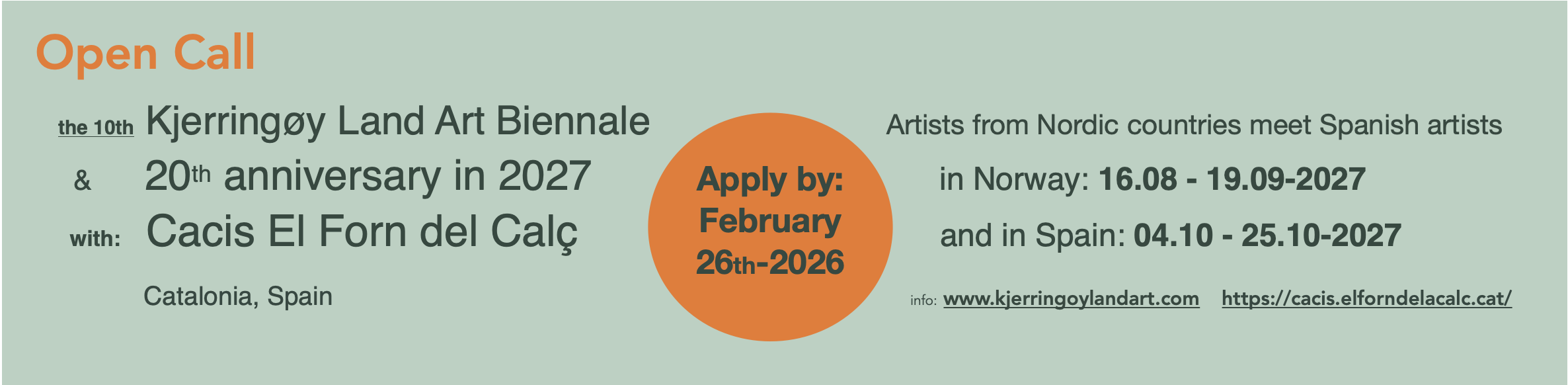
The main structured residency activity in Kjerringøy is connected to the Kjerringøy Land Art Biennale (K-Lab), an artist-run, international platform for land art and site-specific work.
What K-Lab actually is
K-Lab, run by Kjerringøy Land Art Biennale, operates as a hybrid between a biennale and an artist-in-residence program. It focuses on:
- Site-specific land art – works made in direct response to the terrain, light, tides, and local histories.
- Ecological thinking – natural and biodegradable materials, minimal impact, respect for land and inhabitants.
- Interdisciplinarity – visual artists, performers, architects, musicians and other practitioners can be involved.
- Public presence – artists are expected to share work through talks, presentations, or public encounters.
The Biennale has run in different formats, sometimes as multi-year projects where artists return for more than one residency period to develop and present work.
Format: longer arcs, not quick visits
Past K-Lab editions have invited selected professional artists for multi-phase stays, for example:
- First period – several weeks in early summer for research, testing materials, and starting site studies.
- Second period – a later return for additional weeks focused on building, fine-tuning, and presenting the work during the Biennale period.
Some cycles have run across two years, with development time in between the onsite sessions. That structure suits practice that grows slowly in dialogue with the place.
Support and working conditions
According to their open calls and partner listings, K-Lab typically offers:
- Travel covered – transport to and from Kjerringøy, usually via Bodø, is included.
- Accommodation – artists stay in simple, shared living facilities close to the landscape they work with.
- Artist fee – a paid fee for participation; some editions also include extra earning opportunities.
- Occasional workshop income – for example, payment to lead workshops or talks for schools or the public.
One documented setup used Kjerringøy Prestegård (the old vicarage) as the base:
- Studios in the main house, including access to tools like a ceramic kiln and graphic press.
- Bedrooms in outbuildings, shared kitchen, shared bathroom and laundry.
- Small cohort size (around three artists at a time) which makes the group dynamic very focused.
Expect a live/work situation where you have privacy to sleep, communal spaces to cook and talk, and immediate access to outdoors as your main studio.
Artistic expectations and constraints
With K-Lab, the land is not just a backdrop, it sets the rules. You are usually expected to:
- Use natural materials found on site or nearby.
- Work in ways that are mindful of ecosystems and local communities.
- Create works that integrate with the landscape or are temporary and allowed to decompose.
- Prepare a public presentation of your process or result.
So you are not shipping in industrial materials or building permanent monuments. The challenge is to create works that are strong conceptually but modest in physical footprint.
Who K-Lab is a good fit for
This residency-biennale hybrid suits artists who:
- Work with landscape, ecology, or geology as core material.
- Enjoy slow research, long walks, and sketchbooks as much as studio time.
- Are comfortable being outside a lot, even in rough weather.
- Like small, intense cohorts and peer dialogue rather than big-city art “scenes”.
- Are open to workshops with schools or local participants.
If your practice depends on complex fabrication shops, constant access to specialized gear, or large teams of assistants, you may need to radically adapt your methods.
AiR Kjerringøy and educational partnerships
Connected to the Biennale is AiR Kjerringøy, an artist-in-residence program that also reaches into educational contexts.
Residency plus education
AiR Kjerringøy has worked together with Kjerringøy Land Art Biennale and Kjerringøy Art Base Camp AS to build a residency structure that does two things:
- Hosts professional artists for focused work periods.
- Brings those artists into contact with local schools and students.
They have partnered with primary schools, high schools, and Nord University, offering workshops where artists share:
- Methods of working in and with nature.
- Use of hand tools and low-tech processes.
- Different ways of seeing familiar terrain.
For artists interested in pedagogy, this kind of structure lets you test project ideas with young participants and see how they respond to site-based work.
Accommodation and working setup
AiR Kjerringøy does not own permanent accommodation, so setups are flexible. One configuration used:
- A historic vicarage for shared studios and indoor work.
- Converted stables with separate bedrooms and shared kitchen/bathroom.
The scale is small and relatively informal. Expect a residency that feels much more like staying at a working base camp than at a dedicated, purpose-built centre.
Application style
AiR Kjerringøy and K-Lab issue open calls rather than taking applications year-round. Calls have appeared on:
- Their own website: kjerringoylandart.com
- TransArtists listings: transartists.org
- Mobility networks such as On the Move: on-the-move.org
Because the programming often follows multi-year cycles, it helps to watch for calls early and build projects that can stretch over time.
Using Bodø as your nearby city
Even if you are based in Kjerringøy for your residency, Bodø is your urban anchor. Think of it as your practical support system.
What Bodø offers you
- Transport hub – airport, trains, and ferries that connect you to Oslo and other parts of Norway.
- Art institutions – regional museums, galleries, and spaces where you can see work and meet curators.
- Supplies and services – hardware stores, general art supplies, electronics, printing.
- Cultural life – talks, concerts, and festivals that offset the solitude of Kjerringøy.
A practical rhythm many residency artists use: do intense outdoor and studio work in Kjerringøy, then schedule occasional trips to Bodø for materials, meetings, and a mental reset.
Practical realities: money, housing, and logistics
Cost of living
Norway is expensive, and remote Northern Norway can be even more so. Plan for high prices on:
- Groceries (especially imported items).
- Eating out and coffee.
- Alcohol.
- Specialty materials that cannot be found locally.
Funded residencies like K-Lab, which cover travel, accommodation, and offer an artist fee, remove much of the pressure. For self-funded time in the area, budget carefully and consider:
- Bringing specific tools or materials in your luggage if weight and customs allow.
- Planning works around materials you can collect on site.
- Cooking most meals rather than relying on restaurants.
Housing types you can expect
Residencies in Kjerringøy typically use existing local buildings rather than purpose-built centres. Expect combinations like:
- Historic houses with shared studios and private or semi-private rooms.
- Converted barns or stables for bedrooms, with common kitchen and bathroom.
- Close proximity to your outdoor working sites, usually within walking distance.
If you are the kind of artist who needs a strict separation between studio and home, factor that in. Here, the line between “home”, “studio”, and “land” is intentionally blurred.
Working conditions and weather
Conditions shift fast near the Arctic Circle. For outdoor and land-based work, you will deal with:
- Rapid weather changes – wind, rain, bright sun in the same day.
- Long days in summer – extended daylight that can stretch your working hours.
- Cool temperatures – even in summer, you will need layers.
Think work clothes, waterproof layers, sturdy footwear, and backup plans for indoor work when the weather turns.
Getting to Kjerringøy and moving around
Typical route
The basic path looks like this:
- Fly or travel by train to Bodø.
- Go on by road toward Kjerringøy – often a combination of bus/car and a short ferry, depending on your exact destination.
Residency organizers usually send detailed instructions and may coordinate pickups, especially on arrival days when several artists come at once.
Transport for materials and works
If you plan to work on larger pieces or need tools, plan ahead:
- Check what kinds of tools and equipment the residency already has (hand tools, presses, kilns).
- Use local materials wherever possible to avoid freight issues.
- If you must ship items, discuss timing and customs with the organizers.
In remote contexts, transport can quickly become the most stressful and expensive part of a project, so designing the art to fit the place and its logistics is often the smartest move.
Visas and paperwork
Schengen basics
Norway is part of the Schengen Area. Your visa situation depends on your citizenship and the length/type of stay:
- EU/EEA/Swiss citizens generally do not need a visa for residency stays, though longer stays may require registration.
- Non-EU artists may need a Schengen visa for short projects, or a residence/work permit for longer or paid residencies.
Funding and public presentations can affect how your stay is classified, so always check current rules with official sources.
What to ask the host for
To support visa applications or border crossings, ask your residency host to provide:
- A formal invitation letter.
- Exact dates of the residency.
- A clear description of what support you receive (accommodation, fee, travel).
- Confirmation of the location and contact details.
Keep digital and printed copies with your travel documents.
Seasons and timing
When it’s most productive to be there
Many Kjerringøy residencies cluster around late spring and summer. For artists, those months bring:
- Extended daylight for long work sessions.
- Relatively stable access to outdoor sites.
- Better chances to interact with locals and visitors.
Outside of that window, Kjerringøy becomes more rugged and quiet. That can be powerful for drawing, writing, or reflection, but tougher for producing physical land works.
Timing your applications
For project-based programs like K-Lab, the call often precedes the main activity by a long stretch. Build in time to:
- Develop a site-responsive project proposal that shows you understand the constraints.
- Research similar works done in earlier Biennales so you are not repeating familiar gestures.
- Prepare a portfolio that foregrounds outdoor, ecological, or community-engaged work if you have it.
Local art community and broader networks
Kjerringøy’s micro-community
In Kjerringøy, you are working within a small, changing group made up of:
- Residency artists and Biennale participants.
- Local collaborators and guides.
- Students and young participants during workshops.
There is no dense gallery district, but there is a clear community of people used to hosting artists and supporting site-based practices.
Connecting beyond Kjerringøy
Your stay there slots into a wider Norwegian residency environment. Related or comparable contexts include:
- The Arctic Hideaway in Fleinvær – self-directed, quiet, architecture-forward stays in another coastal setting: thearctichideaway.com
- Nordic Artists’ Centre Dale – a more structured centre with dedicated studios and housing: nkdale.no
- Other Norwegian residencies listed on portals such as artistinresidence.no.
Using Kjerringøy as one stop in a wider residency itinerary can help you build on research and keep relationships growing inside Norway.
Is Kjerringøy right for your practice?
Artists who usually thrive there
You are likely to get a lot out of Kjerringøy if you:
- Work with landscape, ecology, or site-specific installation.
- Enjoy remote, quiet contexts where there is not a lot of competing noise.
- Like to build work with limited, simple means.
- Have a practice that can incorporate public sharing and interaction with local communities.
Artists who might struggle
The fit can be more challenging if you:
- Need constant access to urban infrastructure, galleries, and openings.
- Rely heavily on high-tech fabrication or specialized equipment that cannot be brought in.
- Are uncomfortable with extended periods of solitude or small-group dynamics.
Kjerringøy is less about building a career through a busy scene and more about deepening your practice through place, time, and careful attention.
Quick recap for planning
- Main residency anchor: Kjerringøy Land Art Biennale / K-Lab and related AiR Kjerringøy programs.
- Focus: land art, ecology, site-specific works, natural materials, public presence.
- Support: travel and accommodation covered, artist fee, sometimes workshop income.
- Working mode: small cohorts, shared housing, historic buildings as studios, landscape as primary workspace.
- Nearby hub: Bodø for transport, supplies, and wider cultural life.
- Key preparation: weather-appropriate gear, clear project idea that respects the land, and realistic expectations around remoteness and cost.
If you want a residency where each walk outside is part of the work and the site pushes you to rethink materials and time, Kjerringøy deserves a serious place on your list.