City Guide
Kjerrengøy, Norway
How to work, live, and make site-specific projects on this small Arctic coast north of Bodø
Why Kjerringøy is interesting for artists
Kjerringøy is tiny, remote, and radically shaped by weather and light. You’re not going for a gallery district or nightlife; you’re going for time, attention, and a very specific relationship to landscape.
The area sits north of Bodø, above the Arctic Circle, with sea, islands, mountains, old farms, and changing skies doing most of the talking. For many artists, the draw is:
- Place-based inspiration – dramatic coastline, fjords, fields, and traditional buildings all within walking distance.
- Strong sense of context – a living coastal community plus the historic Kjerringøy Old Trading Post (Handelssted) as a cultural anchor.
- Headspace – enough distance from day-to-day life to rethink a project or start a new body of work.
- Space for site-specific work – especially land art, environmental art, performance in landscape, and temporary interventions.
Think of Kjerringøy less as a city and more as an extended outdoor studio with a few key buildings, some dedicated art infrastructure, and a strong connection to Bodø and Nordland’s broader art networks.
K-Lab & Kjerringøy Land Art Biennale: the core residency
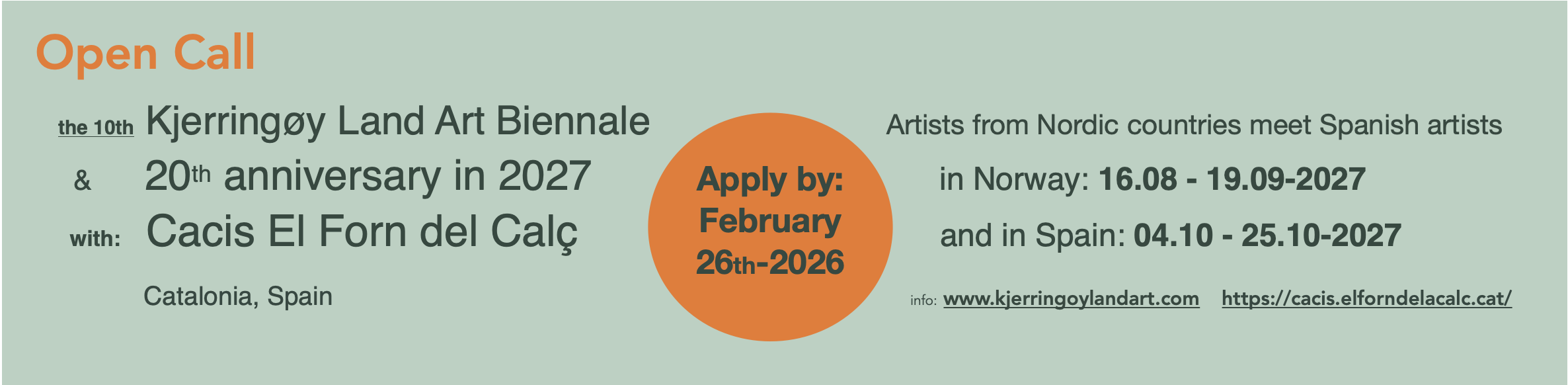
The main structured residency that actually anchors artists in Kjerringøy is the program around the Kjerringøy Land Art Biennale and K-Lab.
What K-Lab is
K-Lab is an artist-run, international and interdisciplinary platform for site-specific work in and with the landscape. It has been running for years and periodically hosts a focused residency tied to a biennale edition.
For one of its recent multi-year editions, K-Lab invited professional artists to Kjerringøy for two working periods, with the aim to create land art projects for public presentation. That structure gives a good sense of how the residency side functions, even if details change from edition to edition.
How the residency is structured
The K-Lab residency model generally includes:
- Two longer onsite stays – for example, around 2 x 5 weeks, spaced about a year apart.
- Artist fee – the program has explicitly stated that an artist fee is included.
- Travel covered – travel to and from Kjerringøy is paid for.
- Accommodation covered – artists stay in housing arranged by the organizers.
- Workshops – focused on local materials and traditional crafts.
- Public presentation – each artist is expected to prepare a talk or similar public sharing of their process.
It is not a vacation-type retreat; it is a production residency with clear expectations that you will engage with the landscape and community and deliver a site-specific work by the end of the cycle.
Where you live and work
In one edition, K-Lab based the residency at Kjerringøy Prestegård (the old vicarage), turning it into a mixed living/working venue. The rough layout:
- Studios in the main house – high rooms, shared but workable for many practices: drawing, small sculpture, mixed media, research, planning.
- Sleeping in the barn/stables – separate bedrooms in a furnished barn, with shared kitchen and bathroom.
- Outdoor workspace – access to surrounding fields, shoreline, and paths, plus selected outdoor project sites around Kjerringøy.
The organizers have talked about aiming for larger studio spaces and their own dedicated housing in future, so expect some evolution. But the core idea remains: a small group living and working together, with easy access to nature and a simple, functional home base.
What kind of practice fits K-Lab
K-Lab is tuned for work that actually needs the site:
- Land art and environmental art – works that use natural materials, respond to erosion, tides, and seasons, or are meant to decompose gradually.
- Performance and time-based work – performative actions in landscape, document-based work, sound projects tied to local acoustics.
- Interdisciplinary practices – architects, performers, and hybrid practitioners who enjoy thinking between fields.
- Research-led projects – ecology, climate, local craft, resource use, rural economies, or heritage narratives.
Past calls emphasized projects using only natural materials found onsite or locally, with no artificial materials, and a respectful relationship to the place and its inhabitants. If your practice relies heavily on electronics, synthetic materials, or intensive fabrication, you’ll need to think about how to adapt or split your production between home and Kjerringøy.
Selection and group size
K-Lab typically targets professional artists and related practitioners (such as architects and performers). The group size has been around 6–8 artists, which keeps the dynamic intimate: enough peers for exchange, not so many that you disappear in a crowd.
You can expect:
- A curated mix of disciplines and nationalities.
- Shared workshops in local crafts and materials.
- Overlap periods where the whole group is present at once, creating an intense, communal phase.
AiR Kjerringøy & educational links
Alongside K-Lab, there is the broader AiR Kjerringøy concept, which ties residency artists to educational work and local community engagement.
AiR Kjerringøy as an artist-in-residence framework
AiR Kjerringøy is described as an artist-in-residence program that connects visiting artists with teaching and workshops for students in primary and high schools, and sometimes Nord University. The idea is to bring artists working in and with nature into direct contact with young people in the region.
That means if you are in Kjerringøy as a resident connected to this program, you might be involved in:
- Leading short workshops outdoors using hand tools and natural materials.
- Showing how you approach site-specific work in a simple, accessible way.
- Helping build a culture of creative engagement with local landscape.
For artists who care about pedagogy, social practice, or intergenerational knowledge sharing, this is a strong plus. If you prefer a residency with no outreach, you’ll want to clarify expectations with organizers.
Artist-run structure and support
Kjerringøy’s programs are artist-run. That is good news if you value:
- Direct conversation with those making curatorial and logistic decisions.
- A flexible, responsive attitude to projects and needs.
- Peers who understand the realities of production on a small budget.
The flip side is that things can change from edition to edition as funding and logistics shift. It helps to be adaptable, communicate early, and confirm details in writing before you travel.
Nearby residencies artists often pair with Kjerringøy
Artists considering Kjerringøy often also look at other northern residencies in Norway. These aren’t in Kjerringøy itself, but useful to understand as you plan a longer Arctic-focused period.
The Arctic Hideaway (Fleinvær)
The Arctic Hideaway hosts artists for self-directed residencies on the tiny island cluster of Fleinvær, not far from Bodø. It’s more retreat-style than project-driven.
Typical setup:
- Year-round hosting, usually two weeks or more to settle into your process.
- Private sleeping cabins with workspace and wifi.
- Access to a communal studio, a traditional njalla, kitchen house, and sauna.
- You set your own schedule and level of social contact.
This is good to pair with Kjerringøy if you want one period of structured, public-facing land art (K-Lab) and one period of quiet, self-funded, self-directed development.
Other northern references
Beyond Fleinvær, there are other Arctic or sub-Arctic residencies across Norway that artists sometimes use as reference points or stepping stones. You’ll see different models: extreme isolation field stations, urban studio residencies, or hybrid setups tied to universities or arts councils. Use them as comparison pieces for funding levels, studio standards, and how much public engagement is expected.
How Kjerringøy feels to work in
Because Kjerringøy is so small, it helps to imagine your everyday life rather than thinking in city “districts.” Most of your radius will be a mix of:
- The residency base – often the vicarage or a similar cluster of buildings with bedrooms, shared kitchen, and studio spaces.
- Project sites – selected coastal spots, fields, paths, or forest edges where land art and installations are developed.
- Heritage context – the historic Kjerringøy Trading Post and older farm structures around, which shape how the place reads culturally.
- Harbour and shoreline – for sea-oriented work, interviews with locals, and sensory research.
If you need regular gallery time, supplies, or a larger art community, Bodø is your reference city: exhibitions, artist-run spaces, and shops are there, not in Kjerringøy.
Studios, materials, and production realities
For studio-based work, you can expect something like:
- Shared studios – in the main residency building, with enough space for drawing, planning, and small-scale making.
- Simple facilities – possibly access to things like a ceramic kiln or graphic press on specific programs, but not a full fabrication lab.
- Outdoor work as extension of the studio – much of your time may be spent outside site-testing, gathering materials, or building with natural elements.
Most site-specific projects in Kjerringøy use:
- Stone, driftwood, sand, and seaweed.
- Grasses, branches, and other plant matter.
- Snow and ice, depending on season.
- Simple hand tools and low-tech joinery.
If your work demands heavy power tools, advanced digital fabrication, or large quantities of imported materials, you’ll need to plan carefully and possibly split your production between home and Kjerringøy. Many artists treat Kjerringøy as a place for research, prototypes, and temporary gestures rather than final heavy objects.
Money, visas, and practical living
Cost of living and funding
Norway is expensive, and remote areas can be even more so because of transport and supply costs. This makes funded residencies like K-Lab especially attractive when they:
- Pay for travel to Kjerringøy.
- Cover accommodation.
- Include an artist fee and sometimes additional earnings from workshops or talks.
Not all residencies in the region are funded to that level, so compare carefully. Self-directed stays at places like The Arctic Hideaway are usually self-funded, and you’ll need a budget for food, travel, and any added materials.
Visa basics
Norway follows Schengen rules. The key variables for you are:
- Your nationality.
- The length of stay across all Schengen countries.
- Whether the residency includes a fee or is considered work.
What you can do to stay out of trouble:
- Ask the residency for an official invitation letter.
- Check the Norwegian Directorate of Immigration (UDI) for your specific situation.
- Factor in any other Schengen travel you have planned in the same period.
Do not assume that a funded residency automatically fits under “tourism,” especially if you’re staying for several weeks and receiving a fee.
Getting there and getting around
Your path usually looks like:
- Fly to Bodø.
- Use local transport (bus, car, ferry, or a combination) to reach Kjerringøy.
Travel tips:
- A car is very helpful if your residency doesn’t provide one and you plan to work at multiple sites or source materials widely.
- Weather can impact ferries and roads; build in time buffer around your arrival and departure.
- Shops and services are limited; plan for grocery runs and materials orders in advance.
Seasons, light, and project planning
Kjerringøy’s seasons shape your work as much as any residency schedule.
Spring and summer
Expect long days, sometimes close to continuous light. This is ideal if you:
- Need extended outdoor time for building and documentation.
- Want to explore multiple sites on foot.
- Prefer mild temperatures and more stable travel conditions.
Residency programs tied to biennales often use this period for production and public events, simply because it’s easier to bring people out to see the work.
Autumn
Autumn brings more contrast: shifting light, weather fronts, and a quieter atmosphere. Good for:
- Conceptual work, writing, and drawing informed by the environment.
- Projects that respond to decay, change, and transitional states.
- Photography and video that need drama and mood.
Winter
Winter is for those who are actively seeking darkness, storm, and constraint. You’ll get:
- Short days or polar night, depending on timing.
- Snow, ice, and harsh weather that limit movement but open new aesthetic possibilities.
- A strong sense of isolation that can push endurance and contemplative projects.
If you choose winter, prepare properly: clothing, backup plans for outdoor work, and a project concept that can thrive under indoor or semi-indoor constraints if needed.
Community, presentations, and networks
Kjerringøy’s art “community” is more a set of relationships than a formal scene. You’ll likely engage with:
- Other resident artists and organizers.
- Local residents curious about what you’re doing.
- Schools and students, if your residency includes workshops.
- Regional arts contacts through Bodø and Nordland networks.
K-Lab and AiR Kjerringøy emphasize public engagement through:
- Public presentations of your work-in-progress or final projects.
- Talks, artist talks, or open conversations.
- Workshops focused on local crafts and materials.
If you want to extend your reach, consider planning a talk or show in Bodø during or just after your residency, using the Kjerringøy period as a production phase.
Is Kjerringøy the right fit for you?
Kjerringøy usually suits artists who want:
- Landscape, weather, and light as active collaborators.
- Time away from heavy social or institutional demands.
- Site-specific, environmental, or research-based practice.
- Small-group living and meaningful, structured engagement with place.
It’s less suited if you need:
- Daily access to multiple galleries and museums.
- Drop-in visits from curators and collectors.
- Large, fully equipped studios for industrial-scale production.
- A big-city social life between studio sessions.
If you’re drawn to working in and with a specific landscape, comfortable with some logistical complexity, and open to public engagement, Kjerringøy can be a powerful place to build a project. Use K-Lab and AiR Kjerringøy as your anchors, and then decide whether to pair them with something like The Arctic Hideaway or another northern residency for a longer, layered stay in coastal Norway.
Explore Norway
More city guides
Opportunity Intelligence
Ready to find your next residency?
Get a personalized shortlist — scored against your practice, discipline, and what you need right now.
See how Intelligence works →