City Guide
Kamburugamuwa, Sri Lanka
How to use Kamburugamuwa as a focused, coastal base for your residency or long work block
Why Kamburugamuwa works as an artist base
Kamburugamuwa is a small coastal village on Sri Lanka’s south coast, tucked between Matara and Mirissa. You get the calmer pace of a residential village with quick access to surf towns, beaches, and transport hubs. For artists, the draw is less about a packed gallery circuit and more about having a stable, grounded place to work.
The main reasons artists choose Kamburugamuwa:
- Quiet, self-directed focus – Not a big-city distraction zone; good for long-form projects.
- Coastal landscape – Daily access to the sea, changing light, and sound for photography, sound, writing, and drawing.
- Proximity to Mirissa, Madiha, and Matara – You can duck into livelier areas and still go home to a quiet base.
- Longer-stay setups – The area suits artists who want a home-like environment over a tightly programmed residency.
If you’re looking to finish a manuscript, build a body of work, or do field-based research in southern Sri Lanka, Kamburugamuwa functions more as your anchor point than your exhibition stage.
Daro’s Enclave: the key residency in Kamburugamuwa
The anchor residency in Kamburugamuwa right now is Daro’s Enclave, a self-directed program based in a private ancestral home.
Core details
Location: 229/A, Egodawaththa, Kamburugamuwa 81750, Sri Lanka
Residency type: Self-directed, independent residency in a private family villa
Typical length: Around 1–6 months
Disciplines: Open to researchers, writers, visual artists, interdisciplinary practitioners, and independent professionals
Official listings describe Daro’s Enclave as a recently renovated ancestral villa set on about 60 perches of land (roughly 1,500 m²+). It’s close enough to the beach that you can walk there in minutes, yet set back enough to feel residential rather than touristy.
Space, facilities, and working conditions
The house set-up is important here, because this is not a multi-studio complex; it is a comfortable base you adapt into your studio.
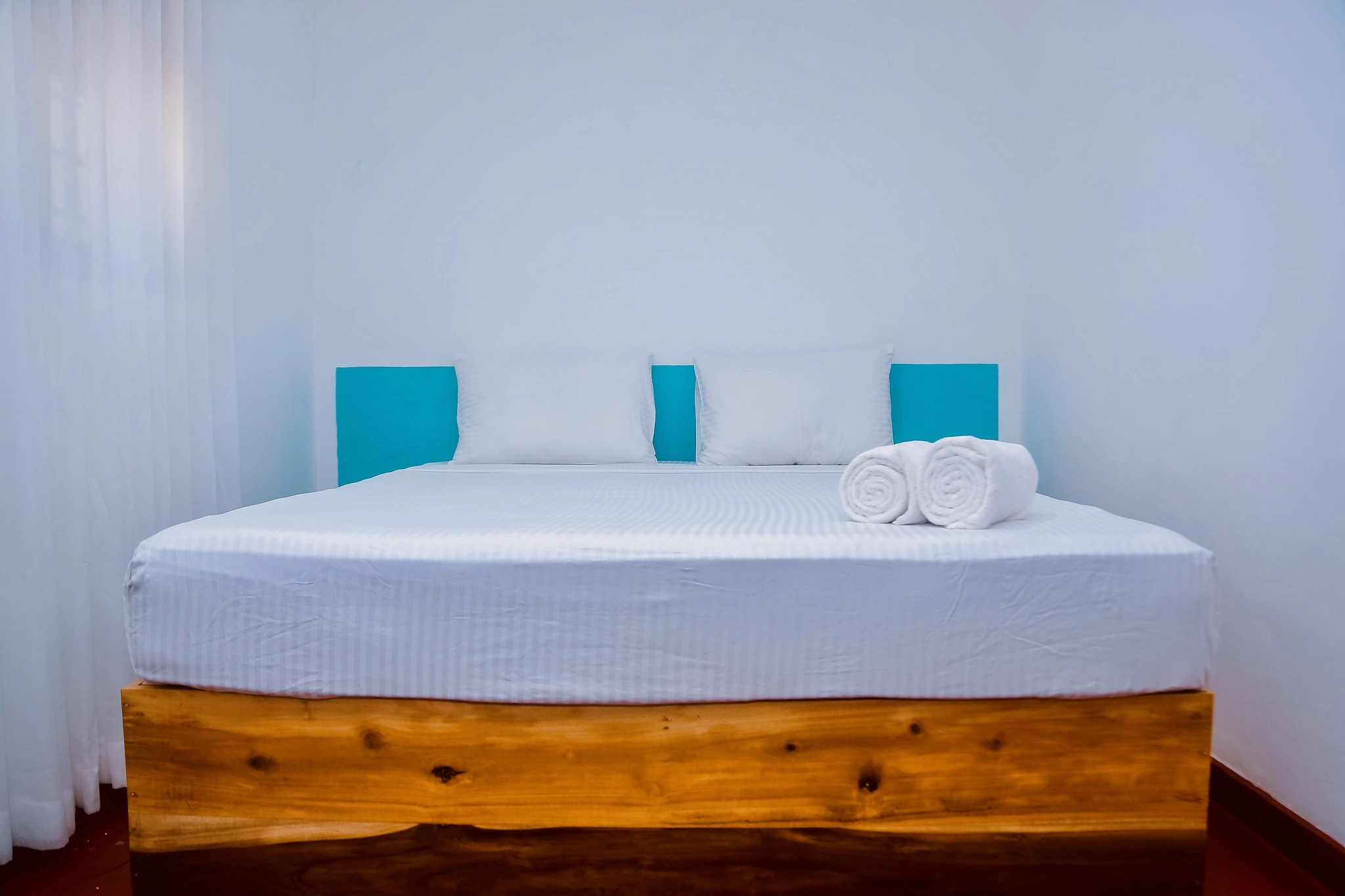
- House layout: Typically cited as a 2-bedroom, 1-bathroom villa, offered as a whole-villa rental for individuals or small groups.
- Outdoor environment: Ancestral land with trees and garden space, which can double as an outdoor drawing, writing, or research area.
- Work space: Most artists use a bedroom, living area, or shaded outdoor zone as their studio. Ask upfront about tables, chairs, and where messy or large-scale work is practical.
- Internet and utilities: You should confirm Wi‑Fi quality and power reliability ahead of time, especially if you rely on video calls or heavy file transfer.
The residency is designed for people who already have their own practice rhythms and don’t need institutional hand-holding. Think of it as a long, structured work retreat with enough comfort to sustain serious focus.
Who Daro’s Enclave really suits
You’re the right fit for Daro’s Enclave if you:
- Want long uninterrupted blocks of time for writing, editing, research, or studio work.
- Prefer self-directed structure instead of schedules filled with workshops and critiques.
- Are comfortable working from a home-like environment rather than a factory-sized studio.
- Plan fieldwork in southern Sri Lanka and need a consistent base to come back to.
- Are ok creating your own social and professional networks while there.
It is less ideal if you’re looking for a big cohort of artists on site, a built-in curator, frequent public events, or a fully funded institutional residency. Daro’s Enclave leans more toward an extended stay with studio potential than a classical, grant-backed residency.
Practical contact points
You can usually find current details through the Artist Communities Alliance listing or the residency’s own channels. As of the latest public information, they share a phone and email for direct contact:
- Phone: +94 76 748 8404
- Email: darosenclave@gmail.com
- Info listing: via Artist Communities Alliance at artistcommunities.org/directory/organizations/daros-enclave
When you reach out, it helps to clearly outline your proposed dates, project type, and any specific spatial needs (e.g. large wall for painting, quiet for sound editing, or storage for research materials).
Nearby residencies and how they relate to Kamburugamuwa
Even if you base yourself in Kamburugamuwa, understanding the wider south-coast residency map will help you plan your time and, potentially, combine stays.
Krinzinger Residency Sri Lanka (Ahungalla, Wathuregama)
Location: Ahungalla (Wathuregama), also on the southwest coast
Type: Structured international residency with exhibition pathways
The Krinzinger residency is run in connection with Galerie Krinzinger and includes an on-site working period followed by presentation opportunities, sometimes including a group exhibition in Vienna. This is a different ecosystem from Daro’s Enclave: more formal, more exhibition-driven, and typically curated.
How it connects to Kamburugamuwa:
- Shows that Sri Lanka’s southwest coast is active as a residency corridor.
- Can be combined with a quieter, self-directed period in Kamburugamuwa for research or production before or after a more structured program.
- Offers a reference point if you’re aiming for international visibility alongside time in a more low-key village base.
You can read about it at galerie-krinzinger.at/residency-sri-lanka.
Studio Macushla Sanctuary (Muruththena / Koththalena)
Location: Inland, with rainforest and tea plantation views
Length: Stays from roughly 7 days to 3 months
Focus: Open to all genres, ages, and nationalities
Studio Macushla Sanctuary is a rural residency with a strong nature component. Accommodation is generally in a private room, with a shared studio space and multiple outdoor work points overlooking rainforest and tea plantations.
How it connects to Kamburugamuwa:
- Good complement if you want a split residency: one coastal block in Kamburugamuwa and one forest block inland.
- Works well for retreat-style workshops and group projects, while Kamburugamuwa serves more as a quiet, flexible base.
- Gives context for what “with housing” residencies in Sri Lanka tend to look like: you’re usually living and working in the same compound.
More details appear on Res Artis at resartis.org/listings/studio-macushla-sanctuary-sri-lanka.
Living and working in Kamburugamuwa
If you anchor your practice in Kamburugamuwa for a month or more, you’ll interact with the village rhythms more than a tourist would. It helps to have a clear sense of what day-to-day life looks like.
Cost of living realities
Compared to Colombo, the south coast is usually more affordable, but tourist pockets can be significantly more expensive than the surrounding villages.
- Accommodation: Through a residency like Daro’s Enclave, housing is the main offering. Outside that, local guesthouses and rentals range from budget to mid-range; prices can rise in peak tourist periods near Mirissa and Weligama.
- Food: Local rice-and-curry, kottu, string hoppers, and small bakeries are budget-friendly. Imported goods, coffee-culture cafes, and Western menus in Mirissa or Weligama cost more.
- Transport: Tuk-tuks are the default for short trips. Buses connect you along the main coastal road. Trains and intercity buses link Matara, Galle, and Colombo.
- Internet: Wi‑Fi quality varies by building and provider. Many artists keep a local SIM with data as backup.
If your project is text-heavy or digital, factor in your personal threshold for connectivity interruptions and plan backups accordingly.
Neighborhoods and nearby hubs
Think of Kamburugamuwa as one node in a small cluster of south-coast spots you’ll probably move between.
- Kamburugamuwa village: Residential, quieter, with day-to-day shops. A good base if you want focus and a sense of routine.
- Mirissa: Nearby beach and surf town with cafes, restaurants, and nightlife. Useful when you need a change of scene or to meet other travellers and creatives.
- Madiha: Often a calmer surf and coastal area compared to Mirissa, with a more laid-back feel.
- Matara: The main nearby town, with larger markets, government offices, banks, and transit links (bus and train). Good for stocking up on materials and taking care of practical admin.
- Weligama: A bit further up the coast; another surf and creative node with coworking spots and cafes.
Using Kamburugamuwa as the base, you can treat Mirissa, Madiha, and Matara as your weekly or biweekly “field trips” for supplies, people, and visual inspiration.
Studio strategies: turning a house into a working space
Because there isn’t a big commercial studio district, most artists in Kamburugamuwa work in hybrid spaces.
Before you go, ask your host:
- If there is a room that can be dedicated as a studio during your stay.
- What kind of furniture exists (tables, desks, shelves, easels, chairs).
- How easy it is to work outdoors (covered veranda, garden shade, power outlets).
- Whether you can move furniture around or use walls for pinning/painting.
For smaller-scale practices (writing, drawing, laptop-based work), the villa format is usually enough. For larger-scale painting, sculpture, or installation, you’ll need to be inventive: use outdoor spaces, temporary tarps, or modular, transportable work that doesn’t depend on industrial infrastructure.
Art scene, community, and showing work
Kamburugamuwa itself is not a gallery-heavy town, so expectations need to match the context. This can be a strength if you want deep work time with low performance pressure.
Local community connections
Artists often build relationships through:
- Residency hosts – who can introduce you to neighbors, local organisations, and craftspeople.
- Surf-town networks – especially in Mirissa and Weligama, where photographers, designers, writers, and filmmakers often circulate.
- Nearby universities and schools – the University of Ruhuna, for example, is relatively close, opening possibilities for research connections or informal talks.
- Village-level initiatives – such as small NGOs, environmental groups, or community arts projects in the surrounding area.
If community engagement is important to your practice, be explicit with your host about that when you first contact them. That gives you time to map out where your work might intersect with local life in a respectful, realistic way.
Showing work and open studios
Instead of formal white-cube openings, artists in Kamburugamuwa typically use softer formats:
- Open studio days – inviting neighbors, local friends, and other artists or travellers passing through.
- Informal presentations – slide talks, screenings, or readings at the residency house or a nearby guesthouse.
- Partnerships with nearby spaces – small galleries, cafes, or cultural centers in Matara or Galle, or collaboration with other residencies on the coast.
If your main aim is an exhibition with institutional visibility, you’ll probably combine a Kamburugamuwa stay with another residency or gallery relationship (for example in Galle, Colombo, or through a program like Krinzinger).
Getting there, visas, and timing your stay
Logistics in Sri Lanka are manageable, but planning ahead keeps your work time intact.
Transport and access
To reach Kamburugamuwa from Colombo or Bandaranaike International Airport, artists typically:
- Take a train on the southern coastal line toward Matara, then a tuk-tuk to the residency.
- Use long-distance buses along the main coastal road, again switching to a tuk-tuk locally.
- Book a private taxi or car directly to Kamburugamuwa for convenience, especially with heavy luggage or equipment.
Once you’re there, assume you’ll rely mostly on tuk-tuks and occasional buses or trains for regional travel. Budget for regular small rides between Kamburugamuwa, Mirissa, Madiha, and Matara.
Visa basics
Visa rules change, so always check current requirements with official Sri Lankan government sources or your nearest consulate. For most short, non-employment residencies, artists use tourist or visit visa categories, making sure that:
- Your visa covers the full length of your stay.
- You understand extension options if your residency runs longer.
- You clarify with your host if you plan public events, teaching, or other activities that might need a different visa type.
Many residency hosts can provide an invitation letter or confirmation of stay if you need it for visa applications, but that doesn’t replace official advice from immigration authorities.
Weather and seasonality
The south coast has periods of drier, calmer weather and periods of heavier rain and rough seas. Artists often prefer the drier months for easier daily movement, beach access, and light quality, while some choose shoulder or wetter months for quieter surroundings and lower tourist pressure.
When you plan, think about:
- How much rain you can tolerate if you’re working outdoors.
- Whether you rely on sun and clear light for photography or painting.
- Your budget, since coastal tourist peaks can affect prices.
Is Kamburugamuwa the right choice for you?
Kamburugamuwa is a strong fit if you want:
- A calm, coastal base with a slower pace.
- Self-directed time with minimal scheduled commitments.
- Enough infrastructure to be comfortable but not overstimulated.
- Proximity to surf towns and regional hubs without living inside them.
- Room for long-form work: manuscripts, research projects, quieter studio practices.
It’s less suitable if you’re seeking:
- A dense local art scene with constant openings and events.
- Daily peer critiques or a large on-site cohort.
- Industrial-scale studios for heavy fabrication or very large installations.
- A fully funded program with built-in stipends and production budgets.
If your practice thrives on independence and you like the idea of a renovated ancestral villa as your base, Daro’s Enclave anchors Kamburugamuwa as a quiet, serious option on Sri Lanka’s south coast. Pair it with visits or additional residencies up and down the coast, and you can build a flexible, layered residency period that balances deep work with regional exploration.