
City Guide
Hamtramck, United States
Hamtramck is small, walkable, and deeply tied to Detroit’s artist-run culture, which makes it a strong base for community-facing residencies.
Hamtramck is one of those places that makes sense fast once you arrive. It is compact, dense, and full of layered cultural life, with Detroit wrapped around it on all sides. For artists, that combination matters. You get a real neighborhood, not a campus bubble. You get working-class streets, immigrant communities, corner stores, bars, churches, and public art in close range. You also get access to Detroit’s larger arts network without giving up the scale and readability of a smaller city.
If your practice depends on people, street-level texture, and direct neighborhood contact, Hamtramck gives you a lot to work with. It is especially good for artists who make sculpture, installation, murals, performance, site-specific work, film, and research-based projects. The residency scene here is not large, but it is distinct and grounded in artist-run culture.
Why artists choose Hamtramck
Hamtramck’s appeal is less about polish and more about density of experience. The city has long been shaped by immigration and working-class life, and that shows up in the food, signage, storefronts, languages, and social rhythms of the neighborhood. You can walk a few blocks and feel a shift in atmosphere. That kind of environment can be useful if your work responds to place, migration, memory, labor, or public life.
The city is also attractive because it is manageable. You can live and work close to your residency site, move around on foot or by bike, and stay connected to nearby Detroit neighborhoods without needing to constantly drive. For artists who want to be present in a place, that is a real advantage.
- Good fit for: community-engaged practice, public art, installation, sculpture, research, photography, film, performance
- Less ideal for: artists looking for remote retreat, solitude, or a highly polished campus-style program
- Best overall quality: direct access to a dense neighborhood and a strong artist-run ecosystem
Popps Packing Residency
Popps Packing is one of the most established residency options in Hamtramck. It is housed in a former meat-packing plant on the Hamtramck/Detroit border and has hosted well over 100 artists since launching in 2012. The setting is very much part of the experience: raw, flexible, and built for making. You are not staying in a neutral white-box environment. You are entering a working artist space with a neighborhood identity.
The program is best known for supporting emerging, mid-career, and established visual artists working in studio-based practices. It especially suits projects that need room to build, test, and revise. Sculpture and installation fit naturally here, as do architecture-related projects, landscape-based work, photo, film, and research.
Accommodation is communal rather than private-hotel-like. Resident artists are typically housed in a loft-style setting with shared living arrangements. That can be a plus if you like informal exchange and a built-in sense of studio community. It can be a challenge if you need total quiet or a lot of personal space.
Popps also tends to support artists who want to connect with the neighborhood, not just work in it. There is often an emphasis on events, open studios, gatherings, and exchange. If your work benefits from a live audience or local dialogue, this residency is worth a close look.
- Best for: sculptors, installation artists, image-makers, and research-driven artists
- Setting: communal live-work space in a former industrial building
- Scale: small, with space for only a couple of artists at a time
Hamtramck Disneyland Artist Residency with Hatch Art
The Hamtramck Disneyland residency is built around one of the city’s most striking folk-art sites. The original installation was created by Dmytro Szylak, a retired auto worker and political refugee from Ukraine, who spent decades building the sprawling environment on and around his property. That history matters. The residency grows out of a place that already carries memory, labor, and imaginative excess in the landscape itself.
Hatch Art’s program is aimed at artists making public-facing work that engages the local community. Think installations, murals, performance, and other site-responsive projects. The structure is clear: you propose a specific artwork or project, and the residency supports you in making it on site. If you like working with a defined brief and real community contact, this can be a strong match.
The residency includes furnished housing, studio space, a small gallery, a garage workshop, bicycles, a darkroom, and a kiln. That mix makes it unusually practical for artists who need both living space and fabrication support. Hatch also offers local guidance, internet, and connections to artists, organizations, museums, and universities in the region.
There is a housing cost, and artists are expected to cover their own travel, supplies, and daily living expenses. Even so, the overall setup is relatively accessible compared with many urban residencies that charge more and offer less in return.
- Best for: public art, muralists, performers, socially engaged artists, site-specific projects
- Strength: real neighborhood context plus strong practical support
- Watch for: the expectation that you create a clearly defined project for the site
What daily life feels like in Hamtramck
Hamtramck is walkable in a way many Midwestern cities are not. That makes a difference during a residency. You can get to a cafe, a food store, a park, or a meeting without turning every errand into a logistics problem. Biking is useful too, especially if you want to move between Hamtramck and nearby parts of Detroit.
The city is not large, so you will likely run into the same streets and faces often. For some artists, that repetition becomes part of the work. You start noticing storefront rhythms, porch conversations, soundscape shifts, and the visual language of a dense urban neighborhood. If your project is about observation, the city gives you plenty to observe.
Detroit’s transit system can help, but it is still a car-oriented region overall. If you do not have a car, a bike and a plan for local buses will make your stay smoother. The residencies here make that easier than many places, especially Hatch Art, which explicitly provides bicycles and transit support.
Practical living notes
- Walking: very useful inside Hamtramck
- Biking: highly useful for local movement and cross-neighborhood access
- Cars: helpful, but not always necessary if you stay central
- Food: varied, affordable enough for many artists, and a real part of the city’s texture
How Hamtramck connects to Detroit’s art scene
One of the biggest advantages of basing yourself in Hamtramck is that you are not cut off from Detroit. You are in the metro art conversation, but from a smaller, more navigable place. That means you can attend openings, visit studios, and connect with artist-run spaces while still returning to a neighborhood that feels coherent and grounded.
Popps Packing and Hatch Art both sit inside this larger ecosystem. They are not isolated programs; they are part of a network of artists, neighbors, community spaces, and regional institutions. If you are building relationships in Southeast Michigan, Hamtramck is a smart starting point.
The city itself also works well for artists who want to think about border conditions: city-to-city edges, immigrant histories, industrial reuse, and the shift between neighborhood scale and metro scale. Those ideas are not abstract here. You can see them on the street.
Who should consider a Hamtramck residency
Hamtramck is a good choice if you want your residency to feel active rather than insulated. It suits artists who are comfortable being part of a neighborhood, who can work with some ambient noise and movement, and who are open to informal exchange. It is also a strong fit if you want your project to respond to public life in a specific place.
You may want to look elsewhere if you need total silence, a rural landscape, or a solo retreat with minimal interaction. Hamtramck’s value is its proximity, density, and lived-in character. The city rewards artists who are willing to meet it on its own terms.
- Choose Hamtramck if you want: urban immersion, community contact, and access to Detroit
- Choose Hamtramck if you make: site-specific work, installations, sculpture, murals, performance, or research-based projects
- Choose another setting if you need: isolation, nature, or a highly structured campus environment
How to approach applying
For both Popps Packing and Hatch Art, the strongest applications usually speak clearly about why the place matters to the work. Be specific. Show that you understand the scale of the residency, the neighborhood context, and the kind of exchange the program supports. A vague statement about wanting “inspiration” will not go far.
Instead, describe what you would make, how you would use the space, and what kind of relationship you want with the city. If the residency asks for community engagement, name the kind of engagement you can realistically hold. If you work with fabrication, say what facilities you need. If your project depends on research, explain what you will be researching and why Hamtramck is the right setting.
It also helps to show that you are flexible. These programs often involve shared space, shifting schedules, and a lot of conversation. Artists who can adapt tend to get more out of the experience.
A short list of things to check before you go
- Housing setup: private room, shared apartment, or loft-style studio?
- Studio needs: do you need wall space, ventilation, fabrication tools, or darkroom access?
- Transportation: will you need a bike, car, or transit plan?
- Community expectations: is the residency asking for a talk, workshop, open studio, or public project?
- Budget: what is covered, and what will you need to pay yourself?
Hamtramck may be small, but the residency options here are not generic. They are rooted in place, and that is what makes them useful. If you want your work to be shaped by a dense neighborhood with real social texture, this is a city worth paying attention to.
Residencies in Hamtramck

Ceramics School
Hamtramck, United States
Ceramics School is a community art school and artist residency program in Hamtramck, MI, offering classes, memberships, studio access, and public programs focused on ceramics and art making. It provides an independent, unstructured residency open to all artists, with communal workspace, housing in a private apartment, and opportunities for community engagement like workshops or talks. Residencies typically last 3-6 weeks, with a fee of $300/week reducible via work exchange.
Popps Packing
Hamtramck, United States
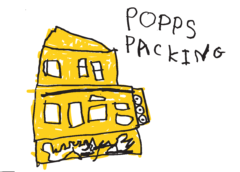
Popps Packing is an international artist residency program founded in , housed in a 4,500 sq ft former meat-packing plant on the Hamtramck/Detroit border, welcoming emerging, mid-career, and established visual artists for immersive studio-based practices. It accommodates two artists at a time in a communal loft-style warehouse with shared studio, kitchen, bath, workshops, gardens, and outdoor spaces, fostering connections through events, exhibitions, and community engagement. Facilities best suit sculpture, installation, architecture, landscape projects, photography, film, painting, and research.
Explore United States
More city guides
Opportunity Intelligence
Ready to find your next residency?
Get a personalized shortlist — scored against your practice, discipline, and what you need right now.
See how Intelligence works →