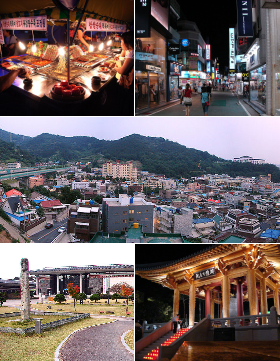
City Guide
Gwangju, South Korea
How to use Gwangju’s residencies, history, and institutions to shape a focused, well-supported stay
Why Gwangju is a serious residency city
Gwangju is one of South Korea’s strongest cities for contemporary, research-based, and socially engaged art. The reputation comes from a mix of political history, a major biennale, and a long track record of institutional support for residencies.
If you are weighing Gwangju against Seoul or another Korean city, think of Gwangju as the place for:
- Institutional access without the capital-city noise
- More affordable living costs
- Time and space for deep research
- Community-oriented, context-aware projects
The Gwangju Biennale, founded in 1995, pulled international curators, critics, and artists into the city and left a permanent infrastructure of museums, project spaces, and residency programs. Gwangju Museum of Art’s Palgakjeong Studio (1995–2011) was one of Korea’s early residency models, which means residency culture here didn’t appear overnight; it has roots.
If your work touches on history, memory, urban change, or social movements, Gwangju offers a responsive audience and collaborators who understand that language.
Key residencies and how they actually function
Horanggasy Creative Studio International Residency Program
Location: Yangnim-dong, Nam-gu, Gwangju
Host: Horanggasy Creative Studio, in the historic Underwood Missionary Residence
Horanggasy sits inside a missionary house with over a century of history, repurposed into studios, living spaces, and exhibition venues. The setting is part of the draw: old architecture, a layered neighborhood, and a clear invitation to engage with local narratives rather than stay in a neutral white cube.
What you generally get:
- Private live–work studio (bed, table, individual A/C, washing machine)
- Housing included on-site or nearby
- Round-trip airfare for international artists (subject to program conditions and budgets)
- Monthly artist fee or stipend
- Solo or group exhibition during or at the end of the stay
- Introductions and networking with local and international art organizations
Usual duration:
- Domestic artists: long-term stays around seven months
- International artists: one to three months, decided by the program
Typical application materials:
- Portfolio (often capped at around 10 works or pages)
- Residency proposal or plan (commonly around two A4 pages)
Who this residency suits:
- Visual artists, filmmakers, musicians, writers, designers, architects, and curators
- Artists who like a mix of production time, public presentation, and exchange
- Practices that can respond to a historic building, a residential neighborhood, or local civic memory
Since 2021, Horanggasy has also served as a main venue for the Gwangju Biennale. That means exhibitions here can sit in the same citywide ecosystem as major institutional shows, giving your residency project better visibility than a random off-site location.
Longega Project × Horanggasy Creative Studio
Location: Same site as Horanggasy Creative Studio, Yangnim-dong
Type: International exchange residency tied to the Alpine region
This program is hosted at Horanggasy but curated through the Longega Project as an exchange between Gwangju and artists from specific European regions.
Eligibility focuses on artists based in:
- Bavaria
- Tyrol
- South Tyrol
What you generally get:
- Economy-class travel covered
- Live–work studio in Gwangju
- Stipend for the full stay
Duration: Usually between three weeks and three months, often around late summer to autumn. The exact timing depends on each open call.
Who this residency suits:
- Visual artists interested in intercultural dialogue and site-responsive work
- Artists who can mesh Alpine contexts with Gwangju’s social and urban fabric
- People comfortable working within a curated thematic framework
If you are based in the eligible regions, this can be one of the most financially practical routes into Gwangju, thanks to the combination of travel, housing, and stipend.
Asia Culture Center (ACC) and ACC_R
Location: Central Gwangju
Institution: Asia Culture Center (ACC)
ACC is a major public complex with theaters, research spaces, and production facilities. ACC_R is its residency arm, often focused on interdisciplinary and experimental practices.
ACC_R typically welcomes a wide range of disciplines:
- Visual and media arts
- Performing arts
- Design and architecture
- Research, critique, and writing
Programs like the ACC CREATORS Residency usually support project budgets, stipends, travel, workspace, accommodation, and public outcomes such as exhibitions or presentations.
Who ACC-type residencies suit:
- Interdisciplinary artists comfortable in a large institutional setting
- Creators doing tech-driven, media-based, or research-heavy work
- Teams or collaborative practices
Expect an environment closer to a research lab or cultural center than a quiet village retreat. Project management, timelines, and institutional expectations are part of the experience.
Residency legacy: Palgakjeong Studio
The Palgakjeong Studio, run by Gwangju Museum of Art between 1995 and 2011, is not a current option but matters historically. It was one of the first residency studios in Korea and helped normalize the idea of long-term institutional support for artists in Gwangju.
This legacy influences how the city treats artists: residencies are seen as part of cultural policy and local identity, not just temporary branding exercises.
Where you’ll actually be: neighborhoods and daily life
Yangnim-dong: historic and walkable
Yangnim-dong, in Nam-gu, is the most relevant neighborhood if you are based at Horanggasy or similar programs. The area is known for:
- Historical houses and missionary-era buildings
- Quiet, walkable streets with layered architecture
- Cafes, small museums, and art spaces embedded in residential streets
For artists, this is a comfortable production base: you can walk between studio, home, small eateries, and cultural sites without long commutes. It is easy to build daily routines and site-based research here.
Central Gwangju and Dong-gu
Central areas, especially around Dong-gu, tend to be more practical if you need:
- Access to the Asia Culture Center
- Public transit hubs and intercity bus terminals
- Art supply shops, bookstores, and printing services
If your residency is at ACC or a program that uses multiple city venues, staying near the center can cut down on transit time and make it easier to attend evening events and openings.
Buk-gu and other residential districts
Outer districts such as Buk-gu offer a more everyday residential pace. These areas can be useful if:
- You plan an extended stay before or after the residency
- You want to live beyond the immediate arts cluster
- Your practice involves working with local communities in less touristy neighborhoods
For many residency artists, the program will already place you in a specific area. It still helps to understand the basic geography so you can decide where to spend off-hours and how far you are from the main institutions.
Costs, logistics, and what to ask before you accept
Cost of living basics
Gwangju is generally cheaper than Seoul, especially in terms of rent and daily expenses. That said, budgets can still stretch, so it helps to map out your main costs:
- Housing: Many residencies provide accommodation; if not, rents in non-central neighborhoods are usually manageable compared with Korean capital levels.
- Food: Local restaurants, markets, and convenience stores make it easy to keep meal costs steady. Korean set meals and street food are often budget-friendly.
- Transport: Bus fares and taxis are affordable for most residency budgets, especially if you cluster your errands and visits.
- Studio and utilities: If the residency covers studio and utilities, your personal costs drop significantly; if not, this will be your biggest variable expense.
Questions to ask the host institution:
- Is housing included, and is it shared or private?
- Are utilities (electricity, water, internet, heating/cooling) covered?
- Is there a separate materials or project budget?
- Is the stipend fixed or dependent on funding each year?
- Are there any local taxes withheld from the stipend?
A program like Horanggasy that offers housing, studio, airfare, and an artist fee will feel very different financially from a residency that only provides space.
Getting to Gwangju
You’ll usually arrive through one of these gateways:
- High-speed rail (KTX): Gwangju Songjeong Station connects to major Korean cities. This is often the fastest route if you arrive via Seoul or Busan.
- Domestic flights: Gwangju Airport offers some internal connections; many international artists still enter via larger airports like Incheon, then transfer by train or bus.
- Intercity bus: Long-distance buses run regularly from most Korean cities and can be cost-effective.
When you are accepted, ask the residency:
- Which station or airport is closest?
- Do they provide pickup or clear directions in English or Korean?
- How long is the ride from the station to your studio or housing?
Getting around the city
Daily movement is usually a mix of walking, buses, and taxis.
- Buses: The bus network covers most neighborhoods you will need. A rechargeable transport card makes transfers easy.
- Taxis: Generally affordable for short to medium distances; useful late at night after openings or events.
- On foot: Areas like Yangnim-dong are walkable enough that many artists barely use transit on studio days.
If your practice requires moving equipment or large works, factor in taxi or delivery costs between studio, fabrication workshops, and exhibition venues.
Visas, paperwork, and institutional support
Visa situations depend on nationality, length of stay, and how your residency defines payment. Many artists enter on short-term visas for brief projects, but you should not assume that this is automatically acceptable.
Questions to raise directly with the residency:
- Will you issue a formal invitation letter with dates and a description of support?
- Do you have experience helping international artists with visa applications?
- Does the stipend count as a grant, or is it treated as payment for work?
- Are there any local registration requirements upon arrival?
Residencies embedded in large institutions, like ACC_R, often have established procedures and can guide you more precisely. Smaller programs may still help, but you might need to do more independent research based on your passport and planned activities.
Timing your stay: seasons, biennale rhythm, and workload
Seasons and studio comfort
Climate affects both production and how you use outdoor space for research.
- Spring: Mild, with comfortable temperatures for walking, site visits, and open studios.
- Autumn: Often ideal: clear air, stable light, and a dense schedule of cultural events.
- Summer: Hot and humid; workable with good air-conditioning but less pleasant for outdoor installation or fieldwork.
- Winter: Cold but manageable; indoor-focused production periods can work well if heating is reliable.
Ask your host institution specifically about heating and cooling in both studios and living spaces. This is not a detail to leave vague, especially for summer and winter residencies.
The Gwangju Biennale effect
Biennale years change the city’s rhythm. You can expect:
- More international visitors, curators, and press in town
- Parallel exhibitions and off-site projects
- Busier schedules, more talks, and more chances for networking
If your residency aligns with biennale programming, clarify:
- Will your exhibition or open studio be tied to official or satellite events?
- Does the institution plan studio visits with visiting curators?
- Are there expectations about aligning your project concept with the biennale theme?
In non-biennale periods, the city is quieter, which can mean more focused studio time and deeper local relationships.
Local art ecosystem: how to plug in while you’re there
Institutions to know
Even if your residency is anchored in one site, it helps to map the broader art infrastructure:
- Gwangju Biennale Foundation / Biennale Hall: Major international exhibitions, symposia, and archive resources.
- Gwangju Museum of Art: Public museum with exhibitions and educational programs; important for understanding local art history.
- Asia Culture Center (ACC): Large-scale complex with performance, exhibitions, labs, and residencies.
- Horanggasy Creative Studio and nearby spaces in Yangnim-dong: Smaller-scale shows, open studios, and community-focused projects.
Community and networking
Gwangju’s scene is smaller than Seoul’s, which can work in your favor. It is easier to meet curators, educators, and other artists repeatedly rather than once in a crowd.
Residencies often organize:
- Open studios and public presentations
- Talks or workshops with local audiences
- Informal gatherings with neighboring artists and students
When you arrive, ask your residency coordinator:
- Which local artists and curators should you meet early on?
- Are there regular critique groups, reading groups, or screenings you can join?
- What community expectations exist around your residency (talks, workshops, classes)?
This helps you stay realistic about your time: balancing production, research, and public engagement.
What kind of practice tends to thrive here
Gwangju is especially supportive if your work aligns with at least one of these tendencies:
- Installation, video, and digital media that can live in institutional or project spaces.
- Socially engaged projects connected to history, community, or urban change.
- Research-driven or archival work that benefits from institutional archives and interviews.
- Interdisciplinary practices that mix performance, sound, design, or writing.
Gwangju is less about fast commercial turnover and more about structured time, context, and conversation. If your main goal is rapid gallery sales, another city might serve that better. If you want to test new methods, work closely with institutions, and situate your practice in a historically conscious setting, Gwangju is a strong fit.
How to use this guide when you apply
When you put together an application for a Gwangju residency, it helps to show that you understand the city and its institutions.
- Connect your project to Gwangju’s context: history, civic culture, or specific neighborhoods like Yangnim-dong.
- Be clear about how you will use institutional resources: archives, exhibition spaces, or technical facilities.
- Outline how you want to share your work locally: open studios, small publications, walks, or workshops.
- Show that you can work within the residency’s time frame, from research to a public outcome.
If you treat Gwangju not just as a backdrop but as a collaborator in the work, your proposals will read stronger, and your actual time on the ground will feel much more integrated and rewarding.
Explore South Korea
More city guides
Opportunity Intelligence
Ready to find your next residency?
Get a personalized shortlist — scored against your practice, discipline, and what you need right now.
See how Intelligence works →