City Guide
Eyeries, Ireland
How to use a tiny village on the Beara Peninsula as a serious base for making work
Why Eyeries works as a residency destination
Eyeries is small, remote, and vividly coloured. That combination can be exactly what you need if your practice thrives on quiet, repetition, and long stretches of time with your work. You won’t find a dense cluster of formal residencies in the village itself, but you will find a serious landscape, a slower rhythm, and a wider West Cork arts ecology that you can plug into.
The village sits on the Beara Peninsula in West Cork, close to the Atlantic and the Ring of Beara route. Mountains, sea, and fields collide in a way that constantly shifts with the light and weather. It suits painters chasing changing skies, writers and poets needing silence, photographers drawn to rugged edges, and musicians or sound artists working with environment and atmosphere.
Think of Eyeries as a place where the residency is half program, half place. The programs nearby might give you housing and structure, but the real “infrastructure” is the landscape and the time you carve out in it.
Residency options in and around Eyeries
The area offers a mix of formal residencies, spiritual retreats, and flexible studio stays across West Cork. Some are directly in or near Eyeries; others are within reach and relevant if your goal is to base yourself on or near the Beara Peninsula.
Pink House – Ministry of Maat (Eyeries village)
The Pink House in Eyeries is part of the Ministry of Maat’s Sanctuary for Spiritual and Creative Research. It reads less like a conventional production-focused residency and more like a spiritual refuge with creative research at its core.
What it offers
- Retreat setting in Eyeries village, on the Beara Peninsula
- Programs focused on spiritual and creative research
- Orientation toward the intuitive arts, creative arts, women’s spirituality, and women’s wellness
- A space described as nurturing, restorative, and long-term in intention
Who it suits
- Artists and writers whose practice intersects with ritual, healing, or contemplative work
- People developing work around embodiment, intuition, the feminine, or spiritual inquiry
- Artists comfortable with a residency that may prioritize inner process as much as visible output
How to use it well
- Frame your time as research, reflection, and drafting rather than as a production sprint
- Bring small, portable materials: notebooks, sketchbooks, audio recorders, laptops, textiles, or drawing media that suit quiet, introspective work
- Stay open to integrating practices like journaling, meditation, or ritual if they resonate with you
Things to clarify with the host
- Whether this specific stay is framed as a retreat, a course, or a residency
- How studio or working time is structured
- Expectations around participation in spiritual or community activities
- What is and isn’t included in the fee (housing, meals, course content, transport)
You can read more about their approach to creative and spiritual research and contact them directly via the Ministry of Maat website at ministryofmaat.org.
West Cork studio residencies (via Res Artis listings)
West Cork regularly appears on residency platforms like Res Artis with studio-based programs that use the region’s landscape as a draw. One generic but useful pattern: a host offers shared studios plus private rooms for 2–6 weeks, sometimes longer, in rural settings not far from the coast.
Typical structure you’ll see
- Two or more shared studio spaces
- Private bedrooms for each artist
- Flexible stays: usually from 2 to 6 weeks, occasionally extended
- Scenic rural locations, marketed towards artists seeking quiet and focus
Why this matters for Eyeries
- Eyeries sits inside the same West Cork ecosystem many of these residencies rely on
- You can choose a residency slightly outside the village but use Eyeries and Beara as your everyday landscape and research zone
- Some hosts are flexible about artists doing focused fieldwork on the peninsula
How to search effectively
- Use keywords such as “West Cork residency”, “Beara Peninsula residency”, or “studio residency West Cork” on resartis.org
- Pay attention to travel information: how far the site is from Castletownbere, Eyeries, or other Beara villages
- Ask hosts directly if their program suits artists doing site-specific research in Eyeries and surrounding areas
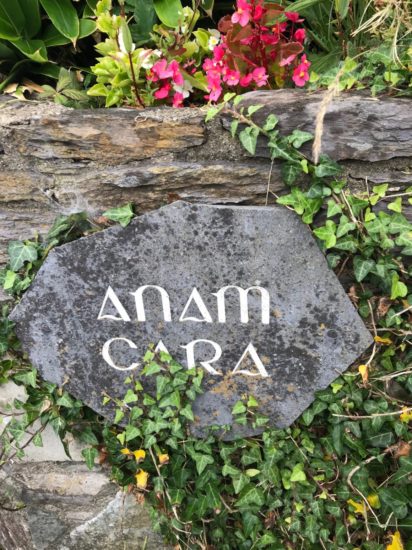
Anam Cara Writer’s and Artist’s Retreat (near Eyeries)
Anam Cara is a well-known retreat near Eyeries, overlooking Coulagh Bay on the Beara Peninsula. It operates more as a year-round retreat than a structured, cohort-based residency, but many writers and artists use it as intensive project time.
What it offers
- Accommodation and working rooms: five private working/bedrooms, each with its own bath
- All meals provided, so you can focus almost entirely on your project
- Quiet, supportive environment marketed toward writers and artists
- Views over Coulagh Bay, mountains, and farmland
Who it suits
- Writers who want uninterrupted drafting or editing time
- Artists whose work doesn’t require a large, messy studio (for example: drawing, photography editing, digital work, small-scale mixed media)
- Anyone wanting a retreat-style structure with meals handled and minimal logistics
Access notes
- Located near the intersection of the R571 and R575, a short distance from Eyeries village
- Minibus service from Cork City is sometimes used to reach the area; always confirm current routes and times directly with the host
More details and contact information are listed on platforms like TransArtists at transartists.org, and on Anam Cara’s own website.
Nearby West Cork residencies worth knowing about
These programs are not in Eyeries itself but are relevant if you want a West Cork base with the option of day trips or short research stays on Beara.
- Carraig-na-gCat (Albers Foundation, West Cork) – Rural farmhouse and studio near the West Cork coast, framed as a calm, somewhat isolated setting. Residencies often run 4–8 weeks, with a focus on deep practice and solitude. Info: albersfoundation.org.
- Greywood Arts (Killeagh, East Cork) – Rural arts organization with residencies that include studio space, accommodation, and community engagement opportunities such as open studios and local events. Useful if you want a Cork residency that is quieter than the city but still structured.
- Other national examples like Cow House Studios in Wexford show the model of intensive rural residencies with shared studios and communal living, useful as reference points when comparing what West Cork programs offer.
You can pair one of these residencies with a self-organised research trip to Eyeries and Beara before, during, or after your stay.
Where to stay, work, and get supplies around Eyeries
Eyeries doesn’t have a formal studio quarter, so you think more in terms of village vs. outlying countryside and which nearby town will support your practical needs.
Areas that work well for artists
Eyeries village centre
- Walkable scale: colourful houses, one of the most photographed villages in the region
- Close contact with local life, pubs, and limited shops
- Useful if you’re working on community-based projects or sketching street and village scenes
Ballycrovane / Cahermore direction
- Quieter and more rural than the village centre
- Strong sea views and open sky, good for landscape painting, photography, and sound recording
- Best if you are happy to walk or drive for supplies
Castletownbere
- Nearest larger town and practical hub for groceries, hardware, pharmacies, and services
- Potential for informal connections with local makers and community events
- Good base if you want more amenities but plan regular day trips to Eyeries and Beara sites
Allihies and Ardgroom
- Other Beara villages with dramatic landscape access and small community cores
- Helpful if you’re working on a project about the peninsula as a whole rather than Eyeries alone
Studios and workspaces
Eyeries itself doesn’t currently operate as a studio complex, so your “studio” may be:
- A room or outbuilding attached to your accommodation
- A shared studio offered as part of a residency in West Cork
- Temporary setups: kitchen tables, portable easels, or laptop-based workspaces
If you need heavier facilities, you’ll usually have to look beyond Beara:
- Skibbereen has more established arts venues and programming
- Cork City provides galleries, print studios, and institutional contacts for research and networking
The trade-off is clear: Eyeries gives you time and landscape; larger towns give you equipment and audience. A lot of artists solve this by developing work on Beara, then producing final pieces or seeking feedback and exhibition opportunities in Cork City or elsewhere.
Costs, transport, and practical planning
Being realistic about logistics makes the residency much more productive. West Cork costs and travel can surprise artists used to urban convenience.
Budgeting for a stay in Eyeries or Beara
Accommodation
- Largest expense, especially in high tourist season when options can be limited
- Residencies that include housing (like Anam Cara or some West Cork studios) simplify this
- Self-organised stays may require booking well in advance and being flexible with dates
Food and supplies
- Groceries are generally moderate, but smaller shops have less choice than big city supermarkets
- Art materials can be harder to source locally; plan to bring key items or have them shipped
- Hardware shops in towns like Castletownbere can help with basic tools or makeshift studio solutions
Travel costs
- Reaching Eyeries usually involves getting to Cork City, then continuing by bus, minibus, or car towards Castletownbere and on to Eyeries
- Car rental can be the biggest line item after housing but gives the most freedom for site visits and material runs
- Budget for occasional taxis if you rely on public transport; services may not be frequent
Getting there and getting around
Access route
- Fly or travel into Cork Airport or Cork City by train or bus
- Continue by regional bus toward Castletownbere, then local roads to Eyeries
- Some retreats, like Anam Cara, mention minibus services from Cork; always confirm current details directly with the host
Local mobility
- A car is highly recommended if you need to transport materials, visit multiple sites, or work with models and collaborators
- Cycling is possible but roads are narrow and hilly; weather can change quickly, so bring proper gear
- Walking works inside the village and for short local hikes but is limiting if you’re based in a more remote cottage
Visa and paperwork
For non-EU/EEA/UK artists, you’ll want to check immigration requirements for Ireland well ahead of time. The right route depends on your nationality, length of stay, and whether the residency involves income, a stipend, or teaching.
Questions to ask the residency host
- Will they provide an invitation letter with dates, purpose, and accommodation details?
- Is any funding or stipend treated as income for visa or tax purposes?
- Is your stay framed as research, cultural exchange, or work?
Combine that information with official guidance from Irish immigration and, if needed, advice from your consulate or a visa specialist. For short, self-funded residencies with clear documentation, many artists enter on standard short-stay terms, but you should always confirm for your specific situation.
Season, community, and how to make the most of it
When to be there
Late spring to early autumn gives you lighter days, more predictable roads, and the widest range of accommodation.
- May to early summer: long daylight, fresh colours, ideal for painting and walking-based practices
- High summer: warmest, most activity in West Cork, but also crowded and pricier for housing
- Autumn: moody light, fewer visitors, excellent for reflective work and photography
Winter can be powerful for atmosphere if you enjoy solitude and dramatic weather, but it demands more resilience, flexible transport plans, and a good indoor workspace.
Connecting with local and regional art communities
Eyeries is tiny, so artistic community is often regional rather than tightly clustered in one village.
Where artists usually connect
- West Cork artist networks linked to towns like Skibbereen and Bantry
- Beara Peninsula community events, which may include exhibitions, festivals, or heritage projects
- Cultural centres in Castletownbere, Skibbereen, and Cork City, where you may find talks, workshops, or open calls
Ways to plug in while you’re there
- Ask your residency host if they organize informal open studios or artist talks
- Use local pubs and cafes as conversation hubs; introductions often travel by word of mouth
- Search for regional art groups and mailing lists before you arrive so you can align your stay with small events or open days
Who Eyeries suits artistically
Strong fit for artists who:
- Work well with solitude, routine, and landscape
- Are painters, writers, photographers, sound artists, or interdisciplinary makers who can adapt to modest facilities
- Are interested in place-based, environmental, or spiritual themes
- Prefer deep process and reflection over a busy calendar of institutional events
Less ideal for artists who:
- Need daily access to large workshops, print labs, or specialist equipment
- Rely on constant gallery hopping or big-city networking
- Depend heavily on frequent public transport and do not plan to rent a car
Using Eyeries intentionally as part of your practice
If you treat Eyeries as a serious part of your practice rather than just a scenic backdrop, it can shift your work. A few practical approaches:
- Build a clear project brief for yourself before arriving: a series of paintings, a manuscript section, a sound archive, a research question
- Map out locations you want to visit on Beara: coastal paths, high viewpoints, village corners, bays, and quiet lanes
- Plan your studio set-up realistically, based on the space you’ll have and the transport you’re using
- Decide where you’ll seek feedback later: Cork City, your home community, online groups, or another residency with more critique culture
Used this way, Eyeries becomes more than a pretty stop; it turns into a focused chapter in your ongoing practice, anchored in a specific place with its own colours, weather, and pace.