City Guide
Eyeries, Ireland
How to use tiny Eyeries on the Beara Peninsula as a serious base for focused creative work
Why Eyeries pulls artists in
Eyeries is a small, vividly painted village on the Beara Peninsula in West Cork, looking out toward the Atlantic. It’s quiet, remote by city standards, and surrounded by sea, mountains, stone walls, and constantly shifting weather. That mix is exactly why artists keep ending up there.
If you work better when life gets very simple and the background noise drops, Eyeries is a strong option. It suits artists who want:
- Concentration – fewer distractions, fewer obligations, lots of time
- Landscape as collaborator – sea, sky, rock, old farm structures, and dramatic weather as material
- A slow rhythm – space for journals, sketchbooks, research, process-heavy work
- A village, not a city – a sense of community but no arts-district hustle
The wider West Cork region has long been attractive for writers, painters, musicians, and retreat-style residencies. Eyeries is one of the quieter pockets of that ecology, which makes it useful if you want to work intensely for a stretch and dip into bigger hubs only occasionally.
The Pink House: spiritual and creative retreat in Eyeries
The key residency-related place actually in Eyeries is the Pink House, run by the organization called ministry of maat.
What the Pink House is
The Pink House is described as a Sanctuary for Spiritual and Creative Research and a retreat center in Eyeries. The focus is on nurturing and restoring body and spirit as much as on producing work. It supports:
- Ministers of the organization
- Students and scholars in the Intuitive Arts
- Practitioners in the Creative Arts
- People working in Women’s Spirituality and Women’s Wellness
They position Eyeries as a precious place held for the long term, used as an ongoing resource for spiritual and creative research. That framing tells you a lot about the ethos: this is not a fast, production-heavy residency model; it is more of a contemplative and ritual-focused environment.
You can read more about the Pink House directly on the Ministry of Maat site: https://www.ministryofmaat.org/pink-house.html.
Who the Pink House suits
While many residencies advertise broadly to all visual artists, the Pink House is more specific. It tends to suit you if:
- Your work sits close to spiritual practice, ritual, healing, or intuitive research
- You explore feminine lineages, women’s bodies, or women’s community
- You work with movement, breath, sound, text, or image in a contemplative or ceremonial way
- You are comfortable in a setting that explicitly names spirituality alongside art-making
Disciplines that often fit this kind of context include:
- Writing (poetry, hybrid prose, spiritual or theoretical texts)
- Drawing, painting, or collage grounded in personal or ancestral narratives
- Performance scores, ritual choreography, or somatic practices
- Sound, chant, or voice-based work rooted in research or meditation
What the Pink House is not
This is not a classic open-call visual arts residency with public studios and a heavy emphasis on exhibitions. Expect:
- Retreat energy over “production residency” energy
- A mission-driven, thematic context, not a neutral facility
- Less focus on public-facing outcomes and more on personal or shared research
If your priorities are fabrication facilities, large-scale installation, or constant studio visits, this may not be the right fit. If you are craving deep reset, ritual, and space to listen to your practice, it might be exactly what you need.
Nearby and related options: using Eyeries as part of a West Cork residency circuit
Eyeries itself is small, but many artists treat it as one stop in a broader Irish residency loop, especially around West Cork and other landscape-driven programs. A few reference points help you understand where Eyeries sits in the bigger picture.
Anam Cara: retreat close by on the Beara Peninsula
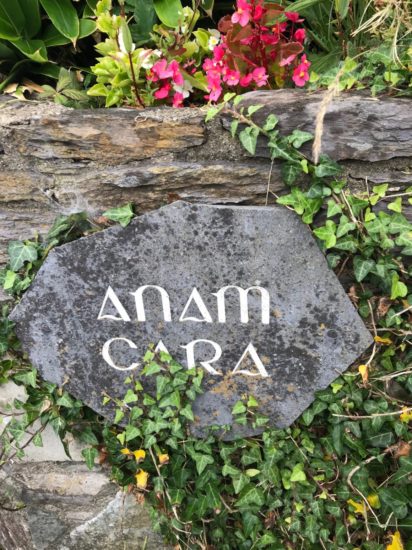
Anam Cara is a writer and artist retreat on the Beara Peninsula, near Eyeries and Castletownbere. It is not branded as a formal "artist residency" in the institutional sense, but it functions in a similar way for many people.
What it offers, based on the TransArtists listing:
- A quiet, nurturing retreat for writers, artists, and other creative people
- Five private working/bedrooms, each with its own bathroom
- All meals provided
- Supportive atmosphere with space to focus on a specific project
Location-wise, it overlooks Coulagh Bay and the mountains and farmland of the Beara Peninsula, about a kilometer west of Eyeries. That puts you close enough to feel connected to the same landscape as the Pink House but in a format more oriented toward individual project time and hosted retreats/workshops.
Practical upside: they give clear directions, including minibus connections from Cork city, which makes it easier to plan travel if you do not drive. You can find details on TransArtists: https://www.transartists.org/en/air/anam-cara.
Carraig-na-gCat: West Cork residency model to compare
Elsewhere in West Cork, but not in Eyeries, the Carraig-na-gCat residency run by the Albers Foundation is a useful benchmark. It is based near Glandore and describes itself as a place for artists interested in calm, somewhat isolated work in a traditional farmhouse with a separate stone studio.
Key points as a comparison:
- It offers wide views of countryside, ocean, and islands, similar to the kind of expansiveness you find on Beara.
- Residencies often support visual artists and sometimes other disciplines.
- The tone is reflective and research-oriented, but in a more classic artist-residency frame than the Pink House’s spiritual mission.
Reading their description can help you calibrate expectations for rural West Cork residencies as a whole: https://www.albersfoundation.org/foundation/residencies/carraig-na-gcat.
Why Burren College of Art and Cow House Studios still matter if you care about Eyeries
Residencies at Burren College of Art in County Clare and Cow House Studios in County Wexford are not anywhere near Eyeries, but they are good models of Irish rural residencies with studios, equipment, and a more structured program.
If you love the idea of Eyeries for quiet, but your work needs facilities like a 3D lab, darkroom, or digital print lab, you might:
- Use a place like Burren College of Art for making and production time
- Then spend time in Eyeries or at the Pink House for editing, reflection, and writing
Cow House Studios, similarly, offers open residencies, parenting-artist programs, and curated residencies with shared studios and private accommodation. Reading how they structure residencies gives you a sense of what is possible in Ireland, even if you then choose Eyeries for a quieter, more self-directed phase.
More information:
- Burren College of Art residencies: https://www.burrencollege.ie/programmes/artist-residencies/artist-residency-programmes/
- Cow House Studios residencies: https://cowhousestudios.com/residencies
Living and working in Eyeries: practical realities
Cost of living and housing
Eyeries is small and rural, so you are not dealing with city-level rents, but scarcity and seasonality do matter. Keep in mind:
- Accommodation is limited. There are only so many guesthouses, cottages, and rooms, and they can be in demand during warmer months.
- Short stays may be easier to arrange than multi-month self-directed residencies unless you plan very early.
- Food and supplies might cost a bit more than big-city supermarket prices, especially if you rely on smaller shops.
If your residency does not include housing, broaden your search to:
- Eyeries village itself for walkable access
- Nearby Beara Peninsula villages
- Castletownbere and surrounding areas if you do not mind a drive
Where to base yourself: village vs outskirts
Eyeries does not have neighborhoods in the city sense, but you do make a choice between being in the village or out in the surrounding countryside.
- Village center
Good if you want short walks to whatever local services exist, the visual charm of the painted houses, and a bit more casual contact with people. - Coastal or rural outskirts
Stronger if you crave solitude, silence at night, access to fields and shorelines, and big sky views. Perfect for plein air painting, land-based practice, or writing marathons.
Think about your actual working habits:
- If you rely on daily walks, notes, and photographs, the outskirts can feed your practice in a direct way.
- If you do socially engaged work, interviews, or community-based projects, being closer to the village and nearby towns is helpful.
Studios and workspaces
Eyeries is not packed with industrial studios or makerspaces. That means you either:
- Use the studio or workroom supplied by a residency like the Pink House or Anam Cara
- Convert a bedroom, kitchen table, or outbuilding into a temporary studio
- Keep your materials portable and your setup flexible
When you consider any Eyeries-based stay, ask clearly:
- Is there a dedicated studio space or is it live-work?
- What is the natural light like?
- Is the space heated and weather-tight enough for the season you are coming in?
- Is there storage if you work large or messy?
If your practice involves welding, woodshops, darkrooms, or heavy digital equipment, you will likely need to either scale down what you bring, schedule heavier production at a facility-based residency elsewhere in Ireland, or focus on research and planning stages while you are in Eyeries.
Transport: actually getting yourself to Eyeries
Closest major access points
For international artists, the usual route is:
- Fly into Cork Airport or sometimes Dublin
- Travel to West Cork by bus or rental car
- Continue on to the Beara Peninsula and Eyeries
Eyeries itself does not have a rail station, and rural bus services can be sparse, so planning is essential.
Public transport vs car
By car:
- Most flexible, especially if you carry art materials or instruments.
- Lets you reach supermarkets, beaches, headlands, and nearby towns without worrying about timetables.
- Rural roads can be narrow and winding, so allow time and drive carefully.
By public transport:
- Possible, but you may need a combination of intercity buses and local links.
- Some retreats, such as Anam Cara, point out specific minibus services running from Cork city to the Beara Peninsula, which is helpful to copy or adapt.
- If you are arriving without a car, ask the residency host directly about the best route and any local taxi contacts.
Visas and paperwork
Residency and retreat stays in Eyeries are often short-term, but you still need to match your plans to Irish immigration rules.
- EU/EEA/Swiss nationals usually do not need a visa for short creative stays, but should still check conditions for longer residencies or paid activity.
- Non-EU/EEA artists may need a visa depending on nationality, length of stay, and whether the residency involves teaching, stipends, or publicly paid work.
Before confirming travel, it helps to:
- Ask the residency host to clarify how they usually categorise the stay for guests.
- Check updated guidance from Irish immigration authorities.
- Contact an Irish consulate or embassy in your country if your case is complex.
Even if you do not need a formal visa, assume you may be asked at the border for:
- Proof of accommodation
- Return or onward travel
- Evidence of funds to support yourself
Seasonality: when Eyeries works best for your practice
Eyeries changes noticeably with the seasons, and that will shape your work.
- Spring
Good light, emerging greens, and fewer visitors. Nice for walking, photographing, sketching, and building momentum after winter. - Summer
Long days and usually the most comfortable outdoor conditions. Also when tourism and accommodation pressure are highest, so book early. - Autumn
Rich colours, moody skies, and often quieter again once peak holiday season passes. Strong for reflective work and projects tied to weather or seasonal change. - Winter
Most isolated and potentially stormy. Intense atmosphere for writing, sound work, or studio-based practice if you have warm space. Logistics around transport and outdoor work require more care.
If you are aiming for a specific residency or retreat, check their application rhythms early. Rural Irish programs often fill early for summer and may have smaller capacities overall, so planning a year or more ahead is not excessive, especially if you are coming from abroad.
Art community, exhibitions, and how to stay connected
Local and regional connections
Eyeries is not an exhibition hub with a row of galleries, but it sits within a region that supports a lot of independent artists, retreats, and seasonal events. To make the most of a stay:
- Ask your residency host if they can introduce you to local makers or arts groups across West Cork.
- Look for open studio trails or small exhibitions in nearby towns during your stay.
- Plan at least one trip to Cork city for galleries, artist-run spaces, and a different kind of conversation about your work.
If your practice depends on feedback and dialogue, you can build that in a few ways:
- Schedule online studio visits or crit sessions with peers while you are in Eyeries.
- Use the quiet time to assemble documents, photos, or texts for future applications and curatorial conversations.
- If the residency offers shared meals or group sessions, use those to talk about process rather than waiting for formal critique.
Who Eyeries is actually good for
Taking all of this together, Eyeries is strongest for artists who:
- Want quiet, landscape, and internal focus more than a busy art scene
- Work in writing, drawing, painting, photography, sound, or research-driven practices that travel well
- Are open to spiritual or contemplative contexts, especially at the Pink House
- Can adapt to limited facilities and still work deeply
It is less ideal if you need:
- Heavy fabrication facilities or specialist studios on site
- Frequent openings, fairs, or gallery crawls
- Fast, frequent public transport and dense urban infrastructure
If your practice thrives on slowness, weather, and a clear horizon line, building Eyeries into your residency plans can give you exactly the kind of time that is hard to protect at home.