City Guide
Eyeries, Ireland
How to use this tiny West Cork village as a serious retreat for your practice
Why Eyeries pulls artists to the edge of Ireland
Eyeries is a small, brightly painted village on the Beara Peninsula in West Cork, looking out toward the Atlantic. It isn’t an arts capital with a gallery every block. The draw here is quieter: long horizons, weather that changes by the hour, and the kind of isolation that makes you actually sit with your work.
If your practice needs breath and bandwidth more than busy openings and studio visits, Eyeries is worth knowing about. You’re coming here for:
- Landscape as collaborator – sea, cliffs, bog, mountains, and constantly shifting light. Strong material for painting, drawing, photography, writing, sound, and land-based practices.
- Real retreat conditions – slow pace, small village, not many distractions. Ideal for focused writing, editing, deep research, or quiet studio cycles.
- Part of the wider West Cork ecosystem – while Eyeries itself is tiny, it sits inside a region known for artists, small galleries, and rural residencies across West Cork.
- Time to reset – many artists use Eyeries as a reset between big projects, as a place to re-plot a body of work or stitch together ideas that have been scattered.
Think of Eyeries as a working retreat rather than a network hotspot. You come to do the work that’s hard to do in a city, then plug back into a more active scene afterwards.
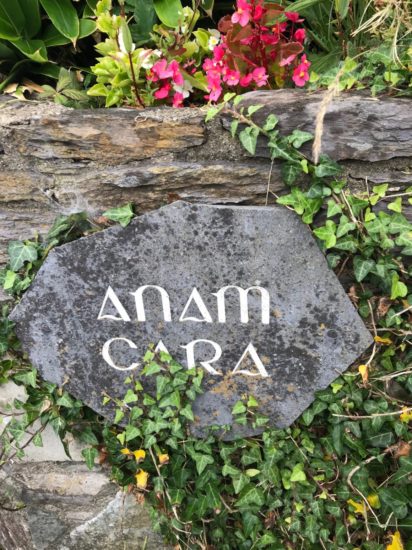
Anam Cara: the core residency in Eyeries
The main residency-style space associated with Eyeries is Anam Cara, a writers’ and artists’ retreat that has attracted international creatives for years. It sits on the Beara Peninsula near the village, with a strong emphasis on quiet, comfort, and time to work.
What Anam Cara offers
Details shift over time, so always check the official site or a current listing, but the core ingredients are consistent:
- Year-round retreat model – stays can often be booked across many months of the year, which gives you flexibility if you’re aligning with teaching schedules, jobs, or family commitments.
- Private rooms – you usually have your own space to sleep and decompress, which matters if your practice is mentally heavy or you’re revising a big project.
- Meals included – many stays include meals, which frees up a lot of energy. You’re not losing two hours a day on shopping and cooking in a remote area.
- Quiet grounds with water and mountain views – the site looks out over the Beara landscape, with garden spaces and walking access to the surrounding area.
- Self-directed work time – you’re not forced into a rigid program. You can structure your day the way your practice actually needs.
Some periods at Anam Cara focus heavily on writers, while other times are more mixed. Visual artists, poets, essayists, playwrights, and hybrid practitioners have all used the retreat as a base.
Who Anam Cara suits best
Anam Cara tends to work well if you are:
- A writer or text-heavy artist – novelists, poets, essayists, comics artists, scriptwriters, and researchers often get huge value here.
- A visual artist who doesn’t need heavy fabrication – painters, illustrators, photographers, and artists working small or digital can usually adapt easily.
- In a reflective phase – editing a book, shaping a thesis, planning a series, or rethinking a long-term project.
- Craving structure-light support – you want quiet, good food, and a stable base more than daily critiques or institutional programming.
If your work depends on specialized studios, industrial tools, or large-scale installation facilities, Anam Cara alone may feel limiting. In that case, some artists use it as a planning or drawing phase, then execute the more technical production at a different residency or home studio.
How Anam Cara differs from a conventional “production” residency
Compared with big institutional programs, Anam Cara is closer to a sanctuary:
- Less about public outcome – you might share work informally, but there’s usually no mandatory exhibition or final show.
- No big technical lab – you’re not walking into a printmaking workshop, digital fab lab, or media suite. Bring what you need, or keep your project portable.
- Deeper focus on personal process – it’s a good place to repair burnout, find a new voice, or test a shift in your practice away from your usual audience.
If you thrive with deadlines and highly structured mentorship, you might pair Anam Cara with a more formal residency before or after, using each for what it does best.
Working in and around Eyeries: daily life for artists
Because Eyeries is small and remote, logistics will shape your residency more than in a city. Planning for this upfront can protect your studio time once you arrive.
Cost of living and budgeting
The big variables to budget around are travel, accommodation, and food.
- Food and basics – local shops can have limited stock and slightly higher prices. If you have dietary restrictions or specific materials you rely on, plan ahead and bring what you can.
- Accommodation – if you are not staying at Anam Cara or a residency that includes housing, private rentals and guesthouses add up quickly, especially in peak travel season.
- Meals at a retreat – if your stay at Anam Cara includes meals, that can actually stabilize your budget and save time.
- Materials – specialty art supplies are unlikely to be available locally. Either ship ahead or bring a compact kit and plan larger production later.
A useful approach is to treat your Eyeries period as a sprint for thinking, writing, sketching, and small-scale work, then do the bulkier, expensive production at home or at a more equipment-heavy residency.
Where artists base themselves
There are no districts in Eyeries, just a village and the surrounding peninsula. Still, there are a few practical options in how you base your stay.
- In or right next to Eyeries village
Good if you want to walk to the nearest pub or shop, see some color in the streets, and feel anchored in a small community. Perfect when your priority is staying close to your retreat or accommodation. - Scattered rentals on the Beara Peninsula
Some artists rent cottages or small houses nearby, especially for longer stays or if traveling with a partner or family. This can give you more space to work, but it usually requires a car. - Using Eyeries as a seasonal base
Some artists pair a stay in Eyeries with time elsewhere in West Cork, splitting a longer trip between quiet retreat and a more connected hub, like a larger town with galleries and workshops.
Studios, galleries, and art spaces
Eyeries itself doesn’t have a dense cluster of galleries or institutions. The creative action is quieter and more dispersed.
- Residency and retreat spaces – your main “studio” is often your room, a shared work area, or a small studio on-site at a retreat.
- Local and seasonal art activity – in West Cork more generally, you will find artist-run spaces, galleries, and occasional open studios. These are usually a drive away from Eyeries.
- Landscape as studio – if your practice involves walking, sound recording, plein-air painting, land art, or photography, the Beara Peninsula itself becomes your workspace.
If you need a full printshop, darkroom, or metal shop, treat Eyeries as the research and concept phase, and look to other Irish residencies with bigger infrastructures for technical production.
Getting to Eyeries and moving around
Reaching a remote village on Ireland’s southwest coast takes a bit of planning, but it’s manageable once you map it out.
Arrival strategy
- By air – most international artists arrive in Ireland through airports such as Dublin, Cork, or Shannon, then connect onwards by train, bus, or car. Cork is usually the closest major airport to West Cork.
- By car – renting a car is the most flexible option. It lets you carry materials, groceries, and work easily, and gives you freedom to explore the peninsula on your own schedule.
- By public transport – you can often reach a larger West Cork town by bus. After that, you’ll likely need a local bus, taxi, or pickup arranged with your residency host for the final leg.
When you’re accepted to a residency, ask them directly for the simplest route from your arrival city. Hosts in rural areas are usually used to solving this puzzle with guests.
On the ground: mobility and access
- With a car – you have easy access to shops, trails, other villages, and any regional art spaces you want to visit. This is especially useful if you’re working with large canvases or doing field recording or location-based work.
- Without a car – it’s still possible, but you will need to be more self-contained. Confirm walking distances to the village, any available lifts to town, and how deliveries or supply runs work.
- Weather factor – rain and wind are part of the daily rhythm. Good boots and waterproof layers are not optional if you want to explore without losing studio days to recovery.
Visas, timing, and planning your Eyeries residency
Even a quiet retreat needs some admin behind it. Sorting visas, timing, and expectations early will let you actually focus once you arrive.
Visa basics for Ireland
Rules differ depending on your nationality and length of stay, so always check directly with Irish immigration authorities before you make firm plans. A few general points to keep in mind:
- Short stays – many artists attend residencies in Ireland on short-stay or visitor permissions, especially if they are not taking on formal employment.
- Payment and stipends – if a program includes stipends, teaching work, or paid public events, that can change what visa you need.
- Documentation – ask your residency for an official invitation letter and any description of the program that you can show at the border or to a consulate.
A simple way to approach this: decide how long you realistically need in Eyeries, then backtrack to see which visa route fits that timeframe and activity level.
When to go: seasons and your practice
Eyeries changes character through the year. Your best time depends on how you like to work.
- Spring and early autumn – often the sweet spot. You get decent weather, strong shifts in light, and fewer crowds in scenic areas than peak summer. Good for painting outdoors, long walks, and focused studio days.
- Summer – long daylight hours and easier travel. The area can be busier with visitors, and accommodation may be tighter, but if you love late-evening light and more human activity, it can be ideal.
- Winter – quiet, atmospheric, and intense. Short days, strong weather, and very little external distraction. Many writers and deep-focus projects thrive in this season, provided you are comfortable with solitude.
When you apply to any residency in or near Eyeries, think about your project’s needs: do you want to be pushed indoors by the weather, or do you want regular access to the landscape for research and sketching?
Connecting Eyeries with other residencies
Eyeries does not have a big institutional arts infrastructure, which is exactly why many artists choose it. Still, it can be smart to see it as part of a bigger residency arc.
Pairing Eyeries with other West Cork residencies
West Cork has additional residencies and art spaces outside Eyeries itself, including farmhouses and studios used as creative retreats. One example within the broader region is Carraig-na-gCat, run by the Albers Foundation near Glandore.
Carraig-na-gCat offers:
- A traditional farmhouse setting with a separate stone studio
- Ocean and countryside views that echo the calm of Beara
- Residencies typically several weeks long, with a focus on deep, uninterrupted work
Pairing a structured residency like this with a retreat period in Eyeries can give you two distinct modes: one phase anchored in a dedicated studio, and one phase where you roam, write, and plan.
Comparing Eyeries with other Irish programs
When you look across Ireland, you’ll see a spectrum:
- Rural retreats like Eyeries – quiet, landscape-focused, good for reflection and self-directed work.
- Academic or institutional residencies – linked to universities or art schools, with more critique, teaching, or research structures.
- Production-focused programs – designed around specific facilities like print, sculpture, or media labs.
Use Eyeries for the phase of your project that needs space to think, not an audience to watch. Then choose a more public or technically equipped residency for the phase where you want heavy production or mentorship.
Making the most of your time in Eyeries
Once you have the logistics and timing settled, the question becomes how to use those days well. A few habits can help you get the most from an Eyeries residency.
Set a project container before you arrive
Instead of trying to “fix everything” in your practice during one stay, give yourself a specific container, such as:
- Write a full draft of a manuscript or long essay series.
- Map and sketch a complete body of work without worrying about final production.
- Record audio, video, or photographic material focused on one theme.
- Re-edit and sequence existing work into a coherent book, show, or portfolio.
Having that container will let you move through your residency days with less background anxiety and fewer side quests.
Balance solitude with some structure
Retreat conditions can be powerful, but they can also feel unmoored. A simple daily structure helps:
- Block out dedicated making time every day, even if it is just a few hours.
- Schedule walks, reading, or thinking time, so it feels like part of the work, not procrastination.
- Use the landscape as a cue: for instance, do outdoor sketching when the light is strong, deep edits when the rain sets in.
Stay connected to your future self
Before you leave Eyeries, make sure the work you did there can actually travel with you:
- Back up writing and digital work in at least two places.
- Photograph drawings, sketchbooks, or ephemeral pieces.
- Write a short reflection on what shifted in your practice, so you remember it once you re-enter daily life.
Key points to hold onto
Eyeries on the Beara Peninsula is small, quiet, and visually intense. You are not going for a packed calendar of openings; you are going to hear your work more clearly. Anam Cara is the main retreat-style residency attached to the village, with private rooms, meals, and a strong emphasis on self-directed practice. The region’s remoteness demands more planning around transport, supplies, and budget, but gives you something rare in return: concentrated time, landscape that refuses to be background noise, and a chance to reset how you work.
If your current practice is crowded with deadlines, gigs, and constant output, an Eyeries residency can function as a turning point. Use it thoughtfully and it can shape the next few years of your work, not just the weeks you spend at the edge of Ireland.