City Guide
Cornwall, United Kingdom
How to choose the right Cornish residency for your work, energy, and budget
Why artists base themselves in Cornwall
Cornwall has a long-standing pull on artists: sharp Atlantic light, exposed coastlines, and a strong sense of place. It’s a county where you can switch between solitary, windswept headlands and small towns with active studios and galleries. If you want time to work, access to landscape, and a mix of grassroots and institutional support, Cornwall is a solid choice.
Instead of one central “scene”, Cornwall is a loose network of hubs:
- St Ives for art history, galleries, and the Porthmeor studios
- Falmouth/Penryn for contemporary, experimental, and university-adjacent work
- Penzance/Newlyn/Cape Cornwall for working-artist culture and sea-edge studios
- North and inland Cornwall for quiet, retreat-style residencies
When you’re choosing a residency in Cornwall, the first decision is less about the organisation and more about the kind of atmosphere you want: busy and connected, or slow and remote.
Penryn & Falmouth: Fish Factory and the contemporary scene
If you want community, conversation, and access to an art school ecosystem, Penryn and nearby Falmouth are a strong base. The area has a younger, experimental energy, fuelled by Falmouth University and a spread of independent spaces, studios, and small galleries.
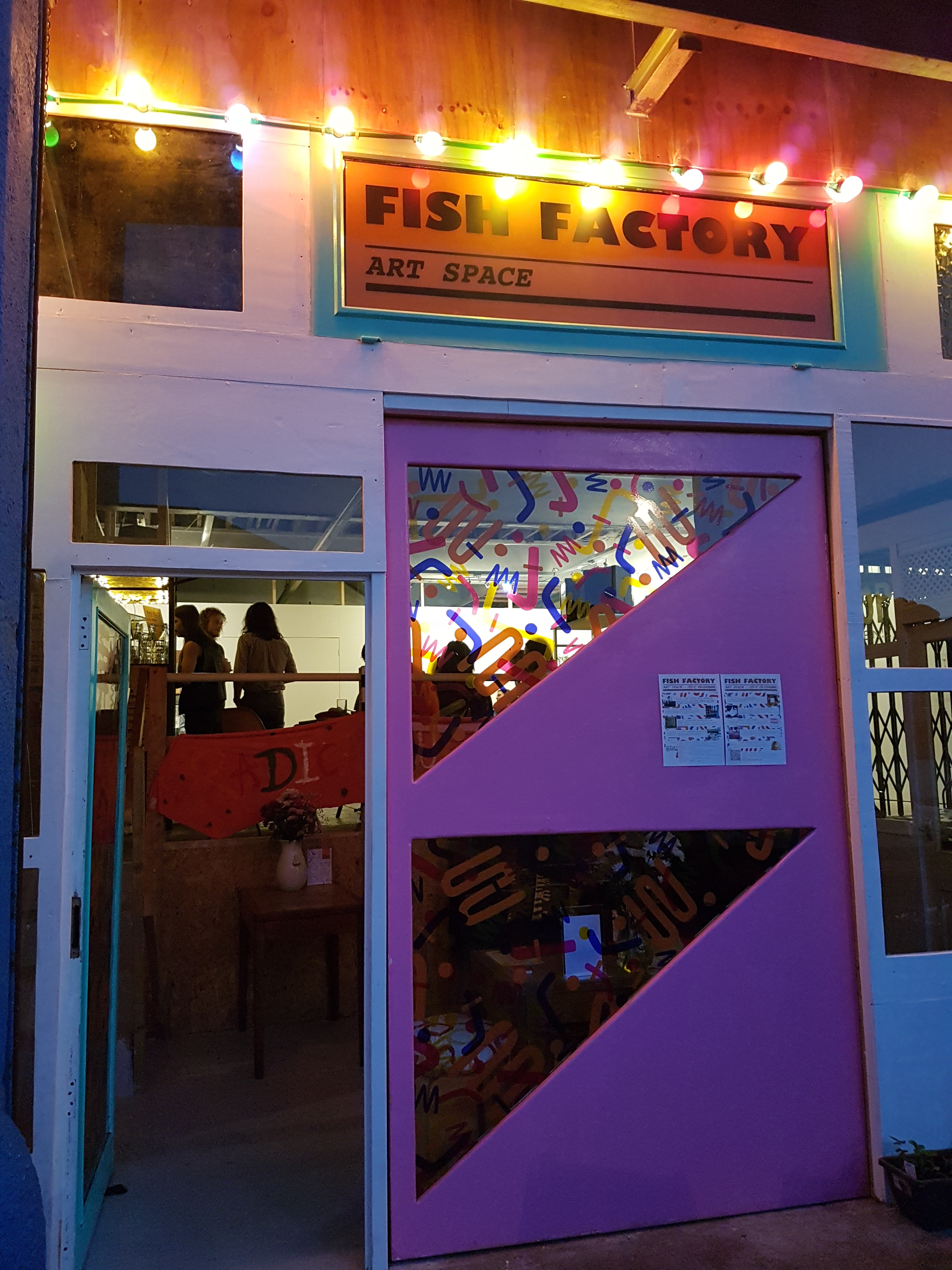
Fish Factory Art Space, Penryn
Residency type: Artist-run, 2–4 week residencies with optional live/work
Location: Penryn, in a former sail loft a short trip from Falmouth
Fish Factory Art Space offers a rolling residency programme that fits well if you want time to work but still feel plugged into a community. The space combines an open-plan cowork area, a small gallery/event space, a darkroom, photography facilities, an acoustic recording studio (by arrangement), and a vegan café on site.
You get:
- A desk in an open-plan cowork space as your working base
- Access to a black-and-white darkroom and photo studio by arrangement
- Potential access to an acoustic recording studio by arrangement
- A vegan café with a resident discount
- The option (not obligation) to host a public event or exhibition
- Possibility of live/work accommodation in their Baby Fish studios when available
The residency fees are typical of self-funded programmes, with separate rates depending on whether you stay in their live/work accommodation. Stays generally run 2–4 weeks, and you propose dates rather than working to a single annual intake.
Best if you want:
- Peer contact and potential collaboration
- Access to experimental and alternative programming
- Easy hops to Falmouth’s galleries and university scene
- A base that supports photography, moving image, sound, and interdisciplinary practices
Things to consider: The workspace is open-plan and social. If you need silence and seclusion, a more isolated setting might suit you better. Accommodation through the residency is limited, so line up options early or factor in renting locally.
Fish Factory Arts residency page
St Ives & Newlyn: historic studios and institutional links
St Ives is where Cornwall’s modernist narrative is most visible. You have Tate St Ives, the Barbara Hepworth Museum, and Porthmeor Studios, all rooted in a history of painters and sculptors drawn to the light and sea. The residency culture here is closer to an institutional model, often linked to partner organisations and curated programmes.
Porthmeor Studios & the Borlase Smart John Wells Trust
Residency type: Curated residency programmes in historic studios
Location: Porthmeor Studios in St Ives, plus Anchor Studio in Newlyn
Porthmeor Studios hosts a range of residency strands overseen by the Borlase Smart John Wells Trust. These include the Porthmeor Artists Residency Programme and partnerships with organisations such as the Freelands Foundation and Visual Arts Scotland, alongside programme links with Tate St Ives and others.
The emphasis here is on professional development within a historically charged environment. The studios are famous: Francis Bacon worked in one of them in the late 1950s, and Mark Rothko visited to exchange ideas with artists like Peter Lanyon and Patrick Heron. Residents are given time and space to develop work without a heavy requirement to exhibit.
You can expect:
- Dedicated studio space in a historic yet active complex
- Proximity to Tate St Ives and the local gallery ecology
- Potential for curatorial input and critical conversation depending on the specific programme
- A focus on making new work rather than producing a finished show on demand
Best if you want:
- Connection to British modernist history and its contemporary extensions
- Structured support and an explicit development framework
- A residency that carries institutional recognition and network potential
Things to consider: These residencies are often competitive and tied to partnership schemes, bursaries, or specific calls. They tend to suit artists who already have a body of work and are comfortable working in a context that is historically and critically loaded.
Borlase Smart John Wells Trust residencies at Porthmeor
Tate St Ives Artist Residency
Residency type: Institutional residency with fees and curatorial support
Location: Porthmeor Studios, St Ives
The Tate St Ives Artist Residency programme gives selected artists studio space in Porthmeor alongside a residency fee, materials costs, and curatorial support. The focus is on deepening professional practice and developing new work linked to the wider programme at Tate St Ives.
It is geared towards artists with a clear trajectory who can benefit from sustained curatorial dialogue, public-facing engagement, or research-based practice. For many artists this is less of a quiet retreat and more of a significant step in their career path.
Far West Cornwall: Cape Cornwall and sea-edge retreats
Head west past Penzance and the land narrows into some of the most exposed coastline in the UK. This is where you find residencies focused on uninterrupted work time, wild landscape, and minimal distraction. Penzance and Newlyn still give you access to shops and studios, but Cape Cornwall and nearby areas feel distinctly remote.
Brisons Veor, Cape Cornwall
Residency type: Self-funded, self-led live/work residencies (1–4 weeks)
Location: Cape Cornwall, near St Just, far west Cornwall
Brisons Veor is a residential artist studio overlooking the Atlantic, set up as a dedicated live-work space. The core idea is simple: give artists time and space away from everyday demands so they can concentrate on their work. It welcomes a wide range of disciplines, including visual arts, writing, music, performance, and mixed practices.
You get:
- A combined studio and accommodation environment
- Enough space for messy, experimental work
- A self-catering set-up so you can work odd hours
- The option to bring at least one additional artist or collaborator at an extra fee
The residency is self-funded, with weekly rates that vary by season and by whether you’re a UK-based or international artist. Extra artists can join you for an additional weekly charge, and there is a small service fee if you use their bedding.
Best if you want:
- Intense focus and very few social distractions
- Direct contact with the sea, cliffs, and changing weather
- Time to test new directions, plan long-term projects, or write
- The option to work side-by-side with a collaborator in the same house
Things to consider: You are relatively remote. A car makes life easier, especially for supplies and exploring the area. This kind of residency works well if you are self-directed and comfortable setting your own structure.
Brisons Veor residency information
Rural retreats: Luxulyan, Bodmin Moor, and North Cornwall
Cornwall’s inland and northern areas lean towards retreat-style residencies: more about process and reflection than external networking. These can be ideal if you need to reset your practice, write, or go deep into a specific project.
Artist Retreat in the wilds of Celtic Cornwall (Luxulyan)
Residency type: Nature-led retreat with studio and shepherd’s hut accommodation
Location: Luxulyan area, inland Cornwall
This residency, run by artist Wendy Rolt, is centred around a small farmstead with a 400-year-old granite farmhouse, a large studio, and a luxury shepherd’s hut. The emphasis is on stillness, slowness, and presence. You are surrounded by granite outcrops and uninhabited land, with space to walk, think, and work.
You get:
- A shepherd’s hut with bed, cooking facilities, hot shower, and log burner
- A large studio nearby with natural light and room to spread out
- Wood supplied for the burner and basic amenities sorted for you
- Possibility of a second hut for another artist, by arrangement
Residencies are self-funded and typically available for stays from several nights up to around two weeks. This suits artists who value solo time and process more than public outcomes or events.
Best if you want:
- A retreat feeling with strong connection to land and weather
- Space to reorient your practice, write, or draw without interruption
- A low-pressure environment with no expectation of an exhibition
Things to consider: The residency is not wheelchair accessible, and public transport is limited. It suits artists who are comfortable with rural living and self-directed routines.
Res Artis listing for the Luxulyan retreat and Wendy Rolt’s residency page
Endelienta Arts, St Endellion (North Cornwall)
Residency type: Structured residencies with development focus
Location: St Endellion, near the north coast
Endelienta Arts runs a programme of residencies designed for artists at various points in their careers. The setting is quiet and rural, bringing a different energy than the urban-ish hubs in Penryn or St Ives. Residencies there often prioritise development, experimentation, and sometimes public engagement, depending on the specific call.
Best if you want:
- A rural base with some organisational support
- Structured time that still leaves space for your own process
- To work in relation to a smaller local community
Because the programme can change, it makes sense to check current opportunities directly with the organisation.
Other rural residencies (Bodmin Moor and beyond)
There are smaller retreats and residencies scattered across inland Cornwall, such as the Roger and Laura Farnworth Arts Residency on the edge of Bodmin Moor. These tend to favour writers, poets, and artists whose work is deeply responsive to landscape and isolation.
If a residency you’re interested in has limited public information, reach out directly and ask clear questions about studio facilities, heating, internet, and access arrangements before committing.
Choosing your Cornish base: what to prioritise
Once you know the broad areas and key residencies, the real decision is about fit. A few filters can help you narrow options quickly.
1. Solitude vs. community
- High community contact: Fish Factory (Penryn) offers shared workspace, a public-facing programme, and proximity to Falmouth’s art life.
- Mid-level contact: Porthmeor/Tate-linked residencies mix focused work with institutional relationships and some public engagement.
- Maximum solitude: Brisons Veor, Luxulyan retreat, and Bodmin Moor-style residencies emphasise quiet and isolation.
2. Practice needs and facilities
- Photography / darkroom: Fish Factory gives access to a black-and-white darkroom and photo studio by arrangement.
- Sound / music: Fish Factory can offer an acoustic recording studio; Brisons Veor has space but you’ll want to ask about noise and neighbours.
- Large-scale or messy work: Brisons Veor and the Luxulyan studio both work well if you need to spread out.
- Writing / thinking / research: Far west and rural residencies give you the headspace to focus on text and planning.
3. Budget and costs
Cornwall can be cheaper than large UK cities but still sharp on cost, especially near popular coasts in high season. When comparing residencies, look beyond the weekly fee and factor in:
- Whether accommodation is included or separate
- Heating and seasonal energy costs in rural locations
- Transport (train vs. car hire vs. local buses)
- Food costs (self-catering vs. relying on cafés or restaurants)
Self-catering live/work residencies often work out more economical for longer stays, especially outside of peak tourist months.
Living and working in Cornwall during your residency
A residency is more than the studio; the surrounding infrastructure shapes your experience just as much.
Cost of living basics
Daily costs vary by town and season. St Ives, Falmouth, and hotspots along the coast are more expensive in summer, while rural inland areas tend to be cheaper but may require more travel for supplies.
To keep things manageable:
- Use residencies with kitchens and cook most meals
- Shop at larger supermarkets when you pass through bigger towns
- Blend work days with local walks instead of constant travel or paid activities
Transport and access
Cornwall is reachable by train (Penzance, Truro, St Austell, and branch lines to Falmouth and St Ives), by road, and by flights into Newquay. Once you’re there, public transport between towns exists, but rural residencies may involve limited buses and long walks.
Ask your host:
- How realistic it is to do the residency without a car
- Nearest supermarket or main food shop
- Whether they offer pickups from stations or can advise on taxis
Access and physical comfort
Many Cornish buildings are older and not fully accessible. Stairs, uneven floors, and steep lanes are common. If accessibility is important for you, ask specifically about:
- Step-free access to accommodation and studio
- Bathroom layout and grab rails if needed
- Heating type and how warm spaces are in colder months
Rural residencies like the shepherd’s huts and some farmhouses may feel very exposed in strong weather, which some artists love and others find draining. Consider which side you’re on.
Connecting with local art communities while in residence
Even if you choose a quiet retreat, you can still tap into Cornwall’s broader art life.
- St Ives: Visit Tate St Ives and Porthmeor Studios, explore independent galleries, and check for talks or opening nights.
- Falmouth/Penryn: Look for exhibitions, student shows, and events linked to Falmouth University and independent spaces.
- Penzance/Newlyn: Explore local studios, galleries, and community art projects.
Many residencies either host or support open studio events, informal sharings, or small gatherings. If you are interested in this, say so early so the organisers can factor it into their planning.
Visa and admin considerations for international artists
If you are travelling from outside the UK, check UK government guidance on visitor permissions for creative work before booking. Short residencies that do not involve employment may fit within visitor rules, but each case is different. Clarify with the residency whether the arrangement includes fees, stipends, teaching, performances, or other activities that might require a different visa category.
Ask hosts for:
- A formal invitation letter describing the residency
- Details of any payments or support they provide
- Confirmation that they understand your intended immigration route
How to choose your Cornwall residency
When you’re comparing options, a simple set of questions can save time:
- Do you want a social programme or deep retreat?
- Do you need specific facilities (darkroom, sound, large studio, wheelchair access)?
- Is the residency fully self-funded, partially supported, or paid?
- How easy will it be to reach the location with the gear you need?
- Does the residency’s rhythm match your working style: short, intense bursts vs. slower build?
If you sketch those answers first, it becomes clear quickly whether you belong in a place like Fish Factory, a historic studio in St Ives, a sea-edge house at Cape Cornwall, or a shepherd’s hut in the middle of granite and gorse.
Cornwall can hold both ends of the spectrum: a quiet hut where you barely see another person, and a shared studio next to a café full of artists and musicians. The right residency is the one that amplifies, rather than fights, the way you already work.