City Guide
Christchurch, New Zealand
How to plug into Christchurch residencies, art spaces, and everyday life as a visiting artist
Why Christchurch / Ōtautahi works well for residencies
Christchurch sits in a sweet spot: big enough to have a serious art ecosystem, small enough that you can actually meet people and get around easily. The city’s identity has been reshaped by the earthquakes and rebuild, so questions of place, memory, and change are right on the surface. That energy runs through a lot of the work made here.
The core things that usually draw artists in are:
- Heritage plus rebuild: restored stone buildings next to new architecture, public art, and ongoing urban experiments.
- Compact city centre: you can often walk or bike between your accommodation, galleries, and the river.
- Diverse practices: visual arts, design, performance, music, writing, and research-linked work all have a place.
- Active institutions: The Arts Centre Te Matatiki Toi Ora, Christchurch Art Gallery, CoCA Toi Moroki, and the University of Canterbury all feed into residency life.
If you enjoy mixing studio time with public engagement and casual encounters with other creatives, Christchurch is a good fit.
The Arts Centre Creative Residences
The Arts Centre Te Matatiki Toi Ora is the cultural heart of central Christchurch. Its Creative Residences sit right inside that precinct, in the restored West Lecture building. For many visiting artists, this is the most visible and straightforward way to spend focused time in the city.
What the residency actually looks like
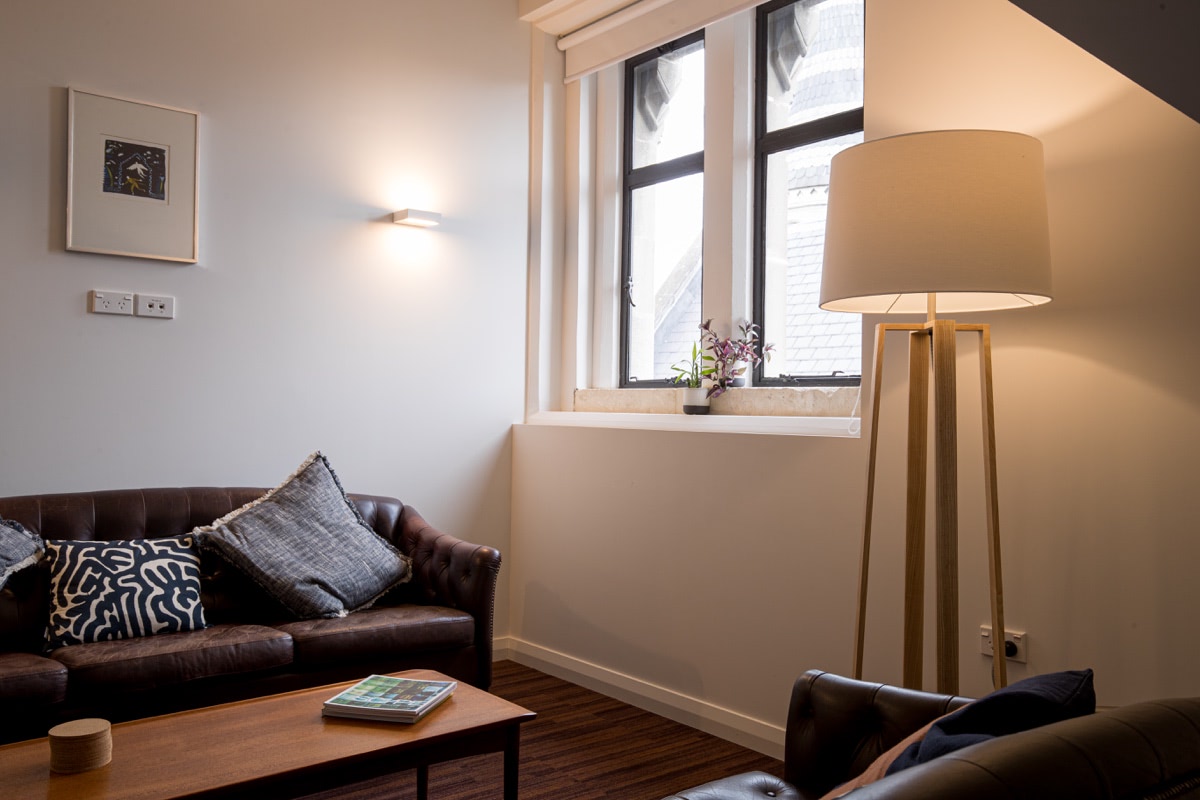
The Creative Residences are set up as a shared apartment with four large double bedrooms, each with its own private bathroom. Residents share a contemporary kitchen, living and dining area, study nook, and balcony. The whole space is wheelchair accessible.
According to published programme information and international listings, the residency typically offers:
- A fully furnished private room with a work desk and bathroom.
- Shared living spaces with other residents, which helps with informal peer support.
- A daily per diem (quoted as NZ$85 per day in recent calls) to support food and everyday costs.
- Travel support (quoted as up to NZ$1,500 NZD) towards getting to and from Christchurch.
- Publicity and visibility through The Arts Centre’s channels.
For some parts of the year, the same apartment is run as an AirBNB-style stay for the general public. Outside those months, it functions as an artist and creative residency.
What kind of practice it suits
The Arts Centre explicitly welcomes a broad sweep of creative professionals:
- visual artists and photographers
- craft and object-based practitioners
- writers and poets
- musicians and sound artists
- dancers and choreographers
- filmmakers and media artists
- designers and interdisciplinary practitioners
The residency is open to artists from Aotearoa New Zealand and from overseas, and the atmosphere is project-focused without being rigidly themed. You propose what you want to work on and how you might connect with local communities.
Expectations and public programme
The Arts Centre is a public-facing precinct, so residencies usually include some kind of community interaction, for example:
- an artist talk or in-conversation event
- a workshop or short course
- a performance, gig, or concert
- a small exhibition, screening, or open studio
The emphasis tends to be on sharing process and ideas rather than producing a huge finished body of work under pressure. Still, it’s worth arriving with a clear project and some realistic outcomes in mind.
Why artists choose it
For many artists, the Creative Residences tick a lot of practical boxes:
- Location: You are in the middle of the arts precinct, within walking distance of Christchurch Art Gallery, CoCA, the river, and city amenities.
- Community: You live alongside other creatives and are surrounded by studios, galleries, and events.
- Financial support: The per diem and travel contribution are significant, especially by New Zealand standards.
- Profile: Public programming can raise your visibility with local audiences and visiting tourists.
The programme also has a track record. Past residents associated with The Arts Centre’s residency history include artists across disciplines such as Michel Tuffery, Raewyn Hill, Mahinarangi Tocker, Areta Wilkinson, and many others. That breadth gives you a sense of who the programme takes seriously.
How to approach an application
If you are thinking of applying, it usually helps to:
- Frame a project that responds to place: Think about Ōtautahi, the rebuild, heritage architecture, or local communities as part of your work, even if subtly.
- Outline how you will use the time: Be concrete about research, making, experimenting, or collaborating.
- Propose a realistic public outcome: A talk, a workshop, a screening, or a small show that fits the length of stay.
- Show that you are independent: The residency supports you but does not micro-manage your process, so self-direction is valued.
To check current details, go to The Arts Centre’s Creative Residences page at artscentre.org.nz or watch for calls via international mobility sites such as On the Move.
Macmillan Brown Centre for Pacific Studies Artist in Residence
The Macmillan Brown Centre for Pacific Studies at the University of Canterbury hosts residency opportunities for Pacific artists, often in partnership with Creative New Zealand and other organisations. These are not constant year-round residencies but appear in cycles tied to specific projects or events.
Focus and structure
A recent residency call described a three-month stay for a Pacific artist to develop an innovative project connected to climate change and Pacific communities. The residency included:
- Three months of dedicated time for a focused project.
- Access to the university environment, including the Pacific Creative Hub.
- A public exhibition or outcome linked to a major climate adaptation event.
- Engagement with researchers, students, and wider communities in Ōtautahi.
The intention is to support work that is both creatively strong and socially or environmentally engaged.
Who this is right for
This kind of residency is tailored for:
- Pacific artists based in Aotearoa or the wider region.
- Practices that already explore climate, environment, migration, community, or identity.
- Artists comfortable working in a research-heavy environment and speaking about their work publicly.
Expect to spend time both making and talking: giving presentations, attending events, possibly collaborating with researchers or students.
How to track opportunities
These residencies are announced periodically rather than running constantly. To stay on top of them:
- Keep an eye on the University of Canterbury news pages and arts announcements.
- Watch Creative New Zealand listings for residencies and fellowships.
- Follow arts news platforms such as Toi Ōtautahi, which sometimes highlight local opportunities.
When you see a call, read the theme closely. Proposals that clearly connect your practice with the stated focus (for example, climate adaptation or Pacific community perspectives) tend to land better than generic project descriptions.
Self-funded and short-stay options at The Arts Centre
Alongside fully supported residencies, The Arts Centre also offers the Creative Residences as paid accommodation for creatives at certain times. This can work as a light-touch residency if you have your own funding or want to extend another stay.
How the self-funded stays work
During some periods, The Arts Centre invites artists (and sometimes their partners) to stay in the Creative Residency apartment for two to ten weeks, depending on availability. In that case:
- You pay a rental fee that covers cleaning, linen, power, and Wi-Fi.
- You do not receive a stipend or artist income from The Arts Centre.
- You can often still offer a public programme such as a talk, workshop, or gig, which helps you connect with local audiences.
This model is essentially a self-directed residency in a highly connected location. It is especially useful if you have external funding, a grant, or institutional support from your home country and want a base inside the arts precinct.
When to consider a self-funded stay
This can be a good option if you:
- already have travel plans in Aotearoa and want a focused making block.
- have funding that covers accommodation but not necessarily a fully curated residency.
- prefer more flexibility, with less emphasis on formal expectations.
To explore this, contact The Arts Centre directly through the Creative Residences page and ask about current availability and rates.
Cost of living and everyday budgeting
New Zealand is not cheap, and Christchurch is no exception, though it often sits below Auckland and Wellington in terms of housing costs. Residency support can make a huge difference to how viable a stay feels.
Key costs to plan for
- Accommodation: If you are in a funded residency at The Arts Centre, your room is covered. For self-funded stays, expect central accommodation and heritage buildings to sit at the higher end of local prices.
- Food: Supermarkets can be noticeably more expensive than in many parts of the world. Cooking at home will save you money compared with eating out regularly.
- Transport: Central Christchurch is very walkable and bikeable. If you stay near the CBD, you may only need buses occasionally, which keeps costs down.
- Studio and materials: Some residencies provide only living space, so factor in materials, printing, fabrication, or specialist studio access if your project needs it.
If you are coming on a fully funded residency with a per diem and travel support, you are in a strong position. If you are self-funding, it helps to arrive with a clear budget and, ideally, some external support such as a grant from your home country.
Neighbourhoods and where to base yourself
If your residency is at The Arts Centre or the University of Canterbury, your main decision is how far you want to be from the city centre. Each area has its own rhythm.
Central City / CBD
This is where The Arts Centre, Christchurch Art Gallery, CoCA, the river, and a lot of hospitality and cultural events sit. Staying here means:
- short walks to openings, performances, and meetings
- easy access to public transport
- higher accommodation costs than some suburbs
For time-limited residencies with public outcomes, being in the CBD often makes the most sense.
Addington and Sydenham
These inner suburbs tend to have a mix of housing, small businesses, and creative spaces. They can offer:
- relative affordability compared to right in the CBD
- short bus or bike rides into the centre
- some warehouse and workshop-style spaces suitable for messy or larger-scale work
If your residency does not prescribe specific accommodation, these areas are worth exploring for medium-term stays.
Industrial and eastern areas
Woolston, Phillipstown, and other industrial or semi-industrial areas can sometimes be good for artists who need:
- larger studio footprints
- access to workshops or fabrication
- a little distance from the tourist flow
These areas are less polished but can be practical, especially for project-based work involving building, installation, or sound.
Galleries, institutions, and where to show or connect
Your residency experience in Christchurch will feel very different if you plug into the local institutions and independent spaces. Some key places to know:
- The Arts Centre Te Matatiki Toi Ora – heritage precinct with galleries, performance venues, studios, and markets. If you are a Creative Resident, you are already right there.
- Christchurch Art Gallery Te Puna o Waiwhetū – the main public gallery, with major exhibitions and a solid public programme of talks and events.
- CoCA Centre of Contemporary Art Toi Moroki – focused on contemporary practice, often hosting exhibitions and programmes that connect with current conversations.
- University of Canterbury – including the Macmillan Brown Centre for Pacific Studies and the School of Fine Arts, which can be points of contact for research-based or Pacific-focused work.
- Project and pop-up spaces – Christchurch has a culture of temporary and project-based venues, especially as the city continues its rebuild. These spaces come and go but can be great for short-run exhibitions or performances.
During your residency, keep an eye on local listings from Christchurch Art Gallery, CoCA, and Toi Ōtautahi for events. Openings and talks are often where you meet the people who can help you realise side projects or future collaborations.
Transport, logistics, and moving work around
Christchurch has its own international airport, which is a major advantage if you are coming from overseas. Once you are in the city, most residency-life logistics are manageable.
Getting around day to day
- On foot: The central city is walkable, especially if you are based at The Arts Centre.
- Bike: Cycling is common and there are bike lanes on many routes.
- Bus: The bus network connects suburbs to the CBD reasonably well.
- Car: Useful if your project involves regional travel, community work outside the centre, or frequent trips to industrial fabricators.
If your work involves large-scale objects, sculpture, or heavy gear, ask your host about:
- loading access and freight delivery
- onsite storage options
- connections to local makers, printers, or framers
Planning this early can save a lot of stress around install and deinstall.
Visas and admin for international artists
If you are not a New Zealand citizen or resident, you will need to match your visa to what you plan to do. This is one of those things to get right from the outset.
What to clarify with your host
Before booking flights, ask your residency host:
- whether the residency includes a stipend or fee
- whether you will be doing public-facing work such as workshops or performances
- how they usually describe the residency to Immigration New Zealand (work, cultural exchange, study, or something else)
This will affect whether you need a visa that allows work, or whether a visitor-type visa is enough. Hosts are often used to writing support letters and can tell you what has worked for past residents.
Things to check for yourself
Read the current rules on the Immigration New Zealand website and look carefully at:
- length-of-stay limits
- conditions around receiving money while in the country
- any specific categories for cultural or academic visitors
Visa processing can take time, so build that lead time into your application and project schedule.
When to be in Christchurch and when to apply
Christchurch has a temperate climate with warm summers and cool winters. Each season can work, but they feel quite different as a working artist.
Seasonal feel
- Spring and summer: often good for outdoor work, field research, and public events with more foot traffic.
- Autumn: stable weather, good light, and often a strong programming period for institutions.
- Winter: colder and darker, but great for studio-heavy projects where you want to hunker down and concentrate.
The Arts Centre’s Creative Residences are also used as public accommodation in some summer months, so artist residency slots may be arranged outside peak tourism periods. Dates shift over time, so always check the current details with the host.
Application timing
Different programmes follow different cycles:
- The Arts Centre Creative Residences tends to run on scheduled calls with specific residency windows.
- Macmillan Brown and other university-linked opportunities are often tied to particular events, themes, or partnerships.
- Some self-funded stays can be negotiated more flexibly around availability.
The safest strategy is to sign up for newsletters from The Arts Centre, Creative New Zealand, and Toi Ōtautahi, and set reminders to check periodically for new calls.
Local communities, events, and how to actually meet people
One of Christchurch’s strengths is how quickly you can get face time with other artists, curators, and organisers, especially if you show up consistently.
Where to find your people
- Gallery openings: Christchurch Art Gallery, CoCA, and smaller spaces are regular gathering points.
- The Arts Centre: markets, performances, workshops, and talks often feature resident artists or local practitioners.
- University events: public lectures, symposia, and student shows at the University of Canterbury can connect you with researchers and emerging artists.
- Toi Ōtautahi: the city’s arts strategy platform shares stories, interviews, and event info that can help you map the scene.
Residencies at The Arts Centre often ask you to offer something public, which doubles as a networking event. An artist talk or workshop can be a strong way to introduce your practice and invite collaboration.
How to make the most of your stay
- Arrive with a few clear questions you want to explore in Ōtautahi. This helps conversations go deeper than small talk.
- Say yes to invitations early on, then protect your studio time once you have a sense of what is valuable.
- Document your work and events while you are there, so you can use the residency as a springboard for future applications.
If you are proactive, Christchurch can give you a focused, connected residency experience with room to experiment and build new relationships.