City Guide
Christchurch, New Zealand
How to plug into residencies, art spaces, and communities in Ōtautahi Christchurch as an artist in residence
Why Christchurch works well as a residency city
Christchurch / Ōtautahi is a good fit if you want serious arts infrastructure without living in a massive city. The earthquakes forced a lot of creative rebuilding, so you get a mix of heritage buildings, contemporary architecture, and public art that keeps the place visually active.
The city is anchored by institutions like The Arts Centre Te Matatiki Toi Ora, Christchurch Art Gallery Te Puna o Waiwhetū, the University of Canterbury, and a cluster of independent galleries and studios. For an artist in residence, that means:
- Access to exhibitions, talks, libraries, and archives
- Chances to collaborate across disciplines (music, performance, craft, research)
- A network of artists, students, and curators within walking or biking distance
The city is flat, relatively compact, and more affordable than Auckland. You can base yourself centrally and move mostly on foot or bike, then reach the coast or hills easily for landscape-based work. That balance is a big part of Christchurch’s residency appeal.
The Arts Centre Creative Residences
The Arts Centre Te Matatiki Toi Ora sits right in central Christchurch in a restored Gothic-style precinct. Its Creative Residences are one of the city’s main go-to options for artists wanting a structured residency.
What the Creative Residences offer
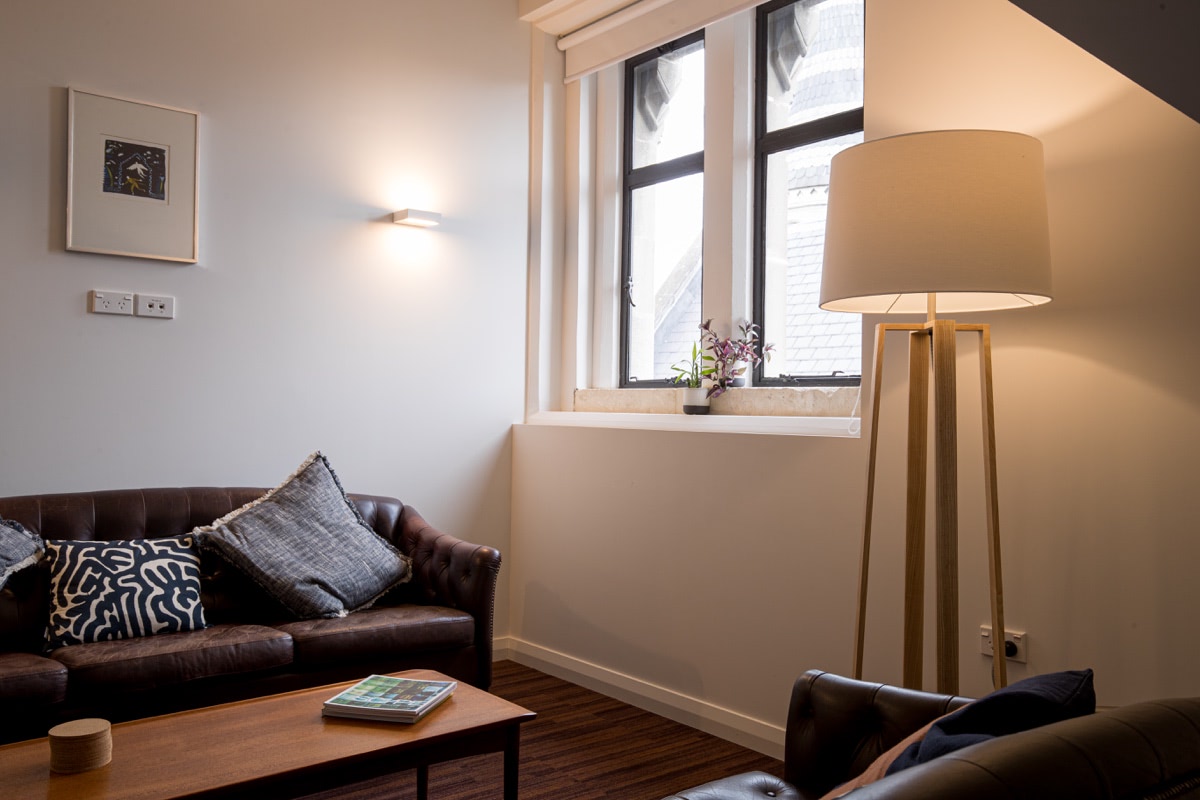
The Arts Centre describes the Creative Residences as a hub for creatives to stay, make connections, and be inspired by the environment around them. You stay in a heritage building (the West Lecture building, 1917) that’s been earthquake-strengthened and refitted for comfort.
Typically, the residency package includes:
- A fully furnished private room with a work desk and bathroom
- Shared living spaces with other residents
- Central location inside the Arts Centre precinct, in the middle of the cultural area
- Visibility via the Arts Centre’s communication channels
Some programme rounds also offer a per diem and travel contribution; check the current details on the Arts Centre site, as funding arrangements can vary by year or residency type.
Residency format and expectations
The Creative Residences are usually self-directed. You shape your own project and use the time as you need, but the host encourages public engagement. That might look like:
- An artist talk or open studio
- A workshop or class
- A small exhibition, pop-up performance, reading, or concert
Past residents have included a mix of visual artists, musicians, writers, dancers, and interdisciplinary practitioners. Names like Bic Runga and Michel Tuffery give a sense of the level, but it isn’t only for established figures; mid-career and emerging artists are part of the mix too.
Who this residency suits
You’ll get the most from the Creative Residences if you:
- Enjoy being in a public-facing hub where people can easily drop in or attend your events
- Like heritage architecture and central-city energy more than remote solitude
- Want to meet other creatives across disciplines, not just in your own field
- Are open to giving at least one public-facing outcome: talk, workshop, performance, or similar
It’s especially good if you’re working on a project that benefits from on-the-ground research in the city: urban photography, community-based work, sound recording, writing, or anything that interacts with architecture and public life.
Self-funded options at the Creative Residences
The Arts Centre also runs a self-funded residency model using the same apartment. This is closer to renting a creative apartment than to a fully funded residency, but it can be strategically useful.
Key points about the self-funded setup:
- Stays typically range from 2–10 weeks, depending on availability
- You pay a rental fee that covers cleaning, linen, power, and Wi-Fi
- There is usually no artist fee or stipend attached
- You can propose an optional public programme (artist talk, workshop, gig, exhibition) as a way to connect locally
This model makes sense if you already have funding, want to work independently in Christchurch, and still value being in a recognised arts environment with built-in community links.
More information and current terms are on The Arts Centre site under Creative Residences: https://www.artscentre.org.nz/visit/creative-residences/
Macmillan Brown Centre for Pacific Studies Artist in Residence
The Macmillan Brown Centre for Pacific Studies, based at the University of Canterbury, runs an Artist in Residence programme that focuses on Pacific artists and often intersects with climate, research, and community themes.
Residency focus and structure
This residency usually runs for around three months and is funded by Creative New Zealand and the university. The core idea is to support significant new work by a Pacific artist while embedding them in a research-focused environment.
Typical features include:
- A defined residency period of several months
- Workspace and institutional support via the Macmillan Brown Centre and the Pacific Creative Hub
- Public outcomes such as an exhibition, presentation, or event
- Connection to a broader public or academic event (for example, a climate adaptation conference in some years)
Application materials usually ask for an up-to-date CV and a concise project proposal outlining what you want to develop during the residency and how it connects with Pacific issues, climate, or community.
Who this residency suits
This programme is tailored to:
- Pacific artists working in any medium, including visual arts, performance, writing, sound, or digital
- Artists whose practice already engages with climate change, Pacific futures, or social and cultural questions
- People comfortable in an institutional context: seminars, public talks, and collaboration with researchers or students
It’s a strong option if you want to balance studio creation with research and public dialogue, rather than working in isolation. The link to major events and conferences can offer visibility far beyond Christchurch.
You can read more on the University of Canterbury’s news and Macmillan Brown pages: https://www.canterbury.ac.nz
Movement Art Practice: Research Exchange / Performance residencies
Movement Art Practice (MAP) is based in Ōtautahi Christchurch and focuses on movement-based and interdisciplinary practices. Their Research Exchange residency at Sutton House is a good reference if your practice touches dance, performance, or embodied research.
How MAP’s Research Exchange works
In one recent format, MAP’s programme invited two artists to work at Sutton House, near the Residential Red Zone in Christchurch. The residency combined studio research with public components.
Artists in residence were expected to engage with:
- At least one workshop each (sometimes combined or co-led)
- A shared closing research presentation
- A written contribution to MAP’s online platform
The residency supported deep research and experimentation while asking artists to share process and thinking with local communities. Outcomes sometimes fed into performance events and exhibitions, such as programmes at CoCA – Centre of Contemporary Art Toi Moroki.
Details like dates, funding levels, and length of stay can change from round to round, so check MAP’s site or Toi Ōtautahi listings for current information: https://movementartpractice.org and https://toiotautahi.org.nz
Who MAP is ideal for
You might gravitate to MAP if you:
- Work in dance, performance, embodied research, or movement-led interdisciplinary practice
- Like sharing process, not just finished work
- Appreciate a residency that is tightly framed around workshops, presentations, and reflection
This is less of a quiet retreat and more of a research and exchange lab.
White Room Creative Space: Boost Ōtautahi Artist Residency
The White Room Creative Space in Ōtautahi supports artists with intellectual disabilities and neurodiverse artists. As part of that work, the Boost Ōtautahi Artist Residency invites a guest artist to collaborate with White Room artists.
Residency flavour
In a recent example, an artist in residence spent three weeks working with White Room artists to create a short animated film. That gives a rough sense of the structure: short-term, project-based, and highly collaborative.
Key elements usually include:
- A defined short residency period (often a few weeks)
- Collaboration with White Room artists in a supported studio setting
- A clear project outcome such as a film, exhibition, or performance
This kind of residency is less about solo development and more about shared authorship, mentorship, and community-building.
You can check the White Room’s site for current programmes and opportunities: https://www.thewhiteroom.org.nz
How residencies connect to the wider Christchurch art scene
Even if your accommodation and studio are provided, your experience of Christchurch will hinge on how you move through the city’s art ecosystem. A few anchors make it easier to plug in.
Galleries and institutions to know
- The Arts Centre Te Matatiki Toi Ora – Heritage precinct with studios, shops, performance spaces, and the Creative Residences. A natural hub for talks, concerts, small festivals, and artist-led events. Site: https://www.artscentre.org.nz
- Christchurch Art Gallery Te Puna o Waiwhetū – Major gallery with contemporary and historical exhibitions, public programmes, and artist talks. Good for seeing how your work might sit in a broader context. Site: https://christchurchartgallery.org.nz
- CoCA – Centre of Contemporary Art Toi Moroki – Contemporary art space that often works with residencies and experimental projects, including collaborations with initiatives like MAP. Site: https://coca.org.nz
- University of Canterbury – Relevant for research-led artists, especially via the Macmillan Brown Centre for Pacific Studies and the Pacific Creative Hub. Site: https://www.canterbury.ac.nz
Artist-run and project spaces
The specific spaces shift over time, but artist-run initiatives and small project spaces are central to Christchurch’s scene. When you arrive, scan:
- Toi Ōtautahi’s listings for current spaces and events: https://toiotautahi.org.nz
- Community noticeboards at The Arts Centre and Christchurch Art Gallery
- Social media for local artist-run spaces and pop-up exhibitions
Openings, open studios, and public workshops are where you’ll meet peers and collaborators. If your residency host encourages public programming, these spaces are also where you might stage your own event.
Neighbourhoods and living logistics
If your residency doesn’t include housing, or you’re staying on before or after your programme, a few neighbourhoods tend to work well for artists.
Central Christchurch / CBD
Staying central puts you close to The Arts Centre, Christchurch Art Gallery, CoCA, and a cluster of cafes, bars, and venues. You can walk between most cultural sites and bike easily to others. Rents can be higher but short stays are simpler to manage here.
Addington
Addington sits just southwest of the CBD. It’s a mixed-use area with venues, small businesses, and some creative studios. It’s a good compromise if you want to be near central events but with a different pace and sometimes more space.
Sydenham and Waltham
These neighbourhoods have a more industrial feel in places and can host workshops, maker spaces, and studios that need floor space and noise tolerance. If your work is installation-heavy, sound-based, or fabrication-focused, this area can be useful for offsite production.
Riccarton and Ilam
Closer to the University of Canterbury, this area makes sense if you’re involved with the Macmillan Brown Centre or want to be near students and academic programming. You still have reasonable access to the city by bike or bus.
Coastal suburbs (Sumner and nearby)
If your practice leans into landscape, sound, or video, coastal suburbs like Sumner can be appealing. You get beach access and cliffs, which are strong locations for field recording and photography. The trade-off is a longer commute to central events, especially without a car.
Costs, funding, and visas
Residencies in Christchurch span fully funded, partially funded, and self-funded models. To plan realistically, break your costs down into accommodation, food, transport, materials, and visa/travel.
Funding structure to watch for
- Fully or partly funded residencies – These may include accommodation, a stipend or per diem, and sometimes travel support. The Arts Centre Creative Residences and the Macmillan Brown programme are examples where costs are at least partially covered in many rounds.
- Self-funded residencies – You pay rent or fees but gain access to a curated environment and community. The Arts Centre’s self-funded option and short-term project collaborations (like the White Room residency) can fall into this category.
If your costs aren’t fully covered, consider applying to your local arts council, cultural foundation, or international travel grant schemes to support the residency.
Visa basics
Visa rules depend on your passport and the length and nature of your stay. Typical steps:
- Check Immigration New Zealand’s site to see if you can enter on a visitor visa or if another category is better for a funded residency.
- Ask your residency host for an invitation letter that spells out the dates, support offered, and the nature of the programme.
- Confirm that receiving a stipend or per diem is allowed under your visa type.
If you’re a Pacific artist considering the Macmillan Brown residency, factor in time to arrange travel and visas early. The host institution will often provide practical documentation if you ask.
How to choose the right Christchurch residency for you
Start by matching your needs to what each programme emphasises.
- Need a central base with heritage surroundings and broad visibility? Focus on The Arts Centre Creative Residences.
- Working as a Pacific artist on climate, identity, or community issues? Look closely at the Macmillan Brown Centre for Pacific Studies residency.
- Movement, performance, or body-led research? Explore Movement Art Practice and related performance-focused opportunities.
- Interested in collaboration with disabled and neurodiverse artists? The White Room’s Boost Ōtautahi residency is a meaningful, socially engaged option.
Once you narrow the field, check:
- What residencies expect in terms of public outcomes (talks, workshops, exhibitions)
- How much time you’ll actually have for your own work once those commitments are met
- What level of financial support is offered, if any
- How the physical setting supports your process (city centre vs residential vs institutional)
Practical moves once you land in Ōtautahi
To make your residency time count, you can:
- Visit The Arts Centre, Christchurch Art Gallery, and CoCA early. Note the programme calendars and sign up to mailing lists.
- Scan Toi Ōtautahi’s events and opportunities page weekly: https://toiotautahi.org.nz
- Ask your residency host who they can introduce you to: curators, other artists, organisers, or researchers.
- Plan at least one event where people see your process or work. Even a modest studio visit can spark ongoing collaborations.
- Use days off to walk the city, document public art, and visit coastal or river sites if your practice is responsive to place.
If you approach Christchurch as both a working base and a network to plug into, residencies there can feed your practice long after you leave.