
City Guide
Christchurch, New Zealand
How to use Christchurch as your base for funded residencies, focused studio time, and Pacific-connected research projects.
Why Christchurch / Ōtautahi is worth your residency time
Christchurch sits in that sweet spot between a major arts hub and a liveable, walkable city. You get institutional infrastructure, an active creative community, and easy access to beaches and hills without the constant pressure of a capital city.
If you are residency-hunting, Christchurch gives you:
- Serious arts infrastructure – The Arts Centre Te Matatiki Toi Ora, Christchurch Art Gallery Te Puna o Waiwhetū, CoCA Toi Moroki, and the University of Canterbury are all key anchors.
- A culture of experimentation – Post-earthquake rebuilding has encouraged site-responsive work, public art, and community projects.
- Pacific and research context – Especially through the Macmillan Brown Centre for Pacific Studies and the Pacific Creative Hub.
- Manageable scale – You can actually get across town, meet people, and see shows without spending your life in transit.
- Landscape access – Beaches, hills, and Banks Peninsula are close enough for fieldwork or retreat-style days.
Think of Christchurch as a mid-size studio city: big enough to support ambitious projects, small enough that people remember your name.
The Arts Centre Creative Residences: Central, funded, and visible
Location: The Arts Centre Te Matatiki Toi Ora, central Christchurch
Who it suits: Visual artists, writers, musicians, dancers, filmmakers, designers, and interdisciplinary creatives who want a solid base with built-in visibility.
What the Arts Centre residency actually offers
The Arts Centre Creative Residences sit in a beautifully restored heritage building in the old university quarter, now a cultural hub. The programme supports creative professionals working in almost any medium on a defined project.
Key features include:
- Residency length: Typically between 1 and 3 months.
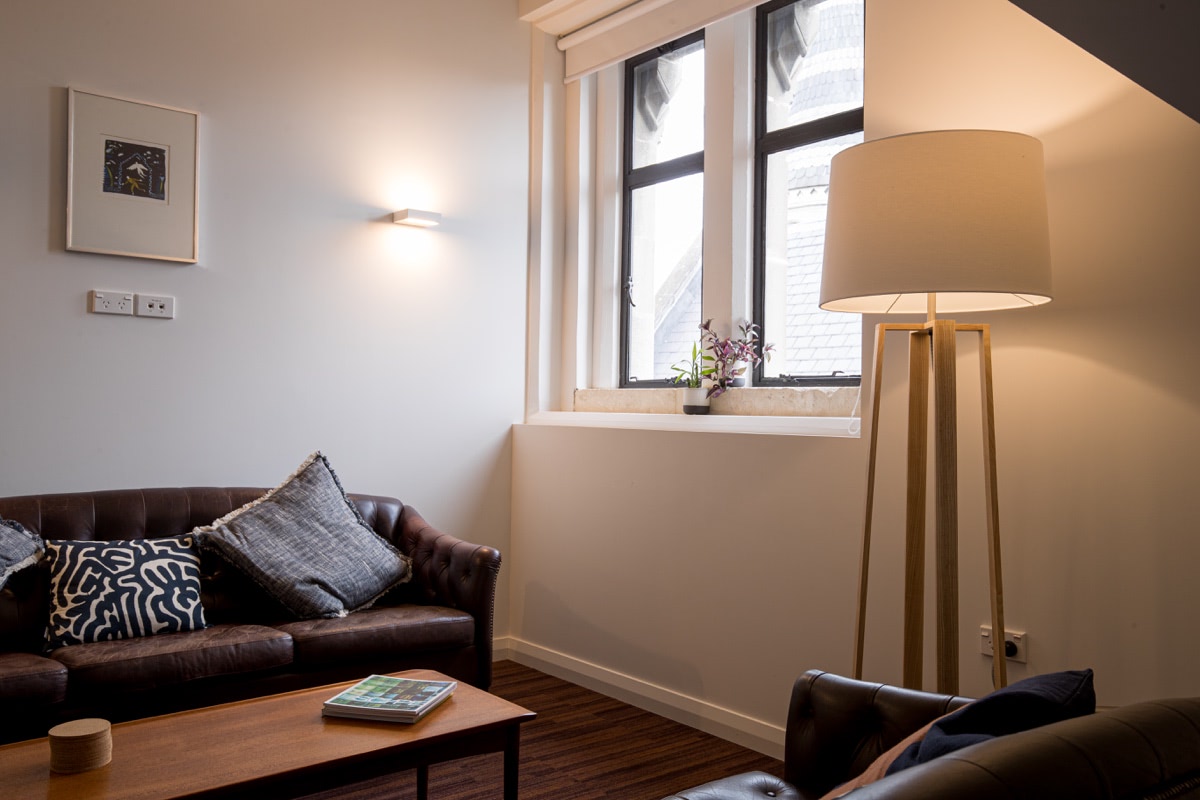
- Accommodation: A fully furnished room with a work desk and a private bathroom.
- Shared living: Common spaces are shared with other residents, which often becomes an informal peer network.
- Per diem: A daily allowance (around NZ$85 per day) paid weekly to help cover living costs.
- Travel support: A contribution toward travel to and from Christchurch (up to around NZ$1,500).
- Publicity: The Arts Centre promotes your residency to local audiences.
Alongside the funded programme, the same apartments are sometimes listed as short-stay accommodation, so you may encounter information about rental fees for self-funded stays. Focus on the Creative Residency details for the funded artist placements.
What they expect from you
The Arts Centre tends to encourage some form of public contribution. That might be:
- An artist talk or lecture
- A workshop or class
- A performance or gig
- A small exhibition, screening, or open studio
They are not expecting a polished mid-career survey; they are looking for ways you can connect with Christchurch communities and show what you are exploring during your stay.
Is this residency a good fit for you?
You are likely a good match if you:
- Want to be in the middle of things – galleries, cafés, and venues are within walking distance.
- Value cross-disciplinary neighbours – composers, writers, designers, and visual artists often overlap here.
- Need financial support – the per diem and travel support can make the residency viable if you are self-employed.
- Are happy offering a public programme in exchange for the support and visibility.
Past residents have ranged from visual artists like Michel Tuffery and Areta Wilkinson to musicians such as Bic Runga and Mahinarangi Tocker, plus choreographers, filmmakers, and object artists. The track record shows that the programme is comfortable hosting very different practices, including experimental and hybrid work.
How to research and position your application
Before applying, it helps to:
- Study the site: Look at photos and maps of the Arts Centre and its West Lecture building. If your work is spatial or performance-based, consider how you might use heritage architecture, courtyards, or surrounding streets.
- Connect your project to the city: Proposals tend to land better when they show some relationship to Ōtautahi – this could be through history, communities, environment, or architecture.
- Plan a realistic public offering: Artist talks, small workshops, or an intimate performance often work better than huge events that depend on high production budgets.
- Budget your energy: Consider how the per diem and travel support interact with your other income. You want a project that is ambitious but still sustainable during a 1–3 month stay.
You can read more via The Arts Centre site: The Arts Centre Creative Residences.
Macmillan Brown Centre for Pacific Studies: A research-rich Pacific residency
Location: Macmillan Brown Centre for Pacific Studies, University of Canterbury
Who it suits: Pacific artists (broadly defined) working with climate, adaptation, Pacific futures, or community-centred art.
What the Macmillan Brown residency looks like
The Macmillan Brown Centre has hosted a three-month artist in residence programme targeted to Pacific artists, supported by Creative New Zealand. While individual calls may change, the structure gives a good template:
- Residency length: Around three months based at the University of Canterbury.
- Focus: Climate change, Pacific communities, and adaptation themes linked to major events or research priorities.
- Outputs: Development of a substantial project and a public exhibition or presentation.
- Community: Access to the Pacific Creative Hub and connections with other Pacific artists and researchers.
At times, the residency has been tied to international climate adaptation events hosted in Christchurch, giving artists a platform to show work and join conversations around climate policy and Pacific resilience.
What they look for in an artist
Typical application materials have included:
- An up-to-date CV outlining your artistic experience
- A concise proposal explaining what you plan to work on during the residency
Strong proposals usually show:
- A clear Pacific identity or deep engagement with Pacific communities
- Artistic practice that can hold its own in both creative and research environments
- Insightful ways of addressing climate, adaptation, or cultural futures
- An understanding of how to work respectfully with community and knowledge holders
If your practice is research-based, socially engaged, or grounded in lived Pacific experience, this residency can act as both a studio and a lab.
How to position yourself
When planning a pitch for Macmillan Brown:
- Map your connections: Identify how your work speaks with Pacific communities, whether in Aotearoa, the Pacific region, or the diaspora.
- Frame climate and adaptation clearly: Show how your work is not just “about” climate change but actively thinking through its impacts, stories, or strategies.
- Use the university setting: Consider potential collaborations with researchers or students, or how you might use archives, libraries, and Pacific scholarship in your process.
To track future calls or learn more, start with the University of Canterbury news pages and the Macmillan Brown Centre information, or search for “University of Canterbury Macmillan Brown Pacific artist in residence”.
Other residency-linked and short-term opportunities around Christchurch
Alongside formal residencies, Christchurch hosts or connects to shorter, more experimental opportunities that can function as mini-residencies or intensive projects.
MAP Research Exchange at Sutton House
Host: Movement Art Practice / MAP
Movement Art Practice has run a Research Exchange residency at Sutton House, on the edge of the Residential Red Zone in Ōtautahi. The programme has given two artists shared time to work deeply in their own practices while inviting “collaborative contamination” – a term they use for open-ended influence between artists.
The structure has included:
- Accommodation and research time at Sutton House
- A framework of activities such as workshops and a joint closing research presentation
- A written contribution to MAP’s platforms
- Site-responsive and community-aware expectations, including awareness of “interferences” between artists and place
Residency outcomes have fed into exhibitions at spaces like CoCA Toi Moroki. Calls and formats may shift from year to year, so the best move is to check Movement Art Practice directly at Movement Art Practice or via Toi Ōtautahi’s listings, and email the contact address often used for open calls (such as residencies@movementartpractice.org).
Boost Ōtautahi Residency at The White Room Creative Space
Host: The White Room Creative Space
The White Room in Christchurch has run the Boost Ōtautahi Artist Residency, inviting an artist to work with their community of artists, including those with intellectual disabilities and diverse support needs. A recent resident used the residency to create a short animated film in collaboration with local artists.
This kind of residency is ideal if you:
- Enjoy participatory or collaborative working methods
- Are committed to inclusive practice and disability arts
- Want to focus on process and relationships as much as outcomes
Formats and support levels vary, so connect with The White Room at The White Room Creative Space and keep an eye out for Boost Ōtautahi announcements.
Cost of living, neighbourhoods, and where artists tend to base themselves
Compared with Auckland, Christchurch is usually easier on rent and general living costs, though central accommodation can still bite if you are paying market rates. Many funded residencies provide accommodation, per diems, or travel support, which makes a big difference.
Neighbourhoods to know
- Central City / Arts Precinct – Ideal for the Arts Centre, Christchurch Art Gallery, CoCA, openings, performances, and cafés. Strong if you do a lot of networking, collaboration, or evening events.
- Riverside / Cashel Street area – Walkable to most galleries and venues, with shops and food options handy.
- Addington – Often more affordable than the very centre, with good bus connections and some creative studios dotted around.
- Sydenham / St Asaph corridor – Historically useful for studio spaces, small creative businesses, and workshops in light industrial buildings.
- Lyttelton – Port town with a strong arts identity and music scene. Great if you like a more intimate community and don’t mind the commute through the tunnel.
- Banks Peninsula / Diamond Harbour – More retreat-style, good for landscape-focused work, writing, or drawing practice that thrives on quiet and sea views.
If your residency is at the Arts Centre, staying central means you can get away without a car. For site-responsive or regional projects, access to a car can open up Banks Peninsula, hill tracks, and more dispersed communities.
Studios, making spaces, and where to look
Christchurch’s studios range from institutional to artist-run. To find spaces, start with:
- The Arts Centre Te Matatiki Toi Ora – Houses studios, galleries, and creative businesses.
- Christchurch Art Gallery Te Puna o Waiwhetū – A central reference point for exhibitions and networks.
- CoCA Toi Moroki – Focused on contemporary art, often connected to experimental or critical practice.
- University of Canterbury – Contact arts departments and the Macmillan Brown Centre for Pacific Studies for research or collaborative angles.
- Artist-run initiatives – These change over time, so Toi Ōtautahi’s site and local word-of-mouth are often the fastest way to see who’s active.
Residency hosts will often point you toward local makers, fabricators, and specialist facilities, so ask early about access to tools, equipment, or rehearsal spaces.
Visas, timing, and planning your Christchurch residency arc
Visa basics for non–New Zealand artists
Residencies can be a grey zone for visas, especially if you are receiving money. In general:
- If you are getting a per diem, fee, or stipend, the residency may count as work.
- Public programmes (talks, workshops, performances) can also fall under work-like activity.
- A standard visitor visa is sometimes acceptable for unpaid, informal stays but may not cover structured funded residencies.
Actions that help:
- Check immigration advice at Immigration New Zealand.
- Ask the residency host what visa types previous residents have used.
- Allow time for visa processing, especially if you are applying from outside the region.
When to be in Christchurch as an artist
The city shifts with the seasons in ways that affect how you work.
- Spring to early summer – Often active, with events re-energising after winter. Good for community-engaged projects and outdoor work.
- Summer – Long light, pleasant weather, but holiday periods can affect audience numbers and institutional staffing.
- Autumn – Stable and focused. Many artists find this a productive studio period, with enough going on but less peak holiday disruption.
- Winter – Quieter and colder; can be perfect for writing, editing, and deep studio phases, especially in a well-heated central base like the Arts Centre residences.
Match your project to the season: outdoor performance and site-specific installations generally prefer spring and summer; research, editing, or object-based work might thrive in winter or autumn.
How Christchurch residencies can connect you internationally
While Christchurch has its own residency ecosystem, it also plugs into wider networks that can shape your next steps.
Creative New Zealand residency pathways
Creative New Zealand supports various international residencies, such as Berlin visual arts residencies, Indigenous-focused programmes in North America, and exchanges in the Pacific. These are not Christchurch-specific, but Christchurch-based artists are often eligible.
Strategically, a stint in Christchurch can help you:
- Develop a body of work or research that strengthens future applications
- Build relationships with institutions that can act as referees
- Test new directions before pitching them to larger international programmes
Check the Creative New Zealand site at Creative New Zealand for current residency options and guidelines.
Asia New Zealand Foundation and regional links
The Asia New Zealand Foundation partners on select residencies with organisations across Asia. These are usually targeted calls, but artists based in Christchurch can still be competitive candidates.
If your practice engages with Asia–Pacific conversations, your Christchurch residency can act as a regional anchor, especially if you connect with Pacific-focused initiatives at the Macmillan Brown Centre.
Choosing the right Christchurch residency for your practice
To narrow things down, focus on fit rather than prestige.
- Choose The Arts Centre Creative Residences if you:
- Want a central, heritage setting with strong visibility
- Need accommodation plus per diem and help with travel costs
- Are happy to offer a public event or workshop
- Thrive in contact with other residents and a busy cultural hub
- Choose a Macmillan Brown Pacific-focused residency if you:
- Identify as a Pacific artist or work deeply with Pacific communities
- Want a research-heavy environment with a clear thematic focus like climate adaptation
- See your work in dialogue with policy, academia, and Pacific futures
- Choose smaller or experimental programmes (MAP, White Room, etc.) if you:
- Care about collaboration, community, and process
- Like working in intimate or site-specific settings
- Are open to shorter, project-driven residencies that can feed into larger projects later
Each of these routes gives you a different Christchurch: heritage city, research hub, experimental field station, or community workshop. The trick is to match your project to the version of Ōtautahi that will push your work somewhere new, while still keeping your energy, finances, and time realistic.
Residencies in Christchurch

Macmillan Brown / Creative New Zealand
Christchurch, New Zealand
The Macmillan Brown / Creative New Zealand Artist Residency is a three-month program funded by Creative New Zealand and hosted by the Macmillan Brown Centre for Pacific Studies at the University of Canterbury, supporting Pacific artists to advance their practice and develop innovative projects of cultural significance. It has been offered annually since 1996, often aligning with events like Adaptation Futures, and welcomes artists in fields such as fine art, carving, music, weaving, and creative writing. Residents contribute to Pacific arts and culture, with opportunities for exhibitions and engagement at the Pacific Creative Hub.
The Arts Centre Te Matatiki Toi Ora
Christchurch, New Zealand
The Arts Centre Te Matatiki Toi Ora in Christchurch, New Zealand, offers a Creative Residency Programme for creative professionals from diverse fields including visual arts, crafts, music, theatre, dance, film, writing, design, photography, digital and sound art, fashion, and gaming, with stays typically lasting 1-3 months. Residents receive housing in fully furnished rooms with shared living spaces, a daily per diem of $85 NZD, up to $1500 NZD travel support, publicity, and community engagement opportunities, often culminating in public events. A self-funded residency option is also available for 2-10 weeks, providing accommodation without financial support.
Explore New Zealand
More city guides
Opportunity Intelligence
Ready to find your next residency?
Get a personalized shortlist — scored against your practice, discipline, and what you need right now.
See how Intelligence works →